7 Effective Ways to Get Rid of Kitchen Ants Fast
If you’re dealing with kitchen ants, you’re not alone. Many people struggle with these tiny invaders ruining their kitchen peace and cleanliness.
Finding quick, effective ways to get rid of them can feel overwhelming, but don’t worry—we’ve got you covered.
To get rid of kitchen ants fast, start by detecting their trails and identifying their entry points, then seal cracks with caulk or weatherstripping.
Keep your kitchen clean, store food in sealed containers, and manage trash effectively.
Use natural repellents like vinegar, peppermint, or cinnamon along entry zones, and set bait traps for quick results.
If ants persist, professional pest control can target hidden nests.
Keep going for more tips to fully banish these pests.
Key Takeaways
- Identify and eliminate food crumbs, spills, and residues to remove ant attractants. Keeping your kitchen clean is key to stopping ants from coming back. Wipe down counters and sweep the floors regularly.
- Seal cracks, gaps, and entry points to prevent ants from entering your kitchen. Check around windows, doors, and pipes. A little sealing can go a long way in keeping ants out.
- Use natural repellents like vinegar, peppermint, or cinnamon along ant trails and entry areas. These scents bother ants and help steer them away. Spray or sprinkle them where you see ant activity.
- Set bait traps to attract and eliminate ants at their source. Place these traps near ant trails or entry points. They’ll carry the poison back to their colony, helping to get rid of the whole nest.
- Maintain regular cleaning and proper food storage to disrupt ant trails and prevent re-infestation. Store food in airtight containers and clean up immediately after meals. Keeping your kitchen tidy is the best long-term solution.
How to Detect Kitchen Ant Infestations
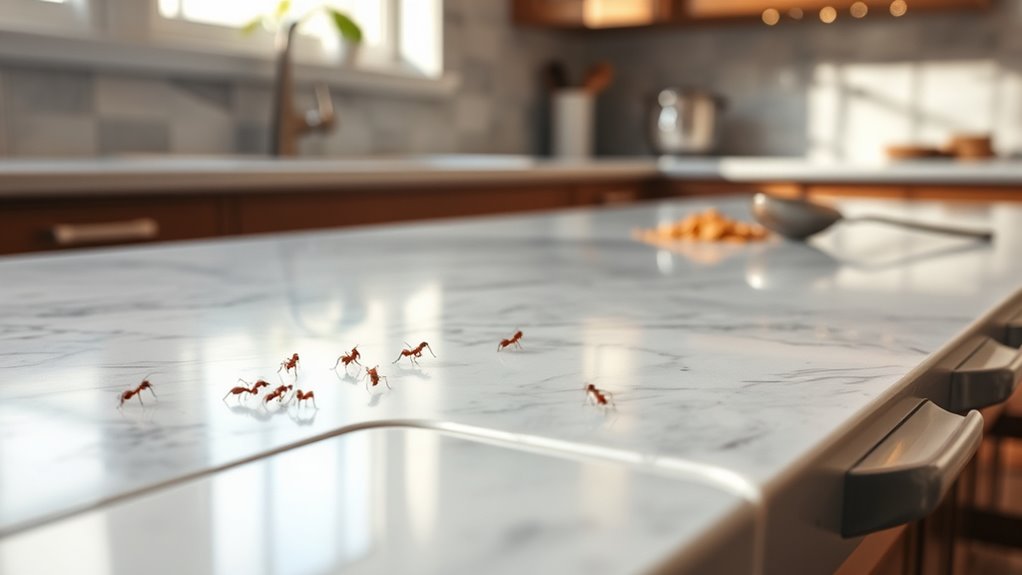
Detecting a kitchen ant infestation early is key to stopping it before it gets worse. Keep a close watch on your counters, cabinets, and pantry shelves for tiny trails of ants.
Look for small piles of dirt or debris near cracks and crevices, which are often used as entry points by ants.
Pay attention to food spills or sticky residues that might attract them. Spotting worker ants wandering around or entering specific areas is a clear sign of an infestation.
You might also see tiny ant holes or trails leading to food sources.
Early detection helps you act quickly, making it easier to eliminate the ants.
The sooner you spot the problem, the better your chances of stopping them from establishing a permanent colony inside your kitchen.
What Attracts Ants to Your Kitchen and How to Find Out
Ants are attracted to your kitchen mainly by food crumbs, water leaks, and their scent trails.
To find out what’s drawing them in, look for sticky residues, dripping pipes, and dark marks they leave behind.
Spotting these clues can help you target the sources fueling their invasion.
Food Residues and Crumbs
A single crumb or spill can be enough to draw ants into your kitchen. They’re really attracted to food residues and crumbs left on counters, floors, and tabletops.
Even tiny particles of sugar, bread crumbs, or sticky spills can signal a food source to them. Check common areas like beneath appliances, inside cabinets, and around your trash bin to see what’s attracting them.
Clear away all crumbs and wipe surfaces thoroughly to remove residual scent trails. Pay special attention to hidden spots where crumbs might collect unnoticed.
Regular cleaning is key to preventing more ants from showing up. By eliminating these food residues, you make your kitchen less appealing and break their search for food.
Water Sources and Leaks
While cleaning up food residues is essential, ants are also attracted to water sources in your kitchen. Leaks from pipes, faucets, or appliances create persistent moisture that draws them in.
Check under sinks, around dishwashers, and near any plumbing connections for drips or puddles. Even tiny water droplets on counters or inside appliances can lure ants.
They need water to survive and often follow moisture trails back to their nests. To prevent this, fix leaks immediately and keep your kitchen dry.
Regularly inspect areas prone to moisture buildup and wipe away any standing water or dampness. Eliminating these water sources deprives ants of hydration, making your kitchen less appealing and helping you get rid of the infestation faster.
Scent Trails and Marks
Scent trails and marks act as invisible highways, guiding ants directly to your food and water sources. These pheromone trails are left behind when ants find food, signaling others to follow the same path.
You might notice a faint, sticky line on counters, walls, or floors—these are the scent marks. Ants rely heavily on these trails to navigate your kitchen efficiently.
To find out where the trails originate, follow the scent lines carefully. Look for tiny crumbs, spills, or open containers that could be attracting them.
Once you identify the source, clean the trail thoroughly with soapy water or vinegar to erase the scent. Removing these marks breaks the trail, making it harder for ants to find their way back to your food.
Seal Entry Points to Keep Kitchen Ants Out
Sealing entry points is one of the most effective ways to prevent ants from invading your kitchen. Check your walls, windows, doors, and floors carefully for tiny gaps or cracks where ants might get in.
Use caulk or weatherstripping to seal these openings tightly. Don’t forget to look behind appliances, around pipes, and along baseboards.
Cover small holes with steel wool or putty to block their entry. Regularly maintaining these seals helps prevent new gaps from forming.
By blocking their access, you make it less likely for ants to find a way inside. This simple step disrupts their pathway into your kitchen.
Keeping up with sealing can really cut down on ant intrusions and keep your kitchen ant-free.
Effective Natural Remedies to Kill Kitchen Ants Fast
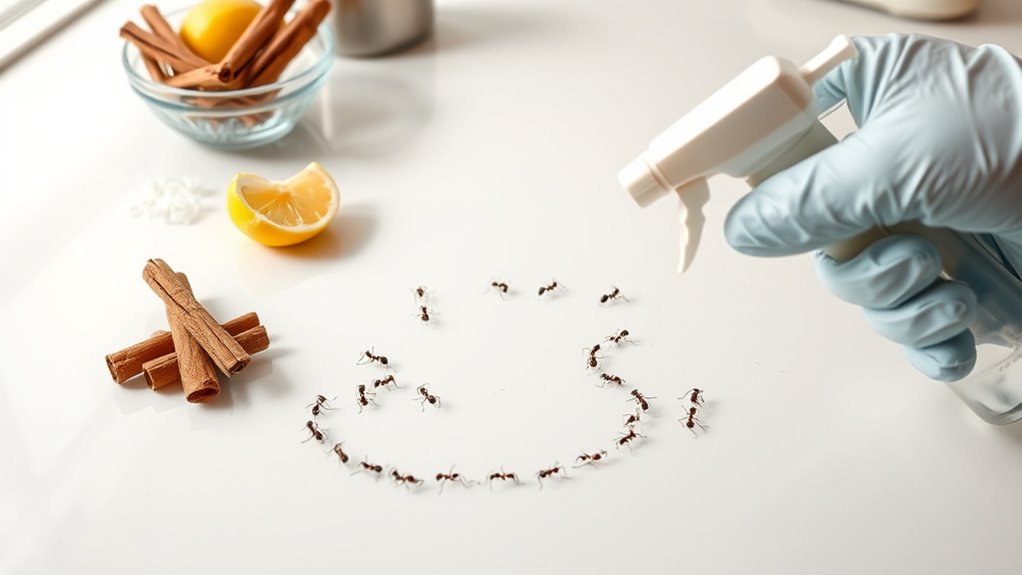
If you’re looking to eliminate kitchen ants quickly, natural remedies can be highly effective and safe around your home. One simple method is spraying a mixture of equal parts vinegar and water directly on ant trails and entry points. The strong smell disrupts their scent trails and deters them from returning.
You can also sprinkle cinnamon, peppermint, or cayenne pepper along baseboards and entry points, as these spices naturally repel ants. Furthermore, placing soaked cotton balls in essential oils like peppermint or tea tree oil near ant pathways can act as a powerful repellent.
These remedies work quickly by disrupting ants’ communication and discouraging them from settling in your kitchen. Use them consistently for fast, safe results without harmful chemicals.
Use Commercial Baits and Traps for Quick Results
Using commercial baits and traps is one of the fastest and most effective ways to eliminate kitchen ants. These products target ants directly at their source, disrupting their colony and stopping the invasion. When you place traps strategically, you’ll see activity decrease quickly, giving you hope.
Here are some key benefits:
- Immediate Impact – Traps work fast to reduce ant numbers.
- Targeted Approach – Baits attract ants directly, making them more efficient.
- Long-lasting Results – Once set, traps keep working over time.
- Safe for Your Home – Many commercial options are non-toxic and family-friendly.
Using these solutions gives you control and peace of mind, helping you turn your kitchen back into a pest-free zone.
Prevent Future Kitchen Ant Problems With Good Hygiene
Keeping your kitchen clean is the first step to preventing ant problems. Make sure to regularly wipe down surfaces and keep everything tidy.
Store food in sealed containers and manage waste promptly. These simple habits help get rid of the things that attract ants into your space.
Regularly Clean Surfaces
Regularly cleaning your kitchen surfaces is one of the best ways to stop ants from invading. When you keep counters, sinks, and tables spotless, you remove scent trails and food residues that attract them.
To really make a difference, focus on these steps:
- Wipe down all surfaces daily with a disinfectant to erase scent trails.
- Clean crumbs and spills immediately to deny ants easy food sources.
- Empty trash cans regularly and sanitize them to prevent lingering odors.
- Pay special attention to sticky spots or residues that can attract ants unexpectedly.
Staying consistent with surface cleaning creates a hostile environment for ants. It makes your kitchen less appealing and harder for them to find food or establish trails.
Store Food Properly
Properly storing your food is key to preventing future ant invasions. Keep grains, cereals, and snacks in airtight containers to block easy access points.
Avoid leaving food out on counters or in open bowls because ants are drawn to even tiny crumbs. Regularly check your pantry for expired or spilled items and clean the shelves thoroughly.
Use sealed jars or containers for sugar, flour, and pet food to hide scent trails that attract ants. When shopping, buy smaller amounts to reduce leftovers that pests can feast on.
Manage Waste Effectively
An effective way to prevent kitchen ants from returning is to manage waste consistently. Properly disposing of trash removes their main food source and discourages foraging.
To maximize hygiene, empty trash cans daily—don’t wait for them to overflow. Use sealed, airtight containers for waste to block ants’ access.
Clean spills and crumbs immediately because ants are drawn to even tiny traces. Regularly wash trash bins with soap and water to eliminate lingering scents.
When to Call a Pest Control Professional for Severe Infestations
Severe ant infestations in your kitchen need a professional’s help when DIY methods stop working or the ants keep coming back despite your efforts. If baiting, cleaning thoroughly, and sealing entry points haven’t solved the problem, it’s time to call in a pest control expert.
Persistent ants might mean there’s a hidden nest or a bigger infestation that’s tough to eliminate on your own. Professionals have access to stronger treatments and tools that can target the entire colony, including nests deep inside walls or underground.
Ignoring a serious infestation can lead to ongoing problems and make it even harder to get rid of the ants later. When your efforts fall short, getting expert help ensures a safer, more effective, and lasting solution.
Frequently Asked Questions
Are Kitchen Ants Dangerous to Health?
Yes, kitchen ants can pose health risks. They often carry bacteria from dirty surfaces, contaminating your food and utensils.
This increases your chances of foodborne illnesses. While they aren’t directly harmful through bites, their presence can lead to unsanitary conditions.
To keep your home safe, clean up food spills promptly, store food properly, and eliminate ant trails. Taking quick action helps protect your health and prevent an infestation.
How Long Does It Take to Eliminate Ants Completely?
Oh, you’ve started the ant war, huh? Well, depending on how stubborn your tiny invaders are, it can take anywhere from a few days to a couple of weeks to eliminate them completely.
Quick fixes might clear them out in a day, but if you’re battling a full-blown colony, patience and persistence are your best allies.
Keep at it, and soon your kitchen will be ant-free—until the next invasion!
Can I Use Household Items to Repel Ants?
Yes, you can use household items to repel ants. Vinegar, lemon juice, and cinnamon are effective natural repellents.
Mix vinegar or lemon juice with water and spray it along ant trails and entry points. Sprinkle cinnamon near doors, windows,, and cracks to deter them.
These items disrupt their scent trails and make your kitchen less inviting. Regular application helps keep ants away without harsh chemicals.
What’s the Best Time of Day to Treat Ants?
Imagine you’re a detective on a mission, and the best time to catch the culprit is when they’re most active. For ants, that’s early morning or late evening when they forage for food.
You should treat the ants during these times because they’re most visible and active. This way, your remedies have a better chance of making contact.
Acting now during their prime activity helps you eliminate the colony quickly and effectively.
Do Ants Return After Treatment, and How to Prevent It?
Yes, ants can come back after treatment if you don’t remove their food sources and entry points.
To prevent this, keep your kitchen super clean, wipe down counters regularly, and store food in airtight containers.
Make sure to seal cracks and gaps around windows and floors too.
Trimming back plants near your home and removing any standing water can also help.
Staying consistent with maintenance and keeping an eye out is key to keeping ants away long-term.
Conclusion
Think of your kitchen as a fortress you’re defending from unwelcome guests.
By sealing entry points, cleaning thoroughly, and using natural or commercial solutions, you can keep ants at bay.
When the invasion feels like a never-ending battle, don’t hesitate to call in the experts—like a seasoned knight summoning reinforcements.
Stay vigilant, and soon your kitchen will be a sanctuary free from tiny invaders trying to conquer your space.
Using effective methods to get rid of kitchen ants fast is key to maintaining a pest-free home.