Standard Height for Tall Kitchen Base Cabinets
Many homeowners find choosing the right height for tall kitchen base cabinets to be a bit overwhelming. You’re not alone—navigating options and measurements can feel like a challenge.
Tall kitchen base cabinets usually range from 72 to 96 inches in height, making them perfect if you have high ceilings or need extra storage.
You’ll want to measure your space carefully to choose the right height—common options include 72, 84, or 96 inches, with custom sizes for very tall ceilings.
Proper measurement is key to a smooth installation.
Keep exploring to uncover how to select the best height for your kitchen needs.
Key Takeaways
- Standard heights for tall kitchen base cabinets are usually 72, 84, or 96 inches.
- A 72-inch cabinet works well with 8-foot ceilings and leaves minimal clearance.
- If your ceilings are between 8.5 and 9 feet, an 84-inch cabinet is a good fit.
- For ceilings around 9 feet or higher, 96-inch cabinets are ideal.
- If your ceilings are taller than 9 feet, custom heights are also available.
Are Tall Kitchen Base Cabinets Right for Your Space?
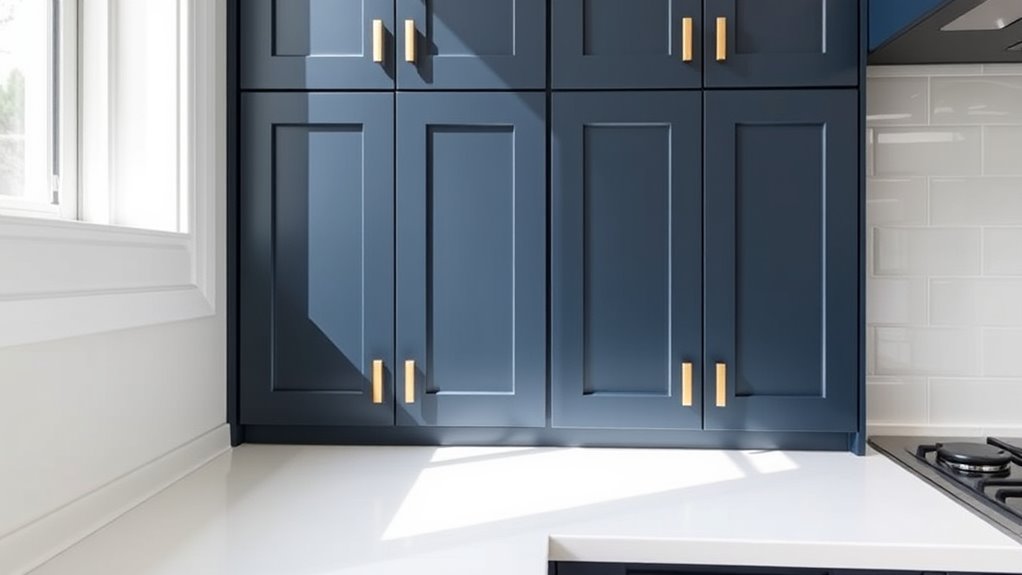
Are tall kitchen base cabinets a good fit for your space? If you have high ceilings or want extra storage, they might be perfect. Tall cabinets extend above standard heights, giving you more room for cookware, appliances, or pantry items.
They can help make the most of vertical space and reduce clutter on your countertops. But think about whether your ceiling height can comfortably handle taller cabinets. If your kitchen feels cramped or the ceiling isn’t high enough, tall cabinets could make the space feel crowded or awkward.
Also, consider accessibility—if you’re shorter or have mobility concerns, reaching the top shelves might be tough. Ultimately, tall base cabinets work best if your kitchen has enough room and your storage needs justify the extra height.
What Are the Standard Heights for Tall Kitchen Cabinets?
Tall kitchen cabinets usually go beyond the standard 30-inch base height, giving you extra storage space. The most common heights are 72, 84, and 96 inches, depending on your ceiling height and what you need to store.
Standard tall cabinets usually start at 84 inches, which is great for pantry items or appliances. If your ceiling allows, 96-inch cabinets make the most of vertical space and almost reach the ceiling.
Here’s a quick comparison:
| Height (in inches) | Suitable Ceiling Height |
|---|---|
| 72 | 8-foot ceilings, minimal overhead clearance |
| 84 | 8.5 to 9-foot ceilings |
| 96 | 9-foot or higher ceilings |
| 108 | Very tall ceilings, custom options |
Choosing the right height depends on your space and storage needs.
How to Measure Your Kitchen for Tall Base Cabinets
To measure your kitchen for tall base cabinets, start by checking your ceiling height to make sure they’ll fit comfortably.
Next, look at your existing cabinets to see how much space you have below the ceiling and between the cabinets.
Finally, remember to account for the thickness of your countertops to get accurate measurements.
Measure Ceiling Height
Before installing tall base cabinets, you need to accurately measure your ceiling height. Use a tape measure or a laser distance finder for the most precise results.
Stand directly beneath the ceiling and extend the tape measure to the floor, making sure it stays straight and level. Record the measurement at eye level to avoid errors caused by uneven ceilings or crown molding.
If your ceiling isn’t perfectly flat, measure in multiple spots around the room’s perimeter and take the smallest measurement. This helps ensure the cabinets will fit properly.
Double-check your measurements to confirm accuracy before moving forward. Knowing your exact ceiling height helps you decide how tall your cabinets can be while keeping your kitchen balanced and functional.
Check Existing Cabinets
Checking your existing cabinets is a good starting point for measuring your kitchen’s space. Begin by noting the height, width, and depth of your current base cabinets. Use a measuring tape to get these measurements accurately.
Look for any decorative moldings or trims that add to their overall height, and make a note of these details. Also, check for unevenness or irregularities, especially if your cabinets are older.
Taking pictures or sketches can help you visualize any changes you plan to make. If you want to replace or modify your cabinets, knowing their current size and layout ensures your new tall base cabinets will fit perfectly.
This step helps you spot potential issues early, saving you time and effort during installation.
Account for Countertop Thickness
Since countertops add to the overall height of your cabinets, it’s important to measure their thickness accurately before installing tall base cabinets. This helps ensure your cabinets fit perfectly and look seamless.
Start by checking the manufacturer’s specifications for your chosen countertop material. Measure the slab thickness at multiple points to account for any variations.
Remember, standard countertop thickness usually ranges from 1.25 to 1.5 inches, but it can vary. When measuring, include any layers like plywood or underlayment.
Once you have this measurement, subtract it from your desired cabinet height to find the correct cabinet size. Keep these tips in mind:
- Use a precise tape measure
- Measure at different spots for accuracy
- Include any additional layers
- Check manufacturer specs
- Adjust cabinet height accordingly
What Factors Influence the Height of Your Tall Cabinets
Several key factors determine the ideal height for your tall cabinets, making sure they fit seamlessly into your kitchen and meet your storage needs. First, ceiling height is important; taller ceilings let you install higher cabinets to maximize storage space.
Your overall kitchen layout and design also influence cabinet height. It’s about finding the right balance between accessibility and looking good. Think about the height of appliances and fixtures—if they are built-in or taller, your cabinets should match up with them.
Your comfort matters too. If reaching the top shelves is tough, you might want to add a step stool or choose a slightly lower height for those cabinets. Lastly, check local building codes and ergonomic standards. They can help you pick heights that are safe, functional, and compliant.
All these factors work together to help you decide the best height for your tall cabinets.
When Should You Choose Taller Cabinets in Your Kitchen Design?
Choosing taller cabinets can be a smart move when you need to maximize storage in your kitchen. They’re perfect if you have high ceilings or want to keep your countertops clutter-free.
Think about taller cabinets if you cook often and need extra space for cookware and ingredients. They’re also great for creating a custom look, especially in open-concept layouts.
Plus, taller cabinets can add visual height, making your kitchen look larger and more modern.
You should also go for taller cabinets if you want to store infrequently used items up high.
They’re a good choice if your ceiling height exceeds standard measurements.
A redesign for a sleek, contemporary style is another reason to opt for taller cabinets.
Using more vertical wall space is easier with taller cabinets, and they help create a more spacious, open feel.
Will Taller Cabinets Fit in My Kitchen?
Wondering if taller cabinets will fit in your kitchen? The key is measuring your space carefully.
Check your ceiling height and account for any crown molding or lighting fixtures that might limit cabinet height. Standard base cabinets are usually 34.5 inches high, but taller options can go up to 42 inches or more.
Measure ceiling height and consider molding or fixtures to ensure taller cabinets fit comfortably.
If your ceiling is higher, you might have room for taller cabinets. Just make sure there’s enough clearance for doors to open comfortably.
Also, consider the space between the top of the cabinet and the ceiling. Leave some room for adjustments and future access.
If your kitchen has sloped ceilings or irregular walls, custom options might be necessary.
Accurate measurements will help you determine if taller cabinets will fit without crowding or obstruction.
Custom or Prefab Tall Cabinets: Which Is Better?
Deciding between custom and prefab tall cabinets depends on your specific needs, budget, and style preferences. Custom cabinets offer tailored fits, unique designs, and high-quality craftsmanship. They’re perfect if you want a seamless look or have unusual space constraints.
Prefab cabinets are more affordable, readily available, and easier to install. They’re great for quick upgrades or if you prefer standard sizes.
Think about these factors: Custom cabinets give you personalized features and finishes. Prefab options save both time and money. Custom work usually takes longer to complete. Prefabs come in a variety of standard sizes.
Your choice really depends on how much flexibility and investment you’re willing to make.
Troubleshooting Common Installation Challenges
Installing kitchen cabinets can be straightforward, but you might run into some common challenges. One frequent problem is uneven walls or floors, which can make cabinets sit crooked. Use a level and shims to fix these irregularities before securing the cabinets.
Misaligned cabinets often happen from inaccurate measurements. Double-check your measurements and markings before drilling to avoid this. If doors or drawers don’t line up properly, carefully adjust the hinges or tracks following the manufacturer’s instructions.
Another challenge is securing the cabinets firmly without causing damage. Use the right anchors and avoid overtightening screws. If cabinets don’t fit snugly against each other, check for gaps or warping and use filler strips or realignments as needed.
Troubleshooting these issues early on helps ensure a professional-looking, durable installation.
Frequently Asked Questions
How Do I Choose the Right Countertop Height for Tall Cabinets?
To choose the right countertop height for tall cabinets, think about what’s comfortable for you and how you plan to use your kitchen. Usually, countertops are about 36 inches high, but if you’re tall, you might prefer 37 or 38 inches to make things easier.
Measure your arm reach and your standing posture to get a better idea of what works best. Adjust the height so you can work comfortably without straining your back or shoulders.
Making sure the height feels right will help your kitchen be both functional and ergonomic, making cooking and prep easier and more enjoyable.
Are There Specific Materials Better Suited for Tall Kitchen Cabinets?
You should consider materials like solid wood, plywood, or MDF for tall kitchen cabinets. They offer durability and stability for the extra height.
Solid wood provides a classic, high-quality look, while plywood is strong and resistant to warping. MDF is more affordable and easy to paint.
Avoid materials that warp or sag over time. This way, your tall cabinets will stay sturdy and beautiful for years.
How Do Tall Cabinets Affect Kitchen Lighting and Ventilation?
Tall cabinets can make your kitchen feel more enclosed if you don’t have enough lighting and ventilation. To fix this, consider adding under-cabinet lighting or pendant lights to brighten up the space.
You might also need more powerful range hoods or extra vents to keep cooking odors from building up. Planning your lighting and ventilation carefully will help your kitchen stay bright, airy, and comfortable despite the tall cabinets.
What Maintenance Tips Are Recommended for Taller Cabinets?
To keep your taller cabinets in tip-top shape, give them regular dusting and clean with a damp cloth. Checking hinges and handles periodically is also a good idea.
Tighten any loose screws on hinges and handles to prevent problems before they start. Avoid harsh chemicals that could damage the finish of your cabinets.
Think of it as giving your cabinets a quick pep talk. Consistent care helps them look sharp and work smoothly, preventing small issues from turning into big headaches later on.
Can Tall Cabinets Be Integrated With Smart Kitchen Technology?
Yes, you can integrate tall cabinets with smart kitchen technology. You’ll want to pick smart devices that work well with your system, like smart lighting, touchscreens, or voice-controlled assistants.
Install these devices inside or on the surface of your tall cabinets for easy access. Just be sure to plan your wiring and power sources carefully so everything works smoothly.
This way, you can enjoy smart tech without sacrificing the cabinet’s look or storage space.
Conclusion
When weighing your options, consider the height, harmony, and hassle of your tall kitchen cabinets. Think about how they’ll fit into your overall kitchen design and daily routine.
Balancing benefits and boundaries helps you build a beautiful, functional space that fits your needs perfectly. Take your time measuring and matching styles to ensure everything aligns smoothly.
Making mindful modifications can turn your kitchen into a welcoming, wonderful workspace. Proper height for tall kitchen base cabinets is key to creating a seamless and practical environment.
With the right choices, your tall cabinets will transform your kitchen from basic to breathtaking, blending practicality with polished perfection.