How Many Ounces of Egg White Are in One Egg?
Struggling to get the perfect egg white measurement for your recipes? You’re not alone—many people find it tricky to measure egg whites accurately, especially when precision matters for baking or nutrition.
Knowing exactly how much egg white you get from different eggs can make all the difference. A large egg typically gives you about 1 to 1.25 ounces of egg white.
If you need more precise amounts, keep in mind that extra-large eggs contain around 2 ounces, while medium eggs hold about 1.25 ounces. Smaller eggs provide roughly 1 ounce of white.
Knowing this helps you measure accurately for recipes or nutrition goals.
Keep going to uncover tips on how to measure egg whites precisely and adjust recipes accordingly.
Key Takeaways
- A standard large egg contains approximately 1 to 1.25 ounces of egg white.
- Extra-large eggs have about 2 ounces of egg white.
- Medium eggs provide roughly 1.25 ounces of egg white.
- Small eggs yield around 1 ounce of egg white.
- If you want about 2 ounces of egg white, you’ll need roughly 1.5 large eggs.
How Much Egg White Is in a Standard Large Egg?
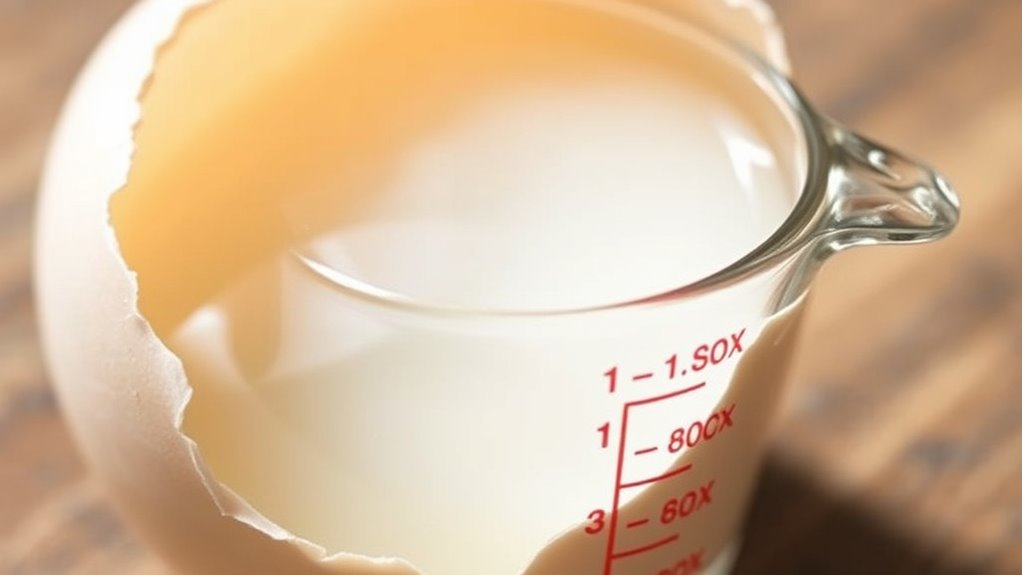
A standard large egg typically contains about 1 to 1.25 ounces of egg white. When you crack open a large egg, you’ll notice that most of the volume is egg white, which is clear and slightly viscous.
The amount of egg white can vary slightly depending on the egg, but generally, it falls within this range. If you’re measuring for a recipe, understanding this helps you estimate how much egg white you’ll get from one egg.
For example, if a recipe calls for 2 ounces of egg white, you’d need roughly 1.5 large eggs to meet that amount. This knowledge helps you portion accurately without waste or guesswork, especially for dietary or culinary needs.
Egg White Content in Different Egg Sizes
Egg white amounts vary with size, so you’ll get different volumes depending on the egg you use.
Large and extra-large eggs typically have more egg white than small or medium eggs.
Knowing these differences helps you measure accurately for your recipes.
Standard Egg White Volume
The amount of egg white you get varies depending on the size of the egg. For a standard large egg, you typically get about 1.5 ounces of egg white.
This measurement is consistent across most recipes and preparations. If you’re using medium eggs, expect roughly 1.25 ounces of egg white, while extra-large eggs contain around 1.75 ounces.
Standard eggs are the most common in stores and recipes, making them a reliable reference point. Keep in mind that egg white volume can slightly vary based on freshness and origin, but these estimates generally hold true.
Knowing these amounts helps you measure accurately, especially when following specific recipes or nutritional plans. This standard volume simplifies substitutions and guarantees your results turn out just right.
Large and Extra Large Eggs
Large and extra-large eggs usually contain about 1.75 ounces and 2 ounces of egg white, respectively. When you’re measuring for recipes, keep in mind that these sizes give you slightly more egg white than standard eggs.
If you’re doubling a recipe or just using egg whites, knowing these amounts helps you estimate more accurately. Extra-large eggs provide about 0.25 ounces more egg white than large eggs, which can impact baked goods or protein dishes.
It’s important to remember that egg white volume can vary a bit from egg to egg, but these figures are good guidelines. Using the right size ensures your recipes turn out as expected without needing extra adjustments.
Small and Medium Eggs Content
Small and medium eggs usually have about 1 to 1.25 ounces of egg white, but this can vary a bit depending on the egg. The size and freshness of the egg play a role in the exact amount.
To give you a clearer picture, here’s a simple breakdown:
| Egg Size | Approximate Egg White Content |
|---|---|
| Small | 1 oz |
| Medium | 1.1 oz |
| Large | 1.25 oz |
| Extra Large | 1.35 oz |
Knowing these amounts helps you adjust recipes better, especially if you’re substituting eggs or watching calories. Keep in mind, the egg white content increases with egg size.
Measuring Egg Whites Accurately for Recipes
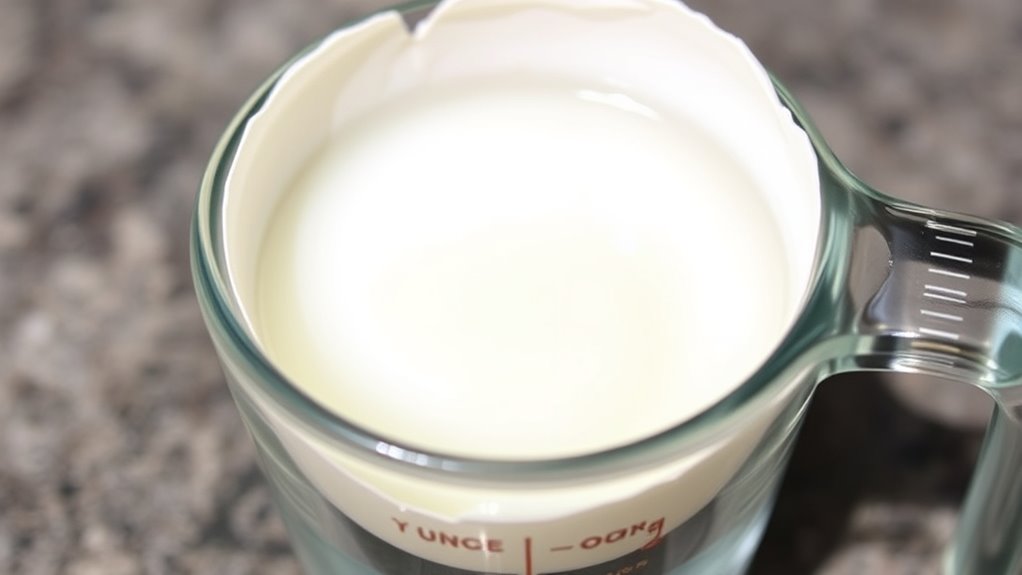
To measure egg whites accurately for your recipes, start by using a liquid measuring cup or a dedicated kitchen scale. If you’re using a measuring cup, crack the egg into a small bowl first, then pour the whites into the cup and check the level at eye’s height for accuracy.
For even better precision, place the egg whites directly on a kitchen scale. Zero the scale first, then add whites until you reach the desired weight. Be careful to avoid overfilling or spilling, as that can throw off your measurement.
If you’re measuring multiple eggs, weigh each one separately to ensure consistency. Using these tools helps you get the right amount, whether you need a specific ounce measurement or a certain number of eggs.
Nutritional Benefits of Egg Whites by Size
Since egg whites come in different sizes, knowing their nutritional benefits can help you make smarter choices. Larger egg whites pack more protein without adding extra calories, which is great for building muscle or managing weight.
Smaller egg whites still have essential nutrients but in smaller amounts. They’re perfect for light snacks or recipes with controlled portions. The size differences can really influence your meal planning and nutrient intake.
Larger egg whites give you about 3.6 grams of protein each, helping with muscle repair. Medium-sized ones have around 2.7 grams, making them good for a balanced diet. Smaller whites contain roughly 2 grams, ideal for low-calorie snacks or adding volume without extra calories.
Knowing these differences helps you tailor your intake to meet your health goals.
How to Use Varying Egg White Quantities in Cooking
When adjusting recipes for different amounts of egg whites, it’s important to be precise about measurements. Using a kitchen scale or measuring cups can help you get it just right.
This way, your dishes turn out perfect no matter how many egg whites you’re using. It’s all about accuracy to ensure the best results.
Adjusting Recipes for Quantity
Adjusting recipes for different amounts of egg whites is pretty easy once you know the basic measurements. If a recipe calls for a certain number of eggs but you need more or less, you can easily scale the ingredients.
Here are some tips to help you adjust efficiently: Use a conversion chart to find the equivalent ounces for your desired egg white amount. Measure egg whites in a liquid measuring cup for accuracy.
Keep in mind that egg whites can be stored in the fridge for a few days if you have some extra.
Measuring Egg Whites Accurately
Accurately measuring egg whites is key to successful cooking and baking, especially when you’re working with different amounts. To do this precisely, use a liquid measuring cup for larger quantities; gently pour in the whites and check the level at eye’s height for accuracy.
For smaller amounts, a measuring spoon works well—fill it to the desired line and level it off with a straight edge. If you don’t have measuring tools, you can weigh the whites with a kitchen scale; one ounce is usually about 2 tablespoons of egg white.
Always crack eggs into a separate bowl first to remove shells and then measure. This ensures you use the right amount and avoid contamination, leading to better results in your recipes.
Tips for Separating Egg Whites Efficiently
Separating egg whites efficiently starts with using the right tools and techniques. Use a clean, cracked egg to avoid shell fragments and guarantee freshness. Keep your eggs cold, as cold whites separate more easily from the yolk. To prevent yolk contamination, gently transfer egg whites between shells or use a separate bowl for the whites.
Consider these tips:
- Use an egg separator or a small, clean spatula for precise separation.
- Crack eggs gently to avoid breaking the yolk.
- Separate over a bowl to catch any drips or yolk leaks immediately.
Following these steps makes the process smoother, minimizes mess, and ensures you get clean egg whites for your recipes.
Do Organic and Free-Range Eggs Have Different Egg White Amounts?
Are organic and free-range eggs different in their egg white amounts? Generally, they’re quite similar. The diet and living conditions of hens influence egg quality more than label distinctions.
While some studies suggest slight variations, these differences are minimal and unlikely to affect recipes. To give you an idea, here’s a comparison:
| Egg Type | Typical Egg White Volume | Nutritional Note |
|---|---|---|
| Organic | 1.5 – 2 oz | Fed organic feed, no antibiotics |
| Free-Range | 1.5 – 2 oz | Allowed outdoor access |
| Conventional | 1.5 – 2 oz | Standard farm practices |
| Conventional | 1.5 – 2 oz | May include antibiotics |
| Organic | 1.5 – 2 oz | Often richer in omega-3 |
Adjusting Recipes Based on Egg Size and White Content
Since egg sizes and white content can vary, adjusting your recipes ensures consistent results. Smaller eggs have less white, while larger eggs contain more protein and liquid.
To get it just right, use a digital scale to measure egg whites precisely, especially in delicate baked goods. This helps you be more accurate than guessing.
Adjust the liquids in your recipe based on the size of the eggs. Add more or less as needed to keep the right consistency.
Keep track of the egg size you use in each recipe. It’s especially helpful when you’re substituting different sizes to maintain consistency.
Frequently Asked Questions
Are Egg White Measurements the Same for Cooked Versus Raw Eggs?
No, egg white measurements aren’t the same for cooked versus raw eggs because cooking causes some moisture loss, which reduces the volume slightly.
When raw, a large egg white weighs about 1 ounce, but once cooked, it may weigh a bit less due to evaporation. So, if you’re measuring for a recipe, use raw weight for accuracy.
Keep in mind that cooked egg whites are slightly more concentrated.
How Does Egg White Volume Vary With Egg Age?
Like a delicate whisper of dawn, egg white volume decreases as eggs age. Fresh eggs hold a generous, cloud-like amount—around 1 to 1.1 ounces—while older eggs lose some of their plumpness, shrinking slightly due to moisture loss.
As eggs age, the whites become thinner and less elastic. So if you’re aiming for maximum volume, use eggs that are as fresh as possible. Aging subtly diminishes their airy, fluffy potential.
Can Egg White Measurements Differ by Egg Color?
Yes, egg white measurements can differ slightly by egg color. Usually, white eggs tend to have a slightly larger volume of egg white than brown eggs, but the difference is very small. Most recipes won’t be affected by this tiny variation.
Factors like egg size and freshness have a bigger impact on the amount of egg white than the shell color. So, while there’s a small difference, it’s generally safe to measure egg whites based on size rather than color.
What Are Common Mistakes When Measuring Egg Whites?
You might think measuring egg whites is straightforward, but common mistakes can trip you up. Eggs vary in size, so not accounting for that can lead to inconsistent results.
Forgetting to use a proper measuring cup or not cracking eggs carefully can also cause errors. Whisking too much or too little can throw off your measurements.
Ironically, the easiest step—measuring—can be the trickiest if you’re not precise. Pay attention, measure carefully, and avoid these pitfalls for perfect results every time.
Is There a Standard Conversion for Egg Whites in Recipes?
Yes, there’s a standard conversion you can use. Usually, one large egg white weighs about 1.5 to 2 ounces.
If a recipe calls for egg whites, you can measure accordingly or use this conversion to ensure accuracy.
Keep in mind that sizes can vary a bit, so for precise baking, weighing your egg whites is your best bet.
This standard helps keep your recipes consistent and reliable.
Conclusion
Now that you know the nuances of egg white quantities, you can confidently customize your culinary creations. Whether you’re measuring meticulously or eyeballing eggs, understanding the differences helps you deliver delightful dishes every time.
Remember, precise portions and proper preparation pave the way to perfect pastries, pancakes, and protein-packed treats. Knowing how many ounces of egg white are in one egg makes all the difference.
So, savor the science, seize the specifics, and serve up a sensational, skillfully scaled, and scrumptious success with the right amount of egg white.