7 Key Factors That Do Much to Influence New Kitchen Cabinet Costs
Thinking about updating your kitchen but feeling overwhelmed by the costs? You’re not alone—many people struggle with figuring out what influences kitchen cabinet prices and how to get the best bang for their buck.
Your kitchen cabinet costs are mainly influenced by the size of your space, the complexity of your design, and the quality of craftsmanship.
Material choices, like high-end wood or budget-friendly MDF, also play a big role in your budget. Customization level and hardware options further impact pricing, while special features or intricate layouts can boost costs.
Keep exploring to uncover how to balance these factors and get the best value for your investment.
Key Takeaways
- Cabinet size and layout really play a big role in how much you’ll spend. They affect the amount of material needed, the labor involved, and the overall cost.
- The type of material you choose matters too. High-end woods tend to cost more but are usually more durable. Budget options might save you money upfront but may not last as long.
- The design complexity and level of customization also impact costs. More intricate designs and custom features require more craftsmanship and time, which can drive up the price.
- When you shop and how you negotiate can make a difference. Getting multiple quotes and bargaining can help you save some money.
- Features like soft-close hinges and special finishes add to the total cost. These hardware upgrades can make your cabinets more functional and stylish but come at a price.
What Factors Most Influence Kitchen Cabinet Costs?
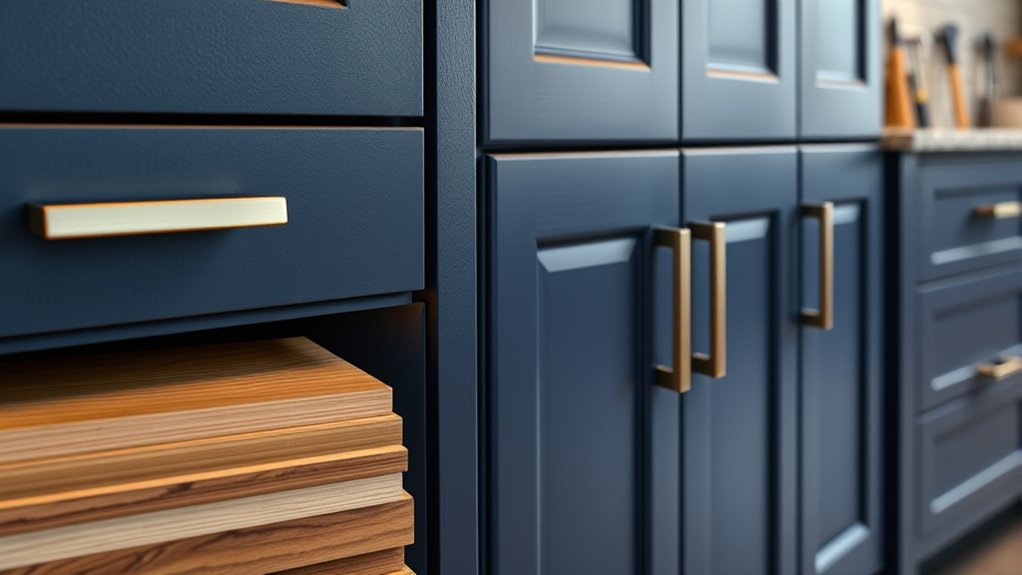
Several key factors directly impact the cost of kitchen cabinets, and understanding them can help you make informed decisions.
The size of your kitchen plays a big role. Larger spaces need more materials and labor, which can drive up the price.
The complexity of your cabinet design matters too. Custom features, intricate details, or unusual shapes tend to add to the cost.
The quality of craftsmanship influences the expense. Higher-quality finishes and durable construction usually cost more.
The type of cabinet hardware, like soft-close hinges or decorative pulls, can also increase your overall budget.
Finally, the level of customization you choose impacts costs. Ready-to-assemble options are generally more affordable, while fully custom cabinets tend to be more expensive.
Knowing these factors can help you plan your project within your budget.
How Material Choices Impact Your Cabinet Budget
Your choice of materials directly affects both your cabinet’s durability and cost, so it’s important to balance quality with your budget. High-end woods and finishes often come with a higher price tag, but they also add lasting beauty and strength.
Furthermore, your material selection influences the overall look of your kitchen, impacting how much you’re willing to spend for aesthetic appeal.
Material Durability and Cost
Choosing the right materials for your kitchen cabinets directly affects both their durability and your overall budget. Higher-quality woods like oak or maple tend to last longer and resist damage, but they cost more upfront.
Conversely, particleboard or MDF are budget-friendly options, but they may warp or chip over time, leading to replacement costs. Solid hardwoods offer excellent longevity but come with a higher price tag because of their density and workability.
Veneers and laminates are cheaper alternatives that can mimic the look of real wood, yet they might not withstand heavy daily use as well. Your choice impacts not just initial expenses but also future maintenance and replacement costs, so it’s important to balance durability needs with your budget constraints.
Aesthetic Appeal and Price
The materials you choose for your kitchen cabinets not only determine how durable they are but also greatly affect their look and price. High-end options like solid wood or custom finishes give a luxurious vibe but cost more.
Budget-friendly choices like MDF or laminate can still look good, though they might not have the same richness as natural wood. The grain, color, and texture of your material influence your kitchen’s overall style and feel.
If you want a modern, sleek look, go for smooth surfaces and uniform colors, which tend to be less expensive. On the other hand, detailed wood grains or exotic finishes usually cost more but add character and elegance.
Your material choices really shape the style of your cabinets and how much you’ll need to spend.
How Cabinet Size and Layout Affect Overall Expenses
The size of your cabinets directly influences the overall cost, with larger units needing more material and labor.
Plus, complex layouts that include custom features or unique shapes tend to drive costs up.
Understanding how these factors work together helps you set a realistic budget that aligns with your design goals.
Cabinet Dimensions Impact Cost
Cabinet dimensions are a key factor in determining overall costs because larger or more complex layouts need more materials and labor. Bigger cabinets require more wood, hardware, and finishing work, which can drive up expenses.
Unusual shapes or irregular designs might need custom cuts and specialized craftsmanship, adding to the price. To understand this better, check out the table below:
| Dimension Factor | Effect on Cost | Example |
|---|---|---|
| Height and Depth | Affects material use | Taller or deeper cabinets |
| Width of Cabinets | Changes material quantity | Wide base cabinets |
| Overall Size & Layout | Impacts labor and parts | Large pantry or island |
Fitting larger or uniquely shaped cabinets can significantly increase your project’s budget.
Layout Complexity Influences Price
When designing your kitchen storage, the layout complexity really impacts the overall cost. A simple, straight-line setup tends to be more budget-friendly compared to layouts with multiple corners or islands.
The more intricate the design, the more you’ll spend on labor and materials. For example, having more cabinets will naturally increase the total cost.
Features like islands or angled sections also add to the price. Plus, custom accessibility options for easier reach or special storage needs can raise expenses even further.
The Role of Customization and Design Complexity
Customization and design complexity play a big role in your kitchen cabinet costs. They often reflect your personal style and what you need functionally.
When you opt for custom finishes, intricate details, or unique layouts, you’ll see an increase in labor and material costs. More complex designs like ornate moldings or specialty cabinetry need extra craftsmanship and time.
Here’s a quick overview:
| Design Feature | Impact on Cost | Description |
|---|---|---|
| Custom Finishes | Higher | Unique colors or textures increase the price. |
| Intricate Details | Moderate to High | Carvings or decorative moldings add costs. |
| Unique Layouts | Higher | Non-standard shapes or configurations cost more. |
Your choices directly influence the overall cost, making customization a key factor.
Popular Upgrades and Features That Increase Costs
Upgrading your kitchen cabinets with popular features can really boost your project’s overall cost. These upgrades add both style and functionality but do come with higher prices.
Here are three common upgrades that tend to increase costs:
- Soft-close hinges and drawers: These make opening and closing quieter and smoother, but they’re more expensive than regular hardware.
- Built-in lighting: Adding LED lights inside or under cabinets improves visibility and looks great, which can add to your budget.
- Custom finishes and paint: Unique colors or special finishes like glazes or distressing require extra work and materials, raising the price.
Choosing these features can really enhance your kitchen’s look and usability, but be ready for the extra investment involved.
Choosing Hardware and Finishes to Balance Cost and Style
Selecting the right hardware and finishes lets you personalize your kitchen without overspending. Durable, stylish options can really boost your space without costing a fortune.
For example, brushed nickel or matte black hardware are trendy choices that are usually affordable. High-end finishes like brass or bronze tend to be more expensive but can add a touch of luxury.
| Finishes | Cost Range |
|---|---|
| Basic Chrome | Low |
| Brushed Nickel | Moderate |
| Matte Black | Moderate |
| Brass/Bronze | High |
| Hardware Styles | Cost Range |
| Standard Knobs | Low |
| Statement Handles | Moderate |
| Custom or Designer | High |
| Vintage or Antique | Moderate to High |
Choose wisely to find the perfect balance between style and your budget.
Tips for Getting Quality Cabinets at the Right Price
Getting quality cabinets without overspending requires a strategic approach. First, compare materials and brands to find options that balance durability with affordability.
Second, consider semi-custom cabinets—they offer customization at a lower price than fully custom options. Third, shop during sales or off-season periods to snag discounts.
Opt for semi-custom cabinets and shop during sales or off-season for the best savings.
Moreover, request quotes from multiple suppliers to guarantee competitive pricing. Don’t overlook local vendors; they often offer better deals and personalized service.
Prioritize essential features over luxury upgrades, and be open to slight design adjustments that reduce costs.
By researching thoroughly, timing your purchase right, and being flexible with choices, you can achieve a high-quality look without breaking your budget.
This approach guarantees you get the best value for your investment.
Frequently Asked Questions
How Do Regional Market Differences Impact Cabinet Pricing?
Regional market differences greatly impact cabinet pricing because local labor costs, material availability, and demand vary across areas. In some regions, higher living costs mean pricier labor, raising overall costs.
If materials are scarce locally, prices go up. Furthermore, regional preferences and competition influence prices. Areas with high demand or fewer options tend to see higher cabinet costs.
You’ll find these regional factors directly affect your budget.
What Are the Hidden Costs Beyond Initial Cabinet Purchase?
Imagine buying a shiny new cabinet, only to find hidden fees popping up later. Beyond the initial cost, you might have to pay for removal, disposal, and installation labor.
Unexpected repairs or upgrades can also add up quickly. Things like soft-close hinges or custom adjustments might seem minor but can increase your overall expenses.
These hidden costs often catch homeowners off guard, making the project more expensive than they first thought. Planning ahead for these extra expenses helps ensure your kitchen stays within budget.
How Does Installation Complexity Influence Overall Cabinet Expenses?
Installation complexity directly impacts your overall cabinet expenses because intricate designs, custom features, or tight spaces require more labor and time. If your kitchen has uneven walls or awkward corners, expect higher costs due to additional adjustments and specialized tools.
You might also need skilled professionals, which increases labor fees. Simplifying the layout or choosing standard cabinets can reduce installation challenges and save you money on total costs.
Can DIY Installation Reduce the Total Cabinet Project Cost?
Yes, DIY installation can lower your overall cabinet project costs. When you do it yourself, you save on labor fees, which can be a big part of the expense.
But make sure you have the right skills and tools to avoid costly mistakes or damage. Planning carefully and following instructions can help you get a good result without overspending.
Just don’t underestimate the effort involved. It’s important to be prepared before you start.
How Do Brand Reputation and Warranties Affect Cabinet Pricing?
Brand reputation and warranties are like guiding lights when you’re choosing cabinets. A well-known brand often comes with a higher price tag because people trust its quality.
A strong warranty gives you peace of mind, protecting your investment from future problems. You’ll pay more for these assurances, but they act as safety nets.
They help ensure your cabinets last longer and perform well over time. Overall, they add value and confidence to your purchase, which can influence the price you pay.
Conclusion
Understanding what drives kitchen cabinet costs helps you navigate your renovation journey like a skilled captain steering through choppy waters. By weighing material choices, size, design complexity, and upgrades, you’ll avoid hidden expenses and find the perfect balance between quality and budget.
Remember, your cabinets are the frame of your culinary masterpiece. Choose wisely to ensure your kitchen stands strong and beautiful, just like a ship built to weather any storm. When considering kitchen cabinet costs, focusing on these key factors will help you make smart, cost-effective decisions.