
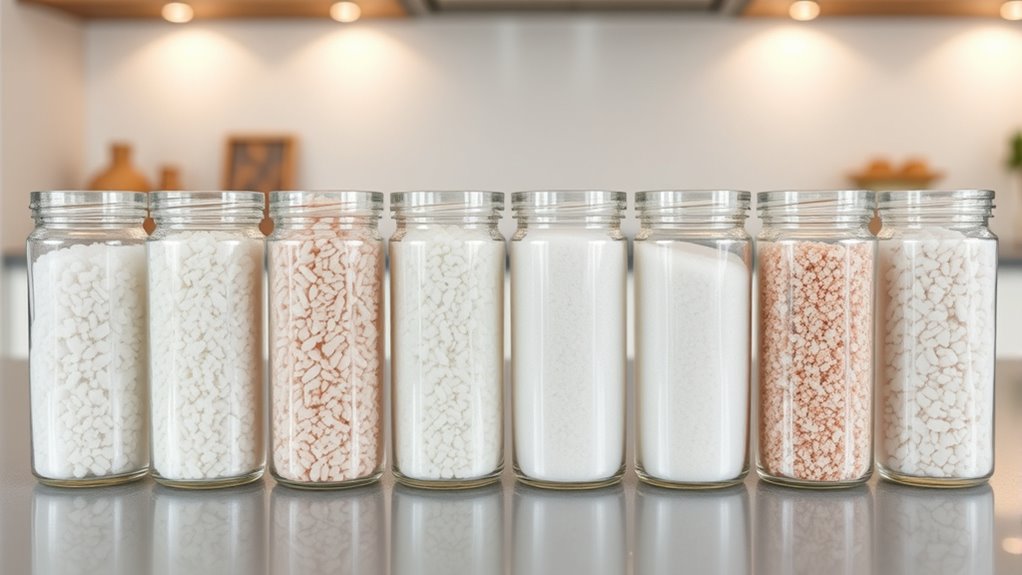
8 Best Salts for Water Softeners in 2026
Dealing with hard water can be frustrating—scaling on fixtures, dry skin, and soap scum are common headaches. Many people struggle to find the right salt for their water softener to keep their system efficient and their water silky smooth.
In 2026, the best salts for water softeners include eco-friendly options like solar, sea, and rock salts, which are cost-effective and sustainable.
For high performance, try pellets like Peladow or Diamond Crystal, especially for hard water.
Choose high-purity salts for better efficiency, and always store salt properly to avoid clumping.
Avoid low-quality or incompatible salts to protect your system.
Keep these tips in mind, and you’ll find everything needed for ideal softening and system longevity.
Key Takeaways
– Understand different water softener salt types like solar, evaporated, rock, and block salts to choose the best for your system.
It’s important to consider your water hardness, your system’s compatibility, your budget, and how much maintenance you’re willing to do.
Prioritizing eco-friendly and cost-effective salts like sea salt, solar salt, and bulk rock salt can help you stay sustainable and save money in the long run.
If you’re dealing with tough water conditions, high-performance salts such as Peladow, Diamond Crystal, or Morton System Saver are great options.
Make sure to store and handle your salt properly to prevent moisture and contamination.
This will help your water softener work at its best and last longer.
What Are the Main Types of Water Softener Salt in 2026?
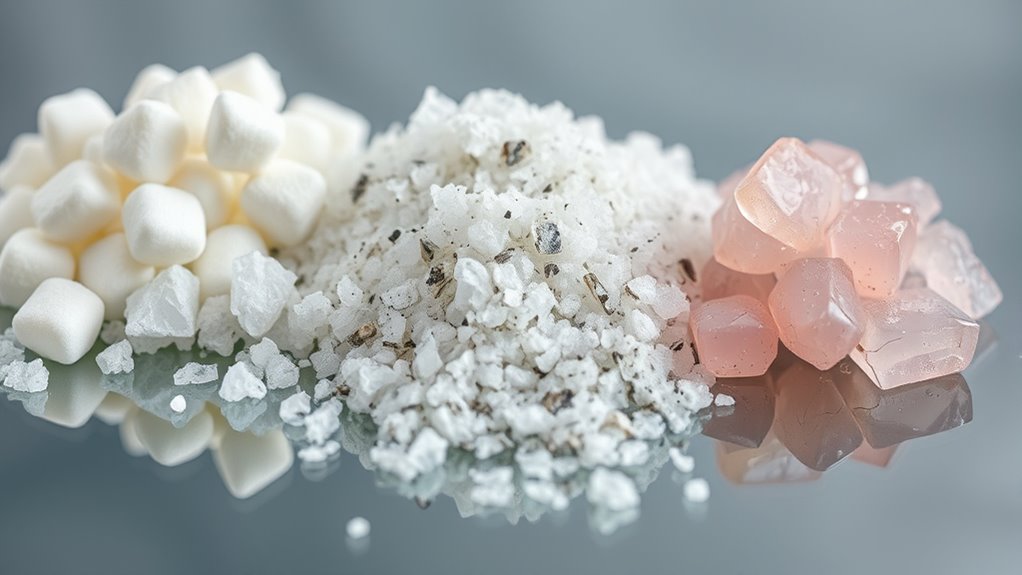
Are you wondering which types of water softener salt are best for your system in 2026? There are three main types: solar salt, evaporated salt, and rock salt.
Solar salt comes from evaporated seawater and is usually less pure. It’s often cheaper but can leave behind more impurities.
Evaporated salt is highly refined, with minimal impurities, making it more efficient and longer-lasting for your system.
Rock salt is mined directly from underground deposits and tends to be less pure. It requires more frequent refills and might cause buildup.
Each type has its pros and cons, depending on your water hardness, budget, and system needs.
Understanding these main types helps you make an informed choice for your water softener.
How to Pick the Best Salt for Your Water Softener
Choosing the right salt for your water softener depends on your specific needs and water conditions. To make the best choice, consider these factors:
Selecting the right water softener salt depends on your water quality and system needs.
1. Water hardness level
Harder water may require high-purity salts for better softening.
2. Type of softener
Check if your system works best with salt pellets, crystals, or blocks.
3. Budget
Some salts cost more but might last longer or work more efficiently.
4. Maintenance preferences
Certain salts help reduce buildup of impurities and can decrease how often you need to do maintenance.
Eco-Friendly Water Softener Salts for a Greener System
Choosing eco-friendly salts helps reduce your system’s environmental impact and supports sustainability. Biodegradable options break down naturally, which helps minimize pollution.
Sustainable production methods ensure fewer resources are used during manufacturing. By choosing these salts, you’re helping create a greener, more responsible water softening process.
Biodegradable Salt Options
As environmental concerns grow, choosing biodegradable salts for water softeners is a smart move for eco-conscious homeowners. These salts naturally break down, reducing chemical buildup and lessening environmental impact.
When selecting biodegradable options, consider these top choices:
- Sea Salt harvested from natural seawater, free from synthetic additives.
- Solar Salt produced through solar evaporation, making it eco-friendly and pure.
- Rock Salt, a natural mineral that needs minimal processing.
- Plant-Based Salts made from renewable plant sources, offering a biodegradable alternative.
Reducing Environmental Impact
To minimize your environmental footprint, choosing eco-friendly water softener salts is a smart move. These salts help reduce harmful runoff and lessen the impact on local ecosystems.
Look for options made from natural, unprocessed minerals that are free from additives or unnecessary chemicals. By picking environmentally conscious salts, you support sustainable practices and help protect water quality.
Consider these types:
| Salt Type | Environmental Benefit |
|---|---|
| Solar-Evaporated | Uses renewable solar energy with minimal processing |
| Natural Mineral | Requires less chemical processing and eco-friendly extraction |
| Organic Salts | Biodegradable and reduce chemical runoff |
Switching to these options helps create a greener water softening system, ensuring cleaner water and healthier surroundings for the future.
Sustainable Salt Production
Producing eco-friendly water softener salts involves sustainable practices that minimize environmental impact. Look for salts made through environmentally conscious methods to reduce pollution and resource waste.
To identify such options, consider these factors:
- Use of renewable energy sources during production
- Reduced or eliminated chemical additives in processing
- Implementation of water recycling and waste management systems
- Certification from eco-friendly organizations verifying sustainable practices
Choosing salts made with these principles helps lower your carbon footprint and supports greener manufacturing. Eco-friendly salts often come from suppliers committed to sustainable sourcing, which means fewer pollutants and better conservation of natural resources.
Cost-Effective Salt Options to Keep Your Water Soft
Finding affordable salt options for your water softener doesn’t mean you have to sacrifice quality. Look for bulk or economy-sized bags of salt, which usually offer better per-pound prices.
Basic rock salt is often the most cost-effective choice, especially if you have a larger softener. It’s less processed, so it’s cheaper but still effective for regular use.
Solar or evaporated salt pellets tend to be more affordable than specialty or high-purity salts. They’re great options for households on a budget.
Always check for sales or discounts at local stores or online retailers. While these options save money upfront, make sure they meet your softener’s requirements to avoid damage or inefficiency.
With a little careful picking, you can keep your water soft without overspending.
High-Performance Salts for Hard Water and Heavy Use
When your household uses a lot of water or has very hard water, investing in high-performance salts is a smart move. These salts are designed to handle tough conditions and keep your water softening system working well.
Look for products made for high-volume use and mineral-heavy water. Here are four top options to consider:
1. Peladow Pellets
Compact and quick-dissolving, perfect for heavy-duty applications.
2. Diamond Crystal Bright & Soft
Offers excellent cleaning and softening for demanding households.
3. Morton System Saver
Built for high-capacity needs, helps reduce buildup and scale.
4. Turbo Hard Water Salt
Optimized for very hard water, ensuring maximum softening performance.
Choosing these salts will help your system work efficiently, even in the toughest conditions.
How Salt Purity Affects Your Water Softener’s Efficiency
Using high-purity salt helps your resin last longer and keeps your softener running smoothly. When salt contains impurities, it can cause buildup that reduces efficiency and harms water quality.
Choosing purer salt guarantees your system works better and produces clearer, softer water.
Impact on Resin Longevity
The purity of the salt you use directly impacts the lifespan of your water softener’s resin. Impurities can cause buildup and clogging, which leads to resin degradation over time.
To get the most out of your resin, consider a few key factors:
- Use high-purity salts like evaporated or solar salt, which contain fewer impurities.
- Avoid block or rock salt that often has dirt, clay, or other contaminants.
- Regularly clean your resin tank to prevent residue buildup from lower-quality salts.
- Keep an eye on salt levels to ensure consistent regeneration cycles, reducing stress on the resin.
Choosing the right, pure salt helps keep your resin efficient, reduces the need for frequent replacements, and extends your water softener’s overall lifespan.
Water Quality Optimization
Pure salt is crucial for keeping your water softener working well because impurities can mess with the regeneration process. Using high-purity salt ensures the resin beads regenerate properly, helping prevent mineral buildup and scaling.
Impurities like dirt or insoluble minerals can clog your system, which shortens its lifespan and makes it less effective. To get the best water quality, always pick salts with the least amount of contaminants.
Here’s a quick comparison:
| Salt Type | Purity Level | Common Impurities |
|---|---|---|
| Solar Salt | Moderate | Dirt, insoluble minerals |
| Evaporated Salt | High | Very few or none |
| Block Salt | Varies | Often contains impurities |
Choosing the right salt helps keep your water cleaner and softer while also extending your system’s life.
Best Practices for Storing and Using Water Softener Salt
Proper storage and handling of water softener salt are essential to guarantee its effectiveness and longevity. To keep your salt in top condition, follow these best practices:
- Store salt in a dry, covered container to prevent moisture absorption.
- Keep it in a well-ventilated area away from direct sunlight.
- Avoid storing salt near chemicals or cleaning agents.
- Refill your softener as needed, but don’t overfill the hopper to prevent bridging or clogging.
Handling salt carefully helps prevent clumping and ensures smooth operation. Always use clean, dry hands or tools when adding salt to avoid contamination.
Handle salt with clean, dry hands or tools to prevent clumping and contamination.
Regularly check your storage area for moisture or pests. Proper storage and handling will extend the lifespan of your salt and keep your water softener running efficiently.
Common Mistakes to Avoid When Choosing Salt
Choosing the wrong type of salt can cause issues like clogging, less effective softening, and higher maintenance costs.
Avoid using regular rock salt if your softener recommends potassium or evaporated salt, as mismatched types can damage your system.
Don’t buy cheap, low-quality salts with impurities or too many anti-caking agents—they can build up and cause blockages.
Be cautious with solar or block salts unless your system specifically needs them, since they dissolve slowly and might leave residues.
Always check your water softener’s specs before buying salt. Using the wrong type can hurt performance and lead to expensive repairs.
Stick to the recommended types and brands to keep your system running smoothly and efficiently.
Frequently Asked Questions
How Often Should I Replace My Water Softener Salt?
You should replace your water softener salt when the salt level drops below the salt bridge or the brine tank is less than half full.
Usually, checking once a month is enough, but it really depends on how much water you use and how hard your water is.
If your water isn’t as soft as it used to be, it’s probably time to add more salt.
Regular maintenance keeps your softener working efficiently.
Can I Mix Different Types of Salts in My Water Softener?
Can you mix different types of salts in your water softener? Yes, but it’s like mixing apples and oranges. Your softener might not work at its best.
Different salts dissolve at different rates and have varying impurities. This can cause bridging or salt mushing, which affects performance.
To keep things running smoothly, stick to one type of salt recommended by your manufacturer. Consistency helps ensure your water stays soft and your softener lasts longer.
What Signs Indicate My Water Softener Needs More Salt?
You’ll notice your water softener needs more salt if the water feels hard or your soap doesn’t lather well. Other signs include reduced water pressure, a salty taste in your water, or the unit’s brine tank not fully filling.
If you see the salt level low or the system isn’t regenerating properly, it’s time to add more salt. Regular checks help keep your system running smoothly and your water soft.
Does Water Temperature Affect Salt Efficiency?
Yes, water temperature affects salt efficiency in your water softener. When water is too cold, the softening process slows down because the salt and resin don’t interact as effectively.
Conversely, warmer water speeds up the ion exchange process, making salt more effective. Ideally, keep your water temperature steady around 45-65°F (7-18°C) to ensure peak salt performance and extend your softener’s lifespan.
Are Certain Salts Better for Specific Water Hardness Levels?
You’ll find that certain salts work better with specific hardness levels. For example, sodium chloride is versatile and effective across most levels. But if your water’s really hard, potassium chloride might be a better choice to prevent scaling.
Many users notice that switching salts based on their water’s hardness improves efficiency and helps their softener last longer. So, matching the salt to your water hardness can make a noticeable difference.
Conclusion
So, after all this fuss about choosing the perfect salt, you’d think it’s a matter of life and death, right? Ironically, the “best” often comes down to what’s easiest and cheapest. Yet here you are, weighing purity, eco-friendliness, and performance.
Just remember, even the finest salt can’t soften hard water if you ignore proper storage or keep making the same mistakes. Sometimes, simple solutions are the hardest to get right!
When it comes to water softeners, selecting the right salt is key. The best salts for 2026 are all about balancing quality and value.