What Is the Ideal Temperature for a Fridge Freezer for Food Safety?
Many people struggle with keeping their food fresh and safe in the fridge and freezer. It’s a common challenge to find that perfect temperature that prevents spoilage while keeping everything crisp and delicious. Don’t worry—you’re not alone in this!
The ideal temperature for your fridge is between 35°F and 38°F (1.7°C to 3.3°C), with 37°F (3°C) being perfect for keeping food fresh and safe.
Your freezer should be set at or below 0°F (-18°C), ideally between -18°C and -20°C, to prevent spoilage and bacterial growth. Maintaining these temperatures helps preserve your food’s quality and safety.
Keep going to learn more about how to keep your appliances running efficiently.
Key Takeaways
– The ideal fridge temperature for food safety is between 35°F and 38°F (1.7°C to 3.3°C).
Keeping your fridge within this range helps prevent bacteria from growing on your food.
The best freezer setting is at or below 0°F (-18°C), with an optimal range of -18°C to -20°C.
Regularly check the temperatures with a reliable thermometer placed in the center of the units.
This way, you can make sure everything stays at the right temperature to keep your food safe.
Maintaining proper temperatures is key to preventing spoilage and bacterial growth on perishable foods.
Try to avoid temperature fluctuations by minimizing how often you open the doors.
And don’t forget to perform routine maintenance on your fridge and freezer to keep them running smoothly.
Why Correct Fridge and Freezer Temperatures Are Key to Food Safety
Maintaining the correct temperatures in your fridge and freezer is crucial for preventing foodborne illnesses. When your fridge is too warm, bacteria can grow rapidly on perishable foods like dairy, meat, and leftovers, increasing the risk of illness.
Likewise, if your freezer isn’t cold enough, it won’t effectively halt bacterial growth or preserve food quality, leading to spoilage. Proper temperatures slow down bacteria and mold, keeping your food fresh and safe to eat.
It also helps prevent freezer burn and maintains the texture and flavor of frozen items. By keeping your fridge and freezer at the right temperatures, you minimize health risks, extend the shelf life of your food, and guarantee every meal you prepare is safe and delicious.
What Is the Ideal Temperature Range for Your Fridge?
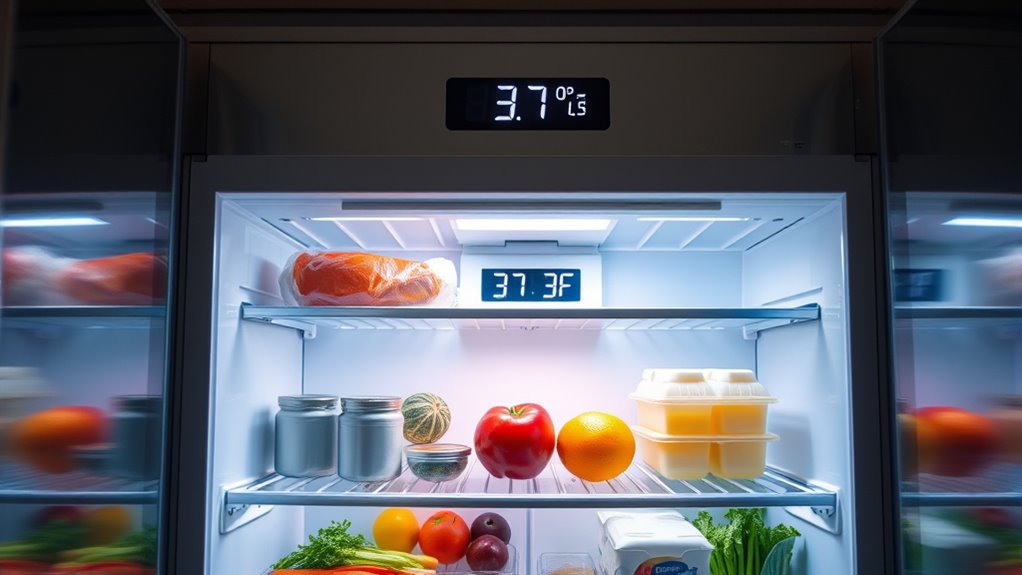
Knowing the right temperature range for your fridge helps you keep food safe and fresh. The ideal temperature is between 35°F and 38°F (1.7°C and 3.3°C). Staying within this range slows bacteria growth, which helps prevent spoilage.
Use a thermometer to check your fridge regularly. To make it easier, here’s a quick guide:
| Temperature Range | Food Safety Impact | Recommended Setting |
|---|---|---|
| 33°F – 35°F | Slows bacteria | Slightly colder |
| 36°F – 38°F | Ideal balance | Best for most foods |
| 39°F – 40°F | Risk of spoilage | Slightly warmer |
Keeping your fridge in this range ensures your food stays fresh longer and cuts down on waste. Regular checks will help you maintain the perfect temperature.
What Is the Best Temperature for Freezing Food?
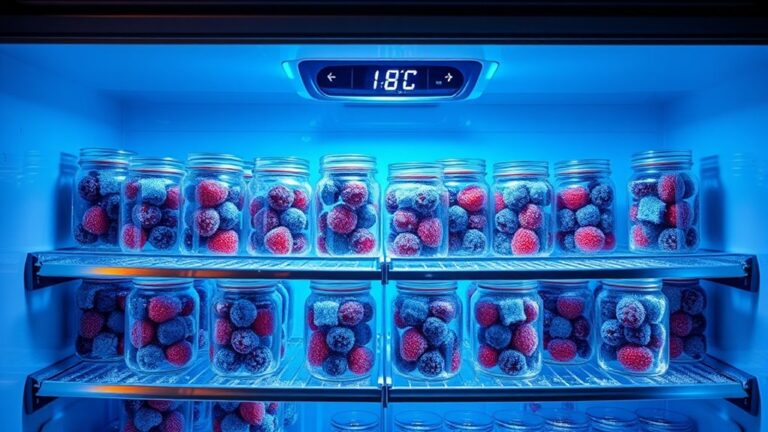
Setting your freezer to the right temperature is key to keeping food safe and fresh. The ideal range is at or below 0°F (-18°C), which helps prevent spoilage and bacteria growth.
Keeping it steady ensures your food stays preserved and safe to eat later. Just make sure your freezer stays at that consistent temperature for the best results.
Optimal Freezing Temperature Range
The ideal freezing temperature for food safety is usually around -18°C (0°F). This temperature makes bacteria, yeasts, and molds inactive, helping prevent spoilage and foodborne illnesses.
The best range to keep your freezer at is between -18°C and -20°C. Staying within this range helps maintain food quality and extends how long it stays good.
Temperatures above this range risk partial thawing, which can lead to bacterial growth and freezer burn. On the other hand, colder than -20°C doesn’t offer many extra benefits and might waste energy.
Set your freezer within this optimal range for the best balance of safety and food quality. Make sure to regularly check the temperature with a reliable thermometer to keep it in the right zone.
Proper freezing temperatures are key to storing food safely and keeping its nutritional value intact.
Preventing Food Spoilage
Maintaining the right freezing temperature is key to preventing food spoilage and keeping your stored items safe and fresh longer. When your freezer stays at 0°F (-18°C), it slows down bacterial growth and enzyme activity that cause spoilage.
Proper freezing stops mold, yeast, and bacteria from developing, which can lead to off-odors and slimy textures. If the temperature rises even slightly above freezing, these microorganisms can become active again, risking spoilage.
Consistent freezing at the right temperature helps preserve food quality, flavor, and nutritional value. Make sure your freezer thermometer is accurate and check it regularly.
Avoid frequent temperature fluctuations by not overloading your freezer. Overloading can block airflow and cause uneven temperatures, which can compromise food safety. Proper freezing practices keep your food safe and extend its shelf life.
Ensuring Food Safety
To keep your frozen food safe and fresh, set your freezer temperature to 0°F (-18°C). This temp stops bacteria from growing and helps prevent foodborne illnesses.
Make sure your fridge stays at this temperature all the time, especially during power outages or when you open the door often. Use a reliable thermometer to check the temperature regularly and make adjustments if needed.
Proper freezing keeps your food’s nutrients, texture, and flavor intact. Avoid packing your freezer too full, as it can block airflow and cause temperature swings.
Label and date your frozen items so you know how long they’ve been stored. This helps prevent freezer burn and spoilage. By keeping the temperature right, you’re protecting your health and enjoying safe, fresh food whenever you need it.
How to Accurately Check Your Refrigerator and Freezer Temperatures
To make sure your fridge and freezer stay at safe temperatures, you need reliable thermometers. Check the temperatures regularly and adjust your settings if they’re off.
Using the right tools and keeping an eye on the readings helps keep your food fresh and safe. Consistent monitoring is key to preventing spoilage and foodborne illnesses.
Use Proper Thermometers
Using proper thermometers is key to accurately checking your refrigerator and freezer temperatures. Digital or analog thermometers made for food storage give reliable readings.
Place the thermometer in a central spot, away from the door or walls. This ensures you get the most accurate measurement. Regularly check and record the temperatures to keep them within safe ranges.
Here’s a quick guide:
| Thermometer Type | Ideal Placement |
|---|---|
| Digital | Middle of fridge, away from the door |
| Analog | Near the center, at eye level |
| Dial | Deep inside, not near the door |
| Wireless | Anywhere, with app monitoring |
| Infrared | Surface areas, not internal parts |
Using the right thermometer and placing it properly helps you maintain food safety effortlessly.
Regular Temperature Checks
Regularly checking your refrigerator and freezer temperatures is key to keeping your food safe.
You should verify temperatures at least once a month using a reliable thermometer placed in the center of both compartments. Make sure the thermometer isn’t touching the walls or shelves, as that can give you wrong readings.
Keep a record of your temperature readings to see if they stay consistent over time. If you notice the temperature is off, don’t guess—use a thermometer to confirm.
Always check both the fridge and freezer separately because they might need different settings.
Regular monitoring helps you catch problems early, preventing spoilage and foodborne illnesses.
Simple temperature checks are an easy way to make sure your appliances are working right and your food stays safe.
Adjust Settings Accordingly
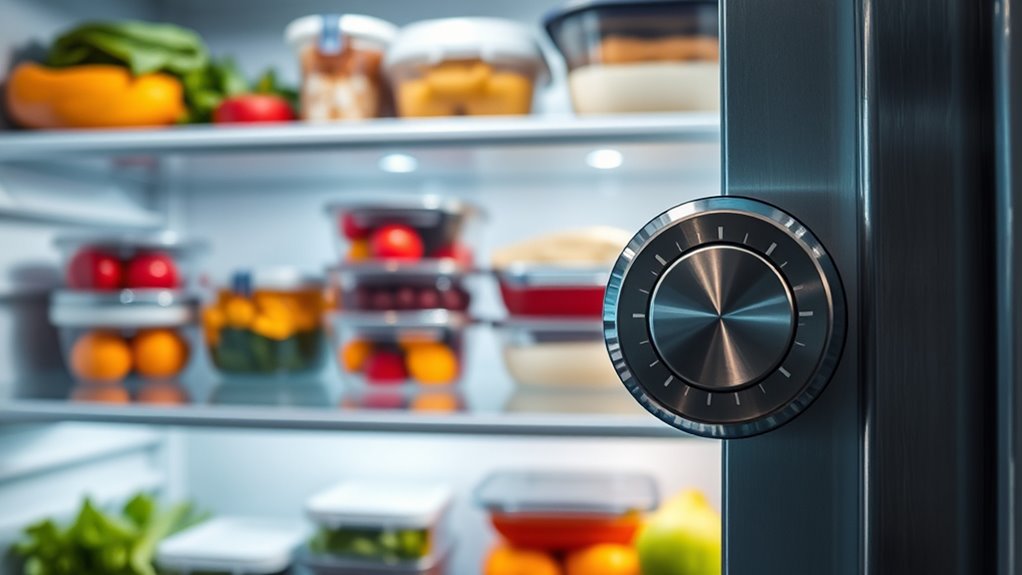
Once you’ve checked your refrigerator and freezer temperatures, it’s important to adjust the settings to keep them at safe levels. Most refrigerators have a temperature control dial or digital display. Turn the dial or input the correct temperature—around 37°F (3°C) for the fridge and 0°F (-18°C) for the freezer.
If your unit has multiple settings, start at the recommended temperature and wait a few hours before rechecking. Avoid setting the temperature too low, as it wastes energy and can cause food to freeze prematurely. Likewise, don’t set it too high, which risks spoilage.
Make small adjustments and monitor the temperatures regularly to guarantee they stay at safe, consistent levels. Properly setting your fridge and freezer helps maintain food safety and extend their lifespan.
Signs Your Fridge or Freezer Is Too Cold or Warming Up
Ever wonder if your fridge or freezer is maintaining the right temperature? You might notice your fridge feels unusually cold, with frost buildup or frozen produce, which means it could be too cold.
On the other hand, if your food spoils quickly or you see warm spots, the appliance might be warming up or not cooling evenly.
In the freezer, excessive ice crystals or a layer of frost can suggest it’s too cold. Soft or thawed items, however, point to warming.
Unusual noises or frequent cycling can also be signs of temperature issues.
Keep an eye on these signs because they can impact food safety.
Addressing temperature irregularities quickly helps prevent spoilage and keeps your food fresh.
Regularly checking for these signs ensures your appliance stays at the right temperature.
Tips for Setting Your Fridge to the Right Temperature
Wondering how to set your fridge to the right temperature? First, find the temperature control dial or digital display inside your fridge. Set the temperature between 37°F and 40°F (3°C to 4°C) for safe food storage.
Use a fridge thermometer to check the actual temperature because built-in controls can sometimes be off. Adjust the dial gradually and give your fridge a few hours to stabilize after each change.
Keep the fridge full but not overcrowded so air can circulate properly. Store raw meat on the bottom shelf to prevent drips and spills.
Try to avoid opening the door too often, as that causes temperature fluctuations. Regularly check the temperature with a thermometer to ensure your settings are accurate and your food stays safe.
How to Set Your Freezer to Prevent Food Spoilage
Setting your freezer to the right temperature is key to preventing food spoilage and keeping everything fresh. To do this effectively, follow these simple steps:
- Set the thermostat to -18°C (0°F). This is the best temperature to stop bacteria from growing and keep your food safe.
- Use a freezer thermometer. Check the temperature regularly to make sure it stays consistent, since the built-in dial can be off.
- Avoid overloading. Leave enough space around items so air can circulate properly, helping maintain a stable temperature and preventing spoilage.
Why Temperature Fluctuations Can Jeopardize Food Safety
Temperature fluctuations can quickly compromise the safety of your food because bacteria can grow rapidly when the temperature rises above the ideal 0°F (-18°C).
When your fridge or freezer experiences inconsistent temperatures, it creates an environment where bacteria can thrive, even if only temporarily.
These fluctuations can happen from frequent door openings, power outages, or faulty thermostats.
If the temperature spikes, your food may partially thaw and refreeze, damaging its texture and increasing spoilage risk.
Over time, this inconsistency can lead to the growth of harmful pathogens that cause foodborne illnesses.
Keeping your appliance at a stable temperature is essential to prevent bacteria from multiplying and to maintain food quality and safety.
Consistent temperatures are key to protecting your food from spoilage and health risks.
How Thermometers Help Keep Your Food Safe and Fresh
Thermometers make it easy to keep your food safe by providing accurate temperature readings. They help you spot temperature fluctuations before food spoilage happens.
With a reliable thermometer, you can ensure your fridge and freezer stay at the right temperatures to keep your food fresh. This way, you can prevent waste and enjoy your meals with confidence.
Accurate Temperature Monitoring
To keep your food safe and fresh, accurate temperature monitoring is key. Using a reliable thermometer lets you quickly see if your fridge or freezer is at the right temperature.
Check your thermometer regularly, at least once a week, to catch any temperature issues early. Place thermometers in the warmest part of your fridge and the coldest spot in your freezer for the most accurate readings.
Make sure to record the temperatures so you can track consistency and spot patterns or problems before they get worse.
Detecting Temperature Fluctuations
Regularly checking your fridge and freezer temperatures helps you catch fluctuations early before they compromise food safety. If you notice the temperature rising above recommended levels, it could be a sign of a problem with the thermostat, a door left open, or a power issue.
Using a reliable thermometer, you can quickly spot these changes and take action, like adjusting settings or inspecting door seals. Digital or analog thermometers placed in the coldest part of your fridge or freezer give continuous readings, alerting you to sudden spikes or drops.
Prompt detection allows you to prevent spoilage and bacterial growth. Keeping an eye on temperatures with accurate thermometers gives you peace of mind that your food stays safe, fresh, and within proper ranges.
Ensuring Food Preservation
Using accurate thermometers is key to keeping your fridge and freezer at the right temperature, which directly impacts how fresh and safe your food stays. Regularly checking these temps helps prevent spoilage and lowers the risk of foodborne illnesses.
To keep everything in check, focus on a few simple steps. First, place thermometers in the center of your fridge and freezer for the most accurate readings. Then, check the temperatures at least once a week to catch any changes early.
If you notice the temps are off, adjust your fridge settings accordingly. Keep your fridge at or below 40°F (4°C) and your freezer at or below 0°F (-18°C). Regular monitoring helps preserve food quality and safety, saving you money and reducing waste.
Troubleshooting Common Temperature Problems in Your Fridge-Freezer
When your fridge or freezer isn’t maintaining the right temperature, it can cause food to spoil and pose health risks. First, check the door seals—damaged or dirty seals can lead to temperature fluctuations.
Next, verify the thermostat is set correctly. The fridge should be around 37°F (3°C), and the freezer at 0°F (-18°C). If the temperatures are off, adjust the thermostat and monitor for 24 hours.
Cleaning the condenser coils regularly can improve efficiency. Make sure there’s enough space around vents for proper airflow. Overloading the fridge or freezer can restrict air circulation, so avoid packing it too tightly.
If these steps don’t fix the issue, you might need to inspect the compressor or defrost the unit, as built-up ice can reduce performance.
How Often Should You Check Your Refrigerator and Freezer Temperatures?
How often should you check your refrigerator and freezer temperatures? It’s best to do so at least once a month to make sure your appliances stay within safe ranges.
Regular checks help catch temperature issues early and prevent food spoilage. To stay on top of it, consider these steps:
- Use a reliable thermometer to check the fridge and freezer temperatures.
- Record the readings to track any fluctuations over time.
- Adjust the thermostat if temperatures fall outside the recommended range of 37-40°F for the fridge and 0°F for the freezer.
Frequent monitoring keeps your food safe and extends its shelf life. Remember, consistent checks are essential for avoiding potential health risks and costly food waste.
When to Call a Professional for Temperature Control Help
If you notice persistent temperature fluctuations despite regular checks and adjustments, it might be time to seek professional help.
Frequent or severe changes in temperature could point to a faulty thermostat, defrost system, or compressor issue. If your thermometer shows inconsistent readings or your appliance struggles to maintain the right temperature, don’t ignore the signs.
Also, if your freezer or fridge makes unusual noises or runs constantly, it’s a good idea to get expert advice. Trying to repair complex parts without proper knowledge can make things worse or cause damage.
Contact a professional technician promptly to diagnose and fix the problem. Addressing these issues early helps keep your food safe and your appliance running efficiently.
Frequently Asked Questions
How Does Ambient Room Temperature Affect Fridge and Freezer Settings?
Ambient room temperature affects your fridge and freezer settings because higher temperatures make it harder to keep things cool. Cooler rooms, on the other hand, mean you might need to adjust your settings to prevent overfreezing.
If your room gets really warm, try lowering the fridge temperature slightly to keep your food safe. When it’s cooler outside, you may want to raise the temperature a bit to avoid freezing your food.
Regularly check your appliance’s thermometer to make sure you’re maintaining the right, safe storage conditions. This way, your food stays fresh and safe no matter the temperature outside.
Can Frequent Door Opening Impact Temperature Stability?
Think of your fridge door as a gateway to freshness; frequent opening stirs up the temperature like wind through a window. Yes, it can impact temperature stability, causing fluctuations that could jeopardize food safety.
When you open the door often, cold air escapes and warm air enters, making the compressor work harder. To keep your food safe, try to minimize door openings and keep the temperature steady.
Are There Specific Foods That Require Different Freezer Temperatures?
Yes, some foods need different freezer temperatures to stay safe and keep their quality. For example, seafood and ice cream do best at -20°C to prevent spoilage.
Meats like beef and poultry can be stored at around -18°C. Vegetables and fruits should be frozen at similar temperatures to keep their texture and nutrients intact.
You should adjust your freezer settings based on what you’re freezing to ensure everything stays preserved properly.
How Long Can Food Be Stored Safely at the Ideal Temperature?
You can store food safely for different lengths depending on the item. Generally, at the ideal freezer temperature of 0°F (-18°C), most foods stay safe for 3 to 6 months.
Meat and poultry can last up to a year, while fruits and vegetables can be stored for 8 to 12 months. Always label and date your items, and check for signs of spoilage before eating.
What Are the Consequences of Consistently Incorrect Fridge Temperatures?
Constantly incorrect fridge temperatures can have serious consequences. Did you know that foodborne illnesses affect 48 million Americans every year?
When your fridge is too warm, bacteria like Salmonella can thrive, putting your health at risk. If it’s too cold, your food can spoil faster than it should.
This can lead to wasting money or even getting sick. Always keep your fridge at the right temperature to avoid food spoilage and protect your health.
Conclusion
So, next time you proudly display that perfectly chilled beverage or frozen treat, remember—your fridge and freezer are silently working behind the scenes.
Keep them at the right temperatures, and they’ll keep your food fresh and safe. Ironically, a little effort with thermometers and regular checks can prevent a soggy mess or a foodborne illness.
After all, isn’t it funny how a tiny thermometer can save your dinner plans from turning into a health hazard?
The ideal temperature for a fridge is at or below 40°F (4°C), while the freezer should be set at 0°F (-18°C).
Maintaining these temperatures ensures your food stays fresh and safe to eat.