10 Key Differences: Induction Vs Glass Cooktops
Are you tired of struggling with your current stovetop, unsure if you’re getting the best performance or safety? You’re not alone—many people find choosing the right cooktop confusing with so many options out there.
If you’re considering upgrading, understanding the differences can help you make the best choice for your cooking style and budget.
Induction cooktops heat cookware directly through electromagnetic fields, offering faster, more precise control and higher energy efficiency, while glass cooktops use electric heating elements beneath the surface.
Induction surfaces stay cooler and are safer to use, but they require special magnetic cookware.
Glass models are easier to clean and compatible with most pots, yet they remain hot longer.
To identify which option suits your cooking style and budget best, investigate these key differences further.
Key Takeaways
– Induction cooktops heat cookware using electromagnetic fields, which means they can heat up faster and give you more precise control over the temperature.
Glass cooktops, on the other hand, heat through electric elements, which can take a bit longer to warm up and cool down.
Induction is highly energy-efficient, with about 80-90% of the energy used going directly to cooking. It also cools down quickly once you turn it off.
Glass cooktops are less efficient and tend to stay hot longer, which can be a safety concern.
When it comes to safety, induction surfaces stay cooler, reducing burn risks. Plus, they have minimal heat transfer to the surrounding area.
Glass cooktops can remain hot for a while, so they pose a higher burn hazard if you’re not careful.
Induction cooktops require magnetic cookware, which is often more expensive.
In contrast, glass cooktops are compatible with most types of cookware, making them more versatile.
Design-wise, induction cooktops usually have a sleek, modern look with touch controls.
Glass cooktops tend to have a glossy, traditional appearance that can fit well with various kitchen styles.
How Do Induction and Glass Cooktops Work?
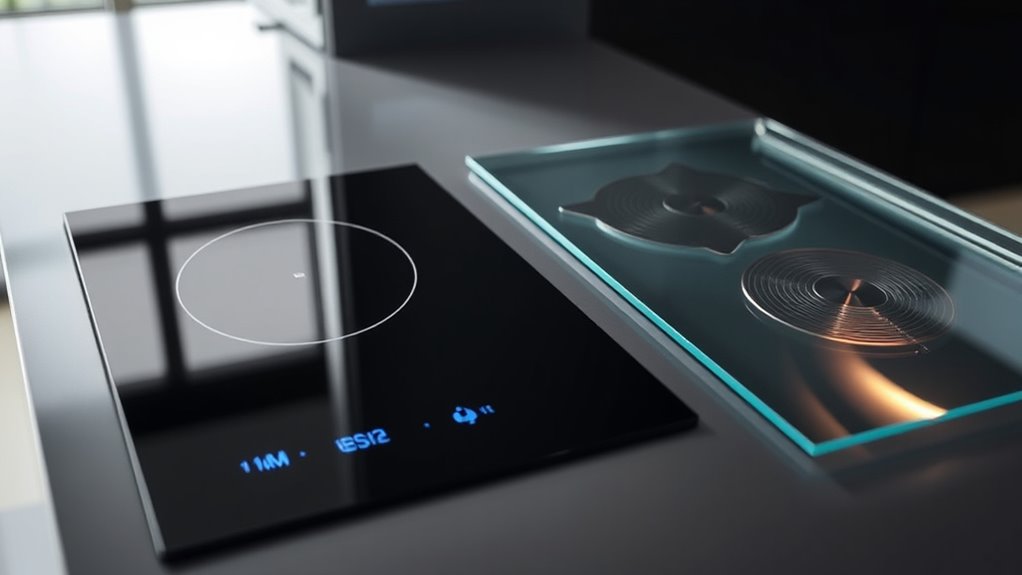
While both induction and glass cooktops have smooth, flat surfaces, they work quite differently. A glass cooktop uses electric heating elements beneath the glass surface. When you turn it on, these elements heat up and transfer warmth through conduction, warming your cookware and the surface.
Induction cooktops, however, use electromagnetic fields created by coils beneath the surface. When you place compatible cookware on it, these fields generate electric currents directly in the metal, instantly heating the pot or pan. This heats your cookware faster and more precisely, with less heat loss.
The surface of induction cooktops stays relatively cool, which makes them safer and easier to clean. So, induction cooktops rely on electromagnetic energy, while glass cooktops depend on traditional electric heating.
Which Is More Efficient for Everyday Cooking: Induction or Glass?
When choosing between induction and glass cooktops for everyday use, you’ll notice differences in how quickly they transfer heat and how precisely you can control the temperature.
Induction cooktops heat up faster and offer more accurate adjustments, making cooking more efficient.
Glass models tend to consume more energy and respond slower, which can make cooking feel less responsive.
Thinking about these points can help you decide which option is better suited for your daily cooking needs.
Energy Transfer Speed
Induction cooktops heat cookware directly through electromagnetic fields, which allows for rapid energy transfer. This means your food heats up quickly and responds instantly to temperature adjustments, making cooking more efficient.
In contrast, glass (ceramic) cooktops transfer heat through the glass surface, leading to slower heat delivery and longer recovery times. The direct transfer in induction minimizes heat loss, making it more energy-efficient for everyday use.
Faster heating and cooling times, precise control of temperature changes, less heat wastage, reduced cooking time, and better energy conservation are all benefits of induction.
Because of these advantages, induction cooktops typically deliver heat faster, saving you time and energy during your daily cooking routines.
Heat Control Precision
Of the two, induction cooktops offer the most precise control over temperature changes, making them highly efficient for everyday cooking. With induction, you can adjust heat instantly, allowing for delicate simmering or rapid boiling without delay.
This precision helps prevent overcooking or burning, especially when preparing complex dishes. Unlike glass cooktops, which rely on radiant heat and can be less responsive, induction heats directly within the cookware, giving you better control.
You’ll notice small adjustments in temperature are reflected immediately, giving you confidence in managing your cooking process. This level of control makes induction cooktops ideal for tasks that require exact heat, like melting chocolate or simmering sauces.
Power Consumption Levels
While induction cooktops excel in precise temperature control, they’re also very energy-efficient for everyday use. They convert most of the energy directly into heat, which reduces wasted power and can lower your energy bills.
Glass cooktops tend to lose more heat, making them less efficient overall. Factors that affect power consumption include the heat transfer method, with induction heating cookware directly and glass relying on radiant heat.
Induction systems usually reach 80-90% efficiency, which is quite high. Cooking times also matter — shorter cooking with induction saves more energy.
Using properly fitted cookware improves efficiency, and higher power settings will use more energy. Luckily, induction responds quickly, giving you better control over power use.
Are Induction or Glass Cooktops Safer? Key Safety Features Compared
You might wonder which cooktop is safer, especially when it comes to surface temperature risks and safety features.
Induction cooktops heat only the cookware, which helps reduce burn hazards. In contrast, glass models can become very hot to the touch.
Safety lock features are available on both types to help prevent accidents.
Understanding how they differ can really help you pick the safest option for your home.
Surface Temperature Risks
Surface temperature risks are an important factor when choosing between induction and glass cooktops because they directly affect safety in your kitchen. Glass cooktops can get extremely hot, which means there’s a burn hazard even after you’re done cooking.
Induction cooktops, on the other hand, generate heat directly in the cookware, so their surfaces stay cooler and reduce burn risks. Still, both types have safety features that help minimize these risks.
Glass surfaces can stay hot for several minutes after turning off, making accidental burns possible. Induction surfaces tend to stay relatively cool during use, which is safer in that regard.
Hot spots may develop on glass cooktops, increasing the chances of burns if you touch them. Induction cooktops cool down quickly once you turn the power off, adding an extra layer of safety.
Spills on glass surfaces can cause sudden temperature changes, which might lead to cracks or damage. Conversely, induction cooktops are less affected by spills because they don’t heat the surface directly.
Safety Lock Features
Safety lock features are essential for preventing accidental activation or changes to your cooktop settings, adding an important layer of security in your kitchen. With these features, you can lock the controls to prevent children or unintended users from turning on the cooktop or changing settings.
Induction cooktops often include child lock functions that deactivate the touch controls when engaged, keeping things safe during busy times. Glass cooktops might have similar locking options, but these can vary depending on the model.
Activating the lock is usually simple—just press and hold a specific button. This feature gives you peace of mind, especially in households with kids or pets.
How Easy Are Induction and Glass Cooktops to Clean and Maintain?
Both induction and glass cooktops are generally easy to clean, but their maintenance routines are a bit different. Induction cooktops have smooth surfaces that resist spills, making wiping quick and simple.
Glass cooktops also have flat surfaces, but they can be more prone to smudges and scratches. To keep them in top shape, use non-abrasive cleaners to avoid scratching.
Wipe spills immediately to prevent staining, and avoid dragging heavy cookware across the surface. Regularly check for any debris or burnt-on residue and remove it promptly.
For a streak-free shine, use a specialized glass cooktop cleaner. With a little regular care, both types of cooktops can stay looking great and work efficiently.
What Is the Cost of Induction vs. Glass Cooktops? Price and Long-Term Value
When comparing induction and glass cooktops, you’ll see that initial costs are different, with induction models usually costing more upfront.
But because induction cooktops are more durable and require less maintenance, they can be more cost-effective in the long run.
Thinking about how long they last and what ongoing expenses are involved can help you decide which option gives you the best value over time.
Initial Purchase Expense
The initial cost of induction cooktops is usually higher than glass models because of their advanced technology. They have more sophisticated electromagnetic parts and precise controls, which drive up the price.
However, your investment might pay off through energy savings and quicker cooking times. Keep in mind that induction units tend to start at a higher price point, while glass cooktops are generally more affordable upfront.
You may also need to consider additional costs like installation, especially for induction models. The brand and quality can greatly influence the price too.
In the long run, the savings on energy and performance could offset the higher initial expense. While induction cooktops cost more at first, they might be worth it if you want fast, precise cooking.
Think about your budget and how often you’ll use the stove when making your decision.
Longevity and Maintenance
Durability is key when comparing the long-term value of induction versus glass cooktops. Induction models tend to last longer because they have fewer parts that wear out, and their smooth surfaces are resistant to scratches and stains.
Glass cooktops, especially those with ceramic surfaces, can chip or crack more easily, which means they might need repairs or replacements over time. Maintenance for induction cooktops is simple; a damp cloth usually does the trick, and they handle spills well.
Glass cooktops require more careful cleaning to prevent scratches and stains, which can impact performance. While induction cooktops might cost more upfront, their longer lifespan and lower maintenance often make them more cost-effective over time.
With proper care, both types can perform efficiently for many years.
Do Cookware Compatibility Differences Matter for Induction and Glass?
Do cookware compatibility differences really matter when choosing between induction and glass cooktops? Absolutely. Induction cooktops need cookware with a magnetic base to work properly, so your pots and pans must be ferrous.
Glass cooktops are more flexible—they work with most cookware types, including aluminum and copper, since they don’t rely on magnetic properties. This difference can influence your buying decisions.
Magnetic material like steel or cast iron is essential for induction. Non-magnetic cookware works just fine with glass cooktops.
Induction cookware often costs more. Using incompatible cookware on induction won’t heat it, which can be frustrating.
Compatibility also affects cooking speed and efficiency. Knowing these differences helps you pick the right cookware for your chosen cooktop type.
Which Cooktop Offers Better Temperature Control?
Ever wonder which cooktop gives you more precise control over your cooking temperatures? With induction cooktops, you get instant adjustments. When you turn the knob or press buttons, the heat responds immediately, giving you accurate control.
This means your food heats evenly, and you can quickly lower or raise the temperature without delay. Glass cooktops, on the other hand, rely on traditional heating elements. They take longer to heat up and cool down, making precise control more challenging.
You might notice fluctuations or lag when trying to fine-tune your heat. If precise temperature control is your priority, induction offers a clear advantage. It allows you to manage heat levels with exceptional accuracy, giving you more confidence in your cooking results.
Which Is More Eco-Friendly: Induction or Glass Cooktops? Energy Use Explained
In terms of eco-friendliness, energy efficiency is a big factor when choosing between induction and glass cooktops. Induction cooktops are usually more eco-friendly because they turn more energy directly into heat, which means less waste.
Induction cooktops are more eco-friendly due to higher energy efficiency and less heat waste.
They heat up faster and use less power overall, helping to lower your carbon footprint. Glass cooktops, on the other hand, can lose more heat during cooking, making them less efficient.
To get the most energy savings, keep these points in mind:
- Induction heats only the cookware, which minimizes heat loss.
- Glass cooktops radiate residual heat even after you finish cooking.
- Induction needs compatible cookware, so it reduces unnecessary energy use.
- Faster cooking times mean less energy consumed.
- Proper maintenance helps keep both types running at their best.
Choosing induction can really boost your kitchen’s environmental friendliness.
How Do Design and Aesthetic Features Differ in Modern Kitchens?
Have you noticed how modern kitchens blend sleek design with functional aesthetics? The choice between induction and glass cooktops really impacts this look.
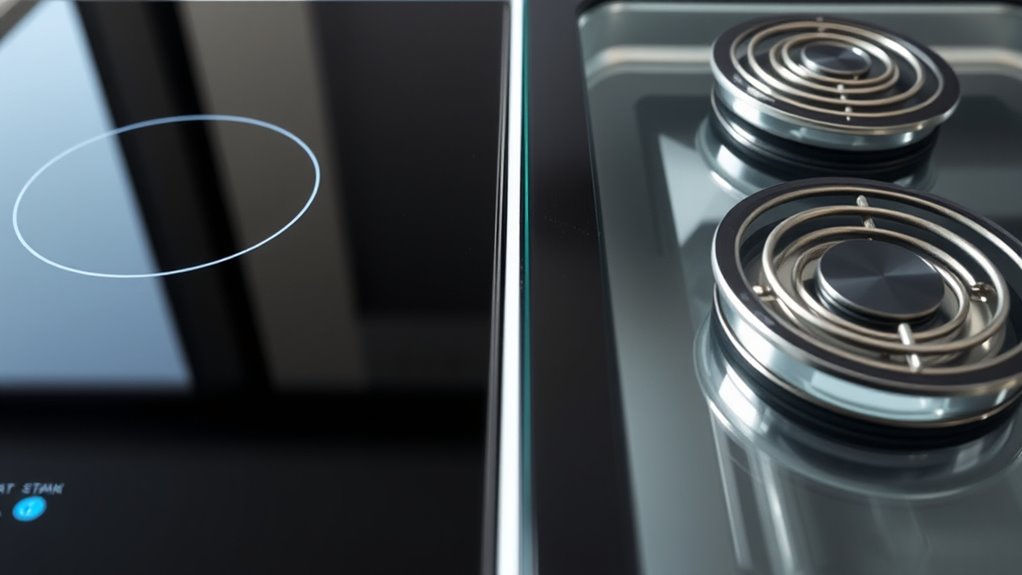
Induction cooktops usually have smooth, flat surfaces with touch controls, giving a futuristic, minimalist vibe. They blend seamlessly into countertops, creating a clean, uniform appearance.
Glass cooktops, on the other hand, display a glossy, transparent surface that shows the heating elements underneath. This adds a touch of sophistication to the kitchen.
Both styles favor sleek lines and minimal clutter, but induction units tend to look more streamlined and modern. The aesthetic depends on your overall kitchen style—whether you like the ultra-modern look of induction or the elegant transparency of glass cooktops.
In the end, both options help create a contemporary, stylish kitchen environment.
Which Cooktop Fits Your Cooking Style Best? Factors to Consider
Choosing the right cooktop really depends on your cooking habits and preferences. Think about how you cook every day—do you need precise temperature control, quick heating, or easy cleanup? Your style helps determine the best fit.
For example, induction cooktops heat up fast and offer precise control, making them perfect for stir-frying or simmering. Glass cooktops are more versatile and easier to clean, suited for general cooking.
Consider these factors: cooking speed and responsiveness, ease of cleaning and maintenance, compatibility with your cookware, energy efficiency, and safety features and control options.
Frequently Asked Questions
Can You Convert a Traditional Cooktop to Induction or Glass?
You can’t directly convert a traditional cooktop to induction or glass because they use different technologies.
However, you can add an induction-compatible cooktop by installing a new unit designed specifically for induction cooking.
For glass cooktops, replacing your current surface with a glass model involves installing a new unit altogether.
Always consult a professional installer to guarantee compatibility and safe installation, especially if modifying existing electrical connections.
How Durable Are Induction and Glass Cooktops Over Time?
Think of induction and glass cooktops as sturdy ships sailing through years of culinary storms. Induction cooktops are built with durable, heat-resistant materials, promising years of reliable performance.
Glass cooktops, made from tempered glass, are resilient but can scratch or crack if mishandled. With proper care, both can serve you well over time.
However, induction’s rugged construction often gives it the edge for longevity in your kitchen voyage.
Do Induction Cooktops Emit Electromagnetic Radiation?
Yes, induction cooktops emit a small amount of electromagnetic radiation when they’re in use. This radiation comes from the electromagnetic fields that heat your cookware directly.
The levels are generally considered safe, similar to what you’d get from other household appliances like microwave ovens. If you have electronic medical devices or concerns, it’s a good idea to talk to your doctor.
Are There Specific Maintenance Requirements for Glass Cooktops?
Glass cooktops need regular maintenance to stay in top shape. You should clean spills immediately to prevent staining and avoid using harsh abrasives that can scratch the surface. A gentle cleaner and a soft cloth work best.
About 60% of users report improved performance after routine cleaning. Also, check the manufacturer’s guidelines for any specific tips to keep your cooktop safe, shiny, and efficient for years to come.
How Do Power Outages Affect Induction and Glass Cooktop Operation?
Power outages temporarily stop both induction and glass cooktops from working since they need electricity. When the power’s out, you can’t cook on either surface until power is restored.
Induction cooktops rely on electromagnetic fields, so they won’t turn on without power. Glass cooktops, whether electric or induction, need electricity too.
During outages, you might want to use a gas stove or another alternative until the power comes back.
Conclusion
Choosing between induction and glass cooktops depends on your cooking style and priorities. Think of it as finding the perfect dance partner who moves seamlessly with your rhythm.
Whether you care most about efficiency, safety, or design, understanding these differences helps you make an informed choice. Both options can elevate your kitchen experience.
Whichever you choose, your kitchen becomes the stage where delicious moments are born. The right cooktop will shine brighter and lead the way to amazing meals.