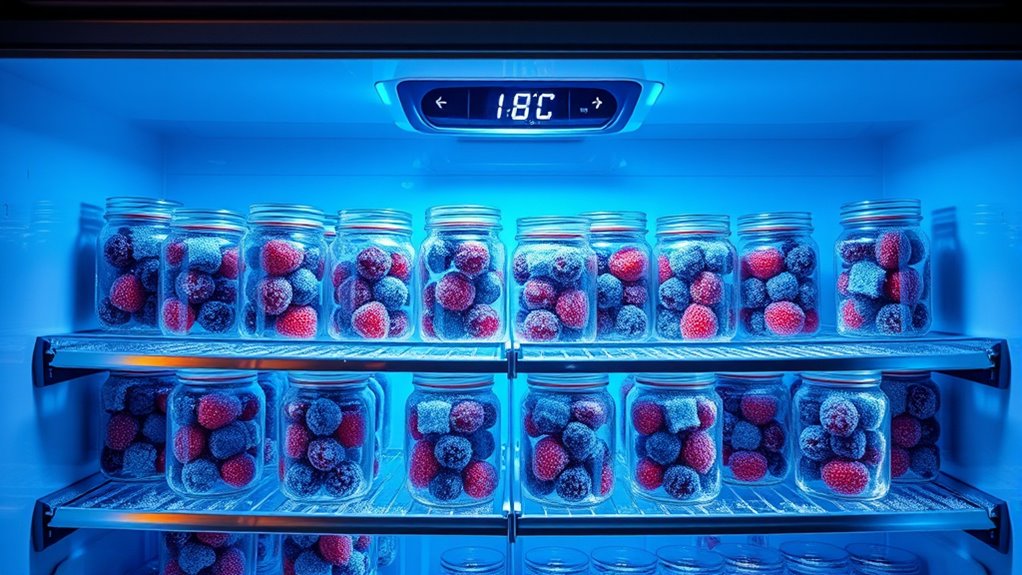
Ideal Freezer Temp?
Many people struggle with keeping their frozen foods safe and fresh. It’s common to worry about spoilage, freezer burn, or wasting energy on a freezer that’s not set right. You’re not alone—making sure your freezer is at the perfect temperature can seem tricky, but it’s easier than you think.
The ideal freezer temperature is 0°F (-18°C), which keeps your food safe, fresh, and maintains quality. Setting it correctly prevents bacteria growth, spoilage, and freezer burn, while also saving energy.
Make sure your freezer is set to this temperature and check it with a reliable thermometer. Avoid common mistakes like overloading or frequent door openings.
To keep everything running smoothly, you’ll want to follow some simple tips—if you want to learn more, keep going.
Key Takeaways
- The ideal freezer temperature is set at 0°F (-18°C).
- Keeping the temperature at this level helps ensure your food stays safe and fresh. It also prevents bacteria from growing.
- Be sure to use a reliable thermometer to check the temperature accurately.
- Try to avoid opening the freezer door too often. Frequent openings can cause temperature fluctuations.
- Regularly inspect and maintain your door seals and coils. This keeps your freezer running efficiently and at the right temperature.
What Is the Ideal Freezer Temperature?
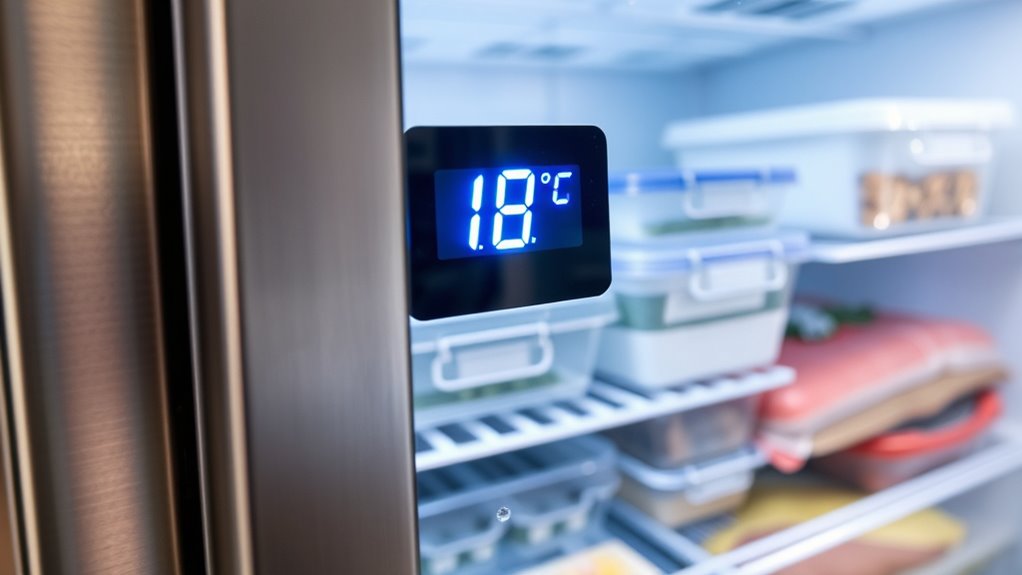
The ideal freezer temperature is usually set at 0°F (-18°C). This keeps your food safely frozen while using less energy.
Setting your freezer at 0°F (-18°C) ensures food stays frozen, fresh, and energy-efficient.
At this temperature, bacteria grow very slowly, helping prevent spoilage and keeping your food fresh. You want it cold enough to avoid ice crystals that can hurt the texture but not so cold that it wastes energy.
Setting your freezer at 0°F ensures your items stay fresh longer. Be sure to check the temperature regularly with a thermometer since built-in gauges can be off.
Consistent temperature control helps prevent freezer burn and keeps your food safe. By maintaining this temperature, you get the best balance of safety and efficiency.
Why Setting the Correct Freezer Temperature Matters
Setting your freezer to the right temperature is really important because it affects food safety and quality.
If it’s set too high, bacteria can grow, which increases the chances of spoilage and foodborne illnesses.
But if it’s too cold, you’ll waste energy and risk freezer burn, which can ruin the texture and flavor of your food.
Keeping the right temperature helps preserve nutrients and keeps your food fresh longer.
It also prevents freezer overloads that can make cooling less effective.
Consistent temperatures ensure your frozen foods stay safe and maintain their original quality.
Plus, setting the correct temperature can save you money on energy bills and help your freezer last longer.
In the end, good temperature control is key to keeping your food safe, fresh, and tasty.
How to Set and Check Your Freezer Temperature
To keep your freezer at the right temperature, you need to know how to set and check it regularly. First, find the control dial or digital display on your freezer.
For manual controls, turn the dial to the recommended setting—usually around 0°F (–18°C). If you have a digital thermostat, set it to this temperature.
To check the actual temperature, use a reliable freezer thermometer. Place it in the middle of the freezer, away from the door.
Close the door and wait at least 4 to 6 hours before reading the thermometer. Adjust the temperature if needed, aiming for 0°F (–18°C).
Regularly checking your freezer ensures it stays at a safe, ideal temperature. This helps prevent food spoilage and keeps your food fresh.
Common Freezer Temperature Mistakes to Avoid
One common mistake is setting your freezer to the wrong temperature, which can spoil your food or waste energy.
Overloading the freezer makes it harder for cold air to circulate, leading to uneven cooling.
Also, opening the door too often or for too long causes temperature fluctuations that can compromise food safety.
Incorrect Temperature Settings
Many people underestimate how important it is to keep their freezer at the right temperature, which leads to common mistakes. Setting it too high can cause food to spoil and bacteria to grow. Setting it too low wastes energy and can cause freezer burn.
Here are key mistakes to avoid:
- Ignoring the thermometer: Relying on guesswork instead of a reliable thermometer can lead to incorrect settings.
- Setting it too cold: Going below 0°F (−18°C) doesn’t improve preservation but increases energy use.
- Leaving it too warm: Temperatures above 0°F risk thawing and spoilage of stored items.
Keeping your freezer at the correct temperature guarantees food safety, quality, and energy efficiency.
Overloading Freezer Space
Overloading your freezer can mess up the airflow and make it harder for the appliance to keep a steady temperature. When it’s packed too full, air can’t move around freely, leading to cold spots and uneven freezing.
Think of it like this: imagine a properly loaded freezer versus one that’s overloaded. In the right one, air flows around the items easily. In the overloaded one, things block the airflow, causing hot and cold spots.
A well-filled freezer is easy to access and helps prevent frost buildup. On the other hand, cramming it full makes it tough to find what you need and can cause frost to accumulate.
Keep your freezer moderately filled, leaving some space for air to circulate. This way, your food stays frozen at the right temperature, preventing spoilage and freezer burn.
Proper loading is really key to maintaining the perfect environment inside your freezer.
Frequent Door Openings
Frequent door openings can cause the temperature to fluctuate, making it harder for the freezer to stay consistent. Every time you open it, cold air escapes and warm air gets in, so the freezer has to work harder to cool back down.
This cycle can lead to frost buildup and uneven freezing. To avoid these problems, try to limit door openings to only when necessary. Prepare everything you need beforehand so you don’t keep opening and closing it.
Also, check the door seal regularly to make sure it closes tightly. A good seal prevents cold air from escaping and helps keep the temperature stable.
Tips for Keeping Your Freezer Running Efficiently
To keep your freezer running efficiently, make sure the door seals tightly every time you close it.
Regularly defrost to prevent ice buildup, which can hinder performance. These simple steps help your freezer stay at the right temperature and save energy.
Proper Door Sealing
A proper door seal is key to keeping your freezer at the right temperature and saving energy. If the seal is loose or damaged, warm air can sneak in, making the compressor work harder and raising your energy bills.
To keep the seal in good shape, check it regularly for cracks, tears, or gaps. Clean it with warm, soapy water to remove dirt and debris.
You can test the seal by closing the door on a dollar bill. If it slips out easily, the seal might need replacing.
Taking care of the door seal helps your freezer stay cold efficiently, lasts longer, and saves you money on energy. Proper sealing is a simple but important step for your freezer’s performance.
Regular Defrosting
Regularly defrosting your freezer keeps it running efficiently by stopping ice buildup that can block airflow and make the compressor work harder.
When ice builds up, it shrinks your storage space and makes it tougher for cold air to circulate evenly.
This leads to higher energy use and temperature fluctuations that can put your food at risk.
To defrost, turn off or unplug the freezer, remove all food, and let the ice melt naturally.
You can speed up the process with warm water or a plastic scraper if needed.
Once the ice is gone, wipe down the interior, dry everything thoroughly, and turn the freezer back on.
Regular defrosting helps your appliance run smoothly, saves energy, and can even extend its lifespan.
Troubleshooting Freezer Temperature Issues
When your freezer isn’t maintaining the proper temperature, it can be frustrating and may put your stored food at risk. To troubleshoot, start with the door seal—if it’s damaged or not sealing properly, cold air can escape.
Next, check the thermostat and make sure it’s set to about 0°F (-18°C). If needed, adjust it to the recommended setting.
Finally, look at the condenser coils. Dirt and dust buildup can make the compressor work harder, which affects temperature stability. Regularly inspecting and cleaning these coils helps ensure efficient cooling.
Frequently Asked Questions
How Often Should I Defrost My Freezer for Optimal Temperature?
You should defrost your freezer when you notice a buildup of ice that’s about a quarter-inch thick or more. Regular defrosting, roughly every six months, helps keep the temperature steady and the freezer running efficiently.
If you see frost forming quickly, it’s a good idea to defrost more often. Turn off the freezer, remove all items, and let the ice melt naturally or use warm water to speed things up.
Keeping your freezer ice-free ensures it runs smoothly and saves energy. It’s a simple way to keep everything in good shape and avoid unnecessary strain on the appliance.
Can Temperature Fluctuations Affect Food Safety?
Yes, temperature fluctuations can affect food safety. When your freezer isn’t holding a steady temperature, bacteria and mold can grow on your stored foods, which increases the risk of spoilage and foodborne illnesses.
To keep your food safe, try to maintain a consistent temperature and avoid opening or defrosting the freezer too often. Regularly check your freezer’s settings to make sure it stays around 0°F (-18°C) for the best preservation and safety.
What Tools Are Best for Monitoring Freezer Temperature?
A stitch in time saves nine, so you should use digital thermometer probes or temperature data loggers to monitor your freezer temperature consistently. These tools give you real-time readings and send alerts if the temperature fluctuates.
This way, you can catch issues early and make sure your food stays safe and preserved. Manual dial thermometers are helpful but less reliable for ongoing monitoring.
Regularly checking and recording temperatures helps keep everything in check, ensuring your food stays fresh and your operations run smoothly.
How Does Door Opening Frequency Impact Freezer Temperature?
Frequent door openings cause your freezer temperature to rise because warm air enters each time you open it. This makes the compressor work harder to restore the cold environment, leading to temperature fluctuations.
To keep the temperature steady, try to limit how often you open the door, especially during busy times. Using a thermometer can help you keep an eye on these changes.
This way, you can ensure your freezer stays at the right temperature for safe food storage.
Is It Necessary to Calibrate My Freezer Thermometer Regularly?
Yes, you should calibrate your freezer thermometer regularly to ensure accurate readings. Over time, thermometers can drift, which might cause incorrect temperature control.
By checking your thermometer against a known accurate reference, you can adjust it if needed. This helps keep your freezer at the right temperature.
Regular calibration is important for preventing spoilage and making sure your food stays safe. Make it a habit to verify and calibrate your thermometer at least once every few months.
Conclusion
Keeping your freezer at the right temperature isn’t just about perfect ice cubes—it’s about giving your food a cozy, safe home. When you tune it just right, you’ll enjoy fresher meals and fewer surprises.
Remember, a little attention goes a long way in preventing chilly misunderstandings. Stay vigilant, check those settings regularly, and your freezer will thank you by keeping everything fresh and ready when you need it most.
For optimal performance, aim to keep your freezer at around 0°F (-18°C). This ideal freezer temperature helps lock in freshness and prevents spoilage, so your food stays safe and tasty.