7 Key Differences: Induction Stoves Versus Electric Stoves
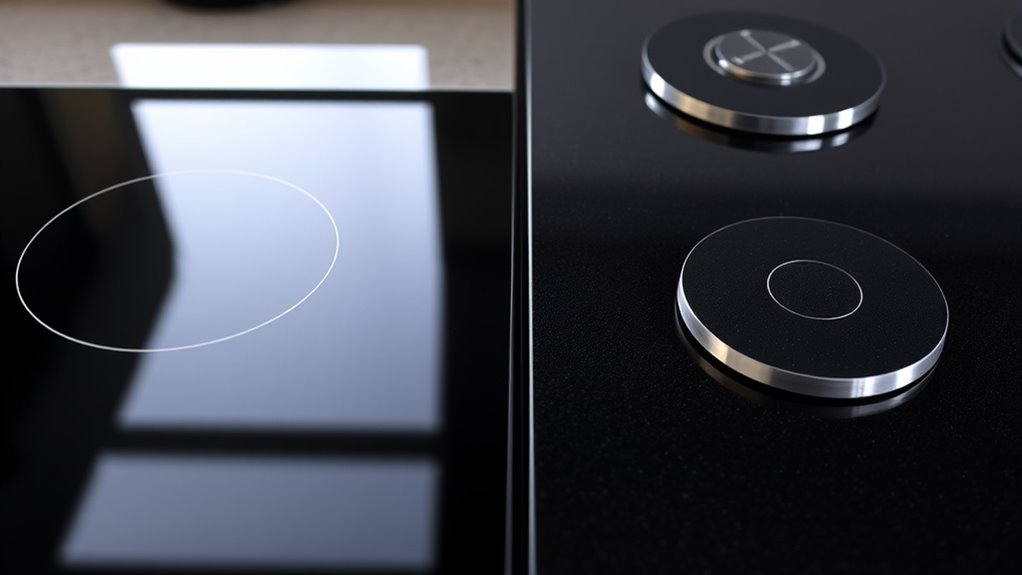
Are you feeling overwhelmed trying to choose between induction and electric stoves? You’re not alone—many people struggle with finding the right fit for their kitchen and cooking style. The good news is, understanding the key differences can help you make a confident decision.
If you’re choosing between induction and electric stoves, you’ll notice induction heats faster, offers precise temperature control, and is more energy-efficient.
Electric stoves are usually cheaper upfront, easier to install, and work with a wider range of cookware.
Induction stoves also have advanced safety features and last longer with less maintenance.
Your ideal choice depends on your cooking style and budget, and exploring further will help you find the best fit.
Key Takeaways
- Induction stoves heat up more quickly and give you better control over the temperature compared to electric stoves.
- They’re also more energy-efficient, turning more of the energy into heat rather than wasting it.
- Electric stoves tend to be more budget-friendly upfront and are easier to install since they use standard outlets.
- Safety is another advantage of induction stoves. They often come with features like automatic shutoff and only work with ferromagnetic cookware.
- Plus, induction stoves usually last longer and need less maintenance than electric ones.
What Are Induction and Electric Stoves?
Induction and electric stoves are popular appliances that offer different ways of cooking, each with its own perks.
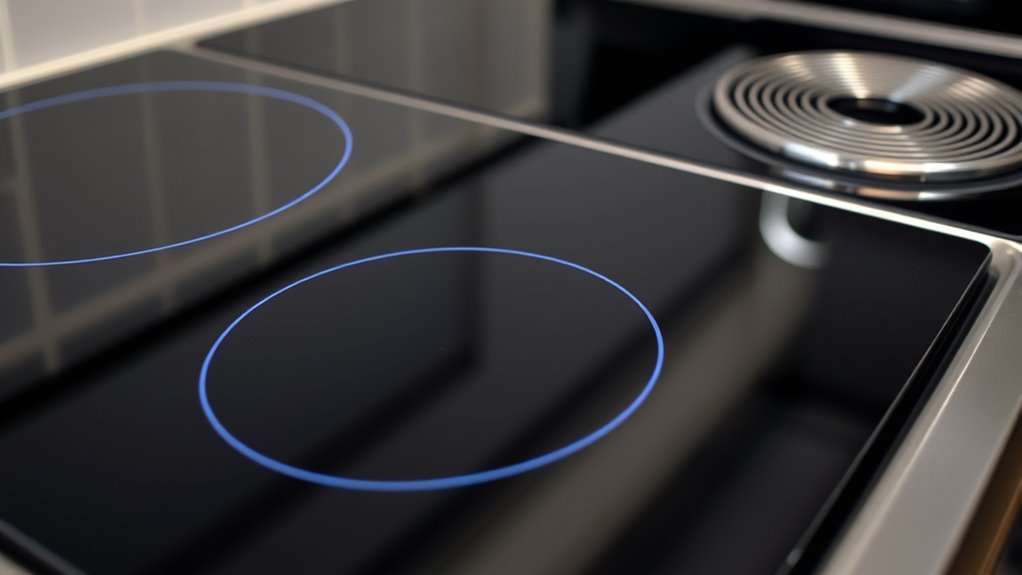
An electric stove heats your cookware through electric coils beneath a smooth glass surface. When you turn it on, the coils heat up and transfer heat directly to your pots and pans.
Electric stoves use coils beneath a smooth glass surface to transfer heat directly to cookware.
Induction stoves, on the other hand, use electromagnetic fields to generate heat directly in ferromagnetic cookware. This keeps the surface cooler and makes heat adjustments quick.
Electric stoves are often praised for their affordability and simple design. Induction stoves, however, heat up faster and give you more precise temperature control.
Both types are convenient and easy to clean, but they work differently and suit different cooking preferences.
How Do Induction and Electric Stoves Compare in Performance and Efficiency?
When comparing induction and electric stoves, you’ll notice differences in heating speed and power. Induction heats up faster and offers more immediate heat adjustments.
Energy consumption levels also vary, as induction stoves usually use less energy because they target heating directly to the cookware.
Plus, induction stoves give you better temperature control, making it easier to cook with precision.
Heating Speed and Power
While both induction and electric stoves generate heat differently, induction stoves usually heat up faster and give you more immediate control over cooking temperatures. They use electromagnetic fields to directly heat cookware, leading to quick response times. Electric stoves, on the other hand, heat through resistive elements, which take longer to warm up and cool down.
| Feature | Induction | Electric |
|---|---|---|
| Heating Speed | Very fast, near-instantaneous | Slower, takes time to heat |
| Power Control | Precise, quick adjustments | Less precise, slower to respond |
| Power Output | High, efficient transfer | Moderate, less efficient |
This difference means induction stoves are better for quick, controlled cooking. Electric stoves may lag behind in responsiveness.
Energy Consumption Levels
Energy efficiency is key when choosing between induction and electric stoves. Induction stoves generally use less energy because they heat cookware directly through magnetic fields, which reduces wasted heat. Electric stoves transfer heat via heating elements, and some energy can be lost through heat dispersion.
Induction stoves convert about 80-90% of energy into cooking heat, making them more efficient. Electric stoves usually operate at 70-75% efficiency, with more heat escaping into the environment.
Because induction heats up quickly, it can cut down on overall energy use during cooking. Electric stoves, however, may use more energy over longer periods because they heat more slowly.
Choosing induction can save you energy and help lower your utility bills, especially if you cook often.
Temperature Control Precision
Induction stoves usually give you better temperature control than electric stoves, letting you adjust heat quickly and precisely. You can fine-tune the heat in small steps, which gives you more control over your cooking process. This quick response helps prevent overheating or undercooking, especially when simmering or melting delicate ingredients.
Electric stoves tend to respond slower because of their heating elements. That makes it harder to keep a consistent temperature. You might notice fluctuations or lag when changing heat, which can affect how accurately your food cooks.
What Safety Features Do These Stoves Offer?
Both induction and electric stoves come with safety features to protect you while cooking. Automatic shutoff turns off the stove if it’s left on too long or detects overheating.
Child safety locks prevent accidental activation, giving you peace of mind around little ones. These features help make cooking safer and more convenient.
Automatic Shutoff Functionality
Automatic shutoff is a must-have safety feature that helps prevent accidents and kitchen fires by turning the stove off when it detects no activity or unsafe conditions. It makes sure you don’t forget to turn off the stove or leave it unattended for too long. Here are four key benefits:
- Prevents Overheating – Stops the stove if temperatures get dangerously high.
- Avoids Boil-Over Hazards – Turns off when liquids boil over or spill.
- Detects Lack of Activity – Shuts down if no pots or pans are detected after a set period.
- Reduces Fire Risk – Automatically turns off if an unsafe condition is sensed, minimizing hazards.
These features give you peace of mind, making your cooking safer and more reliable.
Child Safety Locks
Child safety locks are essential features that help prevent accidental operation of the stove, especially in households with young children. These locks disable the control panel, ensuring little hands can’t turn on or change settings unintentionally.
Induction stoves often come with built-in safety lock features that can be easily activated or deactivated, providing peace of mind. Electric stoves may also include similar locks, but their implementation varies by model.
With safety locks, you avoid dangerous spills or burns caused by children unintentionally activating the burners. This feature is especially useful when cleaning or when the stove is not in use.
How Easy Is It to Install and Maintain Induction and Electric Stoves?
Installing and maintaining induction and electric stoves can vary in ease depending on your home’s existing electrical setup. For installation, consider the following:
- Electrical requirements. Induction stoves often need a dedicated, higher-voltage outlet, while electric stoves may connect to standard outlets.
- Professional installation. Both types usually require a licensed electrician to ensure safe setup.
- Space and fit. Make sure your countertop and cabinetry can accommodate the stove’s size and power cord length.
- Maintenance ease. Induction stoves have smooth glass surfaces that are easy to clean but may need specialized cleaners, while electric stoves might have coil elements that are simpler to replace.
Proper installation and regular upkeep help your stove work efficiently and safely over time.
Which Stove Provides Better Control and Convenience?
Regarding controlling your cooking and making your kitchen experience more convenient, both induction and electric stoves offer distinct advantages. Induction stoves respond instantly to temperature changes, giving you precise control. Electric stoves, however, provide consistent heat distribution with their coil or glass surfaces, making it easier to manage longer cooking times.
| Feature | Induction Stove | Electric Stove |
|---|---|---|
| Response Time | Very fast | Moderate |
| Temperature Control | Precise | Less precise |
| Ease of Use | Requires compatible cookware | Compatible with most cookware |
If you want quick, accurate adjustments, induction is the way to go. For simplicity and steady heat, electric stoves excel.
How Do Costs and Long-Term Value Compare?
When comparing the costs and long-term value of induction and electric stoves, it’s important to think about both upfront expenses and ongoing savings. Induction stoves usually cost more initially but save you money on energy bills over time because they’re more efficient.
Induction stoves cost more upfront but save money over time with greater energy efficiency and durability.
Electric stoves tend to be cheaper to buy but might cost more in electricity in the long run. Keep these factors in mind:
- Upfront costs—induction stoves often have a higher purchase price.
- Energy savings—induction models use energy more efficiently.
- Maintenance—induction stoves generally require less repair.
- Longevity—induction stoves tend to last longer with proper care.
Balancing these points can help you decide which stove offers better long-term value based on your budget and how you use it.
Which Stove Is Right for Your Kitchen?
Are you wondering which stove best suits your kitchen needs? If quick heating and precise temperature control are priorities, an induction stove might be your best fit. They’re energy-efficient and heat up quickly, making cooking faster and more responsive.
On the other hand, if you prefer a more traditional setup, an electric stove offers ease of use and works with a wide range of cookware. Electric stoves tend to have a lower upfront cost and are simpler to install.
Think about your cooking style, budget, and kitchen setup. If safety and modern technology appeal to you, induction stoves are a great choice. For straightforward, reliable performance without needing special cookware, electric stoves could be better.
Ultimately, pick what aligns with your cooking habits and what you see yourself using long-term.
Frequently Asked Questions
Are Induction Stoves Compatible With All Types of Cookware?
No, induction stoves aren’t compatible with all types of cookware. They need magnetic, ferrous materials like cast iron or some stainless steel pans to work properly.
If you test your cookware with a magnet and it sticks, it’s probably compatible. Non-magnetic cookware like aluminum, copper, or glass won’t work unless you add a magnetic layer.
Can Electric Stoves Be Used for Outdoor Cooking?
Yes, electric stoves can be used for outdoor cooking, but they’re not ideal for all environments. You might worry about weather or power sources, but as long as you have a sheltered, weatherproof outlet, you’re good to go.
Keep in mind, electric stoves aren’t as portable as gas grills, so they’re better suited for patio setups or covered outdoor kitchens rather than open fields.
Do Induction Stoves Emit Electromagnetic Radiation?
Yes, induction stoves emit electromagnetic radiation, but it’s generally safe. They generate a magnetic field that heats cookware directly, and this field produces non-ionizing radiation.
While some people may worry about exposure, the levels are typically low and within safety standards. If you have medical implants like pacemakers, it’s a good idea to check with your doctor before using an induction stove, as the electromagnetic fields could interfere with your device.
How Do Power Outages Affect Electric and Induction Stoves?
Power outages shut down both electric and induction stoves since they rely on electricity to operate. When the power goes out, you can’t cook or heat food with either stove until the electricity is restored.
Unlike gas stoves, which can still work during outages, electric and induction models depend entirely on a stable power supply. So, during an outage, your cooking options are limited unless you have a backup power source.
Are There Environmental Advantages of One Stove Type Over the Other?
You’ll find induction stoves more environmentally friendly because they’re energy-efficient, converting most of the energy into heat directly in the cookware. This reduces waste and makes them a smarter choice.
Electric stoves, on the other hand, often lose some energy as heat during the conversion process. By choosing induction, you help lower energy consumption and greenhouse gas emissions.
Conclusion
Now that you’ve explored the key differences between induction and electric stoves, the decision isn’t straightforward. Both options offer unique benefits and challenges that could change your kitchen experience.
Will one type be the perfect fit for your lifestyle? Or will you need to consider the subtle nuances more carefully? Whatever you choose, remember—your ideal stove might just be a decision away, ready to bring new convenience and excitement to your cooking adventures with an induction or electric stove.