How Many Calories Are in 1/2 Cup of Ground Beef?
Many people trying to watch their calorie intake often find themselves confused about how much ground beef they can enjoy without overdoing it. If you’re like most, you want to savor your favorite dishes but stay on track with your health goals.
You’re not alone in this struggle—finding the right balance can be tricky, especially when it comes to understanding calorie content.
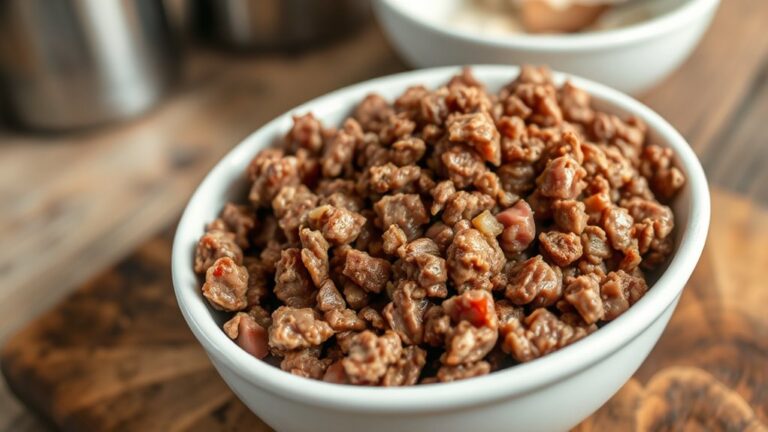
A half-cup of ground beef contains between 150 and 290 calories, depending on its fat content and how it’s cooked. Leaner types, like 96% lean, have around 150 calories, while regular 80% lean beef can have nearly 290 calories.
Cooking methods matter too. Grilling or broiling reduces calories by allowing fat to drip away, whereas frying adds calories.
To learn more about accurately measuring and choosing the right beef for your diet, keep exploring the details.
Key Takeaways
- Calorie content varies depending on the fat percentage. For lean ground beef (96%), it’s about 150 calories per 1/2 cup. Regular ground beef (80%) has around 290 calories for the same amount.
- How you cook it also impacts the calorie count. Grilling or broiling helps reduce calories since excess fat drips off. Frying, on the other hand, can add calories because of the added fat.
- A half-cup of raw ground beef weighs roughly 4 ounces. But keep in mind, the weight decreases after cooking due to water and fat loss.
- The nutritional values mainly depend on the fat content. Leaner beef has fewer calories but still provides similar amounts of protein.
- Using a food scale to measure portions accurately can really help you estimate calories better.
How Much Does 1/2 Cup of Ground Beef Weigh?
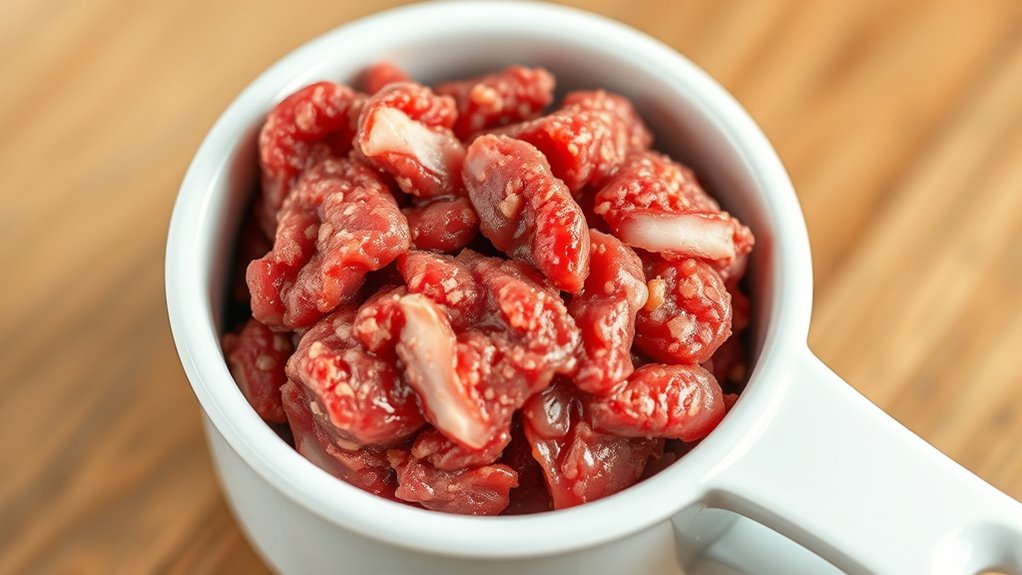
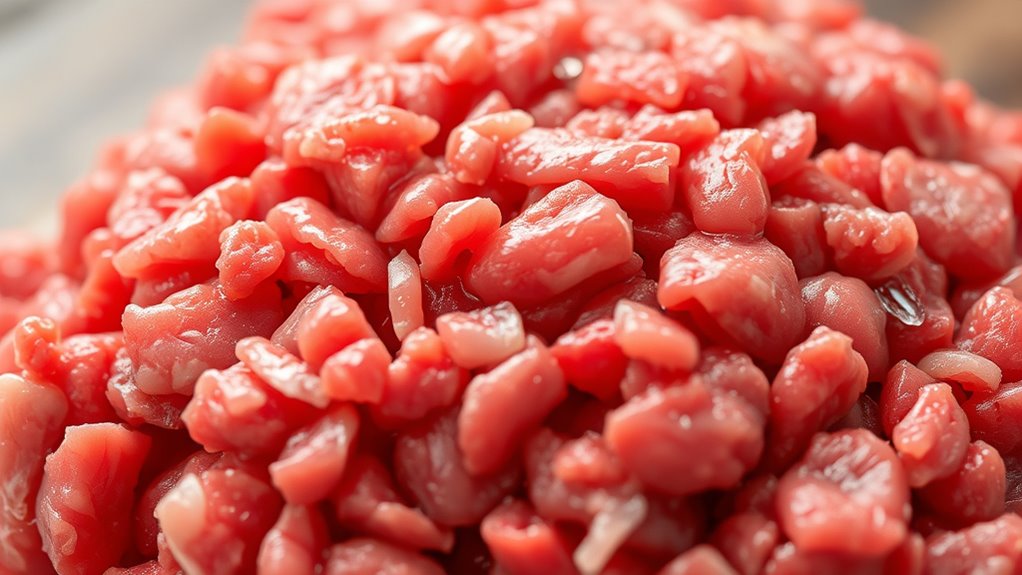
A half-cup of ground beef usually weighs about 4 ounces when raw. The exact weight can vary slightly based on the fat content and how tightly you pack it into the cup.
If you’re cooking and draining off excess fat, the weight might decrease a bit after cooking. Use a standard measuring cup and press the beef gently to avoid packing it down too much.
Remember, raw ground beef is more voluminous than cooked because it loses water and fat during cooking. Knowing the raw weight helps you estimate nutritional info more accurately.
Whether you’re planning meals or tracking calories, understanding this weight gives you a good starting point for portions.
How Many Calories Are in 1/2 Cup of Ground Beef?
The calories in 1/2 cup of ground beef can vary depending on its fat content and type.
Cooking methods like draining fat or adding ingredients also influence the calorie count.
Knowing these factors helps you better estimate the nutritional value for your meals.
Calorie Content Variations
Since ground beef varies in fat content and how you prepare it, the calorie count in a 1/2 cup serving can change a lot.
Leaner options have fewer calories, while higher-fat versions have more. The way you cook it also matters—draining excess fat can cut down on calories.
Here’s a quick comparison:
| Type | Fat Content | Calories per 1/2 Cup |
|---|---|---|
| Extra Lean (96% lean) | 4% | ~150 |
| Lean (90% lean) | 10% | ~200 |
| Regular (80% lean) | 20% | ~290 |
Knowing these differences can help you better control your calorie intake when cooking ground beef.
Types of Ground Beef
Different types of ground beef vary a lot in calories mainly because of their fat content. Lean ground beef, usually labeled as 90% or higher, has fewer calories—about 150 per half-cup serving—since it has less fat.
Regular ground beef, often 70% or 80% lean, has more calories—around 200 to 230 per half-cup. Extra-lean options like 95% lean have even fewer calories, closer to 140 per serving.
The fat level not only affects calories but also changes the flavor and texture. When choosing ground beef, think about your dietary goals. Higher fat means more flavor and calories, while leaner options are lower in calories but might be less juicy.
Cooking Impact on Calories
Cooking ground beef can greatly change its calorie content, mainly because of how the process affects moisture and fat loss. When you cook it, fat melts and drips away, reducing the overall fat content. This means cooked ground beef generally has fewer calories per serving than raw.
For example, a 1/2 cup of raw ground beef might start with more calories than the same amount cooked because of water evaporation. The cooking method matters too; grilling or broiling allows more fat to escape, lowering calories.
On the other hand, frying in oil can increase the calorie content. To get an accurate calorie count, consider draining excess fat and choosing healthier cooking methods. Overall, cooking can greatly reduce or change the calorie content of your ground beef, depending on how you prepare it.
How Does Ground Beef Fat Percentage Affect Calories?
The fat percentage in ground beef directly impacts its calorie content, with fattier options containing more calories per serving.
Choosing leaner ground beef reduces calorie intake without sacrificing protein, making it a smarter option for many diets.
Understanding these differences helps you select the best ground beef for your nutritional goals.
Fat Content and Calories
Higher fat content in ground beef directly increases its calorie count, so it’s an important factor to consider when choosing the right type for your diet. The more fat in the beef, the more calories you’ll consume per serving.
For example, 80% lean ground beef has significantly more calories than 90% lean. Here’s a quick comparison:
| Fat Percentage | Calories (per 1/2 cup) | Protein (g) |
|---|---|---|
| 80% lean | 200 | 17 |
| 85% lean | 180 | 20 |
| 90% lean | 150 | 22 |
Choosing a lower fat percentage helps control calorie intake, especially if you’re watching your weight.
Leaner vs. Fattier Options
Choosing ground beef with different fat percentages directly impacts your calorie intake. Leaner options, like 90% or 95% lean beef, contain fewer calories because they have less fat.
For example, 3 ounces of lean ground beef typically has around 150 calories, while fattier options with 20% fat can have over 200 calories for the same serving size.
If you’re watching your calorie intake or aiming to reduce fat, opting for leaner ground beef is a smart choice. However, fattier ground beef offers more flavor and juiciness, which some people prefer.
Keep in mind that cooking methods also influence calorie content; draining excess fat after cooking can further reduce calories. Your choice depends on your dietary goals and flavor preferences.
What Are the Calories in Different Types of Ground Beef?
Ever wondered how the calorie content varies across different types of ground beef? The calorie count mainly depends on the fat content and the cut of beef used.
Calorie content in ground beef varies mainly with fat percentage and cut.
For example, lean ground beef with about 10% fat typically has around 170 calories per 3-ounce cooked serving. In contrast, regular ground beef with 20-30% fat can have roughly 250 calories or more for the same portion.
Extra-lean options with less than 10% fat usually have fewer calories—around 150. Ground beef labeled as “very lean” or “extra lean” tends to have the lowest calorie count.
Keep in mind that the specific fat percentage influences calorie content considerably, so check labels or ask your butcher to find the best option for your dietary goals.
How Do Cooking Methods Change Ground Beef Calories?
Cooking methods can really change the calorie content of ground beef because of fat drainage and cooking loss.
For instance, grilling or broiling lets fat drip away, which lowers the calories. On the other hand, pan-frying tends to keep more fat, so the calorie count stays higher.
Each method’s details can make a difference in the final calories, so knowing these differences can help you make healthier choices.
Fat Draining Effects
When you cook ground beef, how you prepare it can really affect its calorie content by changing how much fat it keeps. Draining extra fat during cooking helps remove some of the grease that’s high in calories.
As it cooks, fat melts and separates from the meat; pouring off this fat cuts down the total calories. Using a method like browning and draining allows you to get rid of a good amount of fat, making the beef leaner.
This doesn’t change the protein, but it does reduce calories from fat. The more fat you drain off, the fewer calories you’ll eat in each serving.
This simple step can really make a difference in the nutritional profile of your ground beef.
Cooking Loss Variations
Different cooking methods can really change the calorie content of ground beef because they affect how much fat is lost during cooking. For example, grilling or broiling lets excess fat drip away, which reduces the calories.
On the other hand, pan-frying or sautéing with oil can add calories since some fat stays in the meat. Boiling or simmering usually keeps more juices, but you might lose some nutrients along the way.
Cooking temperature and how long you cook also matter. Longer cooking can cause more fat to melt out. Covering the meat while cooking traps moisture and fat, which can mean slightly higher calorie retention.
Knowing these differences helps you estimate how many calories are in your ground beef based on the cooking method you choose.
Method-Specific Calories
The way you prepare ground beef directly affects its calorie content. Some methods can lower calories a lot, while others add extra calories.
Grilling or broiling allows fat to drip away, making the meat leaner and reducing calories. On the other hand, frying in oil can increase the calorie count because the oil adds calories.
Baking or roasting without added fats keeps the calorie levels closer to the raw meat. When you cook ground beef with sauces or oils, those ingredients add calories and make the dish richer.
Sizzling on the grill causes fat to melt away, leaving leaner meat. Pan-frying in oil makes each bite extra calorie-dense. Baking with minimal fats helps preserve the natural calorie content.
Simmering in rich sauces can boost the calorie count quite a bit, so keep that in mind depending on your diet goals.
How to Calculate Ground Beef Calories at Home
Calculating ground beef calories at home is easy with just a few simple steps. First, find out the raw weight of your beef. Then, check the fat content, since leaner beef has fewer calories.
Finally, use a calorie estimate per ounce based on the fat percentage. Here’s a quick reference chart to help you out:
| Beef Type | Calories per 3 oz | Fat Content | Notes |
|---|---|---|---|
| Lean (90% lean) | 150 | Low | Cooked and drained excess |
| Medium (80% lean) | 200 | Moderate | Raw or cooked |
| Regular (70% lean) | 250 | Higher | Use for richer dishes |
| Extra Lean | 120 | Very Low | Great for calorie counting |
| Ground Beef (raw) | Varies | Varies | Adjust based on fat content |
This makes it easy to estimate the calories in your homemade ground beef dishes.
What Are the Nutritional Benefits of Ground Beef?
Ground beef is a nutrient-dense source of high-quality protein that supports muscle growth, repair, and overall body maintenance. It provides essential nutrients that can boost your health and energy levels.
When you include ground beef in your diet, you’re also getting important vitamins and minerals like iron, zinc, and B12. These nutrients help keep your immune system strong, improve oxygen transport, and support brain function.
Imagine tender, flavorful bites that fuel your body and promote strength. Ground beef can also help you meet your daily protein needs efficiently, making it a versatile ingredient for balanced meals.
Its richness in nutrients makes it a valuable addition to your diet, especially if you’re aiming for a nutritious, satisfying source of energy.
How to Incorporate Ground Beef Into a Low-Calorie Diet
Incorporating ground beef into a low-calorie diet can be tasty and satisfying when you pick lean cuts and prepare them smartly. Go for ground sirloin or eye of round, which have less fat and fewer calories.
Trim any visible fat before cooking to cut calories even more. Use grilling, broiling, or stir-frying with minimal oil to keep dishes light and healthy.
Add vegetables like spinach, zucchini, or peppers to increase volume and nutrients without adding many calories. Portion control is important, so measure your servings carefully to stay on track.
Boost your meal with veggies like spinach, zucchini, or peppers for more nutrients and volume—portion carefully to stay on track.
Season your beef with herbs and spices instead of high-calorie sauces or cheese. With these tips, you can enjoy ground beef as part of a balanced, low-calorie diet without losing flavor.
Common Mistakes When Measuring Ground Beef and Counting Calories
Even small errors in measuring ground beef can lead to big mistakes in your calorie count. Overestimating or underestimating portion sizes can throw off your tracking and make it unreliable.
Common mistakes include using rough cups or spoons instead of a precise food scale. Skipping draining excess fat after cooking can also inflate your calorie numbers since fat adds calories.
Don’t forget that cooked weight is different from raw weight because cooking reduces water content. Relying on visual guesses instead of measuring carefully can also lead to inconsistent results.
How to Read Ground Beef Nutrition Labels Effectively?
Have you ever looked at a nutrition label and felt overwhelmed by all the numbers? Don’t worry, you can learn to read them effectively. Start by checking the serving size—this tells you how much food the nutrition info covers.
Next, look at the calories per serving to get a sense of the energy content. Focus on the grams of fat, especially saturated fat, which can impact your health.
Protein content is also important, especially if you’re tracking muscle building or weight loss. Read the sodium level to keep an eye on your salt intake.
Finally, examine the ingredients list if it’s available. This helps you spot any additives or fillers. By understanding these key sections, you’ll make smarter choices about your ground beef and overall diet.
Practice regularly, and soon reading labels will become quick and easy.
What Are Better Alternatives for Lower-Calorie Ground Beef Meals?
If you’re trying to cut calories in your ground beef meals, switching to healthier options can really make a difference. Leaner proteins that fill you up without adding extra fat and calories are a great choice.
Ground turkey or chicken breast are excellent options—they’re lower in fat and calories but still versatile for all kinds of dishes. Plant-based proteins like lentils, mushrooms, or crumbled tofu can also add texture and flavor while reducing calorie intake.
Using vegetables as a base or filler can bulk up your meals without packing on calories. Think colorful bell peppers, zucchini, spinach, and cauliflower—these ingredients add volume and nutrients without the heaviness of traditional ground beef.
Sizzling veggie mixes in a skillet, brightly colored bell peppers stuffed with lean fillings, mushrooms sautéed with herbs and spices, and tofu crumbles seasoned to mimic ground beef are all tasty, lower-calorie options.
Frequently Asked Questions
How Does the Serving Size Impact Calorie Count in Ground Beef?
The serving size directly impacts the calorie count in ground beef because larger portions contain more calories. When you double the serving size, you double the calories, and vice versa.
For example, a half-cup of ground beef has fewer calories than a full cup. Paying attention to portion sizes helps you manage your calorie intake effectively, especially if you’re tracking your diet or aiming for specific health goals.
Are There Any Health Risks Associated With Consuming High-Calorie Ground Beef?
Consuming high-calorie ground beef can pose health risks like weight gain, increased cholesterol, and heart disease if eaten excessively. You might think a little won’t hurt, but regularly eating large portions can strain your cardiovascular system.
To stay healthy, balance your diet with lean meats, vegetables, and whole grains. Monitoring portion sizes and choosing leaner options helps you enjoy ground beef without risking your well-being.
Can Ground Beef Be Part of a Balanced, Low-Calorie Diet?
Yes, ground beef can be part of a balanced, low-calorie diet if you pick lean options like 90% lean or higher and watch your portion sizes.
Try to include it with plenty of vegetables, whole grains, and healthy fats to add nutrition without too many calories.
Cooking methods like grilling or baking help cut down on added fats.
With some mindful planning, you can enjoy ground beef while keeping your low-calorie diet on track.
How Do Added Ingredients Affect the Calorie Content of Ground Beef Dishes?
Adding ingredients to ground beef can skyrocket the calorie count faster than a rocket launch. For example, oils, cheeses, and sauces pack in extra calories, transforming a modest dish into a calorie bomb.
Even small additions like breadcrumbs or sugar can make a huge difference. So, you need to be mindful, carefully choosing ingredients to keep your meal balanced and within your calorie goals, rather than letting extras spiral out of control.
What Are the Best Ways to Reduce Calories When Preparing Ground Beef Meals?
You can cut down calories in ground beef meals by choosing lean or extra-lean beef, which helps reduce the fat content. After cooking, drain any excess fat to make the dish lighter.
Try cooking methods like grilling, baking, or broiling instead of frying, since these methods use less oil and fat. Incorporating vegetables can add bulk and fiber, making the meal more filling without extra calories.
Opt for smaller portions to keep calorie intake in check. Also, flavor your dishes with herbs and spices instead of high-calorie sauces or cheeses, so they stay tasty but light.
Conclusion
So, now you’re armed with the calorie scoop on ground beef, ready to navigate your meals like a culinary captain steering through a sea of options. Remember, choosing leaner cuts and mindful cooking methods can turn your plate into a healthful masterpiece.
With this knowledge, you’ll be slicing through recipes like a hot knife through butter, crafting delicious, satisfying meals that fuel your body without tipping the calorie scales.
And speaking of calories, did you know that 1/2 cup of cooked ground beef contains approximately 150-200 calories, depending on the fat content? Knowing this can help you make smarter choices in the kitchen.
Happy cooking and healthy eating! Whether you’re adding ground beef to your favorite recipes or just keeping track of your intake, understanding the calorie content helps you stay on track.