8 Simple Steps to Fix a Clogged Kitchen Sink
Dealing with a clogged kitchen sink is one of those household headaches you’re probably all too familiar with. Many people struggle with slow drains or complete blockages, and it can be frustrating trying to fix it on your own.
To fix a clogged kitchen sink, start by inspecting the cause—whether it’s slow draining or a full blockage—and try a plunger, ensuring a good seal. If that doesn’t work, pour baking soda and vinegar down the drain, then flush with hot water.
Next, remove and clean the sink trap for any buildup. For stubborn blockages, use a drain snake carefully.
Always prevent future clogs by avoiding fats and debris. Keep going to learn more about each step.
Key Takeaways
- Assess how serious the clog is and try some simple DIY tricks first. You can start with plunging or using baking soda and vinegar. These methods often do the trick without much hassle.
- Grab a plunger and create a good seal over the drain. Push and pull to generate pressure that can loosen the blockage. Make sure the plunger covers the drain completely for the best results.
- If that doesn’t work, remove the sink trap. Clean out any gunk or debris that might be causing the clog. It’s a straightforward step that can make a big difference.
- For tougher or deeper blockages, a drain snake can be really helpful. Insert it into the pipe and twist to break up or grab the clog. It’s a handy tool for stubborn issues that DIY methods can’t fix.
- To keep your sink clear in the future, avoid pouring grease or debris down the drain. Running hot water regularly can also help prevent buildup. Small habits like these can save you from headaches later on.
How to Identify What’s Causing Your Kitchen Sink to Clog
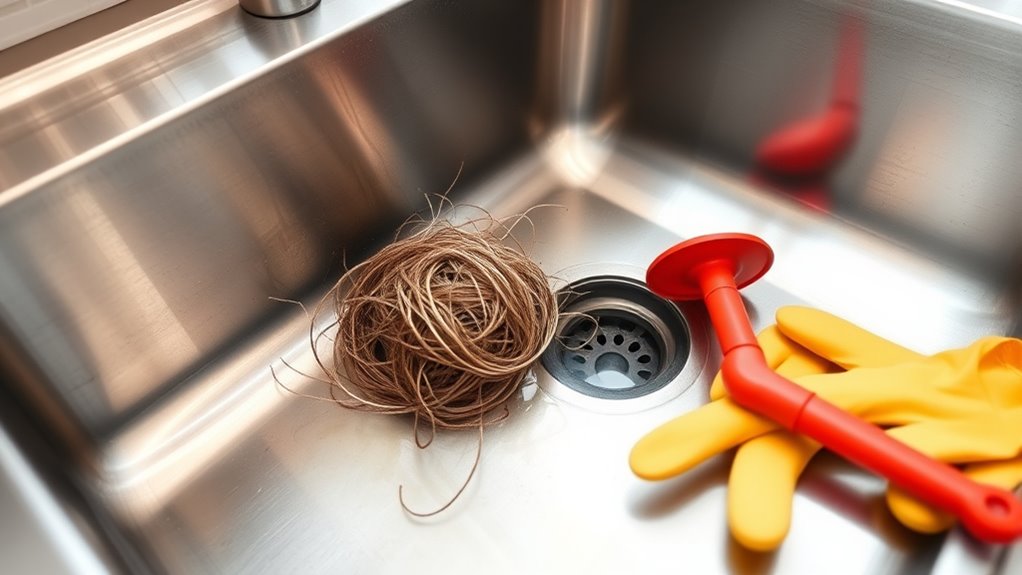
Wondering what’s causing your kitchen sink to clog? First, check if water drains slowly or if there’s standing water after you run the tap.
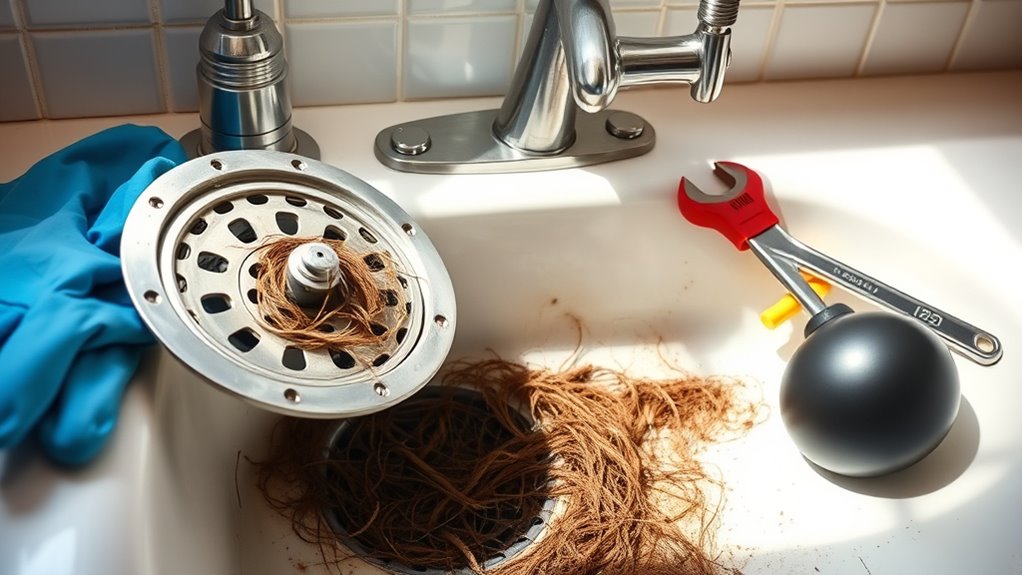
Look for signs like foul odors, which often mean trapped food or grease buildup. Next, examine the drain for visible debris or soap scum.
Think about what you’ve recently washed—greasy pans, rice, coffee grounds, or hair can all contribute to clogs. If the water backs up quickly, it might be a solid blockage deeper in the pipes.
Pay attention to any strange noises when you run water, as these can indicate obstructions. Finally, if accessible, inspect the trap under the sink; a buildup of debris here often causes slow draining.
Identifying the cause helps you choose the best way to clear your clog efficiently.
How to Clear the Clog With a Plunger Effectively
To clear a stubborn clog with a plunger, start by making sure there’s enough water in the sink to cover the rubber cup completely. This helps create a good seal and build up pressure.
Next, place the plunger firmly over the drain, ensuring it completely covers the opening. Push down sharply and pull back up without breaking the seal, repeating this vigorously for 15-20 seconds.
Lift the plunger and see if the water drains. If not, repeat the process a few more times. Be patient and stay consistent.
Proper technique is key to generating the pressure needed to dislodge the clog. If it still doesn’t clear after several tries, consider trying other methods or tools.
Using Baking Soda and Vinegar to Dissolve Kitchen Sink Blockages
When you combine baking soda and vinegar, a chemical reaction creates carbon dioxide bubbles that help loosen debris.
To try this method, pour baking soda into the drain, then add vinegar. Let it fizz for about 15 minutes.
This simple trick can often clear minor blockages without using harsh chemicals.
Chemistry Behind the Reaction
The chemistry behind using baking soda and vinegar to clear a clogged sink is based on a simple acid-base reaction. When you pour vinegar (acid) onto baking soda (base), a reaction happens that produces carbon dioxide gas, water, and sodium acetate.
This reaction creates bubbles and fizzing, which helps loosen debris and soap scum blocking your drain. Here’s how it works:
- The acid and base combine, releasing carbon dioxide gas.
- The bubbling creates pressure that pushes buildup away.
- The reaction’s byproducts help break down greasy, organic material.
This method is safe, eco-friendly, and effective for minor clogs, making it a popular natural remedy. Understanding the chemistry helps explain why this simple mixture can clear your sink without harsh chemicals.
Step-by-Step Application Process
Start by removing any standing water from your sink to ensure the baking soda and vinegar can work directly on the clog.
Once clear, pour about half a cup of baking soda directly into the drain. Follow with half a cup of white vinegar.
Immediately cover the drain with a stopper or a damp cloth to contain the fizzing reaction. Let it sit for 15-30 minutes to loosen the blockage.
Afterward, flush the drain with hot water to wash away the dissolved debris. If the clog persists, repeat the process or try using a plunger.
This simple method uses a chemical reaction to clear minor sink blockages naturally.
How to Remove and Clean the Sink Trap
To effectively remove and clean the sink trap, you’ll need to locate the trap under your sink and gather a few tools. Grab a bucket, pliers, and gloves before you start.
Place the bucket under the trap to catch any water or debris that might spill. Then, loosen the slip nuts on both ends of the trap with pliers, turning them counterclockwise.
Position a bucket beneath the trap, then loosen the slip nuts with pliers to prevent spills.
Carefully remove the trap, keeping it level to avoid spills. Inside, clean out any gunk or buildup with a brush or cloth.
Check the trap for cracks or damage, and replace it if needed. Reassemble by tightening the slip nuts securely, making sure there are no leaks.
With these simple steps, your sink will drain smoothly again, and you’ll prevent future clogs.
When and How to Use a Plumbing Snake for Tough Clogs
When you notice water draining slowly or backing up, a tough clog might be the culprit. Using a plumbing snake correctly can help break through these stubborn blockages.
But it’s important to know when to use it. Learning proper techniques ensures you get the job done right without damaging your pipes.
Identifying Tough Clogs
How can you tell if a clog is particularly tough and needs a plumbing snake? First, if your sink drain stays slow or is completely blocked even after using a plunger, that’s a sign.
Second, if water backs up and refuses to drain after trying simple methods, it might be a stubborn clog.
Third, if you notice a foul smell that sticks around despite cleaning, it could mean a deep or hardened blockage.
When these signs show up, a plumbing snake is often the best tool. Use one if:
- The clog resists standard plunging attempts.
- The water stays backed up after multiple tries.
- You notice persistent odors or slow drainage that won’t clear.
Recognizing these signs helps you tackle tough clogs effectively.
Proper Snake Usage Techniques
If simple plunging doesn’t clear the clog, it’s time to bring out the plumbing snake. First, insert the snake’s tip into the drain opening, turning the handle clockwise as you push it forward.
Keep applying gentle pressure to navigate past bends and reach the clog. When you feel resistance, you’ve likely reached the blockage. Continue turning the handle to break up or latch onto the clog.
Pull the snake out slowly, rotating to avoid pushing debris further down. If the clog persists, re-insert and repeat the process. Avoid forcing the snake, which could damage your pipes.
Once the clog clears, run hot water to flush out remaining debris. Proper technique guarantees you effectively clear tough obstructions without causing damage.
Safely Using Hot Water and Drain Cleaners to Unclog Your Sink
Using hot water and drain cleaners can be effective for clearing minor clogs, but it’s important to do so safely. First, always read the instructions carefully before using any chemical cleaner.
Next, pour hot water gradually to avoid splashing or damaging your pipes. Boiling water can crack plastic, so let it cool slightly if needed. If you choose to use a drain cleaner, pick a safe, eco-friendly product.
Avoid mixing different chemicals because this can be dangerous. Remember, drain cleaners are best for minor clogs and shouldn’t be used as a permanent fix.
Wear gloves and eye protection to avoid contact with harsh chemicals. Keep children and pets away from the area during and after use. When in doubt, consult a professional to prevent damage or injury.
Tips to Prevent Future Kitchen Sink Clogs
To keep your kitchen sink flowing smoothly, adopting some simple preventative habits can make a big difference. First, avoid pouring grease, oil, or fats down the drain, as they solidify and cause clogs. Instead, wipe greasy residues with paper towels and toss them in the trash.
Use a drain strainer regularly to catch food particles, hair, and debris before they enter the pipes. Run hot water after each use to help flush away small particles. Avoid overloading the sink with too much food waste at once, and consider composting or discarding leftovers directly into the trash.
Periodically, pour boiling water down the drain to clear minor buildup. These habits can save you from frequent clogs and keep your sink running smoothly.
Troubleshooting Persistent Clogs and When to Call a Plumber
Persistent clogs can be really frustrating, especially when standard plunging or chemical solutions don’t work.
If you’ve tried these methods and the sink still stays slow or blocked, it’s time to evaluate the situation.
Start by checking the trap — remove and clean it to get rid of any trapped debris or buildup.
Next, try using a drain snake. Insert it to break up or pull out stubborn obstructions further down the pipe.
If water still won’t drain or you notice foul odors, it’s probably time to call a plumber.
Knowing when a clog is beyond your DIY skills saves you time and helps prevent damage.
When in doubt, professional help ensures the problem gets properly resolved.
Frequently Asked Questions
Can Food Scraps Cause Kitchen Sink Clogs?
Yes, food scraps can definitely cause kitchen sink clogs. When you rinse leftovers down the drain, grease and small food particles can stick together, forming a blockage over time.
Items like rice, pasta, or coffee grounds are especially problematic because they expand or become sticky, trapping other debris. To prevent clogs, avoid putting large food pieces or greasy leftovers into the sink.
Regularly cleaning your drain can help keep it clear and avoid buildup. Being mindful of what goes down the drain is key to preventing those pesky clogs.
How Often Should I Clean My Sink Trap?
You should clean your sink trap every three to six months to prevent buildup and odors. Regular cleaning helps remove debris, hair, and grease that can cause clogs.
If your drain is slow or you notice bad smells, it’s a good idea to clean it more often. To do the cleaning, place a bucket underneath, unscrew the trap, and remove any debris.
Rinse everything thoroughly before reattaching. Regular maintenance keeps your sink working smoothly and prevents bigger problems down the line.
Are Chemical Drain Cleaners Safe for My Pipes?
Chemical drain cleaners can be effective, but they aren’t always safe for your pipes. They often contain harsh chemicals that can corrode metal or damage PVC pipes over time.
If you decide to use them, be sure to follow the instructions carefully, and avoid using them too often.
To protect your plumbing, consider natural options like baking soda and vinegar or mechanical tools like a drain snake. These are safer and can give you good results in the long run.
What Signs Indicate a Plumbing Problem Beyond a Clog?
You might notice your sink drains slowly even after clearing minor clogs, or hear gurgling sounds that point to air or water flow issues.
Leaking pipes, water stains, or unexplained increases in your water bills can also be signs of deeper plumbing problems.
If you detect foul odors lingering or water backing up somewhere else in your home, these are signs of more serious issues that need professional attention.
Addressing these early on can save you from costly repairs down the line.
Can Hair Be a Major Cause of Kitchen Sink Blockages?
Yes, hair can be a major cause of kitchen sink blockages. When hair gets washed down the drain, it can easily tangle with grease, soap scum, and food particles, forming stubborn clogs.
Over time, these hair strands build up and create a dense blockage that blocks water flow. To prevent this, use a drain cover to catch hair and clean it regularly to keep your pipes clear.
Conclusion
By following these eight straightforward steps, you can tackle most kitchen sink clogs with the resourcefulness of a seasoned handyman. Remember, patience and proper tools are your allies. Don’t be afraid to call a plumber if the trouble persists, even in this age of modern marvels.
With a little effort, your sink will flow smoothly again, bringing back your kitchen’s harmony. Fixing a clogged kitchen sink doesn’t have to be complicated. Just follow these simple tips, and you’ll be back to cooking without a hitch.