What Temperature Is Ideal Inside Your Freezer?
Many people struggle to keep their freezer at the right temperature, which can lead to spoiled food and wasted money. If you’re tired of guessing whether your frozen goods are safe and fresh, you’re not alone.
Maintaining the perfect freezer temperature is easier than you think. You should keep your freezer at 0°F (-18°C) for ideal food preservation. This temperature slows bacterial growth, prevents spoilage, and keeps your food tasting fresh longer.
Use a reliable thermometer to check the temperature regularly, especially during cleaning or if you notice ice buildup or strange noises.
Maintaining a consistent temperature also helps avoid freezer burn and extends shelf life. Keep exploring for more tips on keeping your freezer running efficiently and safely.
Key Takeaways
- Keep your freezer at 0°F (-18°C) for the best food preservation and safety.
- Use a reliable thermometer to check the temperature every day.
It’s a good habit to keep an eye on it to catch any issues early.
Look out for signs like frost buildup or melting, which can indicate temperature problems.
Try to avoid opening the door too often.
Frequent openings can cause temperature fluctuations that might spoil your food.
Remember to defrost and clean your freezer regularly.
This helps keep it working efficiently and ensures everything stays properly cooled.
What Is the Ideal Freezer Temperature Range?
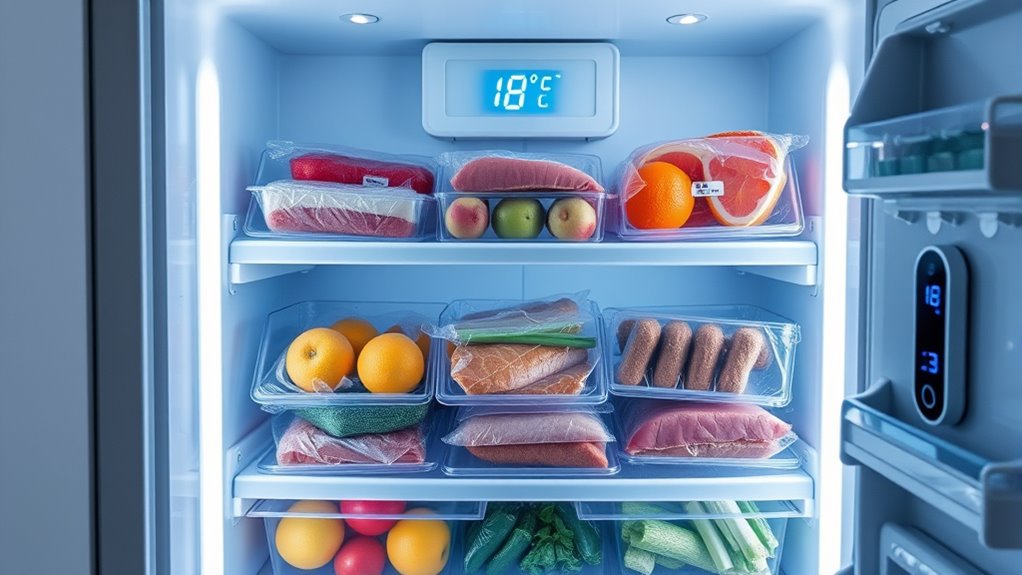
Maintaining the right freezer temperature is essential for keeping your food fresh and safe. The ideal range is between 0°F and -18°C.
Keeping your freezer at 0°F to -18°C ensures food stays fresh, safe, and flavorful.
Keeping your freezer within this range ensures food stays frozen solid, which helps prevent bacteria growth and spoilage. If the temperature goes above 0°F, ice crystals can melt, and bacteria may start to grow, risking food safety.
On the other hand, setting it too cold, below -18°C, can waste energy and cause freezer burn. Use a reliable thermometer to check the temperature regularly, especially if you notice changes in food texture or appearance.
Staying within this range helps preserve the freshness, flavor, and nutritional value of your frozen foods effectively.
Why Maintaining the Correct Freezer Temperature Is Important for Food Safety
Maintaining the right freezer temperature is key to preventing bacterial growth that can cause foodborne illnesses. When your freezer is at the proper temperature, it helps keep your food safe to eat.
It also helps preserve the taste, texture, and nutritional value of your food. Keeping the temperature consistent means your food stays fresh and safe for longer.
Prevents Bacterial Growth
If your freezer isn’t kept at the right temperature, bacteria can multiply quickly and cause food to spoil or become unsafe to eat. When the freezer is too warm, bacteria that cause foodborne illnesses can thrive, raising the risk of contamination.
Keeping the temperature at or below 0°F (−18°C) slows bacterial growth significantly. This helps ensure your food stays safe for longer periods.
To prevent bacterial growth, you should maintain a consistent temperature of 0°F (−18°C), avoid opening the door too often, and regularly check and adjust your freezer’s thermostat.
Preserves Food Quality
Keeping your freezer at the right temperature is key to preserving your food’s quality. When it stays at or below 0°F (-18°C), it helps keep the texture, flavor, and nutrients intact.
Proper freezing prevents large ice crystals from forming, which can damage cell walls and cause freezer burn. This keeps your foods tasting fresh and looking appealing.
If the temperature rises above the recommended level, foods can become soggy, develop off-flavors, or spoil faster. Maintaining a consistent temperature also prevents moisture loss and freezer burn.
How to Properly Measure Your Freezer’s Temperature
To keep your freezer at the right temperature, start with a reliable thermometer made for freezers. Place it in the center, away from walls or door seals for the most accurate reading.
Check the temperature at least once a day, ideally during your regular cleaning. When measuring, make sure the thermometer isn’t touching the sides or back of the freezer, as that can give false readings.
Allow the thermometer to sit for a few hours or overnight before recording the temperature for the best results. Keep these tips in mind:
- Use a digital or analog thermometer specifically for freezers
- Place the thermometer in a central spot, not near walls
- Record readings regularly to stay on top of it
Signs Your Freezer Is Too Cold or Not Cold Enough
If your freezer has frost buildup or melting, it could mean it’s either too cold or not cold enough. You might see your food freezing unevenly or thawing unexpectedly.
Unusual noises coming from the appliance can also be a sign there’s a temperature problem. Keep an eye out for these signs to catch issues early.
Frost Buildup or Melting
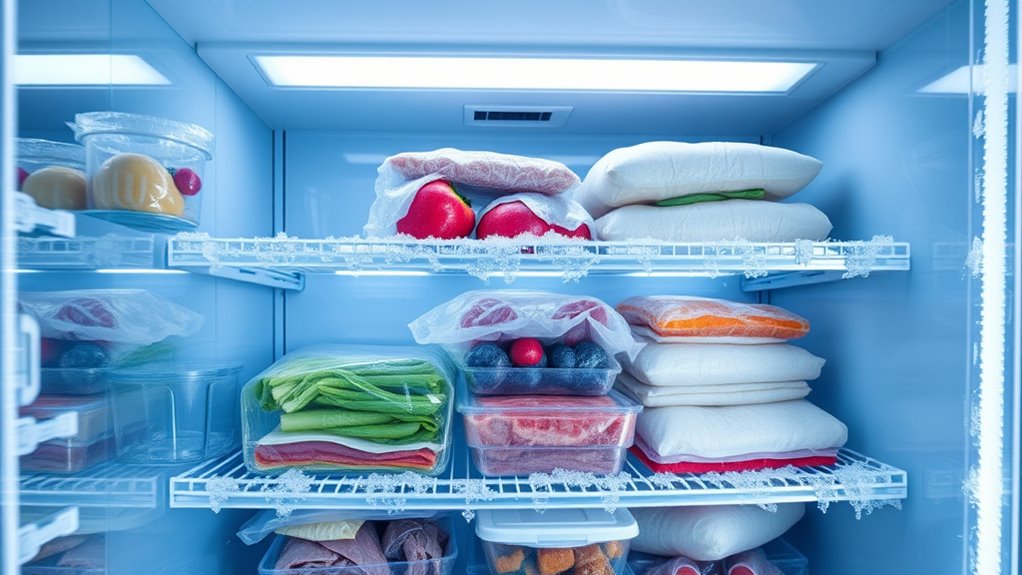
Frost buildup or melting inside your freezer can be a sign that the temperature isn’t set right. When you see thick frost, it usually means the freezer is too warm, causing moisture to condense and freeze on surfaces.
On the other hand, melting or a lack of frost might mean it’s too cold, which can lead to unnecessary ice buildup and waste energy. Keep an eye out for signs like these to catch issues early.
Look for thick layers of frost on the walls or shelves, water pooling inside the freezer, or ice melting. Excess ice around door seals is another clue that something’s off.
These signs suggest your freezer isn’t maintaining the right temperature. Try adjusting the thermostat, check the door seals, or defrost if needed.
Keeping the right temperature helps prevent frost problems and makes sure your freezer runs efficiently.
Food Freezing or Thawing
When your freezer isn’t maintaining the right temperature, you might notice issues with how your food freezes or thaws. If food takes longer to freeze or starts thawing too early, your freezer could be too warm.
On the other hand, if you see large ice crystals or your food becomes overly hard, it might be too cold. Keep an eye on the texture and freezing times of your items to spot these signs.
Use this quick guide to help you figure out if your freezer needs adjusting:
| Sign of Too Warm Freezer | Sign of Too Cold Freezer |
|---|---|
| Food thaws quickly | Excessive ice buildup |
| Ice crystals are small or absent | Food is rock-hard |
| Freezing takes too long | Freezer feels excessively cold |
| Spoiled or soggy foods | Freezer burns on items |
Adjust your freezer’s temperature so your food stays fresh and safe.
Unusual Refrigerator Noise
Unusual noises coming from your refrigerator can be a sign that your freezer isn’t maintaining the right temperature. If you hear rattling, buzzing, or clicking sounds, your freezer might be too cold or not cold enough.
These noises often point to issues with the compressor, fan, or defrost system. When the temperature is off, the compressor may run too much or struggle to cycle properly, causing strange sounds.
To troubleshoot, check for excessive frost buildup, which can strain the compressor. Also, listen for a faulty fan that may be making irregular noise. If the compressor runs constantly, it could indicate a temperature problem.
Dealing with these issues quickly helps keep your freezer running smoothly, prevents food spoilage, and cuts down on noise disruptions.
How Freezer Temperature Affects Food Quality and Shelf Life
Maintaining the proper freezer temperature is crucial because it directly impacts the quality and longevity of your stored food. When your freezer is too warm, bacteria and mold can grow, causing food to spoil faster and lose its flavor, texture, and nutritional value.
Conversely, if it’s too cold, you risk freezer burn, which dries out food and affects its taste. Keeping the temperature consistent helps preserve freshness and prevents deterioration.
Proper freezing slows enzyme activity and microbial growth, extending shelf life. It also prevents the formation of large ice crystals that can damage cell walls in meats and fruits.
How to Set and Adjust Your Freezer Temperature for Optimal Preservation
To keep your food fresh, set your freezer to the right temperature, usually around 0°F.
You should also adjust the settings based on the types of food you’re storing, like freezing meats or preserving baked goods.
Properly managing these settings helps ensure your food stays safe and maintains quality over time.
Proper Temperature Settings
Setting the right temperature on your freezer is key to keeping food fresh and safe. Set your freezer to 0°F (-18°C) to prevent bacteria growth and keep food quality high.
Use a reliable thermometer to check the temperature regularly because built-in gauges can be off. When making adjustments, do it gradually to avoid sudden temperature changes.
Keep the door closed as much as possible to maintain a steady temperature. Here are some tips to help:
- Use a thermometer to verify the actual temperature
- Adjust the thermostat in small steps
- Keep the door closed to prevent heat exchange
Maintaining the correct temperature helps your food stay fresh longer and reduces spoilage or freezer burn. Regular checks ensure your freezer works effectively.
Adjusting for Food Types
Different types of food need specific temperature settings to stay fresh and safe. For example, meats, seafood, and poultry should be kept at around 0°F (-18°C) to prevent bacteria growth.
Vegetables and fruits usually tolerate slightly higher temperatures but still last longer when kept at 0°F. Adjust your freezer based on the food you’re storing.
| Food Type | Ideal Temperature | Storage Duration |
|---|---|---|
| Meat & Poultry | 0°F (-18°C) | 6-12 months |
| Seafood | 0°F (-18°C) | 3-6 months |
| Fruits & Veg | 0°F (-18°C) | 8-12 months |
| Ice Cream | -10°F (-23°C) | 2-4 months |
| Prepared Meals | 0°F (-18°C) | 3-6 months |
Make sure to adjust your freezer to keep food fresh and safe for longer.
Common Mistakes That Mess Up Your Freezer’s Temperature
One common mistake that can disrupt your freezer’s temperature is frequently opening the door or leaving it open for extended periods. Every time you do this, warm air enters, forcing the freezer to work harder to maintain its ideal temperature.
Over time, this can lead to inconsistent cooling and freezer inefficiency. To avoid this, keep the door closed as much as possible, especially during busy times. Also, avoid overloading the freezer, which can block air vents and hinder proper circulation.
Finally, neglecting to clean the coils or vents can cause cooling issues. Regularly check these areas to guarantee proper airflow and cooling performance. Staying mindful of these habits helps your freezer maintain a steady, excellent temperature, keeping your food safe and fresh longer.
Do Different Types of Freezers Have Different Temperature Needs?
While all freezers aim to keep food safely frozen, the ideal temperature can vary depending on the type of freezer you have. Upright freezers typically need to stay at a consistent 0°F (-18°C) to prevent spoilage and freezer burn.
Chest freezers, which often hold larger quantities, also require a temperature of 0°F but can be a bit more forgiving because of their better insulation. Portable or mini freezers might have slightly different settings, usually around 5°F (-15°C), but it’s important to check the manufacturer’s guidelines.
Chest freezers tend to keep colder temperatures more efficiently, while upright models make access easier. No matter the type, keeping the right temperature ensures your food stays fresh and safe for longer.
Tips to Keep Your Freezer Running Efficiently and Save Energy
Keeping your freezer at the right temperature is just the start; maintaining its efficiency also helps save energy and prolong its lifespan. To keep it running smoothly, verify the door seals tightly, check for gaps, and replace worn gaskets as needed.
Regularly defrost your freezer if it isn’t frost-free—excess ice reduces efficiency. Avoid overloading it, which blocks airflow and strains the compressor.
To maximize energy savings, keep the freezer full but not packed, as frozen items help maintain cold temperatures.
Consider these tips:
- Check and replace door seals regularly
- Defrost when ice buildup exceeds a quarter-inch
- Keep the freezer organized for proper airflow
Implementing these simple steps helps your freezer operate efficiently, saving energy and extending its life.
When and How to Thaw and Reset Your Freezer Temperature
Knowing when to thaw your freezer and reset its temperature helps it work efficiently and prevents problems like ice buildup or food spoilage.
You should thaw your freezer when ice gets thicker than a quarter-inch or if it’s having trouble keeping things cold.
Check regularly for frost buildup and defrost as needed, ideally every 6 to 12 months.
To reset the temperature, turn off the freezer, remove all contents, and unplug it.
Let it defrost completely, then clean and dry the interior thoroughly.
Once it’s dry, plug it back in and set the temperature to 0°F (−18°C).
Allow it to stabilize for 24 hours before restocking.
Proper thawing and resetting keep your freezer running smoothly and help it last longer.
How Temperature Prevents Freezer Burn and Food Spoilage
Maintaining the correct freezer temperature is key to preventing both freezer burn and food spoilage. When your freezer stays at the right temperature, it slows bacterial growth and minimizes moisture loss, keeping food fresh longer.
If the temperature is too warm, bacteria can grow, leading to spoilage. Conversely, if it’s too cold, moisture inside food can evaporate, causing freezer burn.
To prevent these issues, keep your freezer around 0°F (-18°C). Proper temperature slows microbial activity, extending food shelf life.
Consistent cold reduces moisture loss, preventing freezer burn. Maintaining the right temperature also helps preserve food texture, flavor, and safety.
FAQs: Monitoring and Maintaining Your Freezer Temperature
How can you guarantee your freezer stays at the right temperature? Regularly check it with a reliable thermometer, ideally placed near the back or center for accuracy. Keep the freezer door closed as much as possible to maintain consistent temperatures.
If you notice fluctuations, defrost and clean the coils, and verify the door seal is tight. Adjust the thermostat if needed, but avoid setting it too low, which can waste energy. Record temperature readings periodically to track stability.
Also, avoid overloading the freezer, as proper airflow helps maintain an even temperature. If your freezer has an alarm feature, enable it to alert you to temperature changes. Monitoring regularly confirms your food stays frozen safely and prevents spoilage.
Frequently Asked Questions
How Often Should I Check My Freezer’s Temperature?
You should check your freezer’s temperature at least once a month to make sure it stays at the right level. Regular checks help prevent spoilage and keep your food safe.
Use a reliable thermometer and adjust the settings if the temperature rises above 0°F (-18°C). Keep a record of your readings so you can spot any patterns or issues over time.
This way, you can ensure your freezer remains efficient and safe for your food.
Can Temperature Fluctuations Damage Frozen Food?
Yes, temperature fluctuations can damage your frozen food. When the temperature rises above 0°F (-18°C), ice crystals melt, which can cause dehydration and changes in texture.
Repeated fluctuations can lead to freezer burn and spoilage, reducing the quality and safety of your food.
To keep your food safe, try to keep your freezer consistently cold, avoid opening the door too often, and check the temperature regularly.
Stable conditions help maintain the taste, texture, and nutritional value of your frozen items.
What Tools Are Best for Measuring Freezer Temperature?
You should use a digital or analog freezer thermometer to measure your freezer’s temperature accurately. Have you ever wondered if your freezer is truly keeping food safe?
A digital thermometer offers quick, precise readings, while an analog one is affordable and easy to use. Place it in the center of the freezer for the best accuracy.
Regular checks guarantee your freezer maintains the ideal temperature and keeps your food fresh.
Does the Size or Brand of Freezer Affect Ideal Temperature?
Yes, the size and brand of your freezer can affect the ideal temperature setting. Larger freezers might need slight adjustments to stay at the right temperature.
Different brands may have unique insulation or cooling systems, which can impact temperature stability. It’s important to keep an eye on your freezer’s temperature with a reliable thermometer.
Regularly checking and adjusting the temperature helps ensure your food stays properly preserved, no matter the size or brand of your freezer.
How Do Ambient Room Temperature Changes Influence Freezer Temperature?
Ambient room temperature changes can influence your freezer’s internal temperature. When the room gets warmer, your freezer has to work harder to keep things cold, which can cause small temperature fluctuations.
On the other hand, if the room is cooler, your freezer might run less often, which could lead to uneven cooling. To keep the temperature steady, make sure your freezer is well-insulated and not placed near heat sources.
It’s also helpful to use a thermometer to keep an eye on the temperature. Adjust your settings if needed to ensure your freezer stays at the right temperature.
Conclusion
Keeping your freezer at the right temperature isn’t just about safety—it’s about preserving flavor and texture. Some say a colder freezer means better food, but did you know that setting it too cold can cause unnecessary energy use and freezer burn?
The truth is, maintaining an ideal range of 0°F to 2°F balances safety and efficiency. So, don’t just guess—measure and monitor regularly to keep your food fresh and your energy bills low.
Remember, the main key to a well-functioning freezer is keeping it at the right temperature. That way, your food stays safe, fresh, and you save energy too.