10 Key Differences Between Ice Melt and Rock Salt
Are you tired of slipping on icy walkways or wasting money on ineffective winter de-icers? You’re not alone—many people struggle with choosing the right product to keep their paths safe and clear.
Knowing the differences between ice melt and rock salt can make all the difference in your winter safety routine.
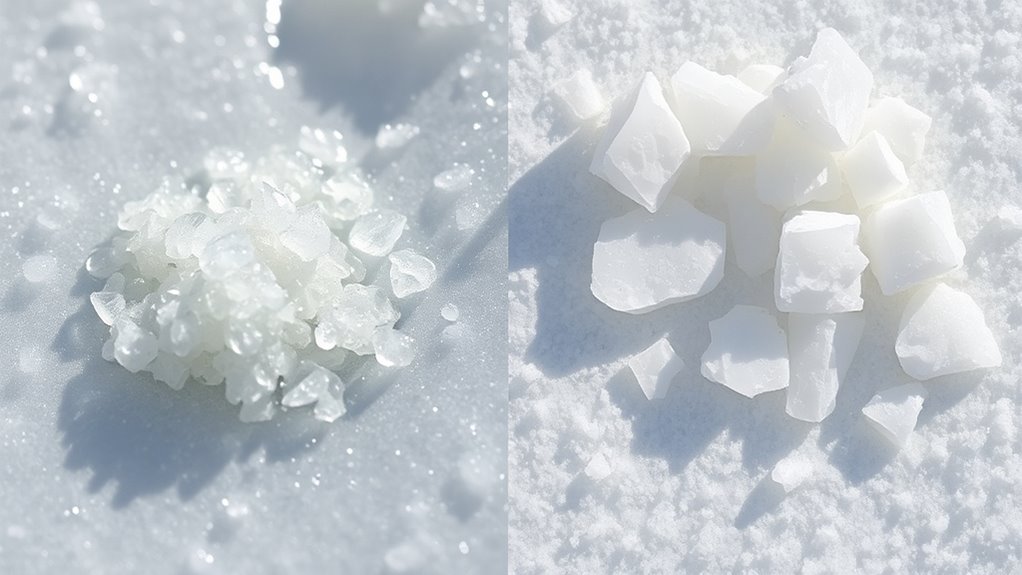
Ice melt typically contains calcium, magnesium, or potassium chlorides, dissolves quickly, and works at colder temperatures, while rock salt is mainly sodium chloride, effective at slightly higher temperatures, but slower.
Ice melt is more costly but lasts longer and melts ice faster. Both can harm plants, surfaces, and pets if not used carefully.
Understanding these differences can help you make safer, cost-effective choices.
Continue exploring to learn more about using these products wisely.
Key Takeaways
- Ice melt contains calcium, magnesium, or potassium chlorides and works well at lower temperatures. Rock salt is mainly sodium chloride and isn’t as effective when it’s really cold.
- Ice melt melts ice faster and can lower the freezing point to about -25°F. In comparison, rock salt works best above 20°F.
- Ice melt tends to be more expensive, but it lasts longer and you need to use less of it. This makes it more efficient in colder weather.
- Both products can harm the environment. Salt runoff can damage plants and soil. Ice melt might also stain surfaces.
- To get the best results, start by clearing away snow first. Then, measure the right amount of product and spread it evenly.
- Reapply as needed to keep ice at bay and ensure safety.
What Are the Chemical Differences Between Ice Melt and Rock Salt?
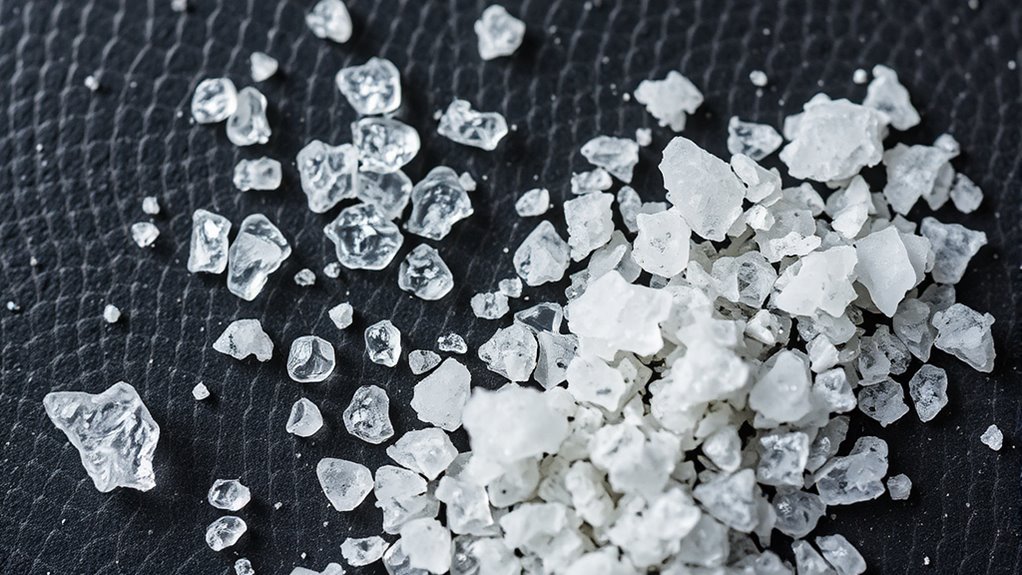
Ice melt and rock salt differ mainly in what they’re made of, which affects how they melt ice. Ice melt products are usually calcium chloride, magnesium chloride, or potassium chloride.
These chemicals dissolve easily in water and release heat, helping to break the bond between ice and pavement. Rock salt, on the other hand, is mostly sodium chloride.
When it dissolves, sodium chloride lowers the freezing point of water, causing ice to melt. But it works best at temps above 20°F, while chloride-based melts can work in colder conditions.
Their chemical makeup not only affects how well they melt but also their environmental impact and potential damage to surfaces. Knowing these differences can help you pick the right product for your winter needs.
Which Melts Ice Faster: Ice Melt or Rock Salt?
You might notice that ice melt generally works faster than rock salt, especially at lower temperatures.
This is because ice melt is designed to work effectively across a broader temperature range, melting ice more quickly.
Understanding these differences can help you choose the right product for your specific winter conditions.
Melting Speed Differences
Regarding melting snow and ice, ice melt products usually work faster than rock salt. Ice melt contains chemicals like calcium chloride that can start melting ice at lower temperatures, speeding up the process.
Rock salt, mainly sodium chloride, works best at slightly warmer temperatures and takes longer to melt ice. If you’re in a hurry, ice melt will clear ice quicker.
Rock salt melts more slowly and depends heavily on temperature. This makes it less efficient in cold, early winter conditions.
Temperature Effectiveness
While melting speed varies based on chemical composition, temperature plays a key role in which product works faster. Ice melt usually starts working effectively at lower temperatures, sometimes as cold as -15°F because it’s designed to lower the freezing point more aggressively.
Rock salt, on the other hand, becomes less effective at extremely low temperatures, typically above 20°F. When it gets colder than that, salt’s ability to melt ice drops significantly.
If you’re dealing with very cold conditions, ice melt formulas are generally more reliable because they work in colder temperatures. In milder weather, both products work well, but ice melt often melts ice faster when it’s really cold outside.
How Effective Are Ice Melt and Rock Salt in Different Temperatures?
You’ll notice that ice melt and rock salt work differently as temperatures get colder, each with their own cold weather limits. Their melting points are different, which impacts how well they perform at various temperatures.
Knowing these temperature thresholds can help you pick the right product for effective ice control. It’s all about matching the product to the conditions to get the best results.
Performance in Cold Weather
Both ice melt and rock salt perform differently depending on the temperature, which can greatly impact their effectiveness during cold weather. Ice melt generally works well in temperatures above 15°F (-9°C), quickly melting ice and snow.
When temperatures drop below this point, its ability to melt diminishes, and you may need multiple applications. Rock salt, on the other hand, remains effective down to about 5°F (-15°C), but its melting power weakens as temperatures plunge further.
In extremely cold conditions, neither product is highly effective on its own, and you might need supplementary methods like sand or other de-icers. Your choice depends on the temperature range you face, and understanding their performance limits helps you stay safe during harsh winter days.
Melting Point Variations
Understanding how ice melt and rock salt respond to different temperatures means looking at their melting point variations. Ice melt products, which often contain calcium or magnesium chloride, can lower the melting point significantly, sometimes down to about -25°F (-32°C). This makes them effective even in very cold weather.
Rock salt, mainly sodium chloride, has a higher melting point around 15°F (-9°C). That means it doesn’t work as well when temperatures drop below that. When it gets colder than 15°F, rock salt struggles to melt ice, but ice melt products can still do the job.
Your choice depends on the temperature range you’re dealing with. Ice melt solutions are better for extremely cold conditions, while rock salt works best in milder cold weather.
Temperature Thresholds
The effectiveness of ice melt and rock salt varies a lot depending on the temperature, with each having a specific range where they work best. Ice melt products, often made from calcium chloride or magnesium chloride, work well at lower temperatures, sometimes as cold as -25°F (-32°C).
Rock salt, mainly sodium chloride, tends to lose its effectiveness below 15°F (-9°C). When temperatures drop below that, salt struggles to melt ice quickly, and its performance drops significantly.
You’ll find ice melt performs well in extreme cold, speeding up melting even during harsh winter conditions. Knowing these thresholds helps you pick the right product for specific temperatures, making ice removal safer and more effective during winter storms.
Are Ice Melt and Rock Salt Safe for Pets and Children?
Are ice melt and rock salt safe for pets and children? Generally, both can pose health risks if ingested or if they come into contact with skin. Rock salt, made from sodium chloride, can cause irritation, vomiting, or more serious issues if pets or kids lick or swallow it.
Ice melt products often contain chemicals like calcium chloride or magnesium chloride, which can irritate skin, eyes, or the digestive system. If your pets or children play outside during winter, it’s best to keep them away from treated areas and wash their hands or paws afterward.
Using safer, pet-friendly alternatives or applying these substances in moderation can help reduce potential health hazards. Always read product labels for specific safety instructions.
What Are the Environmental Impacts of Using Ice Melt and Rock Salt?
While keeping pets and children safe during winter is important, it’s likewise essential to think about how ice melt and rock salt affect the environment. Both can cause serious ecological harm if not used carefully.
They can contaminate water sources, which harms aquatic life. Salt runoff can also damage nearby plants and soil health. Excessive salt can even lead to soil degradation, making it harder for plants to grow.
Salt and chemicals may seep into groundwater, impacting drinking water supplies. These effects are especially worrying in areas with heavy winter maintenance. Being mindful of how much you apply and exploring eco-friendly options can help protect ecosystems while keeping your property safe.
How Should You Apply Ice Melt and Rock Salt for Best Results?
To get the best results when applying ice melt or rock salt, it’s important to spread it properly. Start by clearing away loose snow and ice so the de-icer can directly contact the surface.
Use a spreader or sprinkle evenly by hand, but avoid overdoing it. Too much can be wasteful and might even cause damage. For optimal results, apply ice melt or rock salt just before a storm or when temperatures are near freezing.
Don’t wait until the ice gets thick—applying early helps prevent it from bonding and keeps buildup to a minimum. Reapply as needed, especially after more snow or if temperatures drop again.
Always follow the manufacturer’s instructions for the right amount to use. And remember to wear gloves to protect your skin during application.
What Are the Cost and Longevity Differences Between Ice Melt and Rock Salt?
Considering the cost and longevity, ice melt generally costs more upfront but lasts longer than rock salt. Here’s what you should know:
- Price: Ice melt is more expensive, often two to three times the cost per application.
- Durability: It stays effective longer, so you don’t need to reapply as often.
- Effectiveness: Ice melt works at lower temperatures and melts ice faster than rock salt.
- Usage: You usually need less ice melt overall because it’s more efficient, which can make up for the higher initial price.
While ice melt costs more initially, its longer-lasting effects and better cold-weather performance can save you money over time.
Are There Surfaces or Materials You Should Avoid Using These Products On?
Both ice melt and rock salt can be effective for de-icing, but they can cause damage to certain surfaces or materials if used improperly.
For example, rock salt can corrode concrete, asphalt, and metal fixtures, which can lead to cracks and deterioration over time. Ice melt products with chemicals like calcium chloride might stain concrete or asphalt and harm nearby plants.
Avoid applying these products on wooden decks, painted surfaces, or brick pavers, as they can cause discoloration or surface damage.
Also, steer clear of using them on delicate plants or lawns since the chemicals can be harmful.
Always check the manufacturer’s guidelines and test small areas first. Using the right de-icer on proper surfaces helps prevent costly repairs and extends your property’s lifespan.
When Is It Better to Use Ice Melt Instead of Rock Salt?
Wondering when ice melt is a better choice than rock salt? You should consider using ice melt in these situations:
- When temperatures drop below 20°F, rock salt’s effectiveness drops quickly. Ice melt works better in colder conditions.
- If your surfaces are sensitive to corrosion or staining, ice melt is often less damaging.
- For areas with pets or children, some ice melts are less toxic and safer for contact.
- When you need faster melting on icy patches, certain ice melts act quicker than rock salt.
Choosing ice melt in these cases helps prevent damage, keeps everyone safe, and makes ice removal easier.
How Can You Apply Ice Melt and Rock Salt Safely and Effectively?
To apply ice melt and rock salt safely and effectively, make sure to spread them evenly and avoid using too much. This helps the products work better and prevents damage to your driveway or sidewalks.
Always wear gloves and eye protection to avoid skin and eye irritation. Keep pets and children away from the treated areas to keep everyone safe.
Proper Application Techniques
Applying ice melt and rock salt correctly is key for safety and effectiveness during winter weather. To do this, follow these steps:
- Clear away loose snow or ice first. This helps the product make better contact with the surface.
- Measure the recommended amount. Avoid using too much to prevent damage and waste.
- Spread evenly across the surface, especially on high-traffic areas and shaded spots.
- Reapply as needed, especially after new snowfall or if the surface stays icy.
Using a scoop or spreader makes it easier to distribute the material evenly. Don’t apply too much at once, as excess can harm your concrete or landscaping.
Be mindful of wind and rain, which can wash away or dilute the product. This reduces its effectiveness. Proper application keeps everyone safe and helps protect the environment.
Safety Precautions to Follow
Using ice melt and rock salt safely is key to avoiding injuries and damage to your property. Always read and follow the manufacturer’s instructions for proper application.
Wear gloves and protective gear to prevent skin irritation from chemicals. Avoid over-application, as too much can harm plants, animals, and concrete surfaces.
Apply the product evenly to ensure consistent melting and reduce waste. Keep children and pets away from treated areas until the salt or melt has fully dissolved.
Store these products in a secure, dry place, out of reach of children and animals. Be cautious during application in windy conditions to avoid inhaling dust or chemicals.
Regularly clear away excess snow and ice before applying to maximize effectiveness and safety.
Frequently Asked Questions
Can Ice Melt or Rock Salt Damage Concrete Surfaces?
Yes, ice melt and rock salt can damage concrete surfaces if used excessively or improperly. Rock salt can cause surface spalling and cracks by penetrating and expanding within the concrete as it dissolves.
Ice melt products, especially those with chemicals like calcium chloride, can also weaken concrete over time. To protect your surfaces, use these de-icers sparingly and follow the manufacturer’s instructions.
Consider alternative options like sand or calcium magnesium acetate to avoid damage. Being cautious with de-icing products can help keep your concrete surfaces in good shape.
Do Ice Melt and Rock Salt Work on Freezing Rain?
Yes, ice melt and rock salt can work on freezing rain, but their effectiveness depends on conditions. Rock salt starts melting at around 20°F, so it works best in slightly milder freezing rain.
Ice melt products often contain other chemicals like calcium chloride, which can work at lower temperatures. This makes them more effective in colder conditions.
Keep in mind, heavy freezing rain might need manual removal or other de-icing methods for safety.
How Long Does It Take for Ice Melt and Salt to Work?
Ice melt usually starts working within 15 to 30 minutes, depending on the temperature and how thick the ice is.
Salt can take a bit longer—around 30 minutes to an hour—to do its job.
Things like temperature, how much you apply, and the type of surface all play a role in how fast it works.
You’ll see quicker results if you pre-treat surfaces or use plenty of product, especially when it’s really cold outside.
Are There Health Risks From Inhaling Ice Melt or Salt Dust?
Yes, inhaling ice melt or salt dust can pose health risks. You might experience respiratory irritation, coughing, or trouble breathing, especially if you’re exposed often or in large amounts.
Children, pets, and people with asthma are more at risk. To stay safe, wear masks when applying these substances and make sure to ventilate your space well.
Afterward, wash your hands to avoid spreading any dust. Protect your lungs, your health, and your peace of mind.
Can Ice Melt or Rock Salt Be Used on Indoor Icy Surfaces?
You shouldn’t use ice melt or rock salt on indoor icy surfaces. These substances are meant for outdoor use and can damage flooring, carpets, or other indoor surfaces.
They also pose health risks from inhaling dust or residue, especially in enclosed spaces. Instead, try safer, indoor-specific de-icing products or methods like warm water, rugs, or de-icing mats.
These options can clear ice indoors effectively and safely without causing damage or health issues.
Conclusion
Ultimately, choosing between ice melt and rock salt depends on your needs and priorities. Think of it as picking the right tool for a delicate task—balancing effectiveness, safety, and environmental impact.
By understanding their differences, you can make smarter decisions that protect your loved ones and your property. With a little knowledge, you’ll handle winter’s icy challenges more easily.
Ice melt and rock salt each have their pros and cons. Knowing these can help you choose the best option for your situation. Stay informed, stay safe, and enjoy a safer winter season ahead.