Induction vs. Electric: 8 Key Differences
Are you overwhelmed trying to choose between induction and electric cooktops? Many people struggle with deciding which option best fits their kitchen needs and lifestyle. You’re not alone—finding the right cooktop can feel confusing with so many features to consider.
Induction cooktops heat up almost instantly and offer precise temperature control, making your cooking faster and more efficient. In contrast, electric models take longer to warm and have slower adjustments.
Induction is safer, with cooler surfaces and lower burn risk, but costs more upfront. It’s easier to clean and more energy-efficient, too.
Your choice depends on your budget and needs—keep exploring to uncover which option suits your kitchen best.
Key Takeaways
- Induction heats cookware instantly with electromagnetic fields, while electric cooktops take longer to warm up.
- Induction offers around 90% energy efficiency, compared to approximately 70% for electric cooktops.
- Induction surfaces stay cooler and are safer, reducing burn risk.
- Electric cooktops, on the other hand, remain hot after use, which can be a safety concern.
- Induction cooktops tend to be more expensive upfront.
- But they save money in the long run thanks to their energy efficiency.
- Many induction models feature touch controls and digital displays.
- These make them easier to clean and operate than traditional electric models.
Which Cooktop Is Faster: Induction or Electric?

Have you ever wondered which cooktop heats up faster—induction or electric? The answer is induction. It heats up almost instantly because it directly transfers energy to the cookware using electromagnetic fields.
When you turn on an induction cooktop, the surface itself stays relatively cool, but the pot heats up immediately. Electric cooktops, on the other hand, rely on heating elements that take time to warm up and transfer heat to your pots and pans.
This process can take several minutes to reach the desired temperature. So, if speed is your priority, induction cooktops give you a significant advantage. They deliver rapid, precise heat, making cooking quicker and more efficient.
Electric cooktops simply can’t match that level of immediacy.
How Do Induction and Electric Cooktops Generate Heat?
Induction and electric cooktops generate heat through fundamentally different mechanisms. With electric cooktops, heat is produced by electrical resistance in the heating element, which then transfers warmth to the cookware.
Induction cooktops, however, use electromagnetic fields to directly heat ferromagnetic pots and pans, making the process more efficient.
| Method | How It Works | Heat Source |
|---|---|---|
| Electric | Resistance heats the element | Electric resistance wire |
| Induction | Electromagnetic field heats cookware | Magnetic coils beneath the surface |
| Efficiency | Less efficient, heat loss occurs | More efficient, direct transfer |
| Response Time | Slower, takes time to heat | Faster, heats instantly |
| Safety | Surface remains cooler | Surface cools quickly, safer |
Are Induction Cooktops Safer Than Electric?
You might feel more confident using an induction cooktop because it offers precise surface temperature control, reducing the risk of burns.
However, since electric cooktops can stay hot even after turning off, they still pose a burn hazard.
Also, induction cooktops eliminate the risk of electric shock because the surface remains relatively cool, unlike traditional electric models.
Surface Temperature Control
Surface temperature control is a key factor when comparing the safety of induction and electric cooktops. Induction cooktops heat cookware directly through magnetic fields, so the surface stays relatively cool, reducing burn risks. If you touch the surface, you’ll notice it’s cooler than electric stoves, which transfer heat through resistive elements.
Electric cooktops can reach very high surface temperatures because the heating elements radiate heat even after turning off. This lingering heat can cause accidental burns if you’re not careful. Induction surfaces also cool down quickly once you remove cookware, minimizing the chance of accidental contact with hot surfaces.
Risk of Electric Shock
Because induction cooktops heat cookware through electromagnetic fields rather than resistive elements, they inherently limit the risk of electric shock. You’re less likely to get shocked if you accidentally touch the surface since it doesn’t generate heat directly.
The cooktop remains cool to the touch, which reduces the chance of burns or shocks from hot surfaces. Unlike traditional electric stoves, which carry electrical currents through exposed components, induction units are designed with safety in mind.
If something spills or a utensil dislodges, the power typically cuts off quickly, further decreasing shock risk. Still, you should avoid placing your hands or metallic objects near the cooktop while it’s in use.
What Is the Cost Difference Between Induction and Electric Cooktops?
When comparing the initial costs of induction and electric cooktops, induction models tend to be more expensive upfront. You might spend more at first, but induction cooktops often save you money over time through better energy efficiency.
Electric cooktops are usually cheaper to buy but can cost more in electricity bills and repairs later on. Here’s a quick comparison:
| Aspect | Induction | Electric |
|---|---|---|
| Upfront Cost | Higher, often $800-$2000 | Lower, around $300-$700 |
| Energy Efficiency | About 90%, saves on power bills | Around 70%, less efficient |
| Long-term Savings | Yes, due to lower energy use | Less savings in the long run |
| Repair Costs | Can be more expensive to fix | Generally cheaper to repair |
Choose wisely based on your budget and long-term needs.
How Easy Is It to Maintain and Clean Your Cooktop?
Wondering how easy it is to keep your cooktop looking clean? Both induction and electric cooktops are pretty simple to maintain, but they do have some differences in cleaning ease.
Induction cooktops are a breeze because spills don’t burn onto the surface—just wipe with a damp cloth. Electric cooktops, especially coil types, can be trickier since food and grease tend to stick to the coils or glass surface.
To keep your cooktop in top shape, try these tips:
- Use a soft cloth or sponge for regular wiping.
- Avoid abrasive cleaners that could scratch surfaces.
- Tackle spills promptly to prevent buildup.
Which Is More Energy Efficient: Induction or Electric?
Are induction cooktops more energy efficient than electric ones? Generally, yes. Induction heats cookware directly through magnetic fields, which cuts down on heat loss.
Electric cooktops transfer heat through resistive elements, so they can lose more energy to the surrounding air. Here’s a quick overview to compare them:
| Feature | Induction | Electric |
|---|---|---|
| Heat Transfer | Direct to cookware | Indirect, via heating element |
| Energy Efficiency | Around 80-90% | About 70-75% |
| Response Time | Faster, precise control | Slower, less responsive |
| Heat Loss | Minimal | Higher |
While induction saves more energy, it usually costs more upfront. Your choice depends on what matters most to you and your budget.
Does Your Kitchen Setup Affect Which Cooktop Is Best?
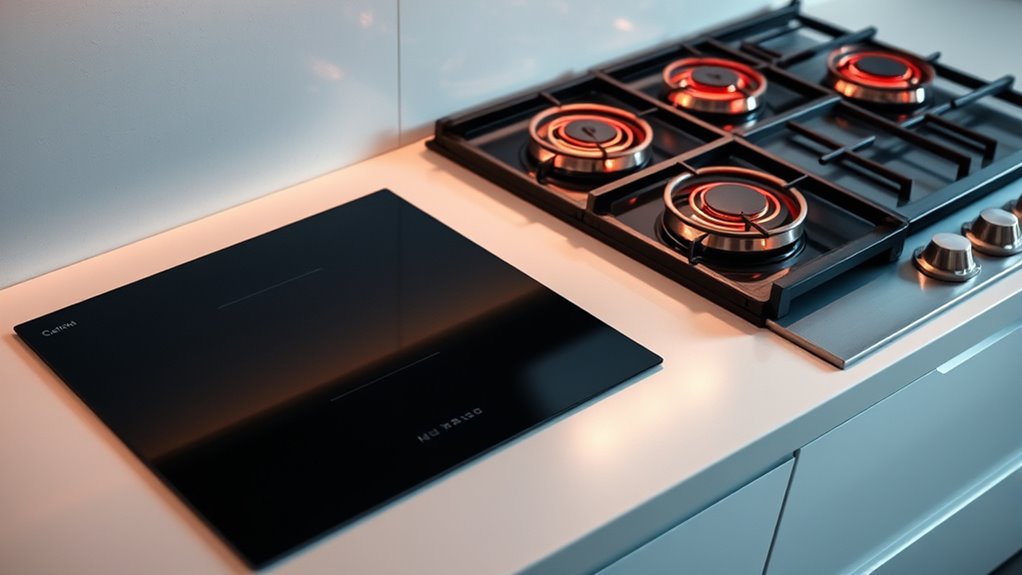
Your kitchen setup can really influence which type of cooktop works best for your space and lifestyle. If you have limited counter space or want a sleek look, an electric cooktop with a flat surface might be perfect.
Your kitchen layout and lifestyle help determine the ideal cooktop choice for your space.
On the other hand, if your kitchen has plenty of room and you like precise heat control, an induction cooktop could be a better fit. Think about these factors:
- Counter space: Induction models usually need a sturdy, flat surface, while electric cooktops can fit into various countertops.
- Power sources: Electric cooktops require a dedicated electrical outlet, whereas induction may need specific wiring.
- Cooking habits: If you want quick heat adjustments, induction offers faster response times, ideal for active kitchens.
Take a look at your kitchen layout and cooking style to find the best fit.
What Features and User Experience Do Induction and Electric Cooktops Offer?
You’ll notice that induction cooktops heat up faster and give you precise control over temperature, making cooking more efficient. Electric models tend to be more durable and easier to clean, with straightforward interfaces that anyone can use.
Considering these features helps you choose a cooktop that best fits your cooking style and lifestyle.
Heating Speed and Control
With regard to heating speed and control, induction cooktops generally outperform electric models thanks to their rapid response times. With induction, heat adjusts almost instantly when you turn the dial or press a button, giving you precise control.
Electric cooktops take longer to heat up and cool down, making it harder to fine-tune temperatures. Here are key features that influence your experience:
- Response Time: Induction heats and cools within seconds, electric takes minutes.
- Temperature Precision: Induction offers more accurate control, ideal for delicate dishes.
- User Interface: Induction panels often have touch controls and digital displays, providing a smoother, more intuitive experience.
Surface Durability and Maintenance
Induction cooktops usually have a sleek, smooth glass-ceramic surface that’s quite durable and resistant to scratches and stains. It’s easy to wipe clean, so maintenance is simple.
Since induction surfaces don’t get as hot as traditional electric cooktops, they’re less likely to suffer from burn marks or heat damage, which helps extend their lifespan.
Electric cooktops with coil burners or smooth glass surfaces can be more prone to scratches, stains, or residue buildup over time. They often need more careful cleaning and maintenance to keep looking new.
User Interface and Features
While both induction and electric cooktops have a variety of features, their user interfaces and overall experience are quite different. Induction cooktops usually have touch-sensitive controls with sleek digital displays, making adjustments quick and easy.
Electric models, on the other hand, often come with physical knobs or buttons, which some people find simpler to operate. Here are some key differences to keep in mind:
- Control Type: Induction cooktops use touch controls, while electric ones rely on knobs or buttons.
- Display Features: Induction models often include digital timers and power indicators, whereas electric models tend to have simpler controls.
- Responsiveness: Induction responds instantly to adjustments, giving you precise control. Electric cooktops are generally slower to react.
Knowing these differences can help you pick a cooktop that fits your preferences for ease of use and modern features.
Frequently Asked Questions
Can I Use Any Cookware on Induction and Electric Cooktops?
You can’t use just any cookware on induction and electric cooktops. For induction, your cookware needs a magnetic base, like cast iron or some stainless steel types, to work properly.
Electric cooktops are more versatile; they work with most cookware, including aluminum and glass. Just make sure to check if your pots and pans are compatible with your cooktop type.
This way, you can ensure efficient heating and avoid any damage to your cooktop or cookware.
Do Induction Cooktops Emit More Noise Than Electric Ones?
Yes, induction cooktops tend to make more noise than electric ones. You might hear a humming or buzzing sound when the induction is on, especially at higher power levels. This noise comes from the electromagnetic coils and the cookware vibrating slightly.
Electric cooktops, on the other hand, are usually quieter. They mainly produce a gentle clicking or sometimes no sound at all. Your experience can vary depending on the specific models and cookware you use.
Are There Specific Safety Features Unique to Induction Cooktops?
Induction cooktops often come with unique safety features, like pan detection, which automatically turns off the heat when no cookware is detected.
Curiously, 85% of models also include child lock functions, preventing accidental activation.
These features improve safety by reducing burns and fires, making induction a smarter choice for households.
You’ll appreciate how these intelligent safeguards give you peace of mind during your cooking adventures.
How Does Power Consumption Vary During Different Cooking Tasks?
During different cooking tasks, your induction cooktop usually uses less power for simmering or gentle warming, which helps save energy.
When you need high heat for boiling or frying, it ramps up power quite a bit to give you quick, intense heat.
Electric cooktops tend to use a steady amount of power no matter what you’re cooking, often leading to higher overall energy use.
Can Induction Cooktops Be Used With Portable or Outdoor Setups?
Yes, you can use induction cooktops in portable or outdoor setups. Imagine camping with a lightweight induction unit; it heats quickly and is easy to use.
Just make sure you have a reliable power source, like a generator or battery pack, to keep it running smoothly. This setup lets you cook efficiently outside, perfect for picnics, camping trips, or outdoor kitchens.
Conclusion
Choosing between induction and electric cooktops is like finding the perfect dance partner—you want one that moves with your rhythm and style.
By understanding their differences, you can pick the one that best fits your kitchen and lifestyle. Think of your decision as a key to a new culinary adventure—unlocking faster, safer, and more efficient cooking.
Whichever you choose, make sure it’s the perfect beat for your home’s harmony. When it comes to induction vs. electric, knowing the pros and cons helps you make the best choice for your cooking needs.