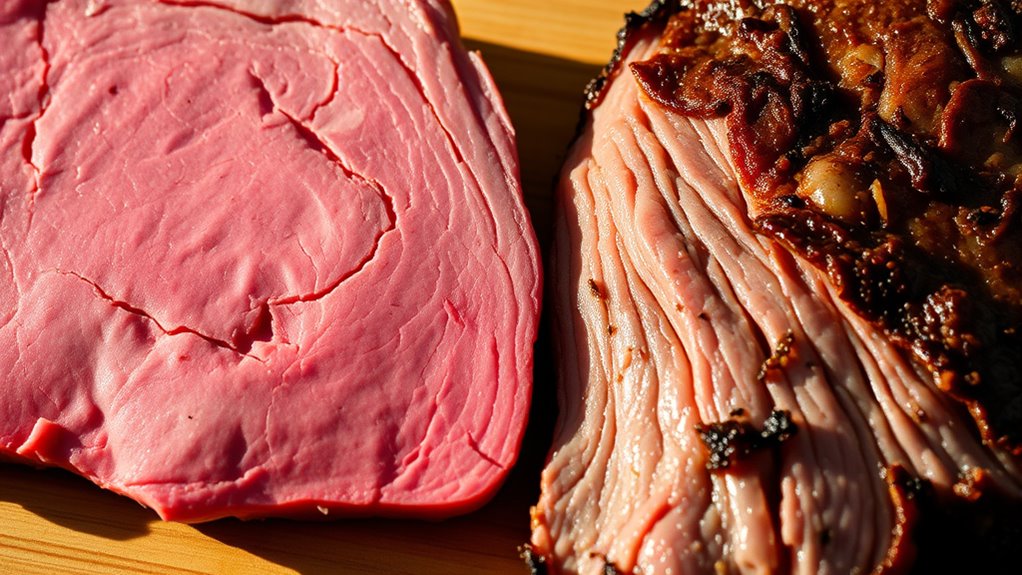
7 Key Differences Between Corned Beef and Brisket
Looking to impress with a hearty, flavorful dish but feeling overwhelmed by the options? You’re not alone—many people struggle to tell apart different cuts of beef and how to cook them best.
Understanding the differences between corned beef and brisket can make all the difference in your cooking.
Corned beef is cured in salt, spices, and water, giving it a salty, savory flavor and a soft, shredded texture. It’s usually cooked by boiling or simmering, making it a quick and convenient choice.
Brisket, on the other hand, comes from the cow’s chest. It offers a beefier, milder taste and a firmer, fibrous texture. It’s best cooked low and slow to break down those fibers and develop its rich flavor.
Their uses and prices vary, and recognizing these differences can help you choose the right cut for your dish—explore further to learn more.
Key Takeaways
- Corned beef is cured in salt and spices, while brisket is typically seasoned and cooked without curing.
- Corned beef has a salty, tangy flavor. Brisket offers a beefy, mild taste that highlights natural flavors.
- Corned beef is softer and easily shredded. Brisket has a firmer, fibrous texture that needs slow cooking.
- Corned beef is usually boiled or slow-cooked in liquid. Brisket is best roasted or braised at low temperatures.
- Corned beef is generally more affordable, pre-cooked, and higher in sodium. Brisket tends to be pricier, with varying fat content.
What Is Corned Beef, and How Is It Made?
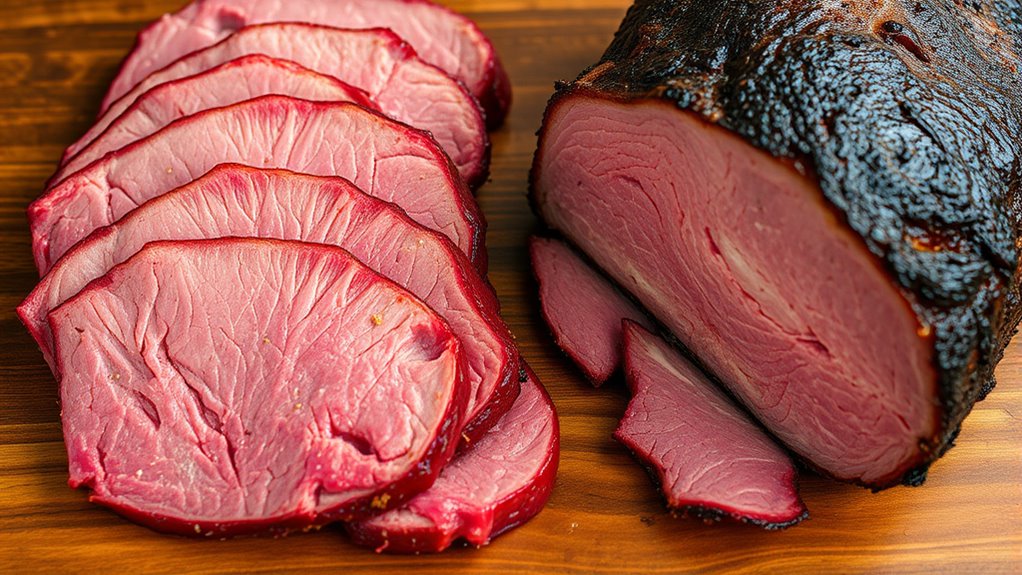
Corned beef is a popular dish made from a cut of beef that has been cured in a salt-based brine. During the curing process, you soak the beef in a mixture of salt, water, and spices, which preserves the meat and gives it a distinct flavor.
This curing method dates back centuries and was originally used to preserve meat before refrigeration. The beef, usually brisket or round, absorbs the salt and spices, tenderizing as it soaks.
After curing, you typically boil or slow-cook the meat until it becomes tender. The process results in a flavorful, salty, and slightly spiced meat that’s often sliced thin and served with vegetables or in sandwiches.
This preparation method gives corned beef its iconic taste and texture.
How Does Corned Beef Differ in Flavor and Texture From Brisket?
You’ll notice that corned beef has a distinct, savory flavor from its curing spices, often with a salty and slightly tangy taste. In contrast, brisket’s flavor is more beefy and mild, allowing the meat’s natural richness to shine.
In terms of texture, corned beef tends to be softer and more moist, while brisket is firmer and can be more fibrous if not cooked properly.
Flavor Profiles and Seasonings
While both corned beef and brisket come from the same cut of beef, their flavor profiles and seasonings set them apart quite a bit. Corned beef is especially salty because of its curing process with coarse salt and spices like peppercorns, garlic, and bay leaves. The curing gives it a distinctive briny flavor that’s savory and slightly tangy.
In contrast, brisket is usually seasoned with simple rubs or marinades, which highlight the beef’s natural richness. It tends to have a meaty, beefy flavor without the extra saltiness or spice overtures common in corned beef.
When cooked, corned beef’s seasoning infuses deeply, creating a more complex, spiced profile. Brisket’s flavor depends mainly on its seasoning and cooking method, allowing the beef’s natural taste to shine through.
Texture and Tenderness
The curing process used for corned beef really affects its texture, making it quite different from brisket. Corned beef tends to be more uniform and softer because of the curing salts and slow cooking, which break down connective tissues.
This results in a tender, almost melt-in-your-mouth experience. In contrast, brisket’s texture depends on the cut and cooking method. It can be chewy if undercooked or tender if cooked properly over low heat.
Brisket often has a firmer bite and more pronounced grain because it keeps more of its muscle fiber. If you want soft, easily shredded meat, corned beef is the way to go. Brisket offers a more substantial, hearty chew with a bit more texture.
What Are the Best Cooking Methods for Corned Beef and Brisket?
What’s the best way to cook corned beef and brisket to guarantee they’re tender and flavorful? For corned beef, slow simmering or boiling works best. Cooking it in a flavorful liquid with spices for 2.5 to 3 hours helps break down the connective tissue, making it tender.
For brisket, roasting at a low temperature around 275°F for several hours keeps it moist and helps develop rich flavors. Alternatively, braising—cooking slowly in a covered dish with liquid—is great for both cuts and locks in moisture.
Using a slow cooker or Instant Pot can also make things easier, giving you tender results in less time. Remember, keeping the heat low and avoiding overcooking are key to getting juicy, flavorful meat.
Which Cut Works Best for Different Recipes and Occasions?
Choosing the right cut of beef depends on the recipe and occasion, since each has its own qualities suited to different cooking methods.
For hearty, slow-cooked dishes like stews or pot roasts, brisket works best because of its rich marbling and tenderness when cooked low and slow.
If you’re making corned beef for a festive dinner or sandwich, pre-cooked corned beef is convenient and flavorful. But if you want a more traditional, homemade touch, raw brisket can be seasoned and cured yourself.
For grilling or quick frying, a leaner cut like flat brisket might be suitable, but it’s less common for corned beef.
Ultimately, choose based on whether you want a tender, melt-in-your-mouth experience or a quick, flavorful meal.
How Do Price and Availability Compare Between Corned Beef and Brisket?
Prices and availability for corned beef and brisket can vary a lot depending on factors like seasonality, regional demand, and meat quality.
Usually, corned beef is more affordable and easier to find year-round because it’s often sold pre-cooked, canned, or sliced, making it widely accessible.
Brisket tends to be more expensive due to its larger size and the demand for fresh, high-quality cuts, especially around holidays or barbecue seasons.
Availability of brisket can change based on regional tastes and supply chain issues.
If you’re shopping on a budget or in a less popular region, corned beef might be more readily available and cheaper.
But for specialty or high-quality cuts, brisket generally costs more.
How Can You Tell Corned Beef and Brisket Apart at the Butcher?
When you’re at the butcher, take a good look at the meat’s appearance. Corned beef usually has a uniform, reddish-pink color, while brisket tends to be darker and deeper in hue.
Feel the texture as well. Corned beef is generally more firm and consistent, whereas brisket has visible marbling and a coarser feel.
Noticing these differences can really help you figure out which cut you’re getting.
Visual Appearance Differences
At the butcher’s counter, telling corned beef from brisket mainly comes down to how they look. Corned beef usually looks uniformly cooked, with a pinkish or reddish color from the curing process, and often has a slightly shiny surface. It’s often pre-sliced or in a chunk, with visible seasonings or spice rubs.
Brisket, on the other hand, looks more raw or uncooked, with a deep red or dark purple hue. It also has a thicker layer of fat on top. When uncooked, brisket has a coarse, fibrous texture, and its surface is more uneven.
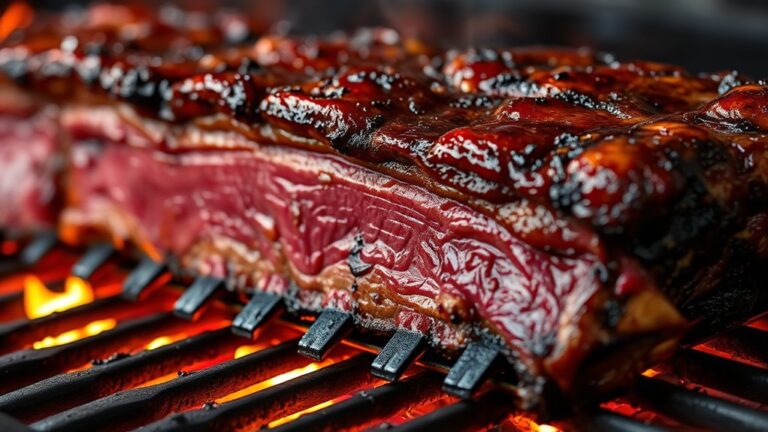
If brisket is cooked, its surface might be browned or even charred, giving it a firmer, denser appearance. Recognizing these visual clues can help you quickly tell the difference between the two at the butcher’s.
Texture and Marbling
The texture and marbling of corned beef and brisket are key indicators that can help you tell them apart at the butcher’s counter. Corned beef tends to feel softer and more uniform because it’s cured and often cooked until tender. Its surface can feel a little squishy, and the meat might fall apart easily.
Brisket, on the other hand, has a denser, firmer texture with a noticeable grain you can feel when you press on it. The marbling in brisket is usually more uneven, with streaks of fat running through the muscle. This fat adds flavor and moisture during cooking.
Corned beef usually has less visible marbling because the curing process changes how the fat is distributed. Recognizing these differences can help you pick the right cut for your recipe.
Common Questions About Corned Beef and Brisket?
Many people wonder about the key differences between corned beef and brisket, especially since they often look similar but have distinct qualities. You might ask, “Can I substitute one for the other?”
While you can cook brisket the same way as corned beef, their flavors and textures are different. Corned beef is usually pre-cooked and cured with salt and spices, so it’s ready to eat. Brisket is raw and needs slow cooking to get tender.
You may also wonder about cooking times. Brisket takes longer to cook, while corned beef is quicker since it’s already cooked. Lastly, people often ask about flavor differences. Corned beef has a salty, spiced taste, while brisket offers a richer, beefy flavor.
Understanding these differences helps you choose the right cut for your meal.
Frequently Asked Questions
Can Corned Beef Be Made From Brisket at Home?
Yes, you can definitely make corned beef from brisket at home. Start by choosing a good cut of brisket.
Then, cure it in a seasoned brine with salt, sugar, and spices for about a week. After curing, rinse the meat and simmer it gently until tender.
Enjoy your homemade corned beef! This process lets you customize the flavors and enjoy a fresh, delicious result.
How Long Does Each Cut Typically Last in Storage?
Did you know that cooked brisket can last 3 to 4 days in the fridge, while corned beef stays good for up to 5 days?
Typically, both cuts should be stored in airtight containers at or below 40°F. If you’re not eating them within this timeframe, freezing is your best bet.
Freezing can extend their shelf life to about 2 to 3 months. Always check for signs of spoilage before eating.
Are There Health Differences Between Corned Beef and Brisket?
Yes, there are health differences between corned beef and brisket. Corned beef tends to be higher in sodium because of the curing process, which can impact your blood pressure if you eat too much.
Brisket, especially fresh, usually has less salt but can be higher in fat. If you’re trying to watch your sodium or fat intake, you’ll want to choose carefully.
Moderation is key to enjoying both cuts in a healthy way.
Which Cut Is More Suitable for Slow Cooking?
You should choose brisket for slow cooking because its tough muscles break down beautifully over time, making it tender and flavorful.
Corned beef, which is already cured and partially cooked, isn’t ideal for long, slow simmering. It can become too soft or lose its texture.
Opt for brisket if you want to fully enjoy a melt-in-your-mouth experience and savor its rich flavors. It’s perfect for creating a hearty, comforting meal that satisfies every bite.
How Do Seasoning Options Differ Between the Two?
You’ll find that seasoning options for corned beef often include pickling spices like mustard seeds, peppercorns, and bay leaves, giving it a distinctive flavor.
For brisket, you can choose from a variety of rubs, marinades, or dry spices such as paprika, garlic, and onion powder.
Brisket’s versatility allows for more customized flavor profiles, while corned beef typically sticks to traditional pickling spice blends.
Conclusion
Now that you know the key differences between corned beef and brisket, you’re ready to pick your perfect cut. Think of it like choosing the right brush to paint your culinary masterpiece—each one adds its own unique color and texture.
Whether you’re after the tender, spicy charm of corned beef or the hearty, smoky richness of brisket, your next delicious adventure is just ahead. Dive in and enjoy the journey!