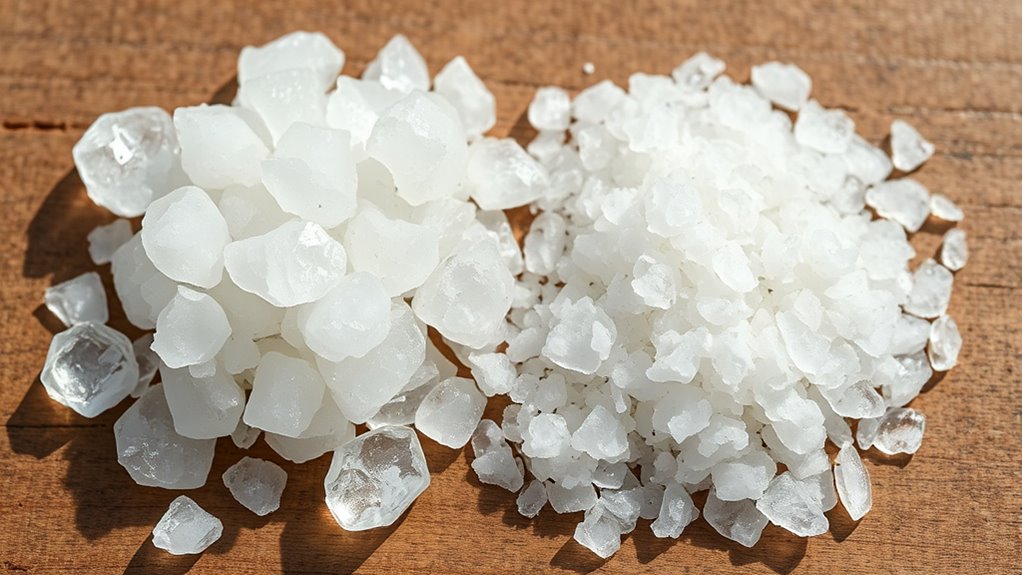
Kosher Salt Vs Sea Salt – 7 Key Differences
Many home cooks and food enthusiasts often find themselves confused about which type of salt to use in their recipes. With so many options out there, choosing the right one can feel overwhelming. You’re not alone—navigating the world of salts can be tricky, but understanding the differences helps you make better choices for your dishes.
Kosher salt and sea salt differ mainly in texture, flavor, and use. Kosher salt has large, flaky grains that are easy to pinch and control, making it great for seasoning and brining.
Sea salt varies from fine to coarse, offering a briny flavor and crunch, perfect for finishing dishes. While nutritional differences are minimal, the minerals in sea salt add complexity.
Keep exploring to unveil when and how to best use each for your cooking.
Key Takeaways
- Kosher salt has larger, coarser grains, while sea salt can range from fine to coarse textures.
- Kosher salt is made from underground deposits, whereas sea salt is harvested from evaporated seawater.
- Sea salt contains more trace minerals, which can add complexity to the flavor. Kosher salt, on the other hand, is mineral-free.
- Kosher salt is great for seasoning and brining because of its larger grains. Sea salt is often used as a finishing touch on dishes for added texture and flavor.
- Both salts have similar sodium content, but sea salt may offer some extra mineral benefits.
What Are Kosher Salt and Sea Salt? A Quick Overview
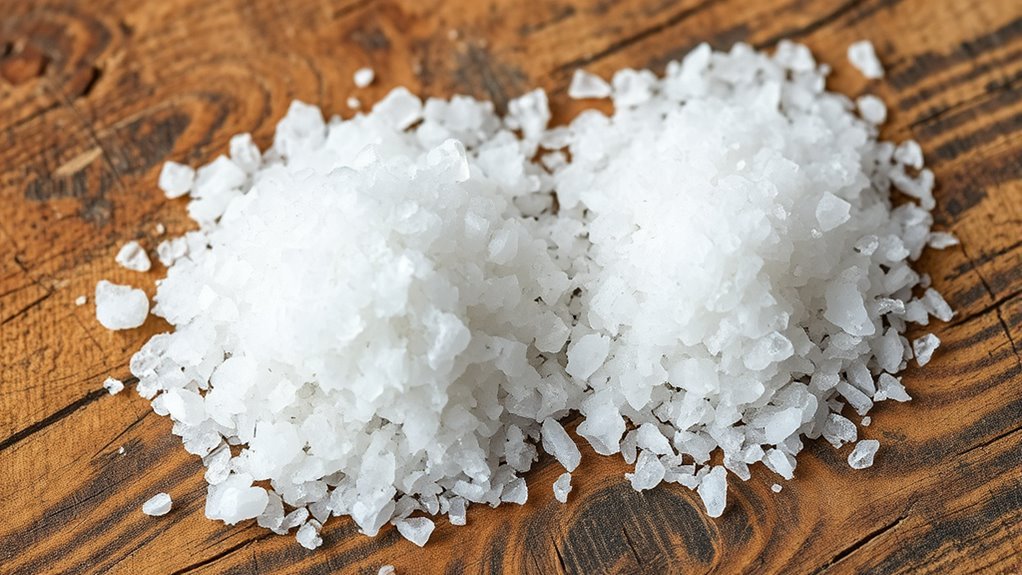
Kosher salt and sea salt are two popular types of finishing and cooking salts, each with distinct characteristics.
Kosher salt has a coarse, flaky texture and dissolves easily, making it perfect for seasoning meats and vegetables. Its larger grains give it a clean, pure flavor without additives.
Kosher salt’s coarse flakes dissolve easily, ideal for seasoning meats and vegetables with a clean, pure flavor.
Sea salt is harvested from evaporated seawater and can range from fine to coarse grains. It often retains trace minerals, which add a subtle, complex flavor.
Sea salt is often used to finish dishes, providing a crunchy texture and a burst of mineral-rich taste. Both salts are versatile, but their differences in texture and mineral content influence how you use them in cooking and seasoning.
How Are Kosher Salt and Sea Salt Made? Production Methods Explained
The production methods of kosher salt and sea salt are quite different, which affects their textures and flavors. Kosher salt is usually made by evaporating water from underground salt deposits, often through mining or solution mining, and then harvesting the crystals.
It’s often processed with minimal additives and sometimes washed to remove impurities. Sea salt, on the other hand, is made by evaporating seawater, either naturally in the sun or through controlled heating.
The seawater is collected in shallow ponds, and as the water evaporates, salt crystals are left behind. The climate and evaporation method influence the mineral content and texture, giving sea salt its distinctive flavor and varied grain sizes.
What Are Their Textures and Grain Sizes Like? How They Differ
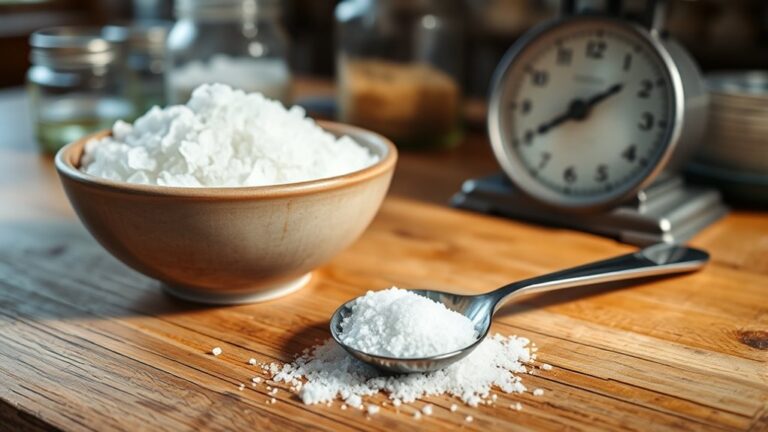
Kosher salt usually has larger, coarse grains, making it easy to pinch and sprinkle onto dishes.
Sea salt can vary from fine to coarse textures, depending on how it’s processed.
The texture affects how you use each type—coarse grains are great for seasoning during cooking, while fine grains are perfect for finishing touches.
Visually, kosher salt looks chunkier and more irregular, whereas sea salt ranges from flaky to crystalline, giving each a unique look.
Coarse vs. Fine Grains
When comparing coarse and fine salt grains, you’ll notice differences in their texture and size that affect how they’re used in cooking.
Coarse grains are larger, around 2 to 4 millimeters, giving them a rough, chunky feel. They’re often used for finishing dishes or in salt grinders, adding a crunchy texture and bursts of saltiness.
Fine grains are much smaller, about 0.3 millimeters, resulting in a smooth, powdery consistency. They dissolve quickly, making them perfect for baking, seasoning, or when you want even salt coverage.
The size difference influences how each type interacts with food. Coarse salt offers more control over seasoning, while fine salt provides quick, uniform coverage.
Texture Differences in Use
Imagine holding a handful of salt. Its texture and grain size really affect how you experience and use it in cooking.
Kosher salt has larger, flaky grains that dissolve slowly. It’s great for seasoning meats or rimming glasses.
Sea salt varies a lot. Some have coarse grains perfect for finishing dishes, while others are finer and blend easily into recipes.
These differences change how much salt you add and how quickly it dissolves, which impacts flavor distribution.
| Salt Type | Grain Size | Texture |
|---|---|---|
| Kosher Salt | Large, flaky | Crunchy, coarse |
| Coarse Sea Salt | Large, irregular | Crunchy, flaky |
| Fine Sea Salt | Small, uniform | Fine, smooth |
Visual Appearance Variations
The visual appearance of salt varies a lot between types, mainly because of differences in grain size and texture. Kosher salt usually has larger, flaky crystals that are opaque and irregular in shape.
These broad grains make it easy to pinch and sprinkle, giving it a rough, matte look. Sea salt, on the other hand, often has smaller, more uniform crystals that can range from coarse to fine.
It’s usually more translucent or shiny, with a crystalline, sometimes sparkling surface. The size and shape of the grains affect how each salt looks on a plate or in a dish.
Kosher salt’s chunky flakes look more rustic, while sea salt’s finer grains seem more refined and delicate. These visual differences help you identify and pick the right salt for your cooking needs.
How Do Flavor Profiles of Kosher and Sea Salt Vary? Enhancing Your Dishes
Have you ever noticed how different salts can subtly change the flavor of your dishes? Kosher salt has a clean, mild taste that enhances natural flavors without overpowering, making it perfect for seasoning meats or vegetables.
Different salts subtly alter your dishes—kosher salt enhances natural flavors with a clean, mild taste.
Sea salt, on the other hand, often contains trace minerals that add a nuanced, briny flavor. It’s ideal for finishing dishes, as its complex profile can lift salads and grilled foods with a subtle oceanic hint.
Consider these flavor differences:
- Kosher salt’s purity improves natural flavors without adding extra taste
- Sea salt’s mineral content introduces a slight earthiness or brininess
- Kosher salt’s larger grains provide a clean, straightforward saltiness
- Sea salt’s flaky texture adds a crunchy contrast
Both salts can complement different cuisines based on their distinct profiles.
Which Salt Is Best for Finishing and Garnishing? Tips and Tricks
In finishing and garnishing dishes, choosing the right salt can really boost your presentation and flavor. Kosher salt’s flaky texture makes it perfect for sprinkling on salads, roasted veggies, or meats, adding a nice crunch.
Sea salt’s mineral-rich crystals bring subtle complexity, making it ideal for finishing delicate treats like chocolates or fresh fruits. For the best results, pick a salt that matches your dish’s texture and look.
Here’s a quick table to help you see which salt works best for different uses:
| Use Case | Kosher Salt | Sea Salt |
|---|---|---|
| Finishing on meats | Adds crunch and visible sparkle | Subtle, mineral flavor |
| Garnishing salads | Flaky, easy to sprinkle | Elegant, delicate flakes |
| Desserts and fruits | Less common, for texture | Improves presentation |
Are There Nutritional or Health Differences? What You Should Know
You might wonder if one salt offers health benefits over the other, especially regarding mineral content and sodium levels.
While sea salt often has more trace minerals, both salts mainly provide sodium, which you should consume in moderation.
Keep in mind that processing and additives can influence their purity and health impact.
Mineral Content Variations
Although both kosher salt and sea salt contain trace minerals, their mineral content can vary greatly depending on their source and processing methods. This means you might notice differences in mineral levels that could influence flavor and potential health benefits.
Some salts contain minerals like magnesium, calcium, or potassium, which can add subtle tastes and may support bodily functions. However, these variations are generally minimal and unlikely to impact your diet significantly.
It’s important to understand that processing methods can strip away or preserve certain minerals. Here are some key points:
- Mineral levels depend on source location and environment
- Sea salt often retains more natural minerals
- Kosher salt typically undergoes refining
- Mineral content influences flavor subtly
- Nutritional impact remains minor for most consumers
Sodium Levels Comparison
While both kosher salt and sea salt contain similar amounts of sodium by weight, their health effects really depend on how you use them. Since their sodium levels are close, the main difference comes down to how much you actually end up consuming.
Kosher salt’s larger crystals mean it’s often used in cooking and seasoning, so you might end up using more or less depending on your measuring method. Sea salt, with its finer grains, can be measured more precisely, which might help you use less sodium if you’re careful.
Ultimately, moderation is key. Neither salt type has a big nutritional difference in sodium content, so your health depends more on your overall salt intake and dietary habits than on which salt you choose.
Processing and Additives
Processing methods and additives differ between kosher salt and sea salt, which can influence their nutritional profiles and health effects. Kosher salt is typically mined from salt deposits and often undergoes minimal processing, sometimes with anti-caking agents added.
Sea salt is harvested through evaporating seawater, and it may contain trace minerals naturally present in the water. Some sea salts include added anti-caking agents or preservatives, while others are pure.
These differences can impact mineral content and potential health benefits. Keep in mind that additives like anti-caking agents are generally safe but may cause sensitivities in some people.
Choosing between them depends on your preference for mineral content and how much processing you’re comfortable with. Anti-caking agents are common in processed salts.
Sea salts may contain trace minerals like magnesium or potassium, while kosher salt often has fewer additives. Processing can influence salt purity, and mineral content varies based on source and treatment.
When Should You Use Kosher Salt vs. Sea Salt? Practical Guidance for Cooking
Knowing when to use kosher salt versus sea salt can really make a difference in your cooking. Use kosher salt for seasoning meats, especially when you want a clean, straightforward salt flavor. Its larger grains make it easy to pinch and sprinkle evenly.
Kosher salt is also great for drawing out moisture during brining or coating foods. Sea salt shines when you’re finishing dishes, adding a subtle crunch and mineral complexity. It’s perfect sprinkled over salads, roasted vegetables, or grilled meats.
When you need precise control over seasoning, kosher salt’s uniform texture helps. On the other hand, for a delicate touch or finishing touch, sea salt’s flaky crystals are ideal. Ultimately, choose based on your texture preference and what role salt plays in your recipe.
Frequently Asked Questions
Can Kosher Salt and Sea Salt Be Used Interchangeably in Recipes?
Yes, you can usually swap kosher salt and sea salt in recipes, but keep in mind their texture and saltiness differ. Kosher salt has larger grains, so use a bit more if substituting for finer sea salt to get the same flavor.
Adjust the amount gradually, tasting as you go, to prevent oversalting. Both work well for seasoning, but their unique textures can affect the final dish slightly.
Which Salt Type Is More Environmentally Sustainable?
In the age of knights and castles, choosing a more sustainable salt depends on your priorities. Sea salt generally has a lower environmental impact because it’s harvested through evaporation, which uses less energy.
Kosher salt, usually mined, consumes more resources during extraction. If sustainability matters to you, go for sea salt, especially if it’s sourced responsibly.
It’s a more eco-friendly choice that aligns with preserving our planet’s treasures.
How Does Mineral Content Affect the Taste of Each Salt?
Mineral content directly influences the flavor of each salt. Sea salt, rich in natural minerals like magnesium and calcium, offers a more complex, nuanced taste that can enhance dishes.
Kosher salt, with fewer minerals, has a cleaner, more straightforward salty flavor. When you use sea salt, you might notice subtle mineral notes, while kosher salt provides a purer saltiness.
Each type of salt is suited to different culinary uses based on flavor preferences.
Are There Any Allergies Associated With Kosher or Sea Salt?
While allergies to common salts are rare, you should still be cautious.
Kosher and sea salts are generally safe, but some sea salts might contain trace minerals or impurities that can trigger sensitivities in certain people.
If you have allergies to specific minerals or are sensitive to additives, it’s a good idea to check labels carefully.
Always talk to your healthcare provider if you suspect a salt allergy, especially if you notice symptoms like itching or swelling after using it.
How Should Storage Conditions Differ for Kosher and Sea Salts?
You should store kosher and sea salts in airtight containers to prevent moisture absorption, which can cause clumping. Keep them in a cool, dry place away from sunlight, as heat and humidity can degrade their quality.
While both salts require similar storage conditions, sea salt may need extra care if it contains added minerals or impurities. Regularly check for clumping or discoloration to guarantee freshness and quality.
Conclusion
Choosing between kosher salt and sea salt isn’t just about taste—it’s about how you like to cook.
Kosher salt offers a clean, straightforward flavor that’s perfect for seasoning. Sea salt, on the other hand, adds a nuanced, mineral-rich touch to finishing dishes.
Think of it as the difference between a simple melody and a complex symphony. Whichever you pick, understanding these differences helps you elevate your cooking.
Knowing when to use kosher salt versus sea salt can make your meals more flavorful and deliberate.