7 Steps to Accurately Measure Kitchen Cabinets
Many homeowners find measuring kitchen cabinets to be more challenging than they expected. You’re not alone—getting those measurements just right can feel tricky, especially with irregularities and hidden details.
To accurately measure your kitchen cabinets, start by making sure they’re level and square using a level and square tool. Then, measure widths, heights, and depths at multiple points, recording each measurement clearly.
Use sturdy tools like a tape measure and double-check your numbers for consistency. Consider hardware and moldings that may affect dimensions.
If you pay attention to irregularities and common mistakes, you’ll get perfect measurements. Keep going to find out more tips for precise cabinet fitting.
Key Takeaways
- Use a measuring tape to take multiple measurements at different points for better accuracy. Don’t just measure once—check several spots to catch any variations.
- Make sure your cabinets are level and square. Use a carpenter’s level and square tool to confirm everything lines up properly.
- Measure the width, height, and depth from wall to wall and floor to ceiling. Be precise with each measurement to avoid surprises later.
- Record all your measurements clearly, and double-check them before moving forward. It’s easy to make mistakes, so taking your time helps.
- Keep an eye out for irregularities like uneven walls or floors. Note these issues and adjust your measurements or plans if needed.
How to Make Sure Your Cabinets Are Level and Square Before Measuring?
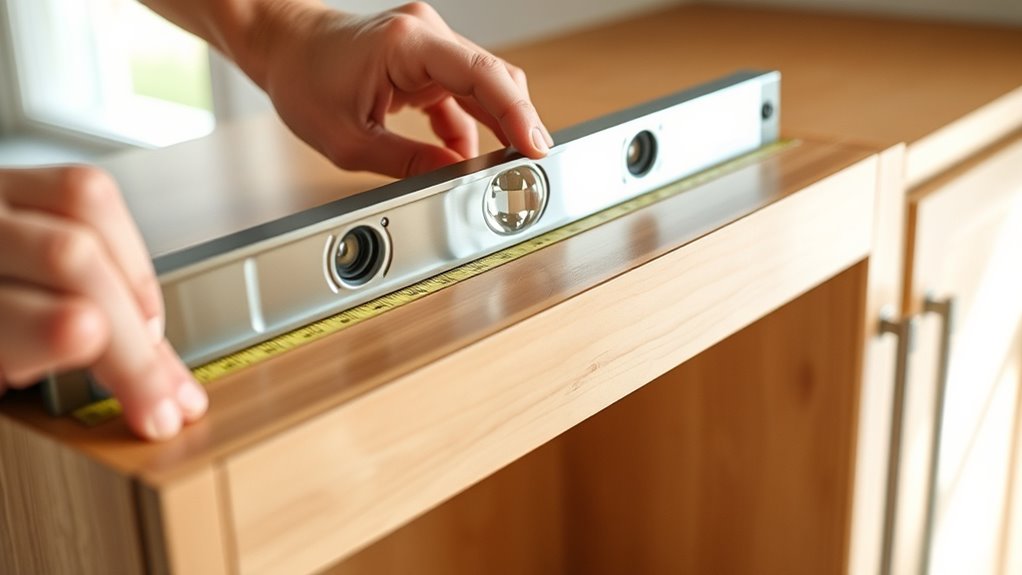
Before measuring your cabinets, it’s really important to make sure they’re both level and square. This will help ensure your measurements are accurate and your new doors or countertops fit properly.
Start by placing a carpenter’s level on the top and sides of the cabinets. If the bubble isn’t centered, adjust the cabinets or add shims underneath until they’re perfectly level.
Next, use a carpenter’s square to check that the corners are at a 90-degree angle. If they’re not, you’ll need to realign or shim the cabinets until they are square.
Confirming your cabinets are level and square helps prevent measurement errors and guarantees a proper fit for your replacements. Take your time to double-check these adjustments before moving on.
Accurately Measuring Cabinet Widths and Heights
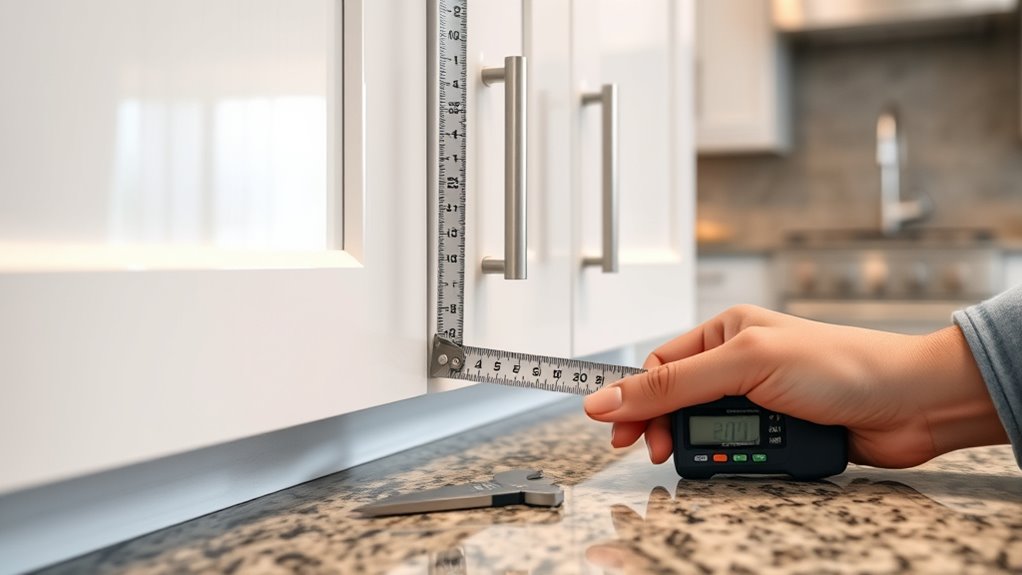
To guarantee your new cabinets fit perfectly, you need to measure their widths and heights accurately. Start by measuring the total width from wall to wall, including any trim or molding, and record it. Use a tape measure, keeping it level and straight, and take measurements at multiple points to catch any irregularities.
For heights, measure from the floor to the top of the cabinet opening at several spots. Note the shortest measurement for accuracy. Don’t forget to record these measurements in inches or centimeters, depending on your preference.
Double-check each measurement to avoid errors and mark them clearly. Accurate measurements will ensure your cabinets fit seamlessly and look professional once installed.
Measuring Cabinet Depth and Interior Space
Measuring the depth and interior space of your cabinets ensures you can store everything comfortably and pick the right accessories. To do this accurately, open the cabinet doors and use a tape measure to find the distance from the front edge to the back panel. Write down this measurement carefully.
Next, check the interior width and height to make sure your items will fit. Here’s a quick reference:
| Measurement Type | How to Measure | Typical Range |
|---|---|---|
| Depth | Front to back inside the cabinet | Usually 12-24 inches |
| Width | Side to side inside the cabinet | Varies by cabinet size |
| Height | Top to bottom inside the cabinet | Usually 12-36 inches |
Getting accurate measurements helps you make the most of your storage space and avoids surprises when arranging your kitchen.
Choosing the Right Tools for Precise Measurements
To get accurate measurements, you need the right tools, like a tape measure, a combination square, or a laser measure.
Make sure your tools are properly calibrated to avoid errors, and handle them with steady hands for consistent results.
Using the correct tools and techniques helps you set a solid foundation for precise cabinet measurements.
Essential Measuring Tools
Having the right measuring tools is essential for getting accurate cabinet dimensions. A sturdy tape measure is your main tool; choose one that’s at least 25 feet long so you can reach all areas easily.
A steel ruler or a combination square is great for smaller, detailed measurements. A level helps ensure your measurements are straight and consistent, especially when marking for installation.
A pencil or erasable marker is handy for marking measurements clearly without damaging surfaces. A reliable laser measure can give you quick, precise readings over longer distances, saving time and improving accuracy.
Keep these tools well-maintained and within easy reach during your project. Using the right tools correctly will help you avoid mistakes and ensure your cabinets fit perfectly.
Tool Calibration Tips
Verifying your measuring tools are properly calibrated is essential for getting accurate results. Regularly check your tape measure for any signs of wear or damage, and make sure the locking mechanism works smoothly.
For a ruler or straightedge, verify the markings are correct by comparing them to a known standard, like a certified calibration block. Digital tools, such as laser measures, need periodic software updates and battery checks to stay precise.
Always zero out your tools before use, especially tape measures and calipers. If you notice any inaccuracies, recalibrate or replace the tool. Proper calibration ensures your measurements are reliable.
This helps prevent errors that could mess up your cabinet fitting or installation. Keep your tools in good condition to achieve the most precise results.
Proper Handling Techniques
Choosing the right tools for measuring kitchen cabinets starts with understanding their specific functions and accuracy. Handle your tools with care—avoid dropping or rough use, which can compromise precision. Always keep tape measures and rulers clean, free of dust or debris that can affect readings.
Use gentle pressure when extending tape measures to prevent stretching or bending. Keep tools level and steady during measurements to ensure accuracy. Handling your tools properly boosts confidence, reduces errors, and leads to perfect fits.
| Handle with Care | Maintain Precision |
|---|---|
| Avoid drops or impacts | Keep tools clean and calibrated |
| Use gentle pressure | Use level, steady hands |
| Store properly when not in use | Regularly inspect for damage |
| Keep tools dry | Handle with care to prevent wear |
How to Record and Double-Check Your Cabinet Measurements
To accurately record your cabinet measurements, start by writing down each dimension right after measuring. Use a clear, organized system like a notebook or digital document to keep your numbers straight. Label each measurement clearly: width, height, and depth, along with the specific location on the cabinet.
Double-check each number by measuring again, ideally from different points, to confirm accuracy. If measurements differ, take the most consistent and precise reading. Don’t rush—precision is key to getting it right.
Once you’ve recorded everything, review your notes carefully. Cross-reference measurements for consistency to make sure there are no typos or errors. This step helps prevent mistakes later, saving you time and hassle during installation or customization.
Accurate recording and double-checking are essential for a perfect fit. Taking your time now makes the whole process smoother and ensures everything fits just right.
Accounting for Hardware and Moldings When Measuring
When measuring your cabinets, it’s important to consider hardware like handles, knobs, and hinges, as well as any moldings or decorative trim. These elements can impact how well doors and drawers fit.
Be sure to measure the added thickness or protrusion of hardware and moldings separately from the cabinet frame to get an accurate measurement. This will help ensure a perfect fit.
Use the table below as a quick guide:
| Item | Measurement Adjustment |
|---|---|
| Handles & knobs | Add width or height if you’re installing new hardware |
| Hinges | Include hinge thickness in your door measurements |
| Moldings/trim | Measure how far they protrude and adjust your overall dimensions |
Troubleshooting Common Measurement Mistakes
Even experienced DIYers can make common measurement mistakes that lead to gaps, misalignments, or fitting issues. One mistake is not double-checking measurements before cutting or ordering cabinets. Always measure twice to confirm accuracy, especially when dealing with walls that aren’t perfectly straight.
Another error is ignoring the thickness of hardware or moldings, which can affect fit. Don’t forget to account for these when measuring. Also, avoid rushing through the process—taking your time guarantees more precise measurements.
Using the wrong tools, like a warped tape measure, can cause inaccuracies. Finally, be aware of any irregularities in your walls or floors. These can throw off your measurements. Address these issues early to prevent costly mistakes down the line.
Frequently Asked Questions
How Do I Measure for Custom Cabinet Doors?
To measure for custom cabinet doors, start by opening the cabinet and measuring the width and height of each opening at three points: top, middle, and bottom for width, and left, center, and right for height.
Use a tape measure, note down the smallest measurements to guarantee a perfect fit, and record all measurements accurately.
Don’t forget to account for hinges and any overlapping edges to get precise door dimensions.
What Is the Best Way to Measure Irregularly Shaped Cabinets?
To measure irregularly shaped cabinets, start by sketching their outline on paper. Use a flexible measuring tape to record each unique dimension, including angles and curves.
Measure the widest and tallest points, then note any indentations or protrusions. Take multiple measurements from different angles to ensure accuracy.
Record everything carefully, and double-check your measurements before ordering or cutting to avoid costly mistakes.
How Do I Account for Cabinet Door Hinges in Measurements?
When measuring for cabinet hinges, you need to account for their placement and depth to guarantee proper fitting. First, measure the distance from the edge of the cabinet to the hinge’s mounting point.
Then, subtract this measurement from your total cabinet width to get an accurate inside measurement. Also, note the hinge type and size, as different hinges require specific placements.
This ensures your doors swing smoothly without interference.
Should I Measure for Extra Space for Cabinet Installation?
Yes, you should measure for extra space during cabinet installation. It’s a common best practice because it accounts for slight imperfections in walls, floors, and the cabinets themselves.
Adding a few millimeters to your measurements ensures you won’t end up with tight fits or gaps. This extra space makes installation smoother and helps doors and drawers open properly.
It also allows for adjustments if needed, ultimately leading to a cleaner, professional look.
How Often Should I Re-Measure Before Ordering?
You should re-measure your cabinets right before placing your order, ideally within a week or two. This keeps your measurements current, especially if any renovations or shifts have happened.
If you notice any changes or uncertainties, it’s a good idea to double-check again. Accurate measurements help prevent sizing errors, saving you time and money in the long run.
Always trust your most recent, precise measurements for the best fit.
Conclusion
By following these steps, you’ll ensure your kitchen cabinets fit perfectly—no need to call in a pro or hope for luck. Double-check your measurements as if you’re a careful scribe, guarding every detail like a treasured gem. Precision now saves you headaches later.
With patience and the right tools, you’ll master this task like a seasoned craftsman. This careful approach transforms your kitchen into a space that’s both functional and beautifully crafted. Accurate measurements are key to a flawless fit and a stunning finish.