Effective Ways to Get Rid of Kitchen Gnats
Dealing with kitchen gnats can be so frustrating. Many people struggle with these tiny pests invading their space, especially when they’re just trying to enjoy a clean, pest-free kitchen. If you’re tired of swatting at these persistent bugs, you’re not alone.
To get rid of kitchen gnats, start by cleaning all food spills, trash cans, and hidden organic matter, especially under appliances and behind cabinets.
Set up traps with apple cider vinegar or wine, covered with plastic wrap and holes, to catch adults. Use natural repellents like herbs or citrus peels around the kitchen.
Storing produce properly and fixing leaks help stop their breeding. Keep exploring effective strategies to fully reclaim your kitchen from these persistent pests.
Key Takeaways
- Use apple cider vinegar traps with dish soap and paper cones to attract and trap gnats effectively.
- Regularly clean your kitchen and remove any decaying organic matter, spills, and overripe produce. This helps eliminate their breeding grounds.
- Store fruits and vegetables in sealed containers or refrigerate them. This way, you can prevent attracting those pesky gnats.
- Fix leaks and ventilate damp areas to eliminate excess moisture. Reducing moisture helps cut down on breeding sites.
- Natural repellents like basil, mint, citrus peels, or essential oils can also help keep gnats away. Place them around your kitchen to deter these tiny invaders.
What Causes Kitchen Gnats and How to Identify Them
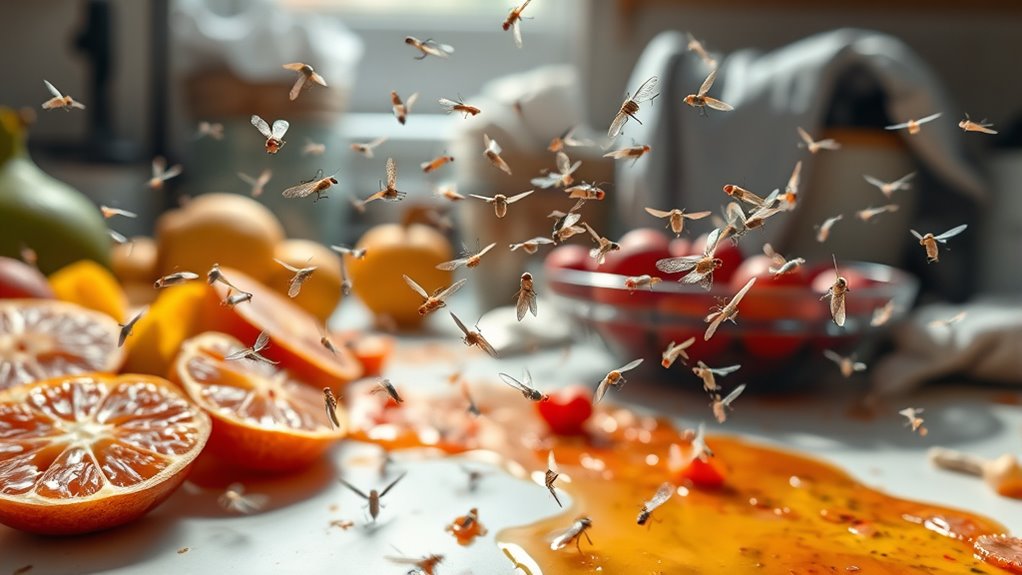
Kitchen gnats are usually drawn to your home by rotting or fermenting organic matter. You might notice tiny, flying insects hovering near your sink, trash can, or fruit bowl.
They’re often mistaken for fruit flies, but gnats are slightly larger and more persistent. These pests lay eggs in damp, decaying organic material, which becomes their breeding ground.
Gnat-sized pests are larger and more persistent than fruit flies, breeding in damp, decaying organic matter.
Common causes include overripe fruit, spilled drinks, or forgotten produce hiding in the back of your fridge. You can identify them by their quick, darting flight and small size, usually about 1/8 inch long.
If you see these insects buzzing around your kitchen, chances are they’re attracted to something rotting or fermenting nearby. Recognizing the cause helps you target your efforts to eliminate them effectively.
Effective Gnat Traps You Can Set Up Quickly
Once you’ve found where the gnats are coming from, setting up quick and effective traps can help reduce their numbers fast.
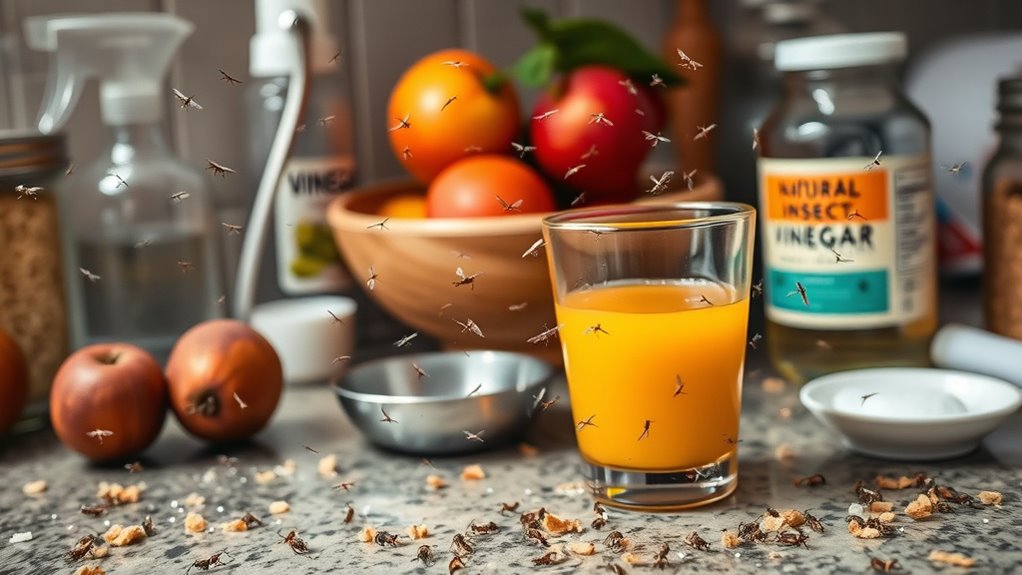
One easy trap is a jar filled with apple cider vinegar, a few drops of dish soap, and a paper cone on top. The vinegar draws in the gnats, and the soap breaks the surface tension, trapping them inside.
Another simple method is a wine or beer trap. Pour a small amount into a container, cover it with plastic wrap, and poke tiny holes for the gnats to get in.
You can also use commercially available gnat traps. These are ready to go and work well. Place them near areas like sinks or fruit bowls to catch the gnats quickly.
These traps act fast and help you control the infestation without using harsh chemicals.
How to Eliminate Gnat Breeding Sites With Cleaning
Cleaning thoroughly is essential because gnats breed in moist, decaying organic matter that often hides in hidden spots. Start by inspecting your kitchen for leftover food, crumbs, and spills, and wipe down all surfaces.
Pay special attention to under appliances, sinks, and behind cabinets, as these areas trap moisture and organic debris. Empty and clean trash cans regularly, including recycling bins, to prevent buildup.
Focus on cleaning beneath appliances, sinks, and behind cabinets to eliminate moisture and organic buildup that attract gnats.
Check for mold or damp areas and scrub them with a bleach solution or vinegar. Remove any overripe fruit or vegetables and store produce in the refrigerator or sealed containers.
Clear out drainage traps and clean them with boiling water or a vinegar solution. Consistent cleaning disrupts gnat breeding sites, making your kitchen less inviting to these pests.
Natural Ways to Repel Kitchen Gnats
After cleaning your kitchen thoroughly, you can take extra steps to keep gnats away naturally. One effective trick is to set out bowls with apple cider vinegar, which attracts gnats and traps them when they land.
Adding a few drops of dish soap makes the vinegar even more effective by breaking the surface tension, causing the gnats to drown. You can also hang fresh herbs like basil, mint, or bay leaves near problem areas; their strong scents naturally repel gnats.
Citrus peels, especially lemon or orange, placed in your sink or around the kitchen, can also help deter these insects. Finally, essential oils like eucalyptus, citronella, or tea tree oil mixed with water in a spray bottle serve as a powerful natural repellent.
Tips for Proper Food Storage to Prevent Gnat Infestations
Proper food storage is essential in preventing kitchen gnats from becoming a problem. Keep all fruits and vegetables in the refrigerator or in sealed containers to prevent attracting gnats.
Avoid leaving bread, pastries, or open packages of grains out on counters, as these are prime breeding grounds. Use airtight containers for pantry staples like rice, flour, and sugar, which prevent gnats from accessing food sources.
Regularly check for spoiled produce or leftovers and dispose of them promptly. Wipe down countertops and shelves to remove food residues that can draw gnats.
Store liquids like juices and wine in sealed bottles or containers. By maintaining clean, airtight storage, you cut off gnats’ food supply, making your kitchen less inviting and less likely to become infested.
When and How to Safely Use Chemical Gnat Sprays
Knowing when and how to safely use chemical gnat sprays is key to getting rid of pests without putting your health or home at risk. Use sprays only when natural methods haven’t worked and the infestation is serious.
Always read and follow the manufacturer’s instructions carefully. Make sure your space is well-ventilated by opening windows and doors before spraying to avoid inhaling fumes.
Keep children and pets away from the treated areas until the spray dries completely. Spray directly onto areas where gnats are most active, like drains, trash cans, or fruit bowls.
Don’t overuse or spray excessively, as this can be harmful and reduce the spray’s effectiveness. Use chemical sprays as a last resort and combine them with other pest control methods for the best results.
Long-Term Gnat Prevention Strategies
Implementing long-term prevention strategies is essential to keep kitchen gnats from returning. First, keep your kitchen clean by wiping counters regularly, cleaning dishes promptly, and taking out the trash often.
Store fruits and vegetables in sealed containers or the refrigerator to prevent attracting gnats. Fix any leaks or excess moisture, as damp areas invite gnats to breed.
Remove compost and decaying organic matter from your kitchen area. Consider installing screens on windows and doors to block entry points.
Regularly check and clean drains with a mixture of baking soda and vinegar to eliminate breeding sites.
Troubleshooting Persistent Gnat Problems and When to Call Professionals
When persistent gnats refuse to disappear despite your best efforts, it’s time to look at the situation more carefully. First, double-check all possible breeding spots, like drains, trash cans, or overwatered plants.
Persistent gnats? Check hidden breeding spots like drains and overwatered plants before calling in professionals.
If you’ve cleared the obvious sources but the gnats are still around, it could mean there’s a hidden infestation or an ongoing problem. Sometimes, DIY tricks just aren’t enough, especially if the problem is widespread or deeply rooted.
That’s when calling a professional pest control service makes sense. They can find hidden breeding areas and use targeted treatments safely. Don’t wait if the problem gets worse or sticks around for more than a couple of weeks.
Getting professional help ensures your kitchen stays gnat-free and hygienic.
Keeping Your Kitchen Gnat-Free Year-Round
To keep your kitchen gnat-free all year, you need consistent habits that prevent their breeding and entry. Regularly clean your countertops, sinks, and drains to eliminate food residues and moisture that attract gnats.
Store fruits and vegetables in sealed containers or in the refrigerator instead of leaving them out. Take out the trash frequently and make sure bins are tightly closed.
Check for and fix any leaks or standing water, as these provide breeding sites. Keep your kitchen well-ventilated to reduce humidity.
Use window screens to block gnats from entering. Maintain these routines consistently, especially during warmer months, to prevent gnat populations from taking hold.
Staying vigilant and proactive guarantees a cleaner, gnat-free kitchen year-round.
Frequently Asked Questions
Do Kitchen Gnats Pose Health Risks to Humans?
Kitchen gnats usually don’t pose serious health risks to humans. However, they can carry bacteria and mold from decaying food, which might contaminate your kitchen surfaces.
While they’re mostly just annoying, their presence can cause food to spoil and spread germs. This can increase the chance of getting sick.
To stay safe, keep your kitchen clean, store food properly, and eliminate places where gnats breed. This helps reduce their numbers and keeps potential health issues to a minimum.
Can Overwatering Indoor Plants Attract Gnats?
Yes, overwatering indoor plants can attract gnats. When you water too much, it creates moist soil that gnats love for laying eggs.
Even if you’re careful, overwatering can happen, especially if the soil doesn’t drain well. To keep gnats away, let the topsoil dry out between waterings.
Use well-draining soil and avoid standing water in plant saucers. These steps will make your plants less appealing to those pesky pests.
Are Some Fruit Varieties More Prone to Gnat Infestations?
Yes, some fruit varieties are more prone to gnat infestations, especially those that are overripe or damaged.
Watch out for bananas, berries, and peaches, as they emit more fermentation gases that attract gnats. Keep your fruit stored properly, preferably in the fridge, and dispose of overripe or rotting fruit quickly.
Regularly inspect your produce to prevent attracting these pests and maintain a clean kitchen environment.
How Long Does It Take to Eliminate a Gnat Infestation?
Like a quick breeze clearing fog, you can get rid of gnats in about a week if you act fast.
Keep overripe fruit away, clean up spills, and set traps regularly. Use a mix of apple cider vinegar and dish soap to lure and drown them.
Don’t forget to empty trash often and wipe down surfaces.
Be patient and stay consistent. With steady effort, you’ll see the gnat population shrink and eventually disappear.
Can Homemade Traps Be as Effective as Commercial Ones?
Homemade traps can work just as well as commercial ones if you set them up right. For example, using apple cider vinegar and dish soap in a jar can attract and trap gnats effectively.
Just keep in mind, commercial traps often have stronger attractants and are designed for maximum efficiency. But if you’re resourceful and consistent, homemade traps can really cut down your gnat problem without costing you extra money.
Conclusion
By following these simple steps, you can keep your kitchen gnat-free and enjoy a cleaner, more comfortable space. Kitchens with poor sanitation and moisture issues are up to 80% more likely to attract gnats.
Staying vigilant with proper cleaning, food storage, and traps can prevent infestations before they start. Regularly check for spoiled food and clear away any standing water or damp areas.
Keep these tips in mind, and you’ll eliminate gnats quickly. Enjoy a fresher, pest-free kitchen year-round by tackling those kitchen gnats early.