
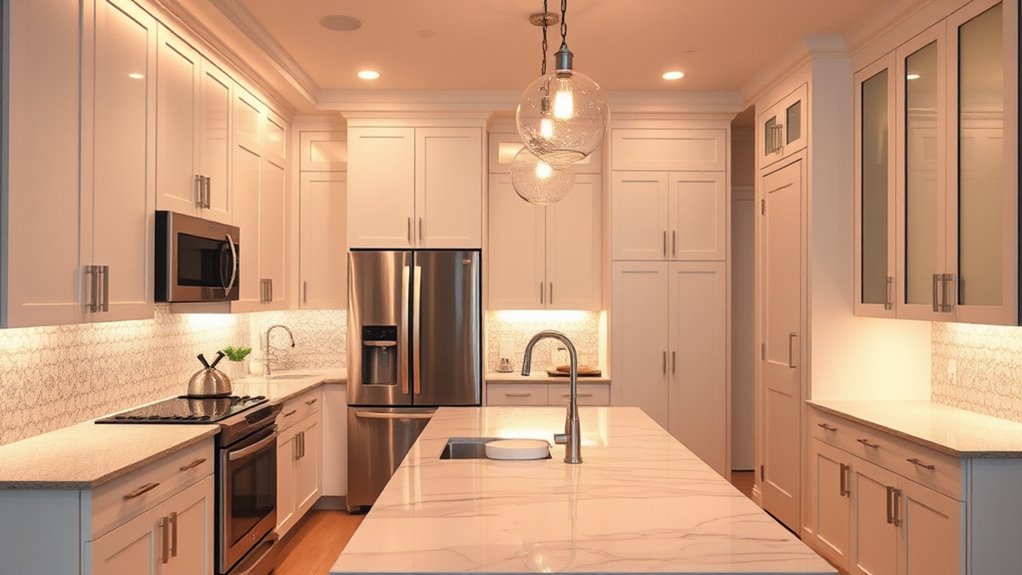
How Can Lighting Transform Your Kitchen?
Many homeowners find their kitchens feel dull or cramped because of poor lighting. You’re not alone—creating a bright, inviting space can be a challenge. Luckily, good lighting can make a huge difference in transforming your kitchen’s style and functionality.
Lighting can completely transform your kitchen by enhancing its style and improving functionality. Proper layers of ambient, task, and accent lighting create a warm, inviting atmosphere, while highlighting design features.
Good lighting also boosts safety and guarantees efficiency during meal prep. Using natural light and well-placed fixtures will make your space feel brighter and more spacious.
If you want to uncover the best ways to achieve this, there’s more you can investigate to make your kitchen truly shine.
Key Takeaways
- Proper lighting enhances the kitchen’s style and highlights its design features.
- Layered lighting creates a warm, inviting ambiance and improves functionality.
- Natural light makes the space brighter, more spacious, and energy-efficient.
- Well-chosen fixtures help establish focal points and complement the overall aesthetic.
- Adjustable lighting allows for versatile moods and better task visibility.
Why Kitchen Lighting Matters: Style and Functionality
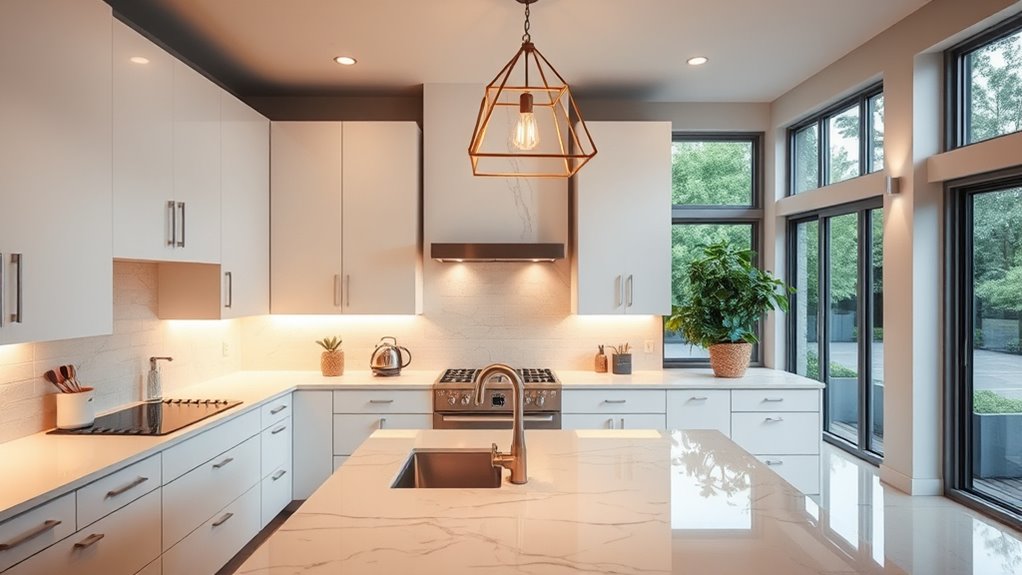
Lighting in your kitchen does more than just illuminate the space; it defines the room’s style and boosts its functionality. Well-designed lighting highlights your decor, making your kitchen feel warm and inviting or sleek and modern.
Good kitchen lighting enhances style and functionality, creating a warm, inviting space or sleek, modern ambiance.
It also helps you see clearly when preparing meals, ensuring safety and precision. Good lighting can create focal points, drawing attention to your favorite features or appliances.
Without it, tasks become harder, and the space may feel dull or unwelcoming. Whether you prefer bright, task-oriented lights or softer ambient lighting, the right choices improve both the look and usability of your kitchen.
Ultimately, thoughtful lighting transforms your kitchen into a functional, stylish hub where you love to cook, gather, and entertain.
The Main Types of Kitchen Lighting You Need to Know
Understanding the main types of kitchen lighting helps you create a balanced and functional space. You’ll want ambient lighting for overall brightness, task lighting for specific work areas, and accent lighting to highlight design features.
Each type plays a crucial role in transforming your kitchen into a brighter, more inviting environment.
Ambient Lighting Options
Ambient lighting sets the overall tone of your kitchen, providing a soft, uniform glow that makes the space inviting and functional. It’s the foundation that creates a warm atmosphere without harsh shadows.
You can achieve this with ceiling-mounted fixtures like chandeliers, pendant lights, or recessed lighting. These options distribute light evenly, making the entire room feel cozy and welcoming.
Here’s a quick visual:
| Lighting Type | Description |
|---|---|
| Ceiling Fixtures | Overhead lights that brighten the whole space |
| Pendant Lights | Stylish fixtures that add ambiance |
| Recessed Lights | Discreet lights embedded in the ceiling |
Choosing the right ambient lighting improves your kitchen’s mood and sets the stage for all your activities.
Task Lighting Solutions
To prepare your kitchen for specific tasks, you need task lighting that provides focused, bright illumination exactly where you need it. Under-cabinet lights are a popular choice, shining directly onto countertops for chopping, cooking, or prep work.
Pendant lights above islands or breakfast bars also offer targeted lighting while adding style. Recessed lights installed in the ceiling can illuminate larger areas, making it easier to see during meal prep or cleanup.
Adjustable track lighting gives you flexibility, allowing you to direct light where it’s most needed. The key is choosing fixtures that deliver sufficient brightness without creating glare or shadows.
Proper task lighting improves safety, efficiency, and your overall cooking experience, making your kitchen both functional and visually appealing.
Accent Lighting Ideas
Accent lighting can instantly boost your kitchen’s style and atmosphere by highlighting key features and adding visual interest. Consider installing under-cabinet LED strips to light up countertops and showcase your workspace.
Pendant lights over an island or breakfast bar create a focal point while giving off a warm, ambient glow. Wall sconces can emphasize architectural details or artwork, adding depth and character.
Recessed spotlights are great for drawing attention to specific areas, like a display shelf or a decorative backsplash. Dimmable options give you control over the mood, letting you switch from bright task lighting to a softer, cozy vibe.
How to Use Task Lighting for Cooking and Prep Work
Proper task lighting is essential for making cooking and prep work safer and more efficient. Focus on directing bright, focused light where you need it most—over countertops, cutting boards, and sink areas.
Under-cabinet lights are a popular choice because they provide direct illumination without shadows. This helps you see ingredients clearly and makes prep work easier.
Adjustable fixtures or track lighting give you flexibility to focus light exactly where it’s needed. Avoid relying solely on ambient lighting, which can create shadows and reduce visibility.
Use LED bulbs for bright, energy-efficient illumination that doesn’t generate heat. Position your lights to minimize glare and shadows, making chopping, measuring, and mixing safer and easier.
With the right task lighting, your kitchen becomes more functional and enjoyable for cooking.
Creating the Perfect Ambiance With Layered Lighting
You can create a warm, inviting atmosphere by using multiple light sources that serve different functions. Adjusting brightness levels lets you set the mood for cooking, dining, or relaxing.
Adding layers of light also creates visual depth, making your kitchen feel more dynamic and inviting. It’s all about blending different lights to make the space feel cozy and lively.
Multiple Light Sources
Layering multiple light sources is essential for creating a warm, inviting kitchen ambiance. Using different lights adds depth and makes the space feel cozy yet functional.
Combine ceiling fixtures for overall illumination, pendant lights over islands for task lighting, and under-cabinet lights to brighten countertops. This approach gives you flexibility to adjust the mood and focus easily.
| Light Type | Purpose | Best Placement |
|---|---|---|
| Overhead ceiling | General lighting | Center of the ceiling |
| Pendant lights | Accent and task lighting | Above islands or counters |
| Under-cabinet | Focused countertop illumination | Beneath cabinets |
| Recessed lights | Even light distribution | Throughout the ceiling |
| Decorative fixtures | Style and ambiance | Corners or feature areas |
Adjusting Brightness Levels
Adjusting the brightness levels of your kitchen lighting lets you set the perfect mood for any activity. By dimming or brightening different lights, you make the space both functional and inviting.
For meal prep, go for brighter lighting to see clearly and reduce eye strain. When you’re hosting or having a family dinner, lower the brightness to create a relaxed vibe.
Installing dimmer switches makes it easy to control the light levels quickly. Layered lighting—using ambient, task, and accent lights—helps you adjust for different times or occasions.
With the right controls, your kitchen becomes a space that feels just right, whether you’re cooking, entertaining, or unwinding.
Creating Visual Depth
Creating visual depth in your kitchen means mixing different types of lighting to add dimension and warmth. By layering ambient, task, and accent lights, you make the space feel lively and inviting. This approach guides the eye around the room, highlighting features and textures.
Well-placed lighting can make your kitchen feel cozy, elegant, or energetic. It transforms the space into something mesmerizing and full of character.
Think about these elements to stir emotions:
- A soft, warm glow from pendant lights that encourages relaxation
- Focused task lighting that boosts your energy while working
- Subtle accent lights showcasing artwork or materials, adding a sense of discovery
Natural Light’s Role in Brightening Your Kitchen
Natural light plays an essential role in making your kitchen feel brighter, more inviting, and even more spacious. It naturally improves your space, reducing the need for artificial lighting during the day.
Proper placement of windows allows sunlight to flood in, highlighting your countertops and creating a cheerful atmosphere. To get the most out of natural light, choose window treatments that don’t block sunlight or add mirrors to reflect light deeper into the room.
Here’s a quick overview:
| Aspect | Benefit | Tips |
|---|---|---|
| Window placement | Maximizes sunlight exposure | Use large, south-facing windows |
| Reflective surfaces | Boosts brightness | Incorporate glass or glossy finishes |
| Light-colored walls | Improves light reflection | Choose whites or soft neutrals |
| Minimal window obstructions | Ensures unobstructed light | Keep windows clear of heavy drapes |
| Skylights | Adds natural illumination | Install in strategic spots |
Choosing the Right Light Fixtures for Your Kitchen Style
Once you’ve optimized natural light in your kitchen, selecting the right light fixtures can further elevate its style and functionality. Your choice should reflect your kitchen’s overall aesthetic, whether modern, rustic, or traditional.
Consider fixtures that complement your design, like sleek pendant lights for a contemporary look or vintage chandeliers for a cozy charm. Think about how the lighting makes you feel—warm, inviting, energizing.
Choose fixtures that match your style, creating warm, inviting, and energizing atmospheres in your kitchen.
Proper fixtures not only brighten your space but also create focal points that draw attention and evoke emotion. Feel the warmth of soft, ambient lighting that makes your kitchen inviting.
Experience the elegance of statement fixtures that showcase your style. Enjoy the confidence of well-placed lighting that improves both beauty and usability.
How Lighting Highlights Your Kitchen’s Design Features
Lighting can draw attention to your kitchen’s architectural details, making features like crown molding or unique ceiling designs stand out. It also brings out the textures of materials such as stone, wood, or tile, adding depth to the space.
Plus, strategic lighting defines focal areas like islands or workstations, guiding the eye naturally across your kitchen.
Accentuates Architectural Details
Architectural details in your kitchen, like intricate moldings, exposed beams, or decorative backsplashes, become true focal points when you light them up strategically. Proper lighting draws attention to these features, turning subtle accents into stunning visual statements.
Highlighting these elements creates a sense of depth, character, and personality that reflects your style. Thoughtful placement of spotlights or wall-mounted fixtures can make ceiling beams seem more prominent or your backsplash pop with color and texture.
This not only enhances your kitchen’s overall look but also evokes feelings of warmth and craftsmanship. Feel a renewed appreciation for your space’s unique charm, and enjoy a cozy, inviting atmosphere.
Showcase your kitchen’s design artistry with pride by emphasizing its beautiful details through clever lighting.
Enhances Material Textures
Strategic lighting can really bring out the rich textures of your kitchen’s materials, making each surface feel more inviting and tactile. By carefully placing lights, you can emphasize the grain of wood cabinets, the shimmer of granite countertops, or the matte finish of ceramic tiles.
Warm lighting enhances the depth of natural stone, while directional lighting highlights intricate details in backsplash designs. Subtle shadows cast by well-placed fixtures create contrast, revealing layers and textures that give your kitchen character.
Bright, focused light can make smooth surfaces appear more vibrant and lively. Overall, thoughtful lighting doesn’t just illuminate; it accentuates the tactile qualities and visual interest of every material.
This transforms your kitchen into a space that feels both stylish and richly textured.
Defines Focal Areas
One of the most effective ways to showcase your kitchen’s design features is by using lighting to create focal points. Proper lighting draws attention to key areas, highlighting your style and craftsmanship. For example, a pendant light above the island emphasizes its role as a gathering spot and adds visual interest.
Under-cabinet lights can highlight intricate backsplash details, making them stand out. Adjustable spotlights can be aimed at artwork or unique architectural elements, turning them into conversation starters.
Illuminate your favorite artwork or decorative pieces to make them pop. Highlight your stunning backsplash or statement hardware to draw the eye. Accentuate architectural features that add character and charm to your space.
Layering Lighting for a Balanced and Functional Kitchen
To create a kitchen that’s both functional and inviting, layering different types of lighting is essential. Start with ambient lighting, like ceiling fixtures or recessed lights, to provide overall brightness.
Then add task lighting, such as under-cabinet lights or pendant fixtures, to illuminate work areas like countertops and stove tops. Accent lighting highlights features like open shelves or artwork, adding visual interest.
Combining these layers guarantees your kitchen is versatile and well-lit for different activities. It also prevents shadows and glare, making the space safer and more comfortable.
Energy-Saving Lighting Options for Your Kitchen
Switching to energy-saving lighting options can greatly cut down your kitchen’s electricity use without sacrificing brightness or style. LED bulbs are a top pick—they use up to 75% less energy than traditional incandescent bulbs and last much longer.
Smart lighting systems let you control brightness and color with just a tap. This helps you create the perfect mood while conserving power. Installing motion sensors ensures lights turn off automatically when not in use, preventing waste.
Imagine the satisfaction of reducing your energy bills and lowering your carbon footprint, all while keeping your kitchen beautifully lit. Feel the joy of a more eco-friendly home that cares for the planet.
Experience the comfort of tailored lighting that adapts to your needs. Plus, enjoy significant savings that make everyday living easier and more sustainable.
Common Kitchen Lighting Mistakes to Avoid
Even though good lighting can dramatically improve your kitchen, many homeowners make common mistakes that undermine its effectiveness. One mistake is relying on a single light source, which creates shadows and uneven illumination.
Relying on a single light source can cause shadows and uneven lighting in your kitchen.
You might also forget to layer different types of lighting, like task, ambient, and accent lights. This can make the space look dull or overly harsh. Using bulbs with the wrong color temperature can throw off the room’s ambiance or make it feel uninviting.
Installing fixtures at inappropriate heights or locations can hinder visibility and functionality. Finally, neglecting dimmer switches limits your control over lighting intensity. This makes it harder to set the right mood or focus on tasks.
Avoiding these mistakes will help you create a well-lit, inviting kitchen.
How to Plan Your Kitchen Lighting for Flexibility and Ease
Planning your kitchen lighting with flexibility and ease in mind guarantees you can easily adjust the ambiance and functionality as needed. Start by layering different light sources—ambient, task, and accent lighting—to create a versatile space.
Use dimmers to control brightness levels, so you can set the mood for cooking, dining, or relaxing. Consider installing smart lighting systems that allow you to change colors and intensities with a tap or voice command.
Think about placement carefully, ensuring lights can be directed where you need them most. Imagine cooking dinner with perfect task lighting, then dimming it for a cozy family movie night.
Feel confident knowing your kitchen adapts effortlessly to every moment. Create a space that’s both functional and inviting whenever you walk in.
Frequently Asked Questions
How Does Lighting Influence the Overall Perception of My Kitchen Space?
Lighting influences your kitchen’s overall perception by highlighting its best features and creating the right mood. Bright, focused lights make the space feel open and clean, while softer, ambient lighting offers warmth and coziness.
Proper lighting also improves functionality, making tasks easier. When you choose the right fixtures and placement, you shape the atmosphere, making your kitchen inviting, stylish, and practical.
It’s all about reflecting your personality and enhancing your daily experience through the right lighting choices.
Can Smart Lighting Systems Enhance Kitchen Functionality and Convenience?
Yes, smart lighting systems can boost your kitchen’s functionality and convenience. You can control lights remotely, set schedules, and adjust brightness to suit your needs, making cooking and cleaning easier.
With voice commands or smartphone apps, you activate or dim lights instantly, saving time and effort. Plus, smart lighting can create different moods, whether you’re preparing a meal or hosting guests, enhancing your overall kitchen experience effortlessly.
What Are the Best Energy-Efficient Bulbs for Kitchen Lighting?
You should choose LED bulbs for your kitchen lighting because they’re highly energy-efficient and long-lasting. Look for ones with a high lumen-to-watt ratio to get the most brightness without wasting energy.
Warm white LEDs create a cozy atmosphere, while cooler tones are great for task lighting. Choose the color temperature that fits your kitchen’s vibe and your needs.
Also, pick bulbs with the ENERGY STAR label for proven efficiency. These options help you save money and reduce your environmental impact while keeping your kitchen well-lit.
How Often Should I Update or Change My Kitchen Lighting Fixtures?
Do you know when it’s time to update your kitchen lighting? Generally, you should consider replacing fixtures every 10 to 15 years or if they’re damaged, outdated, or no longer provide enough light.
Regularly check for flickering bulbs or discoloration, which are signs it’s time for an upgrade. Upgrading not only enhances your kitchen’s look but also improves energy efficiency and safety.
Keep your space well-lit and stylish!
Are There Specific Lighting Tips for Small or Open-Plan Kitchens?
In small or open-plan kitchens, layering your lighting with task, ambient, and accent lights is key to making the space functional and feel bigger.
Use bright, focused task lighting over work areas, like under-cabinet LEDs, to avoid shadows and make cooking easier.
In open spaces, add pendant lights or chandeliers to bring style and create a cohesive look.
Make sure your lighting fixtures are proportionate to the space, and consider installing dimmable options for flexibility during different activities and moods.
Conclusion
By mastering your kitchen lighting, you’ll turn an ordinary space into a culinary sanctuary that shines brighter than the stars. With the right mix of task, ambient, and natural light, your kitchen will become a haven of style and functionality.
Just remember, poor lighting can turn cooking into a nightmare, so don’t settle for less. Light up your kitchen wisely and watch your cooking and entertaining reach legendary status.
When you get your kitchen lighting right, every meal feels more special, and your space looks more inviting. Bright, well-placed lights truly transform your kitchen into a stunning, practical hub.