
How Much Sodium Is in Corned Beef?
Many people love the rich, savory flavor of corned beef, but they’re often concerned about its high sodium content. You’re not alone—navigating the salt levels in this tasty meat can be tricky. If you’re trying to watch your sodium intake, it’s helpful to know what’s in your favorite dishes.
Corned beef typically contains between 900 and 1,200 mg of sodium per 3-ounce serving, which is about 40-50% of the daily recommended limit. Processed versions are heavily salted, but fresh or homemade options usually have less sodium.
Cooking methods and added seasonings can increase sodium levels further.
To manage your intake, rinsing or soaking the meat and choosing low-sodium options can help. If you want to know more, you’ll find useful tips to enjoy corned beef without overdoing sodium.
Key Takeaways
- Canned corned beef usually has between 900 to 1,200 mg of sodium per serving.
- The processing and curing methods really boost the sodium levels in corned beef.
- Rinsing or soaking the meat before cooking can help cut down on some of that sodium.
- A typical 3-ounce serving packs about 900 mg of sodium.
- To stay within daily sodium limits, it’s a good idea to limit yourself to 2 or 3 servings a week.
How Much Sodium Is in Corned Beef? What You Should Know
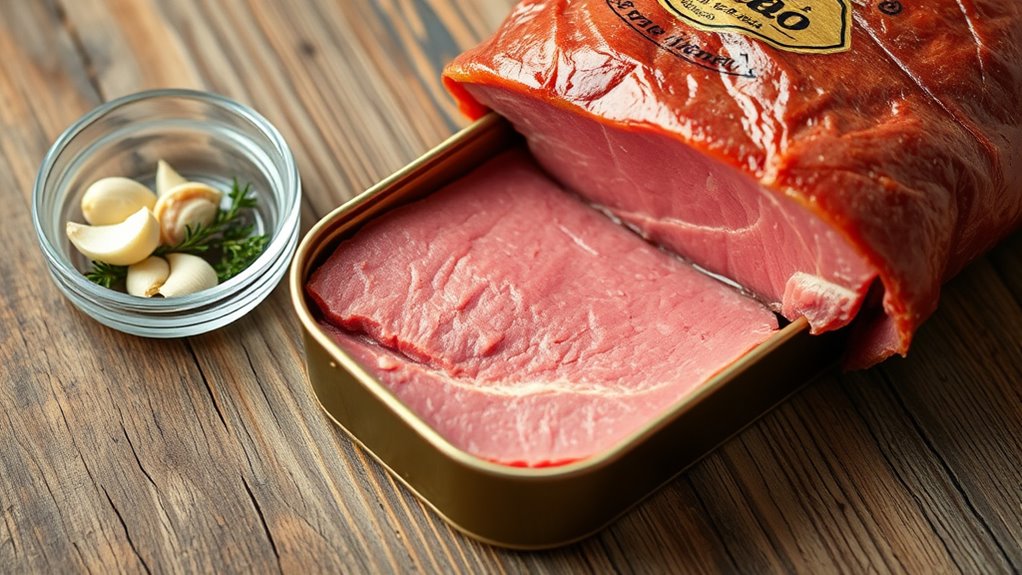
Ever wondered how much sodium is in corned beef? The amount can vary depending on the brand and how it’s prepared, but canned versions often have around 900 to 1,200 milligrams per serving. That’s roughly 40-50% of the recommended daily sodium intake for most adults.
If you’re watching your salt intake, this high level can add up quickly, especially if you eat it often. Fresh, homemade corned beef usually has less sodium, but processed versions tend to be heavily salted during curing.
Always check the nutrition label to know exactly how much sodium you’re consuming. Being aware of these numbers helps you make better choices and manage your salt intake, especially if you have health concerns like hypertension.
Sodium Levels in Canned Corned Beef: What to Expect
Canned corned beef usually has a lot of sodium, so it’s a good idea to check the label if you’re watching your salt intake. A typical can contains about 900 to 1,200 milligrams of sodium per serving, which is roughly 40-50% of the daily recommended limit.
Some brands add even more sodium to boost flavor and help with preservation. If you need to cut back on salt, look for low-sodium or reduced-sodium options when shopping.
Remember that sodium levels can vary between brands and recipes. If you plan to eat canned corned beef often, balancing it with low-sodium foods during the day can help keep your overall intake in check.
Sodium in Cooked vs. Fresh Corned Beef: What’s the Difference?
Have you noticed that cooked corned beef often tastes saltier than its fresh counterpart? That’s because cooking processes, especially boiling or simmering, can concentrate the sodium content.
During cooking, water evaporates, leaving behind a more sodium-rich piece of meat. If you cook corned beef with its brine or seasoning, even more salt seeps into the meat, increasing its sodium levels.
Fresh corned beef, before cooking, usually has less sodium since most of it is in the brine or seasoning. Once cooked, the sodium content can be much higher, making it taste saltier and increasing its sodium density per serving.
Comparing Sodium Content in Different Corned Beef Brands
When comparing different brands of corned beef, you’ll notice big differences in sodium content that can affect your diet. Some brands add more salt to boost flavor and help preserve the meat, while others are lower in sodium.
For example, a typical can of corned beef might have:
| Brand | Sodium Content (mg per 100g) | Notes |
|---|---|---|
| Brand A | 900 | High sodium |
| Brand B | 750 | Moderate sodium |
| Brand C | 600 | Lower sodium |
This table shows how sodium levels can vary by almost 300 mg between brands. Always check labels if you’re watching your salt intake and choose the one that best fits your dietary needs.
How Sodium in Corned Beef Affects Your Heart and Overall Health
Consuming too much sodium from corned beef can raise your blood pressure, increasing your risk of heart disease.
High sodium intake also strains your cardiovascular system and can lead to other health issues.
Understanding how sodium affects your body helps you make better choices for your overall well-being.
Heart Disease Risk
High sodium intake from corned beef can significantly increase your risk of heart disease. Too much sodium causes your blood vessels to harden and narrow, making your heart work harder to pump blood.
Over time, this extra effort can lead to heart attacks or strokes. To see how this happens, check out this table:
| Factor | Effect |
|---|---|
| Sodium levels | Raise risk of clogged arteries |
| Heart workload | Increases, risking heart failure |
| Blood vessel health | Deteriorates, leading to hypertension |
| Long-term risk | Higher chance of cardiovascular events |
Reducing sodium intake helps protect your heart. Cutting back on corned beef and choosing lower-sodium options can lower your risk and boost overall heart health.
Blood Pressure Impact
Sodium in corned beef directly increases your blood pressure, making it harder for your heart to pump blood efficiently. High blood pressure strains your arteries and raises the risk of cardiovascular issues.
Consuming too much sodium causes your body to retain water, which boosts blood volume and pressure. Over time, this added strain can damage your arteries and organs.
To keep your blood pressure in check, limit high-sodium foods like corned beef. Be mindful of portion sizes and look for lower-sodium options. Even small reductions in sodium intake can greatly improve your heart health.
Sodium raises arterial pressure quickly and increases the risk of hypertension. It also strains your heart and arteries, contributing to long-term damage and making blood vessels less flexible.
Overall Health Effects
Because sodium in corned beef can greatly impact your health, it’s essential to understand how it affects your heart and overall well-being. Excess sodium can lead to high blood pressure, which increases your risk of heart disease and stroke. It may also cause fluid retention, leading to swelling and putting extra strain on your organs.
Over time, a high-sodium diet can damage your arteries and kidneys, affecting how they function. Consuming too much sodium might also contribute to osteoporosis and stomach cancer. While corned beef provides protein and nutrients, eating it often or in large amounts can negate these benefits.
To stay healthy, it’s a good idea to balance your diet by limiting processed meats like corned beef. Whenever possible, choose lower-sodium options to help protect your heart and overall health.
Tips for Rinsing and Cooking Corned Beef to Lower Sodium
Rinsing your corned beef thoroughly can help remove excess salt, making it less salty and healthier. Soaking the meat before cooking also reduces sodium content and improves flavor.
Using low-sodium broth instead of regular broth can cut down on salt without sacrificing taste. These simple tips can help you enjoy corned beef with less sodium and more flavor.
Rinse To Remove Salt
To effectively reduce the salt content in corned beef, start by rinsing the meat thoroughly under cold running water. This simple step helps wash away surface salt, lowering the overall sodium intake. Be sure to rinse for at least 2-3 minutes, turning the meat occasionally. Use a gentle stream of water to avoid damaging the meat’s texture.
After rinsing, pat the beef dry with paper towels before cooking. Keep in mind:
- Rinse multiple times if necessary
- Avoid soaking in water for long periods
- Rinse before cooking, not after
- Use cold water to prevent cooking the meat prematurely
- Check for excess salt after rinsing and adjust cooking time if needed
This method effectively reduces surface salt, making your corned beef less salty and more enjoyable.
Soak Before Cooking
Soaking corned beef in water before cooking can really help cut down its sodium content. To do this, just submerge the beef in cold water and let it sit for at least an hour, changing the water every 30 minutes.
This process leaches out some of the salt, lowering the overall sodium level. After soaking, drain and rinse the meat thoroughly under cold water. This step gets rid of surface salt and any residual brine.
Keep in mind, soaking and rinsing won’t remove all the sodium, but it can make a noticeable difference. For the best results, combine soaking with other tricks like trimming excess fat or choosing less salty brands.
This simple process helps you enjoy corned beef with less sodium without sacrificing flavor.
Use Low-Sodium Broth
Using low-sodium broth during cooking is a great way to cut down on sodium in corned beef. It helps dilute the saltiness and stops you from adding extra sodium from the cooking liquid.
When preparing your dish, choose broth labeled “low-sodium” or “unsalted” so you can better control the salt content. You can also add flavor with herbs and spices instead of relying on salty broth.
Remember to avoid adding salt during cooking, and check labels for sodium levels to make sure you’re making the healthiest choice. Combining this with rinsing techniques will give you the best results.
Enjoying Corned Beef Without Too Much Sodium: Practical Tips
Reducing sodium intake while still enjoying corned beef is totally doable with some simple tricks. First, try eating smaller portions to cut down on salt without losing flavor.
Instead of the usual recipes, cook corned beef with herbs, spices, and citrus to boost taste naturally. Rinsing cooked corned beef under cold water can also wash away surface salt.
Cook corned beef with herbs, spices, and citrus to enhance flavor naturally and rinse under cold water to reduce surface salt.
Add more fresh veggies and whole grains to your meal to balance out sodium and make it healthier. Pair corned beef with low-sodium sides like steamed greens or roasted vegetables for a smarter choice.
Finally, use vinegar or mustard instead of salty condiments to enjoy the flavor without extra salt. These tips help you savor corned beef while keeping your sodium in check and supporting your health goals.
How to Read Labels for Low-Sodium Corned Beef Options
Reading labels carefully is key to finding low-sodium corned beef options that fit your health goals. Start by checking the sodium content per serving, aiming for products with less than 140 mg.
Look at the serving size to make sure you’re comparing similar portions. Scan the ingredients list for added salt or preservatives, which can boost sodium levels.
Choose labels that highlight “low sodium” or “reduced salt” claims, but always verify by reading the actual numbers. Keep an eye out for products with natural ingredients and minimal additives.
Focus on sodium per serving, not the total package amount. Compare similar serving sizes for accuracy.
Watch for sneaky added salts and preservatives, which can increase sodium unexpectedly. Trust labels with clear “low sodium” claims but double-check the numbers.
Finally, read the ingredients list carefully to avoid hidden high-sodium ingredients.
Healthy Alternatives to Traditional Corned Beef for Lower Sodium Diets
If you’re looking to reduce your sodium intake, there are low-sodium corned beef options and homemade brine recipes that can help.
You can also explore alternative protein sources like chicken or plant-based meats to enjoy similar flavors without the excess salt.
These choices make it easier to enjoy flavorful meals while sticking to a lower sodium diet.
Low-Sodium Corned Beef Options
For those looking to enjoy corned beef while cutting back on sodium, there are healthy alternatives that let you satisfy your cravings without sacrificing your dietary goals. Look for low-sodium or reduced-sodium options at your local store, which have less salt per serving.
You might also consider canned or pre-packaged corned beef labeled as “low-sodium,” or brands that naturally use less salt during processing. Some products are made with alternative seasoning blends that boost flavor without adding extra salt.
Check labels for “low-sodium” or “reduced-sodium” claims. Opt for smaller portion sizes and choose brands known for minimal salt use. Incorporate fresh herbs and spices to add flavor naturally.
Always read nutritional labels carefully before buying to make sure you’re making the best choice for your health.
Homemade Brine Recipes
Creating a homemade brine lets you control the salt level and customize the flavors, making it a healthy alternative to traditional corned beef. You can cut down on sodium while adding herbs and spices for extra flavor.
Here’s a simple recipe to get you started:
| Ingredient | Quantity | Purpose |
|---|---|---|
| Water | 4 cups | Base for brine |
| Sea salt | 2 tablespoons | Reduced salt option |
| Spices (peppercorns, bay leaves, garlic) | To taste | Flavor enhancement |
Feel free to experiment with herbs like thyme or rosemary. This way, you can make a flavorful, lower-sodium corned beef that suits your taste and health needs.
Alternative Protein Choices
When aiming to reduce sodium intake, exploring alternative protein options can help you enjoy flavorful meals without relying on traditional corned beef. You can incorporate different proteins that are naturally lower in sodium and still satisfy your taste buds.
Consider options like fresh poultry, fish, or plant-based proteins, which typically contain less salt. These choices not only lower your sodium intake but also add variety to your diet.
When selecting alternatives, look for minimally processed options and check labels for added sodium. Experimenting with herbs, spices, and citrus can amplify flavor without extra salt.
This way, you can maintain a healthy, flavorful diet without sacrificing taste.
- Fresh chicken or turkey breast
- Fish like salmon or cod
- Tofu or tempeh
- Legumes such as lentils or chickpeas
- Unsalted nuts or seeds
How Much Corned Beef Can You Eat Without Exceeding Sodium Limits?
Ever wonder how much corned beef you can enjoy without surpassing your daily sodium limit? To stay within recommended guidelines, it’s important to know the sodium content per serving.
A typical 3-ounce portion of corned beef has around 900 milligrams of sodium, which is nearly half of the advised daily maximum for most adults. If you’re aiming to keep your sodium intake below 2,300 milligrams, try to limit yourself to about 2-3 servings per week.
Keep in mind, if you eat other high-sodium foods during the day, you’ll need to cut back on corned beef. Moderation is key to enjoying the flavor without risking too much sodium.
Balancing your intake helps you stay healthy and enjoy your meals without worry.
Final Tips for Balancing Flavor and Nutrition When Eating Corned Beef
To enjoy corned beef without compromising your health, focus on balancing its rich flavor with smart nutrition choices. You can savor this savory dish while managing sodium intake by making simple adjustments.
Use herbs and spices instead of salt to boost flavor without adding extra sodium. Pair corned beef with fresh vegetables or whole grains to increase fiber and nutrients.
Practice portion control—smaller servings help limit sodium without sacrificing taste. When possible, choose low-sodium or homemade versions for better control over ingredients.
Stay well-hydrated, as water helps flush excess sodium from your system. These small tips can help you enjoy corned beef while keeping your health in check.
Frequently Asked Questions
How Does Sodium Content Vary Between Homemade and Store-Bought Corned Beef?
Store-bought corned beef usually has more sodium than homemade versions because commercial brands often add extra salt, preservatives, and flavorings to help it last longer and taste better.
When you make it yourself, you get to control how much salt goes in, which can help lower the sodium content. So, if you’re trying to watch your salt intake, cooking corned beef at home is a good option.
Are There Low-Sodium or Reduced-Sodium Corned Beef Options Available?
Like finding a quiet harbor in a storm, low-sodium corned beef offers a calmer option amid salty seas. Yes, there are reduced-sodium versions available at many stores, often labeled clearly.
You can also make your own at home, controlling salt levels from the start. Check labels carefully and look for brands that advertise lower sodium content.
It’s a smart choice to enjoy corned beef while managing your salt intake.
What Are the Health Risks of Consuming Too Much Sodium From Corned Beef?
Consuming too much sodium from corned beef can raise your blood pressure, which boosts the risk of heart disease and stroke.
It can also cause water retention, leading to swelling and discomfort.
If you eat large portions regularly, you might strain your kidneys and develop health issues over time.
To stay healthy, try to moderate your intake and consider choosing lower-sodium options whenever you can.
How Does Sodium Impact Flavor in Corned Beef Dishes?
Sodium acts like a master painter in corned beef dishes, enhancing flavors and creating a symphony of taste. It amplifies savory notes, making each bite richer and more satisfying.
Without enough sodium, the dish might taste flat or dull, like a painting missing vibrant colors. Too much, and it becomes overpowering, like a loud note in a gentle melody.
Balance sodium carefully to bring out the best in your corned beef.
Can Cooking Methods Significantly Reduce Sodium Levels in Corned Beef?
Cooking methods can significantly reduce sodium levels in corned beef. Rinsing the meat thoroughly before cooking helps wash away surface salt.
Using longer cooking times in water or broth can leach out some sodium. Discarding the cooking liquid afterward further decreases the salt content.
Choosing low-sodium or homemade broths instead of salty store-bought options can help you control your overall sodium intake in your dish.
Conclusion
Balancing your love for corned beef with your health goals is like walking a tightrope—careful steps make all the difference.
By checking labels, choosing lower-sodium options, and enjoying in moderation, you can savor this savory favorite without tipping the scales against your well-being.
Remember, a little mindfulness turns every bite into a dance of flavor and health.
This way, you keep your heart happy and your taste buds satisfied while managing how much sodium is in corned beef.