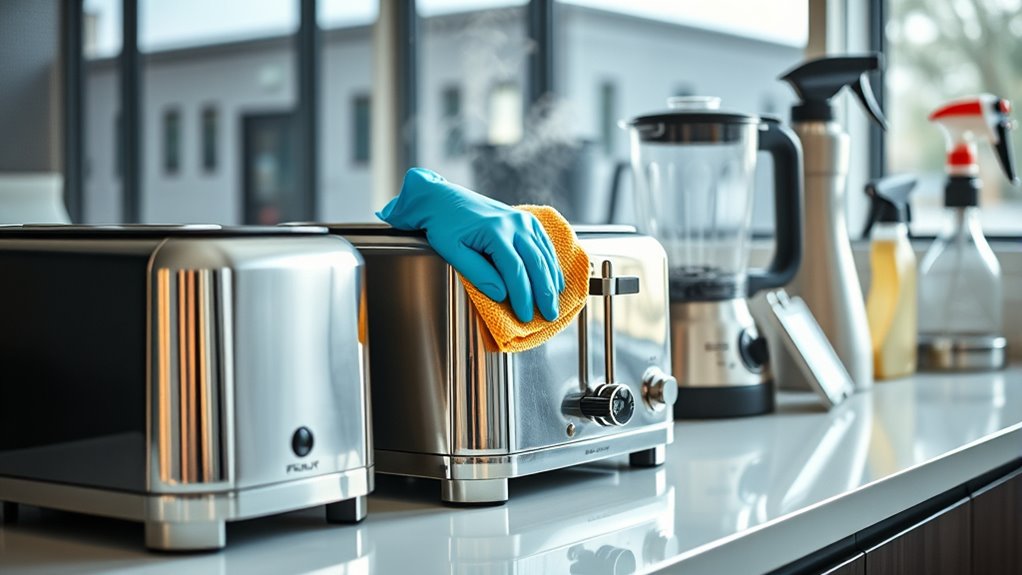
10 Essential Steps to Clean Kitchen Appliances Like a Pro
Cleaning kitchen appliances can feel like a never-ending chore, and many of us struggle to keep everything spotless and functioning efficiently. You’re not alone—finding time and the right methods can be tough.
To clean your kitchen appliances like a pro, gather supplies like mild soap, microfiber cloths, and brushes. Then unplug appliances to guarantee safety. Remove detachable parts for thorough cleaning, wipe down surfaces, and use gentle solutions for stubborn grime.
Deep clean appliances like ovens, microwaves, and coffee makers by applying suitable cleaners and descaling regularly.
Establish a routine to keep everything spotless and efficient.
Keep going, and you’ll uncover more expert tips to make your kitchen shine.
Key Takeaways
- Unplug appliances and remove detachable parts before cleaning. This keeps everything safe and makes it easier to get to all the nooks and crannies.
- Use gentle, non-abrasive tools and cleaning solutions. This way, you won’t accidentally scratch or damage the surfaces.
- Regularly wipe down the outside of your appliances. Don’t forget to clean interior parts like filters and trays too.
- For stubborn grime, try deep cleaning techniques. A baking soda paste or vinegar steam can do wonders.
- Keep your appliances in top shape with routine checks. Rinse filters regularly and neutralize odors to keep everything running smoothly.
Gather Essential Supplies and Tools for Kitchen Appliance Cleaning
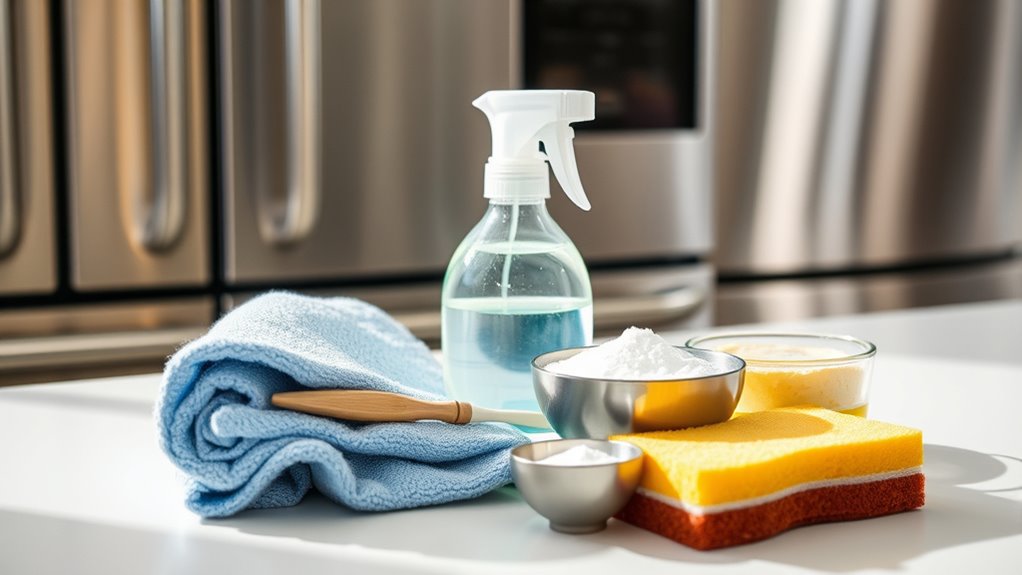
Before you start cleaning your kitchen appliances, gather all the necessary supplies and tools. Having everything ready guarantees a smooth, efficient process.
Grab mild dish soap and a non-abrasive sponge or cloth for general cleaning. You’ll also need a toothbrush or small brush to get into tight spaces like around buttons or vents.
A microfiber cloth helps with polishing and drying surfaces without scratching. Don’t forget white vinegar or baking soda for deep cleaning or deodorizing.
Keep a spray bottle handy for applying cleaning solutions. For stubborn grime, have some steel wool or scrubbing pads nearby—just be cautious with delicate surfaces.
Collect these items beforehand so you’re fully prepared, minimizing interruptions and making your appliance cleaning quick and effective.
Prepare Your Appliances for Effective Cleaning
Start by unplugging your appliances to keep things safe and avoid any electrical accidents. Then, remove any detachable parts like shelves, trays, or filters, and set them aside for cleaning.
Next, wipe down the outside surfaces with a damp cloth to get rid of dust and loose dirt. To prepare your appliances for a deep clean, follow these steps:
- Empty the appliance completely so you avoid messes and can access all surfaces easily.
- Check for leftover food or debris and remove it, preventing odors and cleaning interference.
- Look for any damage or loose parts that need fixing or securing before you start cleaning.
These simple steps set a clean, safe foundation, making the actual cleaning more effective and faster.
Safely Remove Surface Dirt and Debris From Appliances
To safely remove surface dirt and debris, use gentle cleaning tools like soft cloths or sponge brushes.
Wiping your appliances regularly helps prevent buildup and keeps them looking their best.
Always choose mild cleaning solutions to avoid damaging surfaces.
Use Gentle Cleaning Tools
Using gentle cleaning tools is key to safely removing surface dirt and debris from your appliances without causing damage. You want to avoid abrasive materials that could scratch or dull surfaces. Instead, pick tools that are soft and non-abrasive.
Here are three effective options:
- Microfiber cloths. They trap dirt without scratching delicate surfaces.
- Soft sponges. Gentle enough for most surfaces and easy to rinse clean.
- Cotton swabs. Perfect for cleaning tight spots and crevices safely.
Wipe Surfaces Regularly
Regularly wiping down your appliances helps keep dirt and debris from building up, so they look good and work well.
It also prevents stains, sticky spots, and grime from becoming harder to clean later.
Use a soft cloth or microfiber towel with a gentle cleaning solution to wipe down counters, stove surfaces, and fridge exteriors.
Stick to a routine, like daily or after cooking, to stay on top of dirt.
Here’s a quick visual to understand common surfaces:
| Surface Type | Cleaning Tip | Frequency |
|---|---|---|
| Stainless Steel | Use a microfiber cloth | Daily |
| Glass | Wipe with a damp cloth | After each use |
| Plastic | Mild soap and water | Weekly |
| Control Panels | Light touch, avoid harsh chemicals | After use |
| Exterior Surfaces | Wipe with a clean, damp cloth | Weekly |
Deep Clean Ovens and Stoves to Remove Grease Buildup
Grease buildup in ovens and stoves can make cleaning pretty tough if you ignore it. To deep clean effectively, start by removing loose debris and racks.
Next, apply an oven-safe degreaser or a paste made from baking soda and water to greasy surfaces. Let it sit for 15-20 minutes.
Use a non-abrasive scrub brush or sponge to loosen stubborn grease and wipe away the residue. Finish by wiping everything down with a damp cloth to remove any cleaner.
For stubborn spots, just repeat the process. Regular deep cleaning keeps grease buildup under control and helps your appliances work smoothly.
Descale and Deodorize Coffee Makers and Kettles
Over time, mineral deposits from water can build up inside your coffee maker or kettle, affecting their performance and the taste of your beverages. To descale, fill the appliance with equal parts water and white vinegar, then run a brewing cycle or boil it as usual.
Afterward, run two or three cycles with plain water to rinse out any vinegar residue. This process dissolves mineral buildup and restores efficiency. To deodorize, wipe down the exterior and removable parts with a mixture of water and baking soda or a mild detergent.
For a fresh scent, run a cycle with just water and lemon slices or a splash of citrus extract. Regular descaling and deodorizing keep your appliances working well and make sure your coffee and tea taste their best.
Clean and Maintain Refrigerators and Freezers
Keeping your refrigerator and freezer clean is key to maintaining their efficiency and ensuring your food stays fresh. To do this effectively, follow these steps:
Regular cleaning and maintenance keep your fridge efficient and your food fresh.
- Remove all items, discard expired or spoiled food, and wipe down shelves with a mixture of warm water and mild detergent.
- Unplug the appliance and take out removable parts like drawers and shelves for a thorough wash.
- Clean the interior walls with a solution of baking soda and water to eliminate odors, then dry everything with a clean cloth before restocking.
Regularly check and adjust door seals to prevent cold air leaks. Keep the coils at the back or bottom clean to improve energy efficiency. Proper maintenance keeps your fridge running smoothly.
Clean Microwave and Dishwasher Interiors for Sparkling Results
A clean microwave and dishwasher are key to keeping your kitchen hygienic and running smoothly. For your microwave, mix water with a splash of vinegar or lemon juice in a microwave-safe bowl.
Heat it for a few minutes until steam loosens grime, then wipe the interior with a clean cloth or sponge. Make sure to clean the ceiling, walls, and turntable for the best results.
For the dishwasher, start by removing and cleaning the filter. Then wipe down the interior walls and door gasket with a damp cloth.
Run an empty cycle with a dishwasher cleaner or a cup of vinegar to get rid of residue and odors. Regular cleaning helps prevent buildup, keeps everything smelling fresh, and ensures your appliances work at their best.
Eliminate Mineral Buildup and Water Stains
Mineral buildup and water stains can make your appliances look dull and even reduce how well they work. To get rid of these deposits, mix equal parts white vinegar and water.
Apply the solution to the affected areas with a soft cloth or sponge, focusing on spots with buildup or stains. Let it sit for 10-15 minutes to help break down the mineral deposits.
Wipe the area clean with a damp cloth, then dry thoroughly to prevent new stains. For stubborn stains, you can repeat the process or try a commercial descaling product made for appliances.
Regular treatment will keep your appliances looking good and working efficiently.
Establish a Routine Cleaning Schedule for Appliance Longevity
Regularly scheduled cleaning helps prevent mineral buildup and water stains from returning, keeping your appliances in top shape. Setting a routine means you’ll clean them consistently, which can extend their lifespan and keep them running efficiently.
Create a cleaning schedule that fits your usage—daily for high-traffic appliances like coffee makers or weekly for larger ones like refrigerators. Use reminders or a calendar so you stay on track.
Doing regular upkeep also makes deep cleaning easier because grime and residue won’t pile up too much. Being consistent helps you catch issues early, saving money on repairs or replacements.
Troubleshoot Common Appliance Cleaning Challenges
Cleaning appliances can sometimes be tricky, with stubborn stains or lingering odors throwing you off. The key is to identify the specific problem first so you can troubleshoot effectively.
For persistent odors, run a cycle with baking soda or vinegar to help neutralize the smells. If you’re dealing with stubborn stains, make a paste of baking soda and water and gently scrub with a soft brush.
Clogged drains or filters are common issues too. Remove and rinse filters or drains regularly to prevent buildup and keep everything running smoothly.
Frequently Asked Questions
How Often Should I Deep Clean Each Kitchen Appliance?
You should deep clean your kitchen appliances at least once every three to six months. For appliances like your refrigerator and oven, aim for every three months to prevent buildup and keep them running efficiently.
Microwave and dishwasher deep cleans can be done every three to four months. Regularly cleaning your coffee maker and toaster every month helps keep them in top shape.
Adjust the cleaning schedule based on how often you use each appliance and your kitchen’s specific needs.
Are Natural Cleaning Alternatives Effective for Stubborn Stains?
Yes, natural cleaning alternatives can be effective for stubborn stains. You might find that baking soda and vinegar create a powerful paste that loosens grime, especially on appliances like stoves and sinks.
For tougher stains, let the mixture sit for a few minutes before scrubbing. While natural solutions work well for many stains, you may need commercial cleaners for very stubborn or greasy spots.
Can I Clean Appliances Without Unplugging Them First?
You shouldn’t clean appliances without unplugging them first; imagine a sudden spark or short circuit, like lightning striking unexpectedly.
When you unplug, you prevent electrical shocks and damage. As you wipe down your fridge or oven, think of it as a safety dance—moving carefully and deliberately.
Always unplug before cleaning to keep things safe, effective, and ensure your appliances run smoothly without risking your safety.
What Safety Precautions Should I Follow During Cleaning?
You should always unplug appliances before cleaning to avoid electrical hazards.
Wear gloves to protect your skin from harsh cleaners and sharp edges.
Use non-abrasive cloths and gentle cleaners to prevent damage.
Make sure the appliance is cool before cleaning to prevent burns.
Keep water away from electrical parts and avoid spraying liquids directly into openings.
Following these precautions helps keep you safe and your appliances in top shape during cleaning.
How Do I Prevent Future Buildup and Odors?
To prevent future buildup and odors, make sure to clean your appliances regularly and keep them dry. Wipe down surfaces after each use to avoid residue.
Run cleaning cycles with vinegar or baking soda to help break down any buildup. Also, try not to leave food or moisture inside your appliances.
Use airtight containers for storing food, and empty your trash frequently to prevent odors from lingering.
Proper maintenance is key—check and replace filters as needed. This helps keep your appliances fresh and working efficiently over time.
Conclusion
By following these steps, you’ll keep your kitchen appliances spotless and running smoothly. Imagine waking up to a fresh, clean coffee maker each morning, ready to brew your favorite blend.
Regular maintenance not only extends their lifespan but also keeps your kitchen hygienic and inviting. With a little effort and consistency, you’ll become your own appliance cleaning pro.
This way, you’ll save time and money while enjoying a sparkling, efficient kitchen every day. Proper cleaning of your kitchen appliances ensures they perform at their best and last longer.