10 Key Differences Between Wagyu Beef and Kobe Beef
Are you overwhelmed by the variety of premium beef options and unsure which one to choose? You’re not alone—many people struggle to differentiate between Wagyu beef and Kobe beef, two of the most luxurious selections out there.
You’ll find that Wagyu beef includes several Japanese cattle breeds known for marbling, while Kobe beef is a specific, high-quality subset from the Tajima strain of Wagyu in Hyogo Prefecture.
Kobe must meet strict lineage, marbling, and regional standards, making it rarer and more expensive.
Wagyu offers rich flavor and tender texture overall, but Kobe’s intense marbling enhances its richness further.
If you keep exploring, you’ll uncover even more about these premium steaks’ unique qualities and distinctions.
Key Takeaways
- Kobe beef is a particular type of Wagyu from Hyogo Prefecture. It has to meet strict regional and genetic standards to be classified as Kobe.
- Wagyu is a broader term that covers various Japanese cattle breeds known for their marbling. This includes, but isn’t limited to, Kobe beef.
- To be labeled as Kobe, the beef must come from the Tajima strain of Wagyu cattle. It also needs to meet strict certification and grading rules.
- Wagyu cattle are raised all across Japan, with different farming practices. In contrast, Kobe cattle follow specific rearing protocols in Hyogo.
- Kobe beef is rarer and tends to be more expensive. This is mainly because of limited production and strict regional regulations.
What Are the Origins of Wagyu and Kobe Beef?
Wagyu and Kobe beef both have deep roots in Japan, but they are quite different in origin. Wagyu refers to several Japanese cattle breeds known for their incredible marbling and tenderness. These cattle have been around for over a thousand years.
They were originally bred for tough work in Japan’s mountainous areas. Over time, farmers selectively bred Wagyu cattle to focus on quality and fat distribution.
Kobe beef comes specifically from the Tajima strain of Wagyu cattle raised in Hyogo Prefecture. There are strict standards for its production, making it highly regulated.
It’s named after Kobe, the region’s capital. While Wagyu is a broad breed category, Kobe beef is a regional variation of Wagyu. It’s famous for its exceptional quality and unique flavor profile.
How Do Wagyu and Kobe Cattle Breeds Differ?
You’ll notice that Wagyu and Kobe cattle have different origins and lineages, which influence their unique traits. Their genetic features also play a key role in the quality of the meat you enjoy.
Furthermore, their breeding and rearing practices vary, impacting the flavor, tenderness, and marbling. These differences help explain why each type of beef has its own distinct appeal.
Breed Origins and Lineage
While Wagyu and Kobe cattle share a common heritage, their origins and lineages show clear differences. Wagyu, meaning “Japanese cow,” started centuries ago in Japan, evolving from native breeds that were crossed with Chinese and Korean cattle. These cattle were selectively bred for their unique meat qualities.
Kobe beef, on the other hand, is a specific type of Wagyu that comes from the Tajima strain in Hyogo Prefecture, where Kobe is located. Not all Wagyu are Kobe; Kobe beef must meet strict regional and genetic standards. Kobe cattle are raised under specific conditions to ensure they are purebred Tajima. This regional focus and lineage make Kobe beef exclusive and set it apart from the broader Wagyu breed.
Genetic Traits and Features
The main differences in genetic traits between Wagyu and Kobe cattle come down to how they are bred and selected, which affects their meat qualities. Wagyu cattle have a lot of genetic diversity, which helps with marbling, while Kobe cattle are a special group of Wagyu with unique lineage traits.
Kobe cattle inherit specific genes that make their marbling, tenderness, and flavor stand out. Their genetics also influence fat makeup, impacting the meat’s texture and juiciness.
| Trait | Wagyu | Kobe Beef |
|---|---|---|
| Marbling | High, variable | Extremely high, consistent |
| Fat Composition | Intramuscular fat | Finer, softer fat |
| Genetic Lineage | Diverse Wagyu strains | Specific Kobe lineage |
Breeding and Rearing Practices
Wagyu and Kobe cattle differ quite a bit in how they are bred and raised, shaped by their genetic backgrounds and cultural traditions. These differences influence the flavor and quality of the beef you enjoy.
Wagyu cattle are often selectively bred to enhance marbling, with some farmers keeping pure bloodlines for generations. Kobe cattle are a specific strain of Tajima Wagyu, raised only in Hyogo Prefecture under strict guidelines.
Rearing practices involve careful attention, like controlled diets and reducing stress, to boost marbling and tenderness. Kobe farmers follow precise standards, such as limiting slaughter age and sticking to specific feeding routines.
All these practices focus on quality, tradition, and precision. They help create the unique characteristics of each type of beef you taste.
What Are the Main Differences in Wagyu and Kobe Beef Quality and Marbling?
You’ll notice that Wagyu and Kobe beef differ mainly in marbling patterns, quality standards, and flavor. Wagyu generally has higher marbling scores, but Kobe beef follows strict grading criteria to guarantee top quality.
These differences also influence their texture and taste, making each one distinctly appealing. You can really tell them apart once you understand what sets them apart.
Marbling Levels and Patterns
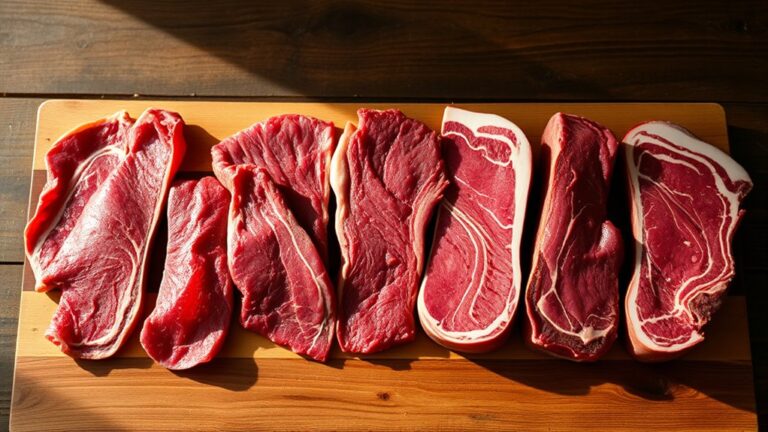
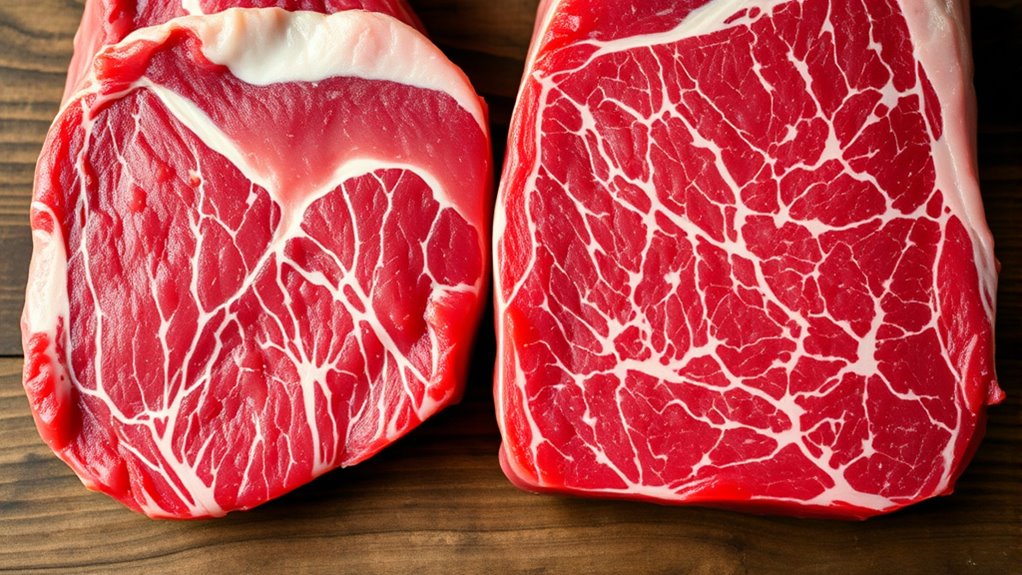
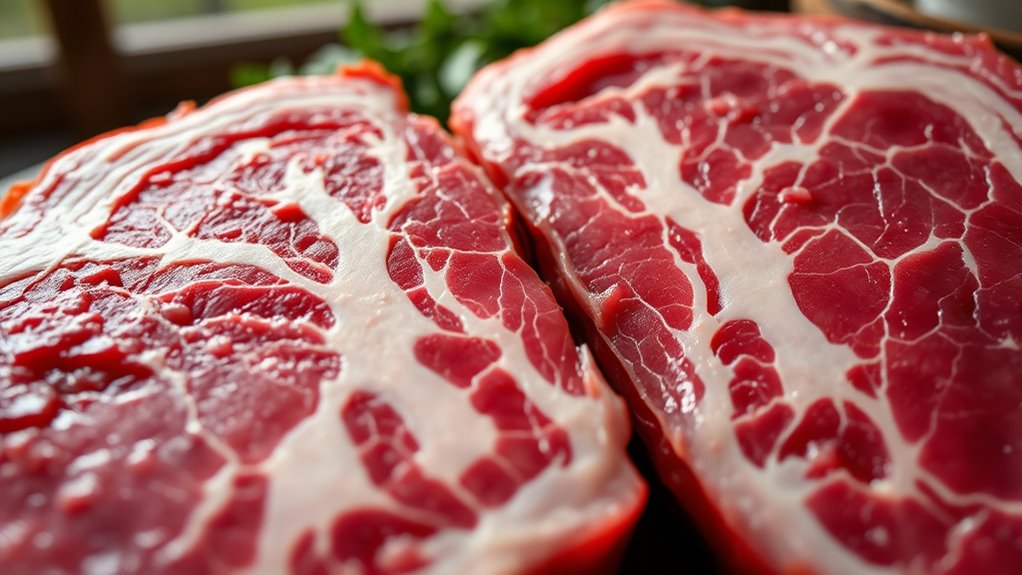
Marbling, the intricate pattern of fat within meat, is a key factor that sets Wagyu and Kobe beef apart in quality and texture. Wagyu generally has more extensive marbling, with fat evenly distributed to create a buttery, tender bite.
Kobe beef, a specific type of Wagyu from the Tajima strain, features even more delicate and fine marbling patterns. These often form small, web-like networks that are visually distinct.
To understand the differences better: Wagyu has a high marbling score but varies across regions. Kobe beef’s marbling is exceptionally fine and uniform.
The pattern density in Kobe is more delicate, with smaller fat flecks, while Wagyu can have larger streaks but still remains rich. These patterns influence tenderness, juiciness, and flavor.
That’s why Kobe’s marbling is so highly prized and considered quite unique.
Quality Standards and Grading
The standards used to evaluate Wagyu and Kobe beef focus heavily on grading systems that measure quality based on marbling, color, texture, and firmness. Wagyu grading mainly relies on the Beef Marbling Score, or BMS, which ranges from 3 to 12 and highlights the intramuscular fat.
Kobe beef, a special subset of Wagyu, follows stricter criteria. It includes specific marbling levels, color, and texture standards set by the Kobe Beef Marketing & Distribution Promotion Association.
| Aspect | Wagyu | Kobe Beef |
|---|---|---|
| Grading Focus | Marbling, color, texture, firmness | Marbling, color, texture, origin |
| Certification | BMS score, overall quality | Strict regional and quality standards |
This table shows that while both emphasize marbling, Kobe beef has more rigorous standards related to its region and origin.
Flavor and Texture Differences
While both Wagyu and Kobe beef are known for their rich flavors and tender textures, small differences make each unique. Wagyu usually offers a buttery, melt-in-your-mouth experience with a balanced umami flavor.
Kobe beef, a specific type of Wagyu, has even more marbling, which makes it feel richer. Its flavor is often described as deeper and more savory. The high fat content also gives Kobe a silky, luxurious texture.
In terms of marbling density, Kobe has more uniform, finer marbling than other Wagyu. Its flavor tends to be more intense and robust. The fat melts quickly, creating a creamier mouthfeel that’s hard to beat.
Both are incredibly tender, but Kobe’s marbling adds an extra touch of softness and luxury. These differences make each type special in its own way.
How Do Regional Factors Influence Wagyu and Kobe Beef?
Regional factors play a big role in shaping the unique qualities of Wagyu and Kobe beef. The climate, terrain, and local farming traditions all influence how the cattle are raised, which affects marbling, flavor, and tenderness.
In warmer areas, cattle tend to develop more intramuscular fat, giving the beef a richer flavor and better texture. Cooler regions usually produce leaner meat because of the different environmental conditions.
The terrain impacts grazing patterns, which in turn influence the cattle’s diet and the quality of the meat. Kobe beef, for example, comes from the Hyogo Prefecture, where traditional methods and strict environmental standards create its special characteristics.
| Factor | Effect on Beef | Regional Example |
|---|---|---|
| Climate | Influences fat marbling and flavor | Hyogo, Japan |
| Terrain | Affects grazing and diet | Hyogo Prefecture |
| Farming Traditions | Shapes rearing practices | Local Japanese methods |
How Are Wagyu and Kobe Beef Certified and Produced?
You’ll want to understand how Wagyu and Kobe beef get their official recognition, which depends on strict regional certification standards.
These regulations control everything from cattle breeding to production methods, making sure the beef is authentic and high-quality.
Certification Standards and Regions
Wagyu and Kobe beef each follow strict certification standards that ensure their quality and authenticity. These standards verify that the beef meets specific regional and breed criteria, making them stand out from other types of beef.
For Wagyu, certification involves checking the breed, lineage, and grading based on marbling, color, and texture. Kobe beef, a subset of Wagyu, must come from Tajima strain cattle raised in Hyogo Prefecture under strict guidelines.
Here are some key points to keep in mind:
- Wagyu certification depends on regional breed standards across Japan.
- Kobe beef must originate from Hyogo Prefecture and meet specific grading criteria.
- Both require strict adherence to feeding, care, and lineage regulations.
- Authenticity is confirmed through government and industry inspections.
Production Processes and Regulations
The production of Wagyu and Kobe beef involves meticulous processes and strict regulations to guarantee authenticity and quality. Wagyu cattle are raised with specific breeding standards, often in controlled environments to ensure superior marbling and tenderness.
Kobe beef, a subset of Wagyu from Hyogo Prefecture, requires adherence to even stricter guidelines, including lineage verification and specific feeding practices. Farmers must follow government rules that restrict the use of growth hormones and antibiotics.
The cattle are often massaged, fed a special diet, and raised with care to improve meat quality. Certification involves rigorous inspections, including carcass grading and lineage checks, to ensure the beef meets regional and breed-specific standards.
This strict process guarantees that what you purchase is genuine, high-quality Wagyu or Kobe beef.
What Are the Price Differences and Availability of Wagyu and Kobe?
Have you ever wondered why Wagyu and Kobe beef come with such hefty price tags? The main reasons are rarity, strict grading standards, and limited availability.
Wagyu and Kobe beef are pricey due to rarity, strict standards, and limited global availability.
Kobe beef, being a specific type of Wagyu from a region in Japan, is especially scarce and highly regulated. Here’s what affects their prices and availability:
- Limited Production: Kobe beef is produced only in Hyogo Prefecture, making it rare worldwide.
- Strict Regulations: Both Wagyu and Kobe must meet high quality standards, which increases costs.
- High Demand: Global interest in these premium meats drives prices higher.
- Import Restrictions: Limited import options for authentic Kobe beef keep prices raised outside Japan.
How Do Flavor and Texture Compare in Wagyu and Kobe Beef?
Ever wondered why some beef melts in your mouth while others offer a firmer bite? Wagyu and Kobe beef are famous for their rich flavors and tender textures.
Wagyu, especially Kobe, has an intense marbling of fat throughout the muscle, which creates a buttery, melt-in-your-mouth experience. The fat melts at a low temperature, releasing a juicy, savory flavor that feels almost luxurious.
Kobe beef tends to have a slightly firmer texture compared to other Wagyu varieties, but it’s still incredibly tender. The flavor profiles of both are deeply beefy, with a subtle sweetness and richness from the high fat content.
While both are prized for their melt-in-your-mouth quality, Kobe’s distinct marbling and flavor nuances make it stand out, offering a truly indulgent experience.
What Are Best Cooking Tips for Wagyu and Kobe?
Wondering how to make the most of Wagyu and Kobe beef? Keep these tips in mind to enjoy their full flavor and tenderness.
- Cook at low temperatures: Gentle heat prevents the fat from melting too quickly, helping keep that delicate texture.
- Keep it simple: Just a little salt and pepper lets the beef’s natural flavors shine without overpowering.
- Limit cooking time: Aim for rare or medium-rare to retain moisture and all that rich goodness.
- Use a hot, clean pan: Searing quickly creates a flavorful crust while keeping the inside tender.
Follow these tips and you’ll really savor the unique marbling and tenderness of Wagyu and Kobe beef.
Common Myths and Misconceptions About Wagyu and Kobe Beef?
Many people have misconceptions about Wagyu and Kobe beef that can lead to misunderstandings about their quality and value. Some think all Wagyu is Kobe or that Kobe beef is always better than other Wagyu.
Others believe these beefs are only high-priced luxury items, which ignores their unique qualities. It’s important to understand the differences to appreciate what makes each type special.
For example, many assume all Wagyu is Kobe, but Wagyu actually includes various Japanese breeds, not just Kobe. This can lead to misjudging both quality and price.
Some think Kobe is the best beef out there, but while Kobe is indeed special, it’s not necessarily superior to other excellent options. There are many high-quality Wagyu outside of Kobe.
Another misconception is that Wagyu always costs a fortune. In reality, prices vary depending on the grade and cut, so it’s not always out of reach.
Lastly, some believe that fat is bad, but Wagyu’s fat is rich in healthy monounsaturated fats. This challenges the idea that all fats are unhealthy.
Which Beef Is Best for Different Culinary Uses and Occasions?
Choosing the right type of Wagyu or Kobe beef depends heavily on the occasion and the dish you’re planning.
Selecting the perfect Wagyu or Kobe beef depends on your occasion and planned dish.
For a luxurious, melt-in-your-mouth experience, Kobe beef is perfect because of its intense marbling and tenderness.
If you want a richer flavor that can stand up to bold seasonings, Wagyu with slightly less marbling works really well.
Here are some options to consider:
- Kobe beef is great for high-end steaks and special celebrations.
- Wagyu is ideal for yakiniku, shabu-shabu, or hot pots, where beef tenderness makes a difference.
- Less marbled Wagyu is perfect for burgers or stir-fries, offering flavor without sacrificing practicality.
- Kobe beef can also be used for elegant presentations like carpaccio or tartare.
Matching the beef type to the occasion helps ensure you get the best flavor and texture for each dish.
Frequently Asked Questions
Are Wagyu and Kobe Beef Interchangeable in Recipes?
You shouldn’t interchange Wagyu and Kobe beef in recipes because Kobe is a specific type of Wagyu from a particular region in Japan with strict standards. Kobe beef has a unique marbling, tenderness, and flavor profile that’s different from other Wagyu.
Using regular Wagyu instead of Kobe might change the dish’s authenticity and taste. So, for the true Kobe experience, use genuine Kobe beef, and for other Wagyu varieties, adjust your expectations accordingly.
How Does Fat Content Differ Between Wagyu and Kobe Beef?
Imagine marbling so rich it looks like a snowy landscape. This is how the fat content differs. Wagyu beef has an incredibly high fat marbling, making it tender and flavorful.
Kobe beef, a specific type of Wagyu, boasts even more intense marbling, with fat that melts at a gentle touch. So, Kobe tends to be fattier and more luxurious, providing an almost buttery melt-in-your-mouth experience.
Are There Health Differences Between Wagyu and Kobe Beef?
Yes, there are health differences. Wagyu beef generally has higher monounsaturated fats, which are better for your heart, compared to other beef types.
Kobe beef, a type of Wagyu, tends to have slightly more fat and calories but also offers beneficial fatty acids.
However, both should be enjoyed in moderation because of their richness. Eating them excessively can lead to higher saturated fat intake.
Can Consumers Easily Identify Authentic Kobe Beef?
Think of authentic Kobe beef as a rare gem hidden in a vast treasure chest. To spot it, you need to look for official certification and labels, like the Kobe Beef Mark or the Kobe-registered tag from Japan’s Kobe Beef Marketing & Distribution Promotion Association.
Trust reputable sellers, ask questions about the origin, and beware of fakes. With a keen eye, you can confidently identify genuine Kobe beef and enjoy its true richness.
What Are the Environmental Impacts of Wagyu and Kobe Cattle Farming?
You should know that Wagyu and Kobe cattle farming can have notable environmental impacts. Both require a lot of resources, like water, feed, and energy, which contribute to greenhouse gas emissions.
Wagyu farming often involves intensive practices that may lead to land degradation. Kobe cattle, raised with strict regulations, might have a smaller environmental footprint.
But overall, these high-quality beef productions tend to be resource-heavy, affecting sustainability efforts.
Conclusion
Think of wagyu and kobe beef as two shining stars in the culinary sky. They each have their own special qualities—marbling, flavor, and tradition—that make them stand out.
Knowing these differences helps you choose the perfect cut for any occasion. It turns your meal into a memorable experience.
Whether you go for the radiant glow of wagyu or the legendary allure of kobe beef, you’re tasting some of Japan’s finest.