
How Much Does a Dishwasher Cost?
Finding the perfect dishwasher that fits your budget and needs can feel overwhelming. With so many options out there, many people struggle with choosing the right model without overspending. You’re not alone in this—navigating costs and features can be tricky.
Dishwasher costs vary widely depending on the type and features you choose. Basic countertop models start around $200, while built-in and fully integrated units can go over $2,000.
Budget models offer essential functions, while mid-range and high-end dishwashers include extra features like quieter operation and smart technology.
Installation and extra expenses can add a few hundred dollars to the total.
If you keep exploring, you’ll find tips to help you pick the right dishwasher for your budget and needs.
Key Takeaways
- Dishwasher costs can vary a lot. You might find basic countertop models for around $200. On the other hand, high-end built-in or integrated units can cost over $2,000.
- For most people, budget dishwashers range between $300 and $700. Mid-range and premium models tend to fall between $600 and over $2,000.
- Several factors influence the price. These include the brand reputation, material quality, features, size, and design elements.
- Keep in mind that installation costs can range from $150 to $500. The final price depends on how complex the setup is and if additional parts are needed.
- Energy-efficient and advanced models might have a higher upfront cost. But they can save you money in the long run through lower utility bills.
How Much Do Different Types of Dishwashers Cost?
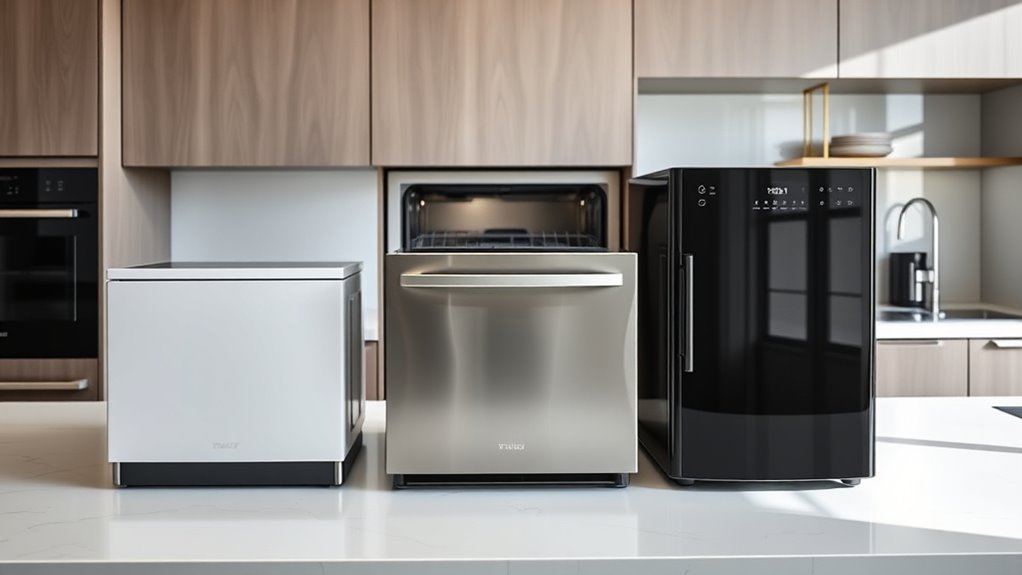
The cost of dishwashers varies widely depending on the type you choose.
Basic countertop models are usually the most affordable, costing between $200 and $500. These compact units sit on your countertop and are perfect for small households or tight spaces.
Built-in dishwashers, installed under your kitchen counter, typically range from $400 to $1,000. They offer more capacity and better performance.
Portable dishwashers cost around $300 to $700 and are a good option if you don’t have built-in space available.
Finally, integrated or fully flush models blend seamlessly with your cabinetry and can cost anywhere from $700 to over $2,000. Your choice mainly depends on your space, needs, and budget.
What Factors Affect Dishwasher Prices?
Several factors influence the price you’ll pay for a dishwasher beyond just its type. First, brand reputation matters; well-known brands often charge more for reliability and features.
Next, the material quality can impact costs. Stainless steel interiors are more durable and usually pricier than plastic ones.
Additional features, such as energy efficiency, noise reduction, smart technology, and specialized wash cycles, also drive up prices.
The size and capacity of the dishwasher can influence cost as well. Larger models tend to be more expensive.
Finally, the design and aesthetic details, like custom panels or sleek finishes, can add to the overall price.
Being aware of these factors helps you understand what influences the final cost and makes it easier to choose a model that fits your budget and needs.
What’s the Typical Price Range for Budget Dishwashers?
Budget dishwashers typically cost between $300 and $500, making them an affordable option for many. They usually include basic features that handle everyday cleaning needs.
While they may lack advanced options, you can still expect decent quality and durability for this price.
Affordable Price Range
Affordable dishwashers usually cost between $300 and $700, making them a great option for most homeowners. In this price range, you’ll find models that clean well without breaking the bank.
They often include basic features like multiple wash cycles, adjustable racks, and energy efficiency. While they might not have all the fancy features of high-end models, they still do a reliable job for everyday use.
You can choose from various brands and styles, including compact and standard sizes, to match your kitchen. Keep in mind that prices can change due to sales, discounts, and store promotions.
Basic Features Included
When shopping in the $300 to $700 range, your dishwasher will likely include some basic features that handle everyday cleaning tasks well. Most models offer multiple wash cycle options like normal, heavy, and quick wash, giving you flexibility.
You’ll usually find adjustable racks to fit different load sizes and types of dishes. Energy efficiency features are common too, helping you save on utility bills. A built-in spray arm ensures thorough cleaning, while a soil sensor may be included to optimize water use based on how dirty the dishes are.
Most budget dishwashers also have a simple control panel for easy operation. While these features meet basic cleaning needs, they often lack the advanced options you’d find in higher-end models.
Quality and Durability
Generally, you can expect to pay between $300 and $700 for a dishwasher that offers decent quality and durability. Budget models usually have stainless steel tubs, reliable wash cycles, and basic energy efficiency, so they last without costing too much.
While these models might lack some advanced features, they still work well for everyday use. To help you compare options, here’s a quick overview:
| Feature | Budget Dishwashers | Premium Dishwashers |
|---|---|---|
| Material | Plastic or stainless steel tubs | Fully stainless steel tubs |
| Longevity | 5-7 years | 10+ years |
| Repair Costs | Lower, easier to fix | Higher, more complex repairs |
This range balances affordability with quality, making it a good choice for most households.
What Features Do Mid-Range Dishwashers Offer at Different Prices?
Mid-range dishwashers offer a variety of features that balance performance and affordability, but prices can vary based on the options included.
You’ll find different levels of cleaning cycles, noise reduction, and smart technology at various price points.
Understanding what features provide the best value helps you choose a model that fits your needs without overspending.
Key Features by Price
Mid-range dishwashers usually fall between $600 and $900. They strike a good balance of essential features and upgrades from basic models. Expect better cleaning, quieter operation, and more convenience.
Some key features you might find include multiple wash cycles. These can include options for delicate, heavy-duty, and eco-friendly cleaning to match different loads.
Adjustable racks are common too. They let you load larger or oddly shaped items more easily and give you more flexibility.
Sensor technology is also often included. It detects soil levels and adjusts cycle length and water use for efficient cleaning.
All these features make your dishwashing experience better without significantly raising the price. That’s why mid-range dishwashers are a practical choice for many households.
Value for Money
As you look at dishwashers in the $600 to $900 range, you’ll notice that prices within this bracket can influence the features offered, providing good value for your money. At this level, you typically get advanced cycle options, better energy efficiency, and quieter operation.
You may also find models with adjustable racks and improved drying features. Here’s a quick look at what you might expect:
| Feature | Benefit |
|---|---|
| Multiple Wash Cycles | Flexibility for different loads |
| Energy Efficiency | Lower utility bills |
| Noise Level | Quieter operation |
In this price range, you’re balancing cost with useful features that elevate your everyday dishwashing experience.
How Much Do High-End Dishwashers Cost and Are They Worth It?
Have you wondered how much a high-end dishwasher might set you back? These models typically cost between $1,000 and $2,500, but they often come with premium features. Here’s what you can expect:
- Advanced Wash Cycles – multiple customizable settings for thorough cleaning.
- Enhanced Quiet Operation – noise levels as low as 40 decibels for peaceful kitchens.
- Premium Materials and Design – stainless steel finishes and sleek aesthetics that last longer.
Are they worth the investment? If you value quieter operation, better durability, and top-tier cleaning performance, they can be a good choice.
However, for everyday needs, mid-range models often deliver great value without the hefty price tag.
Which Features Impact the Cost of a Dishwasher?
Your dishwasher’s cost is influenced by features like wash cycle options, energy efficiency ratings, and extra functionalities. More advanced cycles and higher efficiency ratings usually mean a higher price.
Additional features, such as smart technology or special racks, can also add to the overall cost. These upgrades can make your dishwasher more convenient but often come with a higher price tag.
Wash Cycle Options
Different wash cycle options can really impact the overall cost of a dishwasher, especially as more advanced features are added. Higher-end models often come with extra cycles designed for specific needs, which can make them more expensive.
These options might include heavy-duty or sanitize cycles for deep cleaning and germs, eco-friendly cycles that save water and energy, or quick wash cycles for when you’re in a hurry.
While these features offer more flexibility, they also tend to increase the price. Basic dishwashers usually have only standard cycles, keeping costs lower. If you want those specialized options, be ready to pay a bit more for the added convenience and versatility they provide.
Energy Efficiency Ratings
Energy efficiency ratings really impact the total cost of a dishwasher, often reflecting how much you’ll save on utility bills in the long run.
Models with higher ratings, like those with an Energy Star certification, usually cost more upfront but save you money over time because they use less water and electricity.
These ratings show how effectively the dishwasher uses energy to do its job. If energy efficiency is important to you, expect to pay a bit more initially, but you’ll benefit from lower utility bills and a smaller environmental impact.
On the other hand, less efficient models tend to be cheaper to buy but can lead to higher running costs later.
When choosing, think about your current and future budget, balancing the initial price with potential savings from better efficiency.
Additional Features Included
Certain features included in a dishwasher can greatly impact its overall cost. These extras often add convenience and efficiency but come at a higher price. For example:
- Smart Technology: Wi-Fi connectivity lets you control your dishwasher remotely, but this feature can increase the price considerably.
- Flexible Racks and Loading Options: Adjustable racks and specialized shelves improve loading versatility, which adds to the cost.
- Advanced Wash Cycles: Features like sanitize, heavy-duty, or eco-friendly cycles often come with an extra price, offering tailored cleaning options.
While these features can make your dishwasher more convenient and efficient, they also drive up the initial purchase cost. Consider your needs carefully to balance features with your budget.
Are Energy-Efficient Dishwashers More Expensive, and Are They Worth the Extra Cost?
Are energy-efficient dishwashers worth the extra investment? Generally, yes. They often cost more upfront but save you money over time through lower energy and water bills.
These models use less electricity and water, making them more eco-friendly and cost-effective in the long run. If you run your dishwasher frequently, those savings can really add up.
Plus, many energy-efficient dishwashers come with advanced features that boost cleaning performance and reduce noise. But the higher initial price can be a concern if you’re on a tight budget.
Still, considering the lower running costs and environmental benefits, an energy-efficient dishwasher is often a smart investment that pays off over its lifespan.
How Much Do Dishwasher Installations and Extra Expenses Usually Cost?
Installing a new dishwasher usually costs between $150 and $500, depending on how complex the job is and where you live.
Extra expenses can add up quickly, so it’s good to be prepared. Here are some common additional costs:
Unexpected costs can add up fast—plan ahead to avoid surprises during dishwasher installation.
Labor Fees: If you hire a pro, expect to pay $75 to $200 for installation, especially if plumbing or electrical work is involved.
Parts and Materials: You might need new hoses, connectors, or a mounting kit, which can cost around $20 to $50.
Permits or Inspection Fees: Some areas require permits for electrical or plumbing work, which could add $50 to $150.
Being aware of these potential costs helps you budget accurately and avoid surprises during installation.
How to Find an Affordable Dishwasher That Meets Your Needs
Finding an affordable dishwasher that fits your needs involves balancing your budget with the features you want. Start by making a list of the must-have functions, like capacity, energy efficiency, or specific wash cycles.
Set a clear price range based on what you’re willing to spend and stick to it. Do some research online to compare brands and models, and read reviews to find reliable options within your budget.
Visit stores to see appliances in person. Check the size to make sure it fits and see how easy it is to use. Look out for discounts, sales, or refurbished models to save some money.
Consider Energy Star-rated dishwashers. They might cost more upfront but save you money over time through lower utility bills.
When Is It Worth Investing in a More Expensive Dishwasher?
Determining when it’s worth investing in a more expensive dishwasher depends largely on how often you use it and the features you need. If you run your dishwasher daily or several times a week, spending more on a durable, energy-efficient model can save you money over time.
Think about a higher-end dishwasher if you want advanced features like quiet operation, better cleaning power, or smart technology. These extras can make your life easier and more convenient.
Here are some key points to help you decide:
- If you use your dishwasher often, investing in durability and efficiency makes sense.
- Consider if you need features like quietness or smart controls.
- Remember that long-term savings from energy-efficient models can outweigh the initial cost.
Where Can You Find the Best Deals on Dishwashers?
Looking for the best deals on dishwashers? Your first stop should be online retailers like Amazon, Home Depot, or Lowe’s. These sites often have discounts, seasonal sales, and free shipping offers.
Don’t forget to check manufacturer websites, which sometimes run exclusive promotions or rebates. Local appliance stores can also have competitive prices, especially if you’re willing to negotiate or ask about open-box items.
Big-box stores frequently offer in-store-only deals or clearance events. Keep an eye on holiday sales like Black Friday or Memorial Day, when discounts tend to be the deepest.
Signing up for newsletters from appliance retailers can also alert you to upcoming sales and special promos, helping you score the best deal possible.
Frequently Asked Questions
How Long Do Dishwashers Typically Last Before Needing Replacement?
Dishwashers usually last about 9 to 12 years before you need to replace them. You can extend their lifespan with regular maintenance and proper use.
Keep an eye out for signs of wear, like leaks or poor cleaning performance. These indicate it’s time for a new one.
If you take good care of it, your dishwasher can serve you well for over a decade.
Are There Significant Differences in Maintenance Costs Among Dishwasher Brands?
You’ll find that maintenance costs vary a lot among brands, with some costing up to 30% more over their lifespan. For example, premium brands often have more durable parts, which means fewer repairs.
Budget models might need more frequent fixes, so it’s worth researching brands’ reliability and warranty services. Choosing a reputable brand can help keep repair costs down.
This way, your dishwasher stays functional longer and saves you money in the long run.
Can I Install a Dishwasher Myself or Should I Hire a Professional?
You can install a dishwasher yourself if you have basic plumbing and electrical skills, but it’s often safer and more efficient to hire a professional. DIY installation saves money and can be satisfying, but mistakes might lead to leaks or electrical issues.
If you’re comfortable with tools and follow instructions carefully, go ahead. Otherwise, hiring a pro secures proper setup, prevents damage, and guarantees your dishwasher works smoothly from the start.
Do Smart or Wi-Fi-Enabled Dishwashers Cost More?
Smart or Wi-Fi-enabled dishwashers usually cost a bit more, about $100 to $300 extra, compared to traditional models. Imagine a sleek appliance glowing with a gentle blue light, connecting seamlessly to your phone, ready to start when you are.
This added convenience and tech-savvy feature come with a premium, but they offer remote control, energy efficiency, and smart notifications. These features make your kitchen feel more futuristic and efficient.
What Is the Average Cost of Dishwasher Repairs Over Its Lifespan?
On average, dishwasher repairs cost around $200 to $300 over its lifespan. You might end up paying more if major parts like the motor or control panel fail, especially after the warranty runs out.
Regular maintenance can help prevent costly repairs. Keep an eye on issues like leaks, strange noises, or poor cleaning so you can catch problems early.
Staying proactive ensures your dishwasher lasts longer and helps you avoid unexpected expenses.
Conclusion
When shopping for a dishwasher, keep in mind that higher prices often mean better durability, advanced features, and energy efficiency. These qualities can make a more expensive dishwasher a worthwhile investment over time.
While it’s tempting to choose the cheapest option, studies show that spending a bit more can save you money on repairs and utility bills. It’s about finding the right balance for your needs and budget.
So, don’t just chase discounts. Think about the long-term benefits of a dishwasher that costs a little more. A good machine can save you money and last longer, making it a smart choice for your home.