7 Factors That Determine How Much a Kitchen Island Costs
Many homeowners feel overwhelmed when trying to figure out how much a kitchen island will cost. With so many options and factors to consider, it’s easy to feel stuck or uncertain about what fits your budget. You’re not alone—navigating costs can be tricky, but understanding what influences the price can help you make smarter choices.
Your kitchen island cost depends on several factors, including the materials you choose, like solid wood or quartz, which impact the price. The size matters too, as larger islands need more materials and labor.
Custom features, built-in appliances, and finishes also add to expenses. Prefabricated islands tend to be more budget-friendly than custom ones.
Installation costs vary based on complexity, and your location influences labor prices. Stick around to examine these factors in detail and make smarter decisions.
Key Takeaways
- Material selection really impacts the cost. You can choose from budget-friendly laminates or go for more expensive options like natural stone.
- The design complexity and built-in features also play a big role. More intricate designs or added features will raise both material and labor costs.
- Size matters too. A larger island needs more materials and takes longer to install, which adds to the overall price.
- If you opt for custom features or high-end appliances, expect to pay more. These often require specialized materials and extra installation work.
- Labor costs can vary a lot depending on how complex the project is, where you live, and whether you’re adding plumbing or electrical upgrades.
What Factors Determine the Cost of a Kitchen Island?
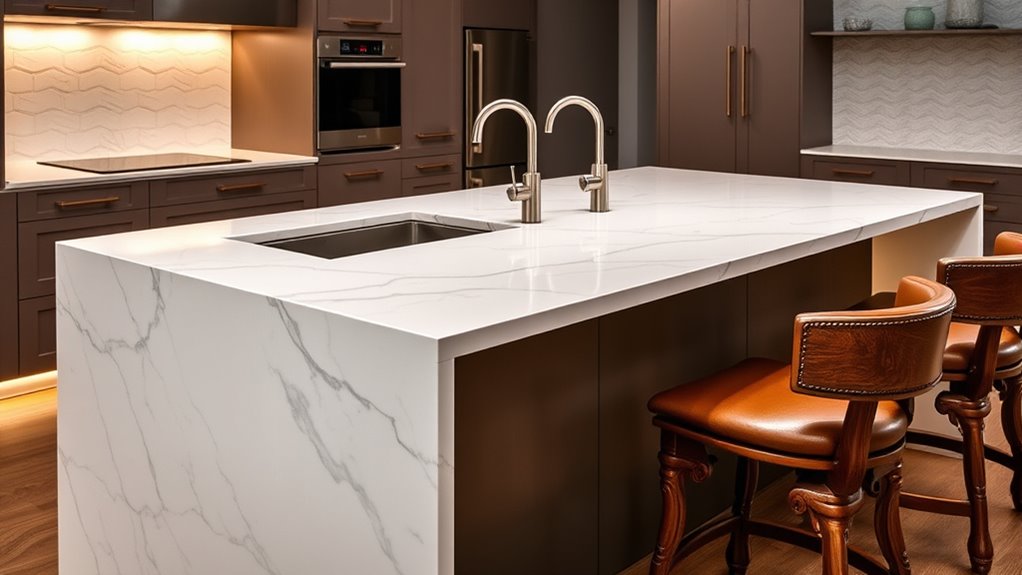
Several key factors influence the overall cost of a kitchen island, and understanding these can help you make informed decisions. The materials you choose greatly impact the price—solid wood, granite, quartz, or custom finishes all vary in cost.
Choosing materials carefully can significantly affect your kitchen island’s overall cost.
The complexity of the design also matters. A simple rectangular island costs less than one with intricate details, curves, or custom features.
Moreover, built-in appliances, sinks, or electrical outlets increase both construction and installation expenses. The choice of hardware, countertops, and finishes further shapes the final price.
Labor costs can fluctuate based on your location and the complexity of the build. By considering these factors, you’ll better understand how your selections influence your overall investment.
How Does the Size of Your Kitchen Island Affect the Price?
The size of your kitchen island directly impacts its overall cost because larger islands need more materials and labor to build. When you choose a bigger island, you’ll notice higher expenses for these reasons. Here are three key points to keep in mind:
- Material Costs: Larger surfaces require more wood, stone, or other materials, which increases the price.
- Labor Expenses: Bigger islands take more time and effort from workers, raising installation costs.
- Additional Features: A larger size often includes extras like seating, storage, or appliances, adding to the total cost.
Which Materials Offer the Best Balance Between Cost and Style?
Choosing the right materials for your kitchen island can help you find a good balance between cost and style. If you want something affordable yet attractive, butcher block or laminate surfaces are great options—they add warmth and variety without costing too much.
For a more modern look, quartz or solid surface materials are durable and stylish at a moderate price. If you’re going for elegance and longevity, natural stone like granite can be worth the investment, though it tends to be pricier.
Wood veneers provide a stylish appearance at a lower cost, and painted or laminated finishes are budget-friendly options that can be customized easily. Ultimately, picking materials that match your style and budget will make sure your island looks beautiful and stays functional.
How Do Custom Features and Appliances Impact Your Budget?
Adding custom features to your kitchen island can quickly drive up costs, especially if you go for unique designs or special materials.
Choosing high-end appliances also impacts your budget, as they often come with higher price tags and installation fees.
Think about how these choices fit into your overall budget so you can avoid surprises later on.
Custom Features Cost Impact
Custom features and high-end appliances can really boost your kitchen island costs. They often need specialized materials, advanced installation, or custom craftsmanship, which adds to both material and labor expenses quickly.
For example, built-in wine coolers or refrigeration units can cost thousands more than standard cabinetry. Unique countertops like marble or custom inlays also demand premium materials and skilled installation.
Integrated lighting or electrical outlets tailored to your needs require electrical work and custom wiring. These features boost your island’s functionality and style but can significantly impact your budget.
When planning, think about how much you’re willing to spend on these personalized elements. This helps ensure your project stays on track financially while still meeting your design goals.
Appliance Selection Influence
Opting for high-end appliances and specialized features can really impact your kitchen island budget. If you go for built-in wine coolers, custom cooktops, or integrated sinks, expect costs to go up quite a bit.
Premium appliances tend to offer better performance and look nicer, but they come with higher price tags. Adding smart technology, like touchscreens or app-controlled features, can also increase expenses.
Choosing energy-efficient or custom-sized appliances can push costs even further. Keep in mind that each upgrade improves functionality and style, but often requires more complex installation, which can add to labor costs.
To stay within your budget, weigh the benefits of these custom appliances against their price. Focus on features that truly meet your needs. Thoughtful selection helps ensure your kitchen island stays functional without overspending.
Prefabricated vs. Custom Kitchen Islands: What’s the Cost Difference?
When choosing between prefabricated and custom kitchen islands, you’ll notice differences in material quality, design options, and installation complexity. Prefabricated islands often use standard materials and are easier to install, which keeps costs lower.
Custom islands, on the other hand, let you create personalized designs and select higher-quality materials. This can significantly increase your overall budget.
Material Quality Variations
Material quality plays a big role in the price of a kitchen island, especially when comparing prefabricated options to custom-built ones. Higher-quality materials usually cost more but last longer and look better.
When choosing between prefabricated and custom islands, think about these factors:
- Wood Type: Premium hardwoods like oak or maple tend to be more expensive than engineered or laminate surfaces.
- Countertop Material: Natural stone such as granite or marble will increase costs compared to laminate or solid surface options.
- Finish Quality: High-end finishes like hand-applied stains or paints add to the price but boost durability and appearance.
Opting for better materials can impact your budget but will give you a more attractive and long-lasting kitchen centerpiece.
Design Customization Options
Design options really impact the overall cost of a kitchen island, especially when comparing prefabricated models to custom-built ones. Prefabricated islands come with limited design choices, keeping costs lower. They’re mass-produced, so you usually pick from standard sizes, shapes, and finishes.
Custom islands give you full control over dimensions, shapes, materials, and finishes, which often makes them more expensive. If you want unique features like integrated sinks, specialized storage, or decorative elements, these will add to the cost.
While prefabricated islands are budget-friendly and quicker to install, custom designs cater to your specific needs and style. But they do require a bigger investment. Your choice depends on your budget, aesthetic preferences, and how personalized you want your kitchen to be.
Installation Complexity Differences
While prefabricated kitchen islands are generally quicker and easier to install, custom-built islands often require a more complex and time-consuming process. This complexity can affect the overall cost and how long the installation takes.
To understand the differences, consider these factors:
- Preparation Work: Custom islands often need extra site modifications, like reinforced flooring or plumbing adjustments, which can increase both time and costs.
- Assembly Requirements: Prefabricated units arrive ready to install, while custom islands may need a lot of assembly on-site, adding to labor costs.
- Integration Challenges: Custom islands require precise fitting with existing cabinetry and electrical systems, which can take longer and be more expensive.
Knowing these differences helps you better estimate the costs and effort involved with each option.
What Are the Installation and Labor Costs to Expect?
Installing a kitchen island can vary quite a bit in cost depending on how complex the project is and who you hire. Labor costs usually cover demolition, site prep, plumbing, electrical work, and the actual installation.
Installing a kitchen island costs vary based on complexity and contractor expertise.
If your island needs new wiring or plumbing, expect to pay more—sometimes a few hundred dollars extra. Simple installs, like putting in a pre-made island, tend to be quicker and cheaper, often between $200 and $500 in labor.
For more complex projects, such as custom-built islands or ones that need extensive electrical or plumbing work, labor costs can go over $1,000. Keep in mind that rates differ depending on your location and the contractor’s experience.
To avoid surprises, it’s a good idea to get detailed estimates upfront and ask what’s included in the labor costs.
How Can You Budget Smartly for Your Kitchen Island Project?
Wondering how to keep your kitchen island project within budget? Start by planning carefully and setting a clear budget limit. Here are three ways to do it:
- Prioritize your must-haves. Focus on essential features and materials first, then add upgrades later if your budget allows.
- Research costs thoroughly. Get multiple quotes from contractors and compare prices for materials so you can avoid surprises.
- Build in a contingency fund. Set aside about 10-15% of your budget for unexpected expenses or changes during the project.
Frequently Asked Questions
How Long Does It Typically Take to Install a Kitchen Island?
It typically takes about 4 to 8 hours to install a kitchen island, depending on its size, complexity, and your existing kitchen setup. You’ll need some time for measuring, preparing the space, and assembling the unit.
If electrical or plumbing work is involved, it could take longer. Planning ahead and hiring experienced professionals can help make the installation smoother and faster.
This way, you’ll ensure your new island is both functional and stylish without unnecessary delays.
Are There Eco-Friendly Options for Budget-Friendly Kitchen Islands?
Yes, there are eco-friendly options for budget-friendly kitchen islands. You can choose reclaimed wood or sustainably sourced materials, which are often more affordable and better for the environment.
Look for islands made from bamboo or recycled materials like metal or glass. These options help reduce environmental impact and can fit within a tighter budget.
Shopping at thrift stores or refurbishing existing furniture is also a cost-effective and eco-conscious choice.
Can a Small Kitchen Still Accommodate a Large Island?
Yes, a small kitchen can still accommodate a large island, but careful planning is key. Measure your space to ensure there’s enough clearance around the island for easy movement and appliances.
Choose a multi-functional or slim design to make the most of the space without making the room feel crowded. You could also consider a portable or foldable island that can be moved or tucked away when not in use, adding versatility to your small kitchen.
What Are the Maintenance Costs Associated With Different Island Materials?
Think of your kitchen island as a mirror reflecting your lifestyle. Maintenance costs vary: granite and quartz are like sturdy friends, needing only occasional sealing or cleaning.
Wood requires regular sealing to prevent damage, like tending a delicate plant. Metal surfaces like stainless steel are low-maintenance, enduring like a steadfast companion.
Choosing the right material depends on how much time and effort you’re willing to invest. This shapes your kitchen’s harmony and longevity.
How Does the Resale Value of My Home Change With a New Kitchen Island?
Adding a new kitchen island can boost your home’s resale value by making your kitchen more functional and attractive to buyers. It signals modernity and extra space, which many homebuyers find appealing.
However, the impact depends on the island’s quality, style, and how well it matches your overall kitchen design. A well-chosen island can make your kitchen look more inviting.
If you plan it thoughtfully, a good kitchen island can enhance your home’s appeal. This might even help increase its market value over time.
Conclusion
As you plan your kitchen island, keep in mind that the right choices often come down to timing and your vision. Sometimes, a well-placed sale or a clever upgrade can unexpectedly save you money.
Keep your priorities clear, and don’t forget to factor in installation costs. With a little patience and insight, your perfect kitchen island can become a reality without breaking the bank.
Remember, understanding the main factors that influence the cost of a kitchen island can help you make smarter decisions. The best results often happen when you least expect them.