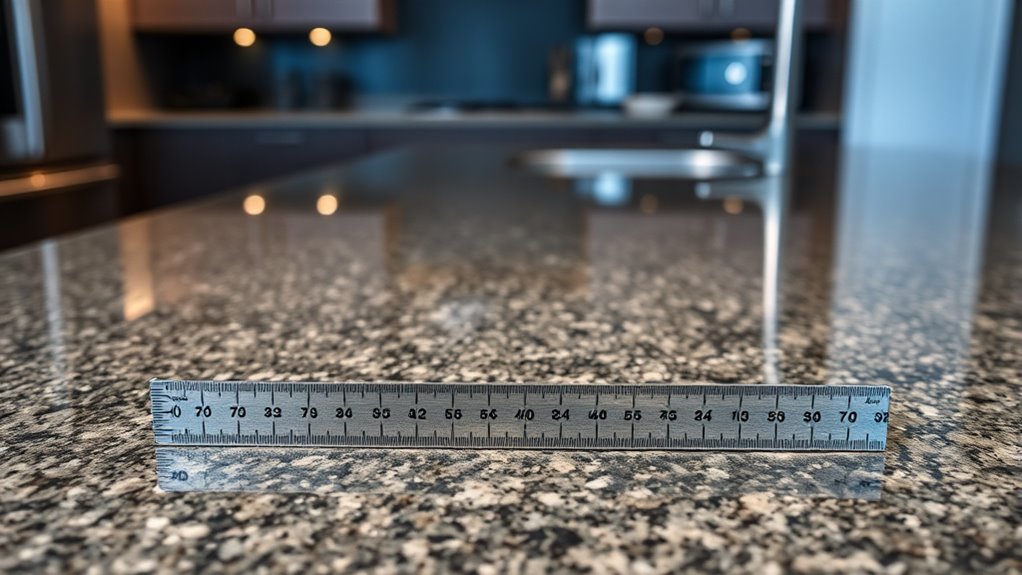
Standard Depth Measurements for Deep Kitchen Counters
Many people struggle with designing a kitchen that’s both functional and comfortable. Finding the right counter depth is a common challenge, especially when balancing workspace and storage needs.
Standard depths for deep kitchen counters usually range from 24 to 30 inches, giving you extra workspace for prep and larger appliances. If your kitchen has a lot of cooking or baking, opting for a deeper counter may improve comfort and efficiency.
Keep in mind that deeper counters can affect storage and seating arrangements.
To guarantee the best fit for your space, investigate more tips and considerations as you continue.
Key Takeaways
- Deep kitchen counters usually range from 24 to 30 inches or more in depth.
- The standard depth is around 24 inches, but you can find options that go 2 to 6 inches deeper.
- Sometimes, custom depths are built for specific needs, especially to fit appliances or particular workspace requirements.
- When measuring for deeper counters, make sure there’s enough clearance for appliance doors and drawers.
- It’s a good idea to talk to professionals to figure out the best depth for your kitchen’s layout and how you plan to use it.
What Are Standard Depths for Kitchen Counters?
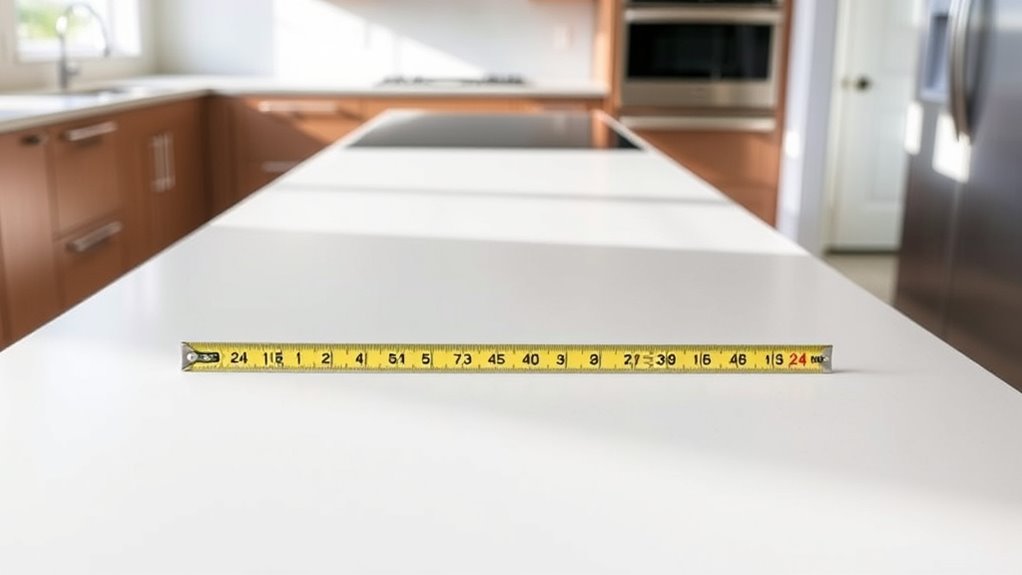
Have you ever wondered what the standard depth for kitchen counters is? Usually, kitchen counters are about 24 inches deep.
Kitchen counters are typically around 24 inches deep for optimal functionality and space efficiency.
This measurement provides enough workspace for food prep and keeps appliances within easy reach without crowding the area. Some counters might be slightly shallower or deeper, but 24 inches remains the most common.
It balances functionality with space efficiency, making it ideal for most kitchens. If you’re planning a renovation or building new counters, knowing this standard helps you avoid awkward gaps or cramped spaces.
Keep in mind that some counters, like those in breakfast bars or baking stations, may vary in depth. However, sticking close to the 24-inch mark guarantees your kitchen remains practical and comfortable to use.
Why Does Counter Depth Matter in Your Kitchen?
Choosing the right counter depth makes your workspace more efficient because it’s easier to move around and reach everything.
It also affects safety and accessibility, helping prevent accidents and making sure everyone can use the kitchen comfortably.
Plus, the right depth creates a balanced look that boosts your kitchen’s overall style.
Workspace Efficiency
Since counter depth directly affects how efficiently you can work in your kitchen, understanding its importance can help you make better design choices. A deeper counter gives you more workspace, making meal prep and other tasks easier.
It allows you to spread out ingredients and tools without feeling cramped, saving you time and effort. Shallow counters might require you to lean or reach more, which can slow down your workflow.
To visualize, here’s a quick comparison:
| Counter Depth | Benefits | Drawbacks |
|---|---|---|
| Standard | Adequate workspace, easy access | Limited prep space |
| Deep | More surface area, comfortable | Can feel bulky, harder to reach |
| Very Deep | Maximum workspace, spacious | May obstruct movement |
Choosing the right depth balances workspace efficiency with overall kitchen flow.
Safety and Accessibility
Counter depth plays an essential role in making your kitchen safe and accessible. If counters are too deep, reaching items at the back becomes hard, increasing the risk of accidents or spills.
On the other hand, shallow counters might limit your workspace and cause strain when reaching across them. Proper depth helps prevent injuries from overreaching or awkward movements.
It also boosts safety for everyone, especially kids or those with mobility challenges, by reducing falls or collisions. Accessibility improves when counters are designed at an ideal depth, so you can comfortably use appliances and prep food without strain.
Choosing the right depth ensures you can move freely and safely around your kitchen. This minimizes hazards and makes daily tasks easier and more comfortable.
Aesthetic Balance
The depth of your kitchen counters really impacts how your space looks and feels. A balanced depth creates harmony, making your kitchen seem cohesive and inviting.
If counters are too shallow, they might feel cramped or unfinished. If they’re too deep, they can take over the room and overshadow other design elements.
Choosing the right depth ensures your counters match your cabinets, appliances, and open space. Think about your style—sleek and modern or cozy and traditional.
Use this table to see how different depths affect the space:
| Shallow Counters | Deep Counters |
|---|---|
| Less visual weight | More visual weight |
| Creates openness | Adds sense of enclosure |
| Better for small spaces | Suitable for larger kitchens |
Picking the right depth improves both how your kitchen looks and how it functions.
Deep Kitchen Counter Depths: 24 to 30 Inches
Deep kitchen counters, measuring 24 to 30 inches, give you more workspace for meal prep and other tasks.
They also make it easier to fit larger appliances, making your kitchen more functional.
Plus, the extra depth can boost ergonomic comfort, helping you avoid strain during long cooking sessions.
Optimal Workspace Dimensions
Choosing the right depth for your kitchen workspace can really boost how functional and comfortable it is.
For deep counters between 24 to 30 inches, pick a depth that balances plenty of workspace with ease of use.
A 24-inch depth gives you a streamlined surface that’s perfect for prep work and small appliances.
If you want more room for different tasks or bigger items, go for around 30 inches. This gives you extra space without making things hard to reach.
Just keep in mind, deeper counters might mean changing your seating or storage options.
Your goal is to create a comfortable work zone where tools and ingredients are easy to grab.
The right depth helps you work efficiently, reduces strain, and makes your kitchen more user-friendly.
Compatibility With Appliances
When choosing a counter depth between 24 and 30 inches, it’s important to consider how your appliances will fit and work. Measure the depth of your refrigerator, dishwasher, and microwave to make sure they match your space.
Deeper counters might need appliances with shorter profiles or custom-fitting options. Also, think about the clearance needed to open doors and drawers comfortably without hitting anything.
If your appliances have protruding handles or controls, check that they won’t block cabinet doors or other appliances nearby. Make sure built-in appliances are compatible with your chosen counter depth, especially if you want a seamless look.
Proper planning helps avoid awkward fits and makes your kitchen more functional. It’s all about creating a streamlined, user-friendly layout that works for you.
Ergonomic Comfort Levels
A counter depth between 24 and 30 inches can really affect how comfortable and efficient you are in the kitchen. It influences how easily you reach and work at your surfaces, which can help reduce strain.
If the counter is too deep, you might find yourself leaning forward too much, which can cause discomfort. On the other hand, if it’s too shallow, you may need to stretch or bend awkwardly to reach things.
Visualize your workspace:
| Depth Range | Ideal For | Comfort Level |
|---|---|---|
| 24 inches | Shorter users, quick tasks | Moderate comfort, easy reach |
| 27 inches | Most users, general use | High comfort, balanced reach |
| 30 inches | Taller users, prep work | Maximum comfort, minimal strain |
Choosing the right depth makes sure you work efficiently without feeling tired. It helps make your kitchen experience smoother and more enjoyable.
How to Pick the Right Counter Depth for Your Space
Selecting the right counter depth is key to making your kitchen feel both functional and balanced. First, measure your space carefully, including clearance for walkways and appliances.
Think about how you use your kitchen. If you cook often, deeper counters might give you more workspace. But keep in mind, they can also make the room feel cramped if space is tight.
Consider your storage needs too. Shallower counters may limit surface area but leave more room to move around. Check that your existing cabinetry and appliances match the counter depth for a seamless look.
Ultimately, choose a depth that strikes a balance between practicality and comfort. Avoid counters that are too deep to reach easily or too shallow to meet your storage and prep needs.
Standard vs. Deep Kitchen Counters: What’s the Difference?
Standard kitchen counters are usually about 24 inches deep, offering a good balance of workspace and accessibility. Deep counters, on the other hand, are often 30 inches or more, giving you extra surface area but making reaching across a bit more challenging.
The main difference is their size and purpose. Standard counters work well for most kitchens, while deep counters are great if you need more space or have specific tasks in mind.
Here’s a quick comparison:
| Feature | Standard Counter | Deep Counter |
|---|---|---|
| Depth | 24 inches | 30+ inches |
| Accessibility | Easy to reach | Slightly harder to reach |
| Workspace | Adequate for most tasks | Extra surface area |
| Cost | Usually less | Usually more expensive |
| Ideal for | Everyday use | Specialized tasks |
Choosing the right one depends on your space and what you’ll be using it for.
Pros and Cons of Installing Deeper Kitchen Counters
Installing deeper kitchen counters can give you more workspace and make food prep more comfortable.
But it might also increase the overall cost of your countertops.
You’ll need to decide if the extra space is worth losing some space efficiency in your kitchen.
Weighing these pros and cons will help you figure out if a deeper counter is the right fit for your needs.
Enhanced Workspace Comfort
While deeper kitchen counters can really boost your workspace comfort, they come with both pros and cons. You’ll find it easier to prep, cook, and clean without feeling cramped. Plus, more surface area can make your kitchen feel bigger and more organized.
But, increased countertop depth might cause some inconveniences. You could have trouble reaching items at the back of the counter. Reduced legroom might be an issue if cabinets are built underneath.
It can also be tricky to fit a deeper counter into smaller kitchens. And you might strain yourself from leaning forward or hunching over during tasks.
Thinking about these factors helps you decide if the extra comfort is worth the potential inconveniences, especially in larger kitchens where space isn’t as limited.
Increased Countertop Cost
Deeper kitchen counters often come with a higher price tag, making cost an important factor to consider. You’ll pay more for the extra material and any needed installation adjustments.
The increased cost can be worth it if you value more workspace, but it’s important to weigh this against your budget. Here’s a quick comparison:
| Pros | Cons |
|---|---|
| More space for prep | Higher upfront expense |
| Better for larger appliances | Possible installation complexity |
| More comfort during use | May leave underused space |
While the initial investment goes up, some find the extra counter area worth the cost. But if your budget is tight, deeper counters might stretch your finances without giving you proportional benefits.
Space Efficiency Considerations
Adding extra depth to your kitchen counters can greatly improve your workspace efficiency, but it also requires careful consideration of how it impacts your overall layout. Deeper counters provide more surface area for prep work and appliance placement, reducing clutter.
However, they can also make your kitchen feel cramped, especially in smaller spaces. You might find it harder to reach items at the back or move around comfortably.
Furthermore, deeper counters could increase your costs and make installation more complex.
How Counter Depth Affects Appliance Placement and Workflow
The depth of your kitchen counters directly influences how easily you can access appliances and move efficiently through your workspace. If counters are too shallow, small appliances like toasters or mixers may sit awkwardly and be hard to reach comfortably.
Deep counters provide ample space for larger appliances and allow you to work with multiple items simultaneously without feeling cramped. They also impact workflow by reducing the need to stretch or lean, which can cause discomfort.
Proper counter depth guarantees that appliances are within arm’s reach, streamlining tasks like food prep and cooking. When your counters are appropriately sized, you’ll find it easier to keep your workspace organized, minimize clutter, and maintain a smooth, efficient kitchen routine.
When and How to Customize Counter Depth in Your Kitchen
Knowing when to customize your counter depth helps ensure your kitchen works smoothly and comfortably. You might want to change the standard depth if you have specific needs or unique space challenges.
For example, customize if you want easier access to appliances or storage. Or if you need extra workspace for baking or cooking prep.
Your kitchen layout might call for a non-standard design, or you’re fitting counters into a small or oddly shaped space.
A non-standard design or unusual space shape may require customizing your counter depth.
To do this effectively, measure your space carefully and think about how you’ll use the counters every day.
It’s a good idea to talk with a professional to make sure your design keeps proper ergonomics and workflow.
Customizing your counter depth can boost usability, but thorough planning is key to avoiding loss of storage or functionality.
Common Mistakes to Avoid When Choosing Counter Depth
Choosing the right counter depth isn’t just about personal preference; it’s about avoiding common pitfalls that can hurt your kitchen’s functionality.
First, don’t pick a depth that’s too shallow, as it cuts down on workspace and makes prepping or serving harder. On the other hand, avoid overly deep counters that can make the kitchen feel cramped and restrict movement.
Be careful about ignoring standard measurements. Going too far outside typical ranges can cause issues with appliances and storage. It’s better to stay within normal limits to ensure everything fits well.
Also, think about the space behind the counter. Choosing a depth that blocks walkways or access points can cause inconvenience and make the kitchen less practical.
Finally, don’t rush the decision. Take time to evaluate your cooking habits and storage needs. Thoughtful planning helps you avoid costly mistakes and ensures your countertops work well for years to come.
Measuring Tips and Tools for Your Kitchen Counter Space
Accurately measuring your kitchen counter space is key to making sure your countertops fit perfectly and work smoothly. Use a reliable tape measure and double-check your measurements from different angles to be sure.
Ensuring precise counter measurements guarantees a perfect fit and smooth kitchen workflow.
Keep a pencil and paper nearby so you can jot down measurements right away. When measuring, include the depth from the wall to the front edge, and note any irregularities or variations.
Use a sturdy tape measure to get accurate results. Mark measurements with a pencil directly on the wall or cabinetry for easy reference.
Measure from multiple points to ensure consistency and accuracy. Be sure to keep a record of all your measurements for future reference.
Finally, use a level to check that your measurements are straight, especially if your walls aren’t perfectly plumb.
What Factors Should You Consider for Ideal Counter Depth?
When planning your kitchen counter setup, considering the right depth can make a big difference in both functionality and comfort. Think about how you’ll use the space. If you often prepare large meals, deeper counters provide more workspace.
However, excessively deep counters can hinder access and make tasks uncomfortable. Measure the height of your existing appliances and storage to ensure everything fits comfortably without overreaching.
Consider your cooking style. If you frequently entertain or bake, extra depth allows for additional prep area. Also, account for your height and reach to avoid straining.
Finally, think about the overall kitchen layout. The counter depth should complement other features for a balanced, ergonomic workspace. Balancing these factors helps create a functional, comfortable kitchen.
Frequently Asked Questions
How Do Deep Counters Impact Overall Kitchen Storage Options?
Deep counters significantly increase your kitchen’s storage options by giving you more space underneath for larger items, appliances, or hidden storage.
They make it easy to store bulky cookware, small appliances, or organize pantry essentials without cluttering your countertops.
But keep in mind, it can be harder to reach items at the back of a deep counter.
Are There Specific Design Styles Better Suited for Deep Counters?
Think of your kitchen style as a wardrobe—certain designs just fit better. For deep counters, modern and minimalist styles work beautifully, emphasizing sleek lines and open space.
Rustic or farmhouse designs highlight the counters’ practicality and charm, creating cozy, functional kitchens. You’ll find that contemporary, industrial, or Scandinavian themes complement the depth.
These styles allow you to maximize storage without sacrificing aesthetic appeal. Choose a style that resonates with your lifestyle and design preferences.
Can Deep Counters Be Customized for Ergonomic Comfort?
Yes, deep counters can be customized for ergonomic comfort. You can adjust their depth, height, and edge profiles to fit your needs, making working and sitting more comfortable.
Adding features like rounded edges or cushioned surfaces can also boost comfort. It’s a good idea to work with a kitchen designer to get these counters exactly right.
That way, your workspace becomes safer, more efficient, and more enjoyable to use every day.
What Are the Cost Differences Between Standard and Deep Counters?
You’ll find that deep counters usually cost a bit more than standard ones, mainly because they need more materials and custom installation.
The price difference can range from a few hundred to over a thousand dollars, depending on your kitchen’s size and the materials you pick.
But think about it—this small extra investment can make your cooking space more comfortable and functional, especially if you love baking or prepping large meals regularly.
How Do Deep Counters Affect Cleaning and Maintenance Routines?
Deep counters can make cleaning more challenging because they trap more crumbs, spills, and debris in the back corners. You’ll need longer tools, like a mop or extended scrub brush, to reach those areas effectively.
Regular wiping becomes essential to prevent buildup. While they may take a bit more effort to maintain, staying consistent with cleaning routines will keep your deep counters looking fresh and hygienic.
Conclusion
Choosing the right kitchen counter depth can really boost your cooking space and workflow. Did you know about 60% of homeowners go for deeper counters to get more storage and prep room?
By understanding standard measurements and customizing to your needs, you can create a kitchen that’s both functional and stylish. Take your time measuring and think about your specific space.
Your perfect counter depth is just a decision away, making your kitchen both beautiful and practical.