How Many Calories Are in Beef Broth?
Many of us love adding flavorful broths to our meals but worry about the calories they pack. You’re not alone—navigating the world of broth options can be confusing, especially if you’re trying to watch your calorie intake.
Beef broth typically contains between 15 and 40 calories per cup, making it a low-calorie, flavorful addition to your meals. The exact amount depends on factors like whether it’s homemade or store-bought, and the ingredients used, such as fats or vegetables.
Store-bought versions often have fewer calories, but always check labels for accuracy.
If you want to learn how to make the healthiest, low-calorie beef broth at home, keep exploring the details below.
Key Takeaways
- A typical cup of beef broth contains between 15 and 40 calories, depending on how it’s prepared.
- Store-bought broths are usually lower in calories compared to homemade versions.
- Most of the calories come from the meat, bones, and added ingredients like fats or oils.
- Concentrated broths or bouillon cubes tend to be more calorie-dense.
- Always check the nutrition labels to get accurate calorie information.
How Many Calories Are in Beef Broth?
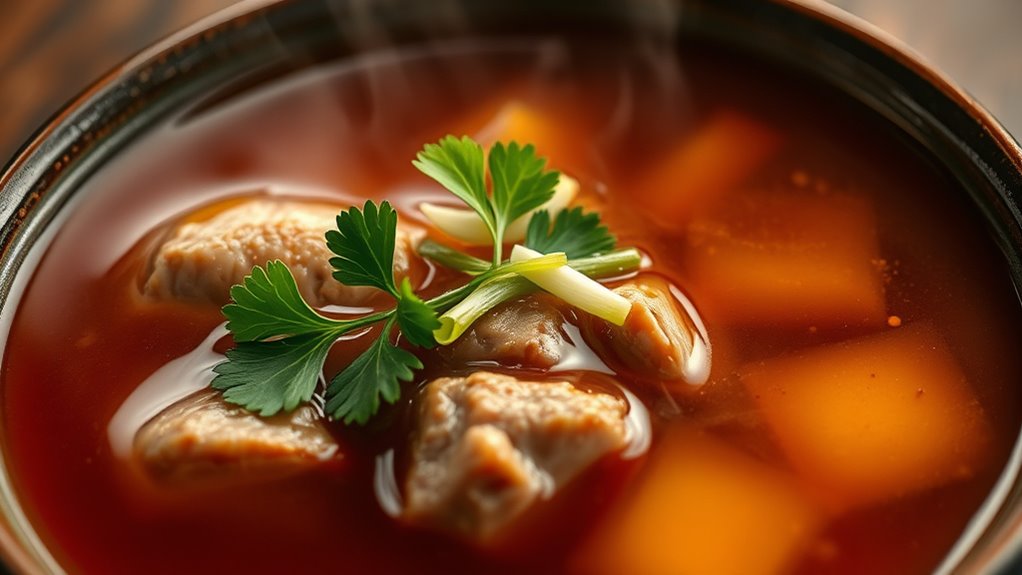
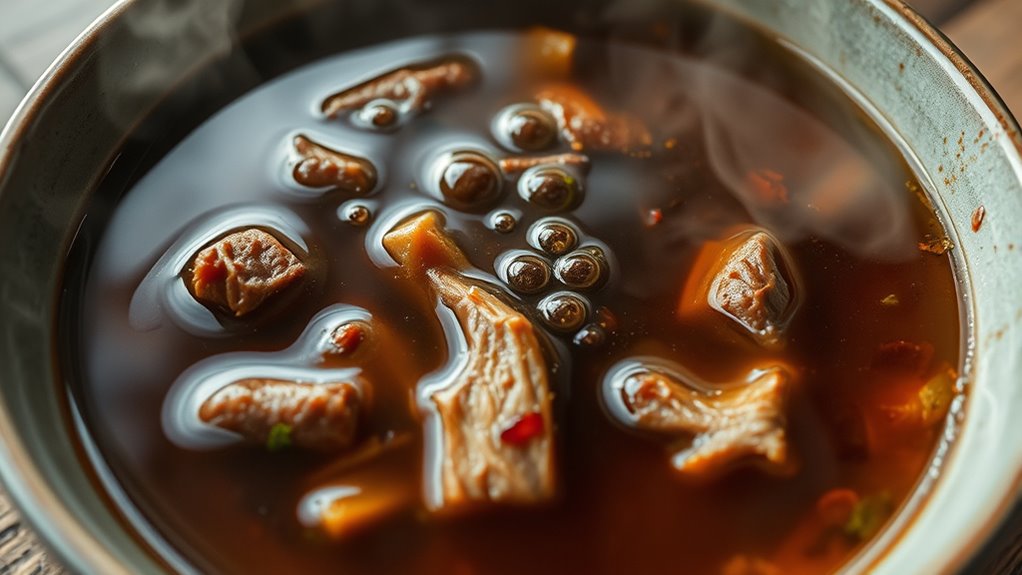
Have you ever wondered how many calories are in a cup of beef broth? Typically, a standard cup contains around 15 to 40 calories, depending on the recipe and ingredients.
A cup of beef broth generally has 15 to 40 calories, making it a low-calorie, flavorful addition to meals.
Store-bought versions are usually lower in calories because they’re mostly water with some flavoring, and they often contain little fat or protein. Homemade beef broth can vary more, especially if you add fats or use bones that release marrow.
Keep in mind that the calorie count stays relatively low because beef broth is mostly liquid. Most calories come from small amounts of meat, bones, or vegetables used during cooking.
If you’re watching your calorie intake, beef broth is a flavorful option that won’t add many calories to your meals.
What Factors Influence Beef Broth Calories?
Several factors directly influence the calorie content of beef broth, so it’s helpful to consider how ingredients and preparation methods affect its nutrition.
The type of meat used makes a difference—leaner cuts have fewer calories, while fattier cuts will increase the calorie count. Adding fats or oils during cooking also boosts the calorie level.
Seasonings, vegetables, or other ingredients can add calories too, especially if they contain sugars or starches. The cooking time and how much you reduce the broth matter as well; longer simmering or reducing concentrates flavors and calories.
Store-bought broths might contain preservatives or flavorings that influence calorie content. Overall, understanding how these factors interact helps you estimate and control the calorie count of your beef broth.
How Do Homemade and Store-Bought Beef Broth Calories Compare?
You’ll notice that homemade and store-bought beef broths can have different calorie counts. This mainly depends on ingredients and how they’re prepared.
Ingredients like added fats or flavorings can boost the calories in store-bought versions. Homemade broths usually have fewer additives, making them a bit lighter.
Keep in mind that serving sizes vary, which also affects the calorie comparison. So, it’s good to check labels or measure portions to get an accurate idea.
Calorie Variations Between Types
When comparing homemade and store-bought beef broths, you’ll notice notable differences in calorie content, mainly due to variations in ingredients and how they’re prepared. Homemade broth usually has fewer calories because you control what goes in, avoiding added fats, preservatives, and flavorings.
It typically contains just beef, water, and seasonings, which results in a lower calorie count per serving. Store-bought broths can vary a lot; some are low-calorie, while others have added oils, salt, and preservatives that boost the calorie content.
Concentrated or bouillon cubes and powders tend to be more calorie-dense because of their concentrated flavors. Always check the labels to see the specific calorie count.
Ingredients Impact Calories
Ingredients play an essential role in determining the calorie content of beef broth, with homemade and store-bought versions often differing considerably. Homemade broth usually has fewer calories because you control the ingredients, often using leaner meat, less fat, and minimal added salt or preservatives.
You can also skip high-calorie additives like oils or flavor boosters. Store-bought broths, however, may contain added sugars, salt, and flavorings that increase the calorie count.
Some brands add thickening agents or preservatives that contribute to calories as well. When comparing the two, always check labels for added ingredients, especially if you’re watching your calorie intake.
Serving Size Differences
Serving sizes vary a lot between homemade and store-bought beef broths, which directly affects their calorie content. Usually, store-bought broths come in standard containers, like one-cup servings, making it easier to track calories.
These often have around 10-15 calories per cup, but added preservatives or flavorings can bump that number up. Homemade broth, on the other hand, is usually served in larger portions, like bowls or mugs, so you might end up eating more calories if you’re not measuring carefully.
Plus, homemade broth tends to be less concentrated, so the calorie count per serving can be lower or higher depending on how much fat and meat you include. Always check serving sizes to accurately compare calorie content between the two.
How to Read Labels and Nutrition Facts for Beef Broth
When reading labels on beef broth, focus on key nutrients like calories, sodium, and protein to understand its nutritional value.
Check the ingredient list to spot added preservatives, flavors, or fillers that could impact your health goals.
Being attentive helps you make informed choices that fit your dietary needs.
Identifying Key Nutrients
To effectively evaluate the nutritional value of beef broth, it’s helpful to know how to read labels and nutrition facts.
Key nutrients to look for include protein, sodium, and fat content. These give you a quick idea of the broth’s health benefits and potential concerns.
For example, high sodium levels can impact blood pressure, while protein supports muscle health. Use the table below to identify these nutrients quickly:
| Nutrient | What to Watch For |
|---|---|
| Protein | Supports muscle repair |
| Sodium | Affects blood pressure |
| Fat | Provides energy, watch for excess |
Focusing on these key nutrients helps you make informed choices and pick broths that match your dietary goals.
Recognizing Ingredient Labels
Understanding how to read ingredient labels on beef broth is key to making informed choices about what you eat. Start by checking the list of ingredients—look for real beef, vegetables, and herbs.
Avoid labels loaded with excessive additives, preservatives, or artificial flavors, which can increase calories or lower nutritional quality. Pay attention to serving sizes to accurately understand calories and nutrients per portion.
The nutrition facts panel shows details like calories, sodium, fat, and protein. Compare different brands to find healthier options that suit your dietary goals.
Be cautious of labels claiming “low calorie” or “reduced sodium” and verify these claims by reading the actual numbers. Recognizing the ingredients helps you pick beef broth that aligns with your needs and keeps you aware of what’s in your food.
Adding Low-Calorie Beef Broth to Your Meals
Adding low-calorie beef broth to your meals is an easy way to boost flavor without adding extra calories. It enriches soups, stews, and sautés, making dishes richer without extra fat or carbs. Using broth instead of oil or heavy cream cuts calories while keeping the taste great.
To get the most benefits, think about how different dishes can be improved with broth. For example, soups gain depth without feeling heavy. Try using it as a base for veggie soups for extra flavor.
In stir-fries, broth can boost flavor without needing oil. It’s a good substitute that keeps things lighter. For rice and grains, cooking in broth adds moisture and flavor without extra calories.
You can also lighten up sauces by using broth as a base. It keeps sauces flavorful but less heavy. Incorporating low-calorie broth is a simple way to make your meals more tasty and healthier.
Can You Make Low-Calorie Beef Broth at Home?
Can you make low-calorie beef broth at home? Absolutely. Making it yourself lets you control ingredients and cut back on added fats or high-calorie stuff.
Start with lean beef bones or lean cuts to keep the calorie count low. Add vegetables like onions, carrots, and celery for flavor without extra calories.
Use lean beef bones or cuts and add vegetables like onions, carrots, and celery for flavorful, low-calorie broth.
Avoid adding oils or fatty ingredients, and simmer everything gently for several hours to extract flavor without excess fat.
Strain the broth to remove solids, leaving a clear, flavorful liquid. You can season it with herbs and spices instead of salt or high-calorie flavorings.
This way, you’ll create a nutritious, low-calorie beef broth that’s perfect for soups, stews, or sipping on its own.
Is Beef Broth Good for Weight Loss and Health?
Is beef broth a good choice for supporting weight loss and overall health? Absolutely. It’s low in calories, so you can enjoy it without feeling guilty. Plus, it’s packed with nutrients that boost your immunity and support digestion.
Here’s why it can help you on your health journey:
- Low in calories making it easier to stay within your daily limits.
- Rich in protein which keeps you feeling full longer.
- Contains minerals like zinc and magnesium that support your energy and recovery.
- Hydrating and nourishing helping your body function effectively.
Frequently Asked Questions About Beef Broth Calories
Curious about how many calories are in beef broth? The calorie content depends on the type and brand. Usually, a cup of plain, homemade beef broth has about 15 to 40 calories.
Store-bought options might have added ingredients or preservatives, which can raise the calorie count a bit. If you’re watching your intake, be sure to check the nutrition label for the exact amount per serving.
Keep in mind that added ingredients like oils, fats, or seasonings can also bump up the calories. Unsalted or low-fat versions are generally lower in calories and a better choice if you’re mindful of your diet.
Frequently Asked Questions
Does the Fat Content Affect Beef Broth’s Calorie Count?
Yes, the fat content affects beef broth’s calorie count. The higher the fat, the more calories it has because fat provides 9 calories per gram, while proteins and carbs offer 4 calories per gram.
If your beef broth has added fats or is made from fatty cuts, you’ll see a higher calorie number. To keep it lower, choose leaner cuts and skim off any surface fat before eating.
Are There Any Low-Sodium Beef Broth Options With Fewer Calories?
Yes, there are low-sodium beef broth options with fewer calories. About 10% of store-bought broths are labeled “low-sodium,” which usually have around 10-20 calories per cup.
Standard varieties tend to have about 15-30 calories. You can find these low-sodium options in most grocery stores.
They’re a great choice if you’re trying to cut down on sodium and calories. Just remember to check the labels to make sure they fit your dietary needs.
How Does Boiling Time Impact Beef Broth Calorie Concentration?
Boiling time directly impacts beef broth’s calorie concentration by reducing its water content. This makes the broth more concentrated and higher in calories per serving.
The longer you boil, the more water evaporates, which intensifies flavors and increases calorie density. If you want a lighter broth, keep the boiling time short.
Conversely, extended boiling yields a richer, more calorie-dense broth, perfect for adding depth to dishes.
Can Beef Broth Be Part of a Low-Calorie Diet Plan?
Absolutely, beef broth can be part of a low-calorie diet plan. It’s light, lovely, and low in calories, especially if you choose a clear, strained version without added fats or oils.
You get a flavorful, nourishing sip without the calorie count rising quickly. Just watch portion sizes and ingredients, and beef broth becomes a beneficial, belly-friendly addition to your balanced, low-calorie eating plan.
Do Organic Beef Broths Have Different Calorie Counts Than Conventional Ones?
Organic beef broths typically have similar calorie counts to conventional ones, usually around 10-20 calories per cup. The main difference is in the ingredients; organic broths often contain fewer additives and preservatives.
When comparing labels, check for added sugars or fats, as these can increase the calorie content. Overall, choosing organic doesn’t change the calorie count much but may give you cleaner, more natural ingredients.
Conclusion
In the grand tapestry of your dietary journey, beef broth acts as a subtle yet potent brushstroke, adding depth without overwhelming.
By understanding its calorie content and making mindful choices, you can craft a flavorful, healthful masterpiece.
Whether simmered from scratch or sourced from store shelves, let beef broth be your culinary compass, guiding you toward nourishing meals that dance harmoniously on your palate and your waistline.
Knowing that beef broth typically contains around 15-50 calories per cup, depending on the brand and ingredients, helps you make smarter choices.
Adopting it as a versatile ingredient can enhance your wellness symphony without adding unnecessary calories.