10 Essential Tips to Organize Your Kitchen
Many people struggle with keeping their kitchens organized and clutter-free, which can make cooking and cleaning feel overwhelming. You’re not alone—finding a system that works for your space and lifestyle is a common challenge.
Luckily, with a few simple steps, you can transform your kitchen into a tidy, functional space.
To organize your kitchen effectively, start by evaluating and decluttering your space, removing expired or unused items.
Create functional zones for cooking and cleaning, and optimize storage with clear containers, labels, and shelves.
Keep your pantry tidy by grouping similar items and checking for freshness regularly.
Maintain your efforts through routine cleaning and adjustments, and add personal touches like decorative jars or plants.
If you want to uncover more tips, you’ll find practical ideas to keep your kitchen organized long-term.
Key Takeaways
– Assess and declutter to remove unnecessary items and create a clean, functional space.
Take a good look at what you have and get rid of anything you no longer need or use.
Organize cabinets and drawers using clear containers, labels, and dividers for easy access.
This makes it simple to find what you’re looking for without digging through clutter.
Designate specific zones for cooking, cleaning, and prep to maximize efficiency.
Having dedicated areas helps everything stay organized and makes your time in the kitchen smoother.
Optimize pantry storage with clear containers, proper labeling, and systematic organization.
This way, you’ll always know where everything is and avoid buying duplicates.
Maintain routine cleaning and reorganization to prevent clutter and ensure ongoing order.
A little regular upkeep keeps your kitchen functional and inviting every day.
Assess Your Kitchen’s Current Organization and Clutter
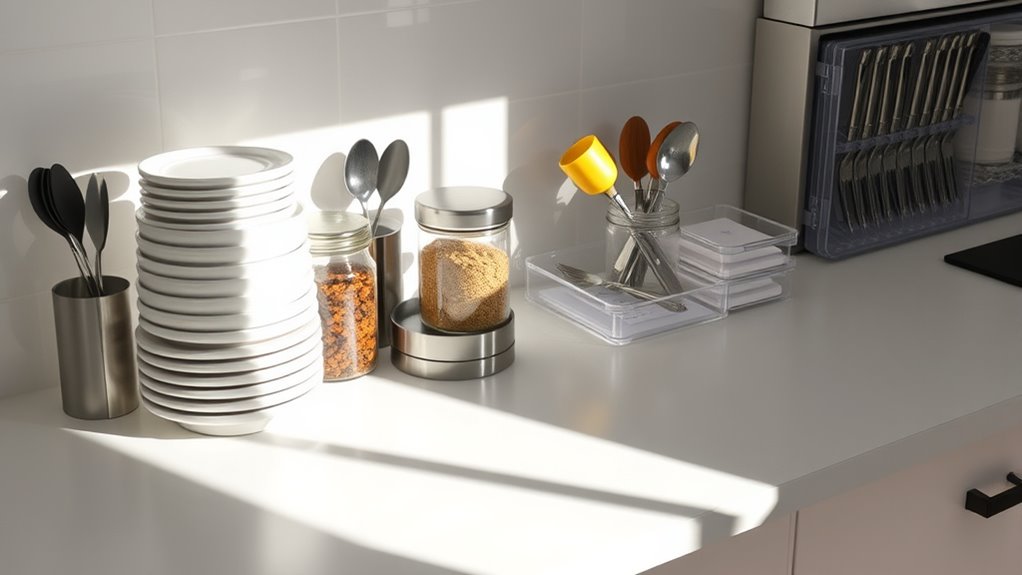
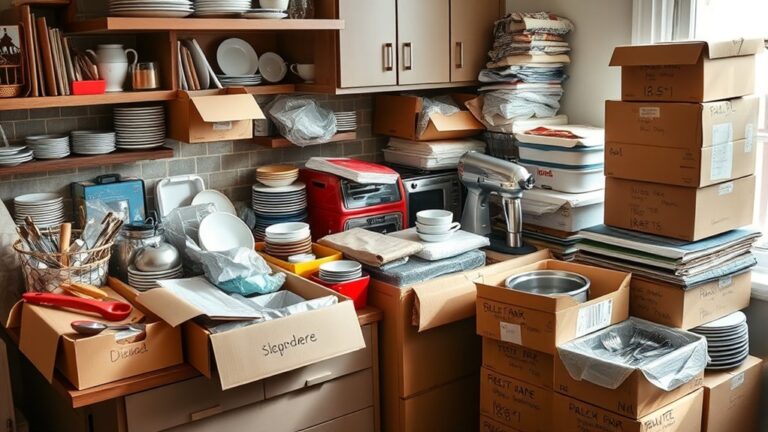
Have you ever wondered what your kitchen really looks like beneath the clutter? Take a close look and honestly assess its current state. Notice where things are stored and identify unused or rarely used items.
Are your countertops overcrowded with gadgets, or are there hidden piles of expired food in the back of your cabinets? Be honest with yourself about what’s working and what isn’t.
Check for cluttered counters and hidden expired food to honestly assess your kitchen’s organization.
Make a list of problem areas—maybe a messy drawer or overflowing pantry. This step helps you understand your space’s limitations and your habits.
Recognizing these details sets the foundation for effective organization. Without this honest evaluation, your efforts might miss the mark.
Declutter and Clear Counter Space
To free up counter space, start by removing items you no longer need or use regularly. Consider using vertical storage solutions like shelves or hooks to keep essentials accessible and organized.
Make it a habit to wipe down your counters regularly to maintain a clean, clutter-free surface.
Remove Unnecessary Items
Clearing your kitchen counter starts with figuring out what items are truly necessary and what can be stored away or thrown out. Look at everything on your counter and ask yourself if you use it every day.
Keep only the things you rely on regularly, like a coffee maker or knife block. Store away appliances and gadgets you rarely use to free up space.
Get rid of broken or expired items that clutter your countertops. Consider donating items you no longer need. Removing unnecessary items makes your workspace more functional and looks better instantly.
It also helps prevent clutter from building up again. Regularly check your counters to keep only the essentials within reach.
Use Vertical Storage Solutions
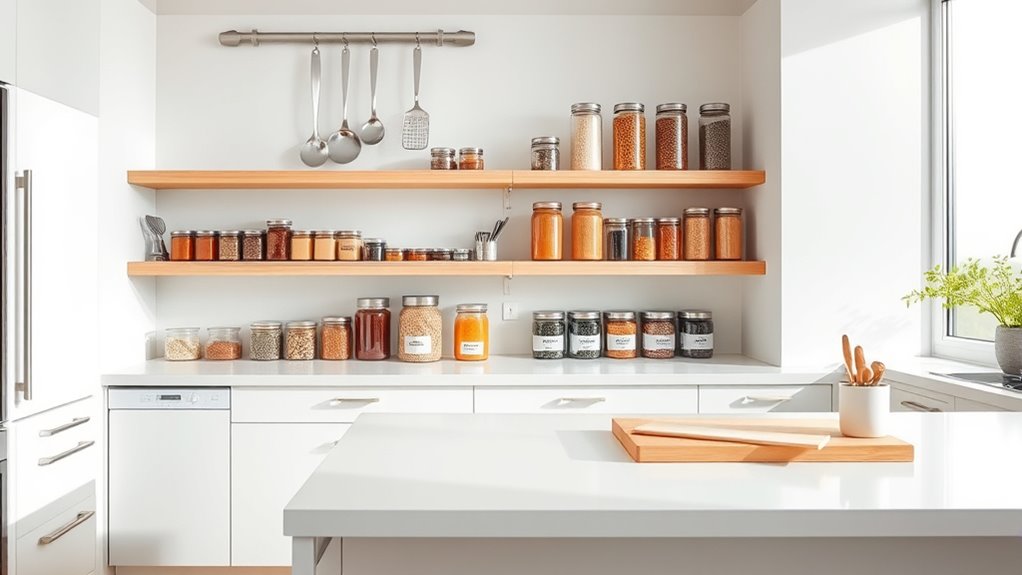
Utilizing vertical storage solutions is a smart way to maximize your kitchen space and keep countertops clear. By thinking upward, you can free up valuable surface area and make your kitchen feel more organized. Install wall-mounted shelves for spices, jars, or cookbooks to create easy access and reduce clutter.
Use hanging racks or hooks for utensils, pots, and pans to free up drawer space. Consider tall, narrow pantry cabinets or stacking bins to make the most of vertical space efficiently. Magnetic strips for knives or metal utensils can also help free up drawer space.
Mount open shelves on walls for frequently used items. Hang hooks for utensils and pots. Use tall storage cabinets or stacking bins to maximize vertical space. Attach magnetic strips for knives and other metal tools.
Regularly Wipe and Maintain
Keeping your countertops tidy takes regular effort, so try to make it a daily habit to wipe surfaces and clear clutter.
Each day, remove items you don’t need right away—like mail, utensils, or small appliances—to keep your workspace open and inviting.
Use a damp cloth or a cleaning spray to wipe down surfaces, getting rid of crumbs, spills, and fingerprints. This helps prevent buildup and keeps your kitchen looking fresh.
Regular maintenance also helps you notice things that are out of place or expired, so you can toss or move them.
Sticking to these quick daily routines stops clutter from piling up and keeps your kitchen functional and welcoming.
A clean, organized space makes cooking easier and creates a more relaxing environment.
Organize Cabinets and Drawers for Easy Access
Using clear storage containers helps you see what’s inside at a glance, saving time when cooking. Group similar items together so you know exactly where everything belongs.
This keeps your cabinets and drawers neat and makes your kitchen more efficient.
Use Clear Storage Containers
Clear storage containers are a game-changer when it comes to organizing your kitchen cabinets and drawers. They allow you to see what’s inside easily, saving you time and cutting down on clutter.
You can quickly find ingredients or snacks without digging through opaque packaging. To get the most out of them, try these simple tips:
Use uniform sizes for stacking and easy access. Label containers with clear, easy-to-read tags or markers. Store the items you use most often at the front for quick grabbing. Keep similar items together to stay organized and make restocking easier.
Group Similar Items Together
Grouping similar items together is the next step to creating an organized and efficient kitchen. When you arrange your cabinets and drawers by category, you’ll find what you need faster and reduce clutter.
For example, keep all baking supplies like flour, sugar, and baking soda in one spot so you don’t have to search through multiple places. Store utensils together—spoons, spatulas, and whisks—so they’re easy to grab.
Use dividers or small containers to keep small items tidy. Group pots and pans or keep canned goods together in one cabinet. This method minimizes chaos, saves time, and makes cleaning easier.
Create Functional Zones for Cooking and Cleaning
Creating distinct zones for cooking and cleaning helps streamline your kitchen workflow and keeps clutter to a minimum. By designing specific areas for these tasks, everything becomes more accessible and efficient.
Start by dividing your space into a cooking zone near the stove, prep area, and utensils. Then, assign a cleaning zone with trash bins, dish soap, and drying racks. Make sure the sink is centrally located for easy access from both zones.
Keep frequently used items nearby to avoid unnecessary movement. For example, place cutting boards and utensils close to the stove, and store cleaning supplies under the sink or in a nearby cabinet.
Allocate a countertop space for food prep and cleanup. Also, store trash and recycling bins in a convenient, designated spot to keep things tidy.
Implement Smart Storage Solutions Like Containers and Shelves
Using clear, durable containers and smart shelving can make your kitchen more organized and accessible.
Choosing containers that maximize space and allow easy identification saves you time and reduces clutter.
Installing shelves in strategic spots helps keep essentials within reach without sacrificing valuable counter space.
Maximize Space Efficiency
To make the most of your kitchen space, smart storage solutions like containers and shelves are essential. Use vertical space by installing wall-mounted shelves for frequently used items or decorative storage.
Group similar items together to reduce clutter and improve accessibility. Consider stacking containers or dishes to save cabinet space and keep everything organized.
Use pull-out drawers or lazy Susans for hard-to-reach corners, making every inch count. Furthermore, utilize door-mounted racks for spices, cleaning supplies, or small tools.
These strategies help you maximize every available surface and keep your kitchen tidy and functional.
Choose Clear, Durable Containers
Choosing clear, durable containers is key to keeping your kitchen organized and easy to access. When you use transparent containers, you can quickly see what’s inside, saving you time and preventing unnecessary package opening.
Go for sturdy materials like glass or high-quality plastic that won’t crack or warp easily. These containers help keep food fresh longer and are simple to clean.
Label your containers so you can identify what’s inside at a glance. This helps prevent clutter and makes it easier to find what you need.
Stackable designs make the most of small spaces, maximizing storage efficiency. Investing in durable, clear containers makes your kitchen neater and more functional.
Label and Categorize Kitchen Items for Faster Meal Prep
Labeling and categorizing your kitchen items can really speed up your meal prep. When everything has a designated spot and clear labels, you’ll spend less time searching and more time cooking.
Organizing with labels and categories makes meal prep faster and more enjoyable.
Start by grouping similar items together, like baking supplies or snacks. Use labels to identify contents, especially for containers stored in drawers or on shelves. This helps prevent confusion and keeps your space organized.
Here are some ideas to get started:
- Label jars with their contents and date
- Categorize spices by type or cuisine
- Organize baking tools in a dedicated drawer
- Use clear labels for pantry bins
Implementing these simple steps makes your kitchen more efficient and reduces clutter. You’ll find meal prep becomes quicker and more enjoyable.
Optimize Your Pantry for Better Inventory Management
Organizing your pantry effectively can really improve your inventory management and cut down on waste. Start by grouping similar items together—like baking supplies, canned goods, and snacks—so you always know what you have.
Use clear containers for frequently used ingredients so you can see supplies at a glance. Label everything to avoid confusion and keep track of expiration dates easily.
Think about storing items in a way that makes them easy to access and rotate. Place older products at the front so you use them first.
Here’s a simple organization framework:
| Group | Storage Method | Notes |
|---|---|---|
| Baking Supplies | Clear jars | Keep dry ingredients fresh |
| Canned Goods | Stackable bins | Label with expiration dates |
| Snacks | Baskets or trays | Keep fresh and visible |
This setup helps you stay on top of your inventory and minimizes waste.
Maintain Your Organization With Routine Checks
To keep your pantry looking tidy and ensure your organization system works smoothly, regular checks are a must. These help you catch expired items, move misplaced things back to their spots, and keep everything orderly. Try setting a schedule, like weekly or every two weeks, to review what’s inside.
Regular pantry checks keep things tidy, prevent spoilage, and maintain an efficient organization system.
During these checks, toss out expired food, wipe down shelves, and confirm items are in the right places. Staying consistent prevents clutter from piling up and keeps your system running well.
Here are four easy ways to stay on top of your organization:
- Schedule regular cleaning and inspection sessions.
- Quickly get rid of expired or spoiled food.
- Rearrange items so your most-used ones are easy to grab.
- Change your storage setup if needed for better efficiency.
Add Personal Touches to Style Your Kitchen Storage
Adding personal touches to your kitchen storage can turn a practical space into one that really shows off your style. Think about using decorative jars for pasta and grains, picking colors and labels that match your vibe.
You can also add some personality with unique dish towels or oven mitts to bring in pops of color. Display your favorite cookbooks or vintage kitchenware on open shelves for a curated look.
Choose storage containers that reflect your personality—whether through patterns, colors, or custom labels. Small decorative accents like plants or framed photos nearby can make your kitchen feel cozy and inviting.
These little touches help your kitchen feel more personal and lively, transforming storage from just functional to a space that truly represents you.
Tips for Keeping Your Kitchen Organized Long-Term
Maintaining an organized kitchen over the long term requires consistent habits and thoughtful planning. To stay on top of clutter, develop routines that prevent messes from building up. Regularly evaluate your storage and discard items you no longer need. Implement systems to keep everything in its place so cleanup becomes effortless.
Here are some tips:
- Schedule weekly tidying sessions to put things back where they belong.
- Use clear containers for easy identification and quick access.
- Label shelves and storage bins to keep everything organized.
- Limit new items by practicing mindful shopping and donating unused items.
Frequently Asked Questions
How Often Should I Reassess My Kitchen Organization?
You should reassess your kitchen organization every six months or whenever you notice clutter or inefficiency. Regular checks help you see what’s working and what’s not.
If you’ve made big changes, like getting new appliances or doing a renovation, review your setup sooner. Keeping your kitchen organized is an ongoing process, so stay attentive to how you use the space.
Regular reassessment ensures your kitchen remains functional and clutter-free for your daily needs.
What Are the Best Materials for Durable Kitchen Storage Containers?
You should choose durable kitchen storage containers made from glass, stainless steel, or BPA-free plastic.
Glass is great because it’s sturdy, doesn’t stain or retain odors, and is microwave-safe. Stainless steel is highly durable, resistant to dents, and looks sleek.
BPA-free plastic is lightweight, shatterproof, and safe for food storage. Pick containers with airtight seals to keep food fresh longer and make sure they’re dishwasher-safe for easy cleaning.
How Can I Maximize Small Kitchen Space Efficiently?
You can turn your tiny kitchen into a space-saving marvel by going vertical. Install shelves that reach the ceiling and hang pots and pans from ceiling racks.
Use stackable containers and drawer dividers to maximize every inch. Opt for multi-functional appliances to cut clutter.
Get creative with under-cabinet storage, magnetic strips for knives, and door-mounted racks.
With these tricks, you’ll make your small kitchen feel like a spacious culinary paradise!
Are There Eco-Friendly Storage Options for Kitchens?
Yes, eco-friendly storage options for kitchens include bamboo baskets, recycled glass jars, and stainless steel containers, which are durable and sustainable. You can also choose biodegradable or compostable storage bags and boxes.
Repurposing old cans, tins, or wooden crates adds a rustic charm while helping reduce waste. These eco-conscious choices not only support the environment but also keep your kitchen organized and stylish.
How Do I Involve Family Members in Maintaining Organization?
You involve family members by making organization fun and inclusive. Assign each person specific tasks, like sorting the silverware or wiping counters. Encourage teamwork by setting small goals and celebrating successes.
Create a chore chart or schedule to keep everyone accountable. Talk about why maintaining the space is important and lead by example. When everyone pitches in regularly, your kitchen stays organized and becomes a shared space everyone enjoys.
Conclusion
By applying these tips, you’ll transform your kitchen into a more efficient, inviting space.
Regularly evaluating and maintaining your organization prevents clutter from sneaking back in, proving that consistency is key.
Curiously, some studies suggest that a well-organized kitchen can even boost your cooking creativity and mental well-being.
So, stay committed, personalize your space, and enjoy the lasting benefits of a tidy kitchen, making every cooking experience more enjoyable and stress-free.