How Does an Induction Hot Plate Work?
Are you tired of waiting forever for your stove to heat up? Or maybe you’re frustrated with uneven cooking and wasting energy? You’re not alone—many people struggle with traditional cooktops that are slow and inefficient.
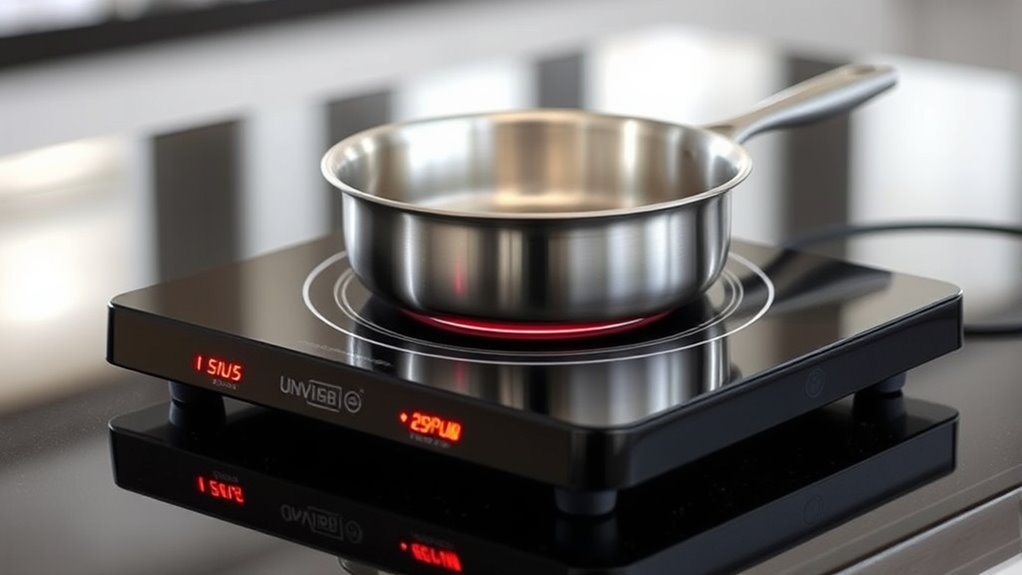
An induction hot plate heats your cookware directly through electromagnetic fields generated by an electric coil beneath the surface. When your ferromagnetic pot or pan sits on it, the magnetic field induces eddy currents inside the metal, creating heat instantly.
This process heats cookware efficiently, with the surface staying relatively cool and safe.
Want to understand how this technology works in more detail? Keep exploring to uncover the science behind induction cooking.
Key Takeaways
- An induction hot plate works by using an electromagnetic coil to create a magnetic field just beneath its surface.
- When you place ferromagnetic cookware on the hot plate, this magnetic field causes eddy currents to form inside the cookware.
- These currents generate heat directly within the cookware because of electrical resistance.
- The heat then transfers efficiently to whatever you’re cooking, while the surface of the hot plate stays relatively cool to the touch.
- You can control the temperature precisely by adjusting the strength and frequency of the magnetic field.
What Is an Induction Hot Plate and How Does It Work?
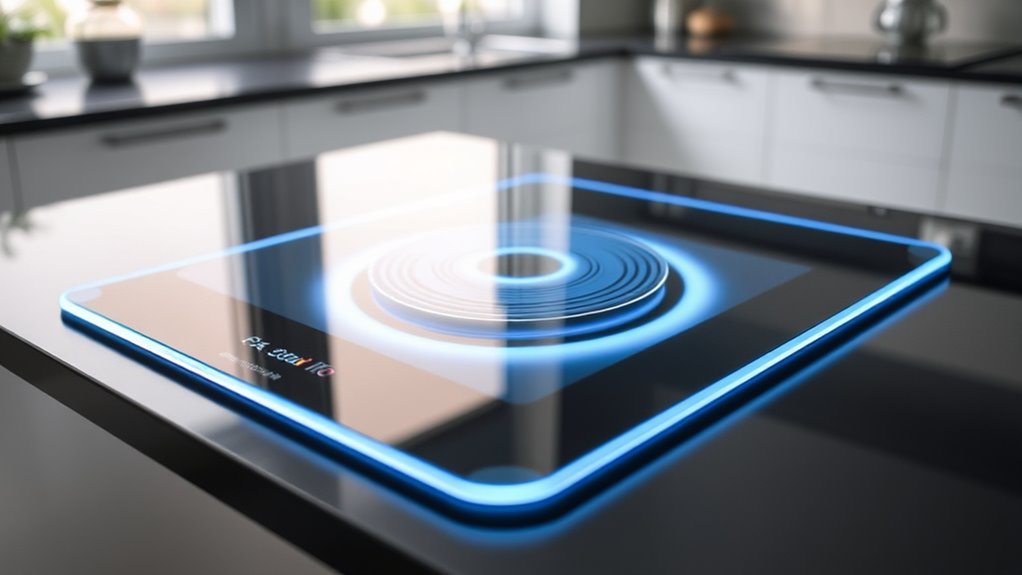
An induction hot plate is a cooking appliance that heats cookware directly through electromagnetic induction instead of using traditional heating elements.
When you turn it on, an electromagnetic coil beneath the surface creates a magnetic field. This magnetic field interacts with ferromagnetic cookware, generating electric currents called eddy currents inside the metal.
An electromagnetic coil beneath the surface creates a magnetic field that energizes ferromagnetic cookware with eddy currents.
These currents quickly produce heat within the cookware itself, not on the surface of the hot plate. Because the heat is generated directly in the cookware, the surface stays relatively cool and heats up fast.
This method makes cooking more efficient because energy is focused where it’s needed. It also gives you precise control over the temperature, making it great for fast, responsive cooking.
How Does Electromagnetic Induction Heat Your Cookware?
When you turn on an induction hot plate, a magnetic field is generated beneath the surface.
This field creates eddy currents within your cookware, which then produce heat.
The heat transfers directly from the cookware to your food, making the process efficient and fast.
Magnetic Field Generation
Electromagnetic induction heats your cookware by creating a magnetic field that changes rapidly. Inside the induction hot plate, a coil of copper wire carries an alternating current, which causes the magnetic field to constantly switch direction.
This changing magnetic field passes through the glass surface and into your cookware if it’s made of ferromagnetic material like cast iron or stainless steel. The magnetic field then induces an electric current within the metal, turning electrical energy into heat.
This method is super efficient because it heats the cookware directly without needing an extra step of heat transfer. The strength and frequency of the magnetic field control how effectively heat is generated.
Eddy Currents Formation
As the magnetic field rapidly changes inside the induction hot plate, it induces circulating electric currents within the ferromagnetic cookware, known as eddy currents. These currents flow in loops, creating their own magnetic fields that oppose the original change.
This process generates heat directly within the cookware. The strength of eddy currents depends on the cookware’s material and thickness. Higher electrical conductivity results in stronger currents and more efficient heating.
Eddy currents are concentrated near the surface, making the heat generation highly localized. This method guarantees quick, even heating with minimal energy loss.
- Dependence on cookware material and thickness
- Localized heat production near the surface
- Oppose the changing magnetic field
- Generate heat through electrical resistance
- Facilitate rapid heating and precise control
Heat Transfer Mechanism
Eddy currents generated within the cookware convert electrical energy directly into heat through electrical resistance. When the induction coil creates a changing magnetic field, it induces an electric current in the ferromagnetic cookware.
These currents flow within the metal, encountering resistance that causes them to heat up. Because the heat is generated directly in the cookware, heat transfer to the food is rapid and efficient.
Unlike traditional methods, you don’t need an intermediary like a flame or electric element. The cookware itself acts as the heating element, making the process highly responsive.
As soon as you turn on the induction hot plate, the magnetic field induces currents, heating your cookware almost instantly. This precise heat transfer results in faster cooking and better energy efficiency.
Key Components of an Induction Hot Plate
The heart of an induction hot plate is its coil, which creates a magnetic field when electric current flows through it. This coil is usually made of copper or aluminum and generates the electromagnetic energy that heats your cookware.
Surrounding the coil, you’ll find a ceramic or glass surface that provides a durable, heat-resistant top. Inside, a power supply converts electricity into high-frequency alternating current to drive the coil.
Other key components include sensors that monitor temperature, a control panel for settings, and insulation to prevent heat loss. These parts work together smoothly to deliver fast, efficient heating.
Benefits of Using an Induction Hot Plate at Home
Using an induction hot plate at home offers several advantages that can make cooking more efficient and convenient. It heats up quickly, so you spend less time waiting for your pan to warm.
Because the heat is generated directly in the cookware, it provides precise temperature control, helping you cook food perfectly every time. The surface stays cooler, reducing the risk of burns and making cleanup easier.
Induction cooktops are energy-efficient, consuming less power compared to traditional stoves. They also respond faster to temperature adjustments, giving you better control over your cooking process.
Moreover, their sleek, compact design saves space in your kitchen. Overall, using an induction hot plate improves safety, efficiency, and control, making it a great choice for everyday cooking at home.
How to Choose the Best Induction Hot Plate for Your Kitchen
Are you unsure how to pick the right induction hot plate for your kitchen? Consider these key factors to make an informed choice.
First, check the wattage. Higher wattage means faster heating, so choose based on your cooking needs.
Next, look at the size and number of burners. Make sure they fit your countertop space and cooking style.
Ensure the burners suit your space and cooking needs for optimal kitchen efficiency.
Compatibility with your cookware is vital. Look for models that work with your pots and pans.
User interface matters too. Pick a unit with clear controls and easy-to-read displays.
Finally, evaluate safety features like auto shut-off or child locks for peace of mind.
Common Questions About Induction Hot Plates
Curious about how induction hot plates work and whether they’re right for your cooking needs? Many people wonder if induction is safe, efficient, or compatible with their cookware.
Induction hot plates use magnetic fields to directly heat your pots and pans, making cooking faster and more energy-efficient. You might also ask if induction surfaces stay cool to the touch. Generally, yes, except for the heat transferred from cookware.
Concerns about noise or electromagnetic interference are common, but these are usually minimal. If you’re worried about compatibility, check if your cookware is magnetic. If a magnet sticks, it works.
Induction hot plates are safe, but they do require specific cookware and proper use to maximize benefits.
Frequently Asked Questions
Can Induction Hot Plates Be Used With Non-Metallic Cookware?
No, induction hot plates can’t be used with non-metallic cookware. They need cookware made of ferrous metals like cast iron or certain stainless steels to work through magnetic induction.
If you try using non-metallic pots or pans, the plate won’t detect the cookware and it won’t heat up.
To be sure, always check if your cookware is induction-compatible before using it on an induction hot plate.
How Safe Are Induction Hot Plates for Children and Pets?
You’ll be glad to know induction hot plates are pretty safe around children and pets. Studies suggest they’re about 30% safer than traditional stoves because the surface only heats up when a compatible pan is on it. This reduces the risk of burns.
Plus, they automatically shut off if no cookware is detected. Still, it’s a good idea to supervise kids and pets to prevent accidental contact. Keeping the control panel out of reach adds an extra layer of safety.
Do Induction Hot Plates Require Special Electrical Outlets?
Yes, induction hot plates usually need special electrical outlets. Most models run on standard 120V outlets, but higher-powered ones might require a dedicated 240V outlet.
It’s a good idea to check the manufacturer’s specs before plugging it in. Using the correct outlet ensures safety and the best performance.
If you’re not sure, it’s best to talk to an electrician to make sure your home’s wiring can handle the hot plate’s electrical needs.
How Energy-Efficient Are Induction Hot Plates Compared to Gas Stoves?
Induction hot plates are generally more energy-efficient than gas stoves, like a river flowing smoothly with minimal waste. They convert about 80-90% of energy directly into cooking heat, while gas stoves only manage around 40-55%.
This means less energy gets wasted, saving you money and reducing environmental impact. You’ll notice faster heating times and precise control, making induction a smart choice for efficiency and convenience.
What Maintenance Is Needed to Keep an Induction Hot Plate Functioning Properly?
To keep your induction hot plate functioning properly, regularly clean the surface with a soft cloth and mild cleaner to prevent buildup. Check the power cord and connections for damage, and make sure the ventilation areas are clear.
Avoid using abrasive cleaners or metal scrubbers, as they can damage the surface. Also, periodically inspect the control panel and settings to ensure they respond correctly.
Proper maintenance helps extend your hot plate’s lifespan and keeps it working at its best.
Conclusion
Ready to upgrade your cooking game with an induction hot plate? Its quick heating, energy efficiency, and precise control make it a smart choice for any kitchen.
Once you understand how electromagnetic induction works, you’ll see how it offers safety and convenience. It heats cookware directly through magnetic fields, so there’s no open flame or hot coil.
Isn’t it time you experienced the future of cooking? Embrace the innovation of an induction hot plate and enjoy faster, safer, and more efficient meals every day!