7 Key Differences Between Angus Beef and Regular Beef
Many people struggle to find beef that’s both consistently tender and full of flavor. It’s frustrating when your steaks don’t turn out juicy or lack that rich taste you’re craving. If you’re looking for top-quality meat, you’re not alone.
Angus beef is known for its consistent quality, rich flavor, and high marbling that makes it tender and juicy. It comes from specially bred Angus cattle that prioritize meat quality, often making it more expensive.
Regular beef may lack this marbling and breed standards, resulting in less tenderness and flavor. Angus beef also tends to be USDA-certified and vacuum-sealed for freshness.
If you keep exploring, you’ll uncover more about what sets Angus apart from other beef types.
Key Takeaways
– Angus beef usually has more marbling, which means it’s more flavorful, tender, and juicy compared to regular beef.
It comes from specially bred Angus cattle, with a focus on genetics that improve meat quality.
You’ll often find Angus beef that’s USDA-certified and labeled to guarantee its authenticity.
This makes sure you’re getting the real deal, unlike some generic beef products.
Because of its quality, marbling, and specialized farming methods, Angus beef tends to be more expensive.
Regular beef, on the other hand, can vary in quality and marbling, which can affect its flavor and tenderness.
What Is Angus Beef and Why Is It So Popular?
Angus beef is a premium type of beef that comes from Angus cattle, a breed originally from Scotland. You’ll notice it’s popular for its consistent quality and rich flavor.
Farmers and producers often breed Angus cattle because they produce tender, juicy meat with a deep, beefy taste. Its reputation has grown because of its high quality.
Farmers breed Angus cattle for tender, juicy meat with a rich, beefy flavor, boosting its reputation for top-quality beef.
Many restaurants and markets prioritize Angus beef. People prefer it because it offers a reliable dining experience, with meat that’s usually more tender and flavorful than regular beef.
The breed’s genetics naturally lead to a desirable meat profile, making it a top choice among chefs and consumers alike. Its popularity keeps increasing as more people seek high-quality, flavorful beef options.
How Does Marbling Influence Flavor and Tenderness in Angus Beef?
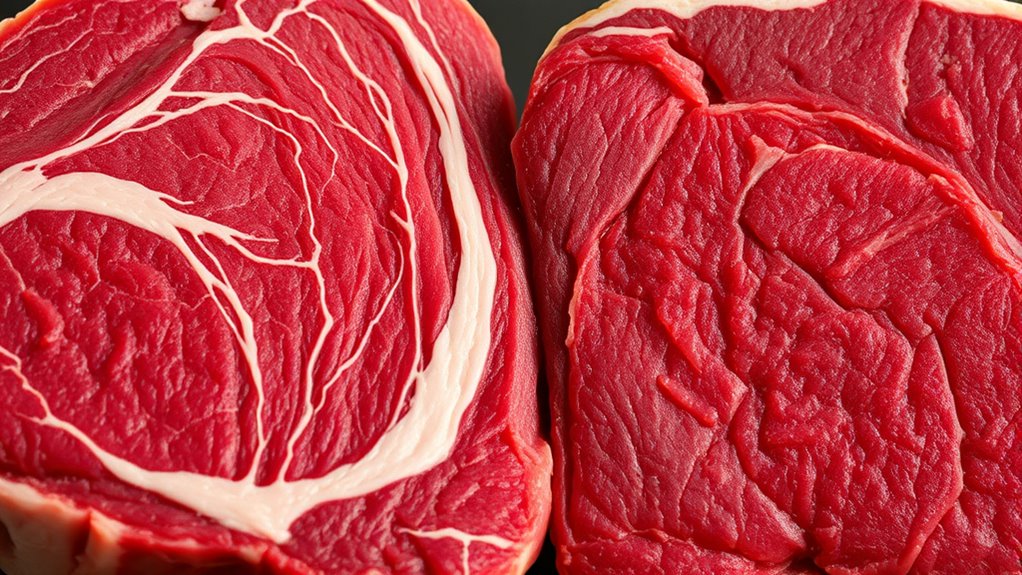
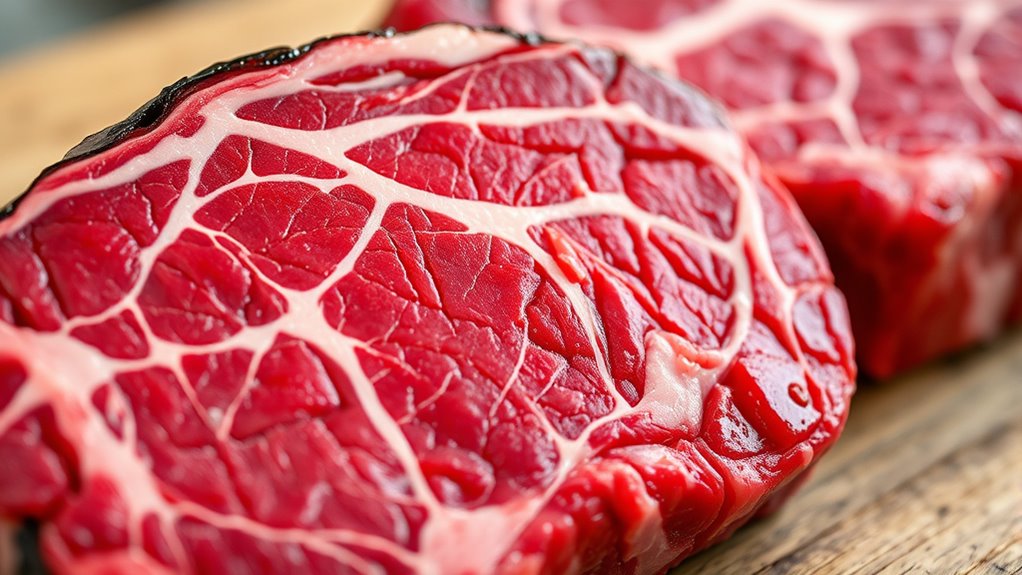
Marbling, the fine streaks of fat dispersed throughout the muscle, plays an essential role in enhancing both the flavor and tenderness of Angus beef. When cooked, this fat melts into the meat, creating a juicier and more flavorful bite.
The more marbling present, the richer the taste, with buttery undertones that improve the eating experience. You’ll notice that well-marbled Angus beef offers a melt-in-your-mouth tenderness, making each bite more satisfying.
To visualize, consider these aspects:
- Juiciness increases, preventing dryness during cooking
- Flavor intensifies with a buttery, savory profile
- Texture becomes more tender and easier to chew
This combination of marbling directly influences the overall quality, making Angus beef a preferred choice for those seeking superior taste and tenderness.
What Breed Standards Make Angus Beef Stand Out?
Certain breed standards set Angus beef apart by emphasizing specific genetic traits that influence meat quality. These standards prioritize traits like marbling, which keeps the meat tender and flavorful, and a solid black coat, a hallmark of Angus cattle.
The breed also requires a naturally muscular build, contributing to consistent meat yield. Angus cattle are selected for their ability to produce high-quality beef with excellent marbling, which improves flavor and juiciness.
Furthermore, the breed’s genetic predisposition for rapid growth and efficient feed conversion makes their meat more desirable. These standards help maintain Angus’s reputation for producing premium beef.
Why Is Angus Beef Usually More Expensive Than Other Beef?
Because of their reputation for high-quality meat, Angus beef often commands a higher price than other types of beef. This premium cost reflects several factors.
First, Angus cattle are selectively bred for better marbling, which enhances flavor and tenderness. Second, Angus beef is usually raised with stricter standards, including better feed and care, which increases production costs.
Third, more people want Angus because of its reputation for quality, which pushes prices higher. These factors come together to make Angus more expensive than regular beef.
When you buy Angus, you’re paying for better marbling, stricter standards, and a reputation for excellence that makes the higher price worth it.
How Are Angus Cattle Farmed and Produced Differently?
You’ll notice that Angus cattle are bred with strict standards and specific genetics to guarantee quality.
Their feeding and nutrition are carefully managed to promote marbling and tenderness.
Furthermore, they’re raised in environments and using methods that prioritize consistent quality and health.
Breeding Standards and Genetics
Angus cattle are bred and raised with specific standards that emphasize genetics and quality traits. Their breeding focuses on improving marbling, tenderness, and consistent meat quality.
You’ll find that Angus herds often use selective breeding programs to maintain desirable characteristics. These programs prioritize traits like rapid growth, high-quality meat, and disease resistance.
This careful selection process results in cattle with strong genetic lines for marbling and flavor, as well as consistent, predictable beef quality. It also increases their adaptability to various environments.
Feeding and Nutrition Practices
Unlike regular beef cattle, Angus cattle are often raised with specialized feeding and nutrition practices aimed at improving meat quality. They usually get high-energy diets, including grains like corn and barley, to promote marbling and tenderness.
This focused nutrition encourages fat to infiltrate within the muscle, making the beef juicier and more flavorful. Farmers might also add specific minerals and vitamins to support healthy growth and overall well-being.
Instead of relying solely on pasture grazing, Angus producers often use feedlots for finishing, ensuring consistent fat development. This targeted approach helps produce the high-quality, consistent beef Angus is known for.
Farming Environments and Methods
Farmers often use different environments and methods to produce Angus cattle compared to regular beef operations. Angus cattle are usually raised in more controlled, high-quality environments that focus on animal welfare and meat quality. They often graze on lush pastures or are finished in specialized feedlots to ensure ideal fat marbling.
You might notice that Angus farms prioritize sustainable practices, reduce stress, and give cattle plenty of space. These farms typically feature rotational grazing systems to keep pastures healthy. They also tend to have smaller herd sizes for more personalized care.
Additionally, Angus farms use high-quality forage and specialized feeds to finish the cattle. This approach results in healthier animals and superior beef, which sets Angus apart from more conventional methods.
What Are the Health Benefits of Choosing Angus Beef?
When you choose Angus beef, you get a richer nutrient profile that can support your overall health. It also contains higher quality fats that may be more beneficial for your body.
These factors make Angus beef a smarter, more nutritious option for your diet. It’s a tasty way to enjoy the benefits of better nutrition.
Richer Nutrient Profile
Because of its selective breeding and higher quality standards, Angus beef generally offers a richer nutrient profile than regular beef. This means you get more essential nutrients with each serving, supporting your overall health.
You’ll likely notice higher levels of important vitamins and minerals such as iron, which helps maintain energy levels and supports immune function, and zinc, which is essential for tissue repair and your metabolism.
Plus, you’ll find more B vitamins, including B12, which are critical for nerve health and red blood cell production. These nutrients play a key role in your well-being and can contribute to better energy, immune support, and overall vitality.
Choosing Angus beef means you’re opting for a product that’s not only flavorful but also packed with nutrients your body needs to thrive.
Higher Quality Fats
Choosing Angus beef not only boosts your intake of essential nutrients but also means you’re consuming higher quality fats. These fats include more monounsaturated and omega-3 fatty acids, which support heart health and reduce inflammation.
Unlike lower-grade beef, Angus tends to have a better fat distribution, resulting in meat that’s tender and flavorful without excess saturated fat. This means you get the benefits of healthy fats without sacrificing taste or quality.
How Can You Spot Authentic Angus Beef at the Store?
Ever wondered how to identify genuine Angus beef at the store? The key is to look for specific labels and packaging.
Authentic Angus beef usually features a USDA-approved stamp or a clear Angus certification label. Check for a logo or seal that indicates it’s 100% Angus.
Look for USDA-approved stamps or Angus certification labels to verify genuine Angus beef.
Also, examine the color and marbling of the meat. Authentic Angus tends to have a deep red hue with fine, abundant marbling throughout. Here are some visual cues:
- A distinct USDA or Angus-specific label
- Deep red color with visible marbling
- Well-packaged, vacuum-sealed or wrapped tightly
Frequently Asked Questions
Are There Different Grades of Angus Beef Available?
Yes, you can find different grades of Angus beef. The most common is USDA Prime, which has the highest marbling, tenderness, and flavor.
Then there’s USDA Choice, which is still high-quality but with slightly less marbling. Some producers also offer premium Angus grades based on strict standards.
These ensure you get a consistently flavorful and tender experience. So, depending on your preferences and budget, you’ll find a range of Angus beef grades.
How Does Angus Beef Compare to Wagyu or Other Premium Beef Types?
You’ll find that Angus beef offers a rich, juicy flavor with good marbling. However, Wagyu surpasses it with intense marbling, tenderness, and a buttery texture.
Other premium beef types, like Kobe or certified Japanese Wagyu, often have even higher fat content and unique flavor profiles. While Angus provides excellent quality and consistency, Wagyu and similar varieties deliver a more luxurious, melt-in-your-mouth experience.
This makes Wagyu and similar options stand out, especially for special occasions.
Is Angus Beef Suitable for All Cooking Methods?
Yes, Angus beef is suitable for most cooking methods. You can grill, pan-fry, roast, or braise it, depending on the cut. Its marbling guarantees it stays tender and flavorful, making it versatile.
For steaks, quick high-heat methods like grilling or pan-searing work best. For tougher cuts, slow cooking or braising helps break down connective tissues.
Does Angus Beef Have a Distinct Taste Compared to Regular Beef?
Like a melody that stands out in a song, Angus beef has a distinct taste that sets it apart. You’ll notice it’s richer and more buttery, with a smoother, more intense flavor compared to regular beef.
The marbling in Angus beef boosts its juiciness and tenderness, making every bite more flavorful. If you’re after a premium, flavorful experience, Angus offers a taste that’s hard to forget and easy to distinguish from standard cuts.
Can Consumers Identify Angus Beef Based on Packaging Labels?
Yes, you can spot Angus beef on packaging labels. Look for the certified Angus label, which shows the beef’s breed and quality standards. Many brands also display the Angus certification or logo prominently.
Conclusion
So, next time you splurge on that premium Angus steak, remember you’re paying for the marbling, breed standards, and a bit of beefy prestige. Those fancy standards and farm practices are what make it more expensive.
Ironically, all that effort and quality control are what drive up the price, yet in the end, it’s just beef. But hey, if you’re craving a tender, flavorful bite and want to impress friends, that extra dollar might just be worth it.
Enjoy the luxury of Angus beef—your taste buds will thank you!