7 Best Salts for Fasting
Many people struggle with maintaining proper electrolyte balance during fasting, which can lead to cramps, dizziness, and discomfort. You’re not alone—navigating the right salts to support your fast can be confusing.
Luckily, choosing natural, unrefined salts like Himalayan pink salt, Celtic sea salt, and red Hawaiian salt can make a big difference.
For fasting, choosing natural, unrefined salts like Himalayan pink salt, Celtic sea salt, and red Hawaiian salt helps maintain electrolyte balance and hydration. Use about a quarter teaspoon daily, adjusting for activity and signs of imbalance like cramps or dizziness.
Opt for mineral-rich options that contain magnesium and potassium, and avoid processed table salt with additives.
Proper salt management boosts fasting success and comfort—stick around to uncover how to incorporate these salts safely into your routine.
Key Takeaways
- Choose unrefined, mineral-rich salts like Himalayan pink salt, Celtic sea salt, and Red Hawaiian salt for electrolyte support during fasting.
- Opt for natural salts with high mineral content to help with hydration, nerve function, and muscle activity.
- Keep your salt intake moderate, around 1/4 teaspoon daily. Be sure to listen to your body to avoid dehydration and cramps.
- Drink plenty of water along with natural salts to stay properly hydrated and maintain electrolyte balance.
- Adjust your salt consumption based on how active you are. This can help boost your energy, reduce cramping, and make your fasting more successful.
How to Choose the Best Salt for Fasting
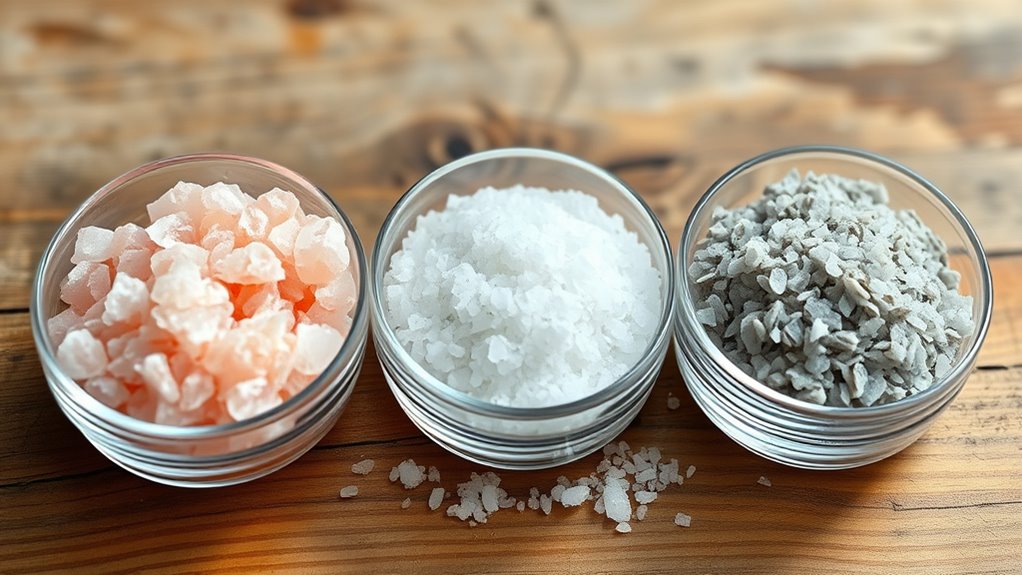
Wondering how to pick the best salt for fasting? First, look at the purity of the salt. Choose unrefined, minimally processed options like sea salt or Himalayan pink salt, which keep natural minerals intact.
Avoid highly processed table salt. It often lacks beneficial minerals and may contain anti-caking agents. Next, check the mineral content—more minerals mean better electrolyte support.
Decide if you prefer coarse or fine grains based on how you’ll use it. Coarse salts are great for seasoning and salt blocks, while fine salts dissolve quickly in water.
Think about your taste preferences and any sensitivities you might have. Ultimately, pick a salt that’s high in natural minerals, free from additives, and fits your fasting routine. This way, you get the benefits without unnecessary extras.
What Are the Top Mineral-Rich Salts to Support Electrolyte Balance During Fasting
To keep your electrolyte balance steady during fasting, you want salts rich in key minerals like sodium, magnesium, and potassium. Natural sources like sea salt and Himalayan salt are great because they contain these nutrients in forms your body can easily absorb.
Choosing the right mineral-rich salt is important. It helps support your body’s needs without adding unnecessary chemicals or additives. So, going for pure, natural salts is usually the best choice.
Essential Minerals Content
During fasting, maintaining electrolyte balance is key, and choosing salts rich in essential minerals can help with that. These minerals support hydration, nerve function, and muscle activity.
The best mineral-rich salts contain significant amounts of sodium, potassium, magnesium, and calcium. For example, Himalayan pink salt offers trace minerals, while Celtic sea salt provides higher magnesium levels.
Picking salts with diverse mineral content helps keep your body balanced without needing supplements. Here’s a quick comparison:
| Salt Type | Key Minerals |
|---|---|
| Himalayan Pink Salt | Sodium, potassium, magnesium, calcium |
| Celtic Sea Salt | Sodium, magnesium, trace minerals |
| Red Hawaiian Salt | Sodium, calcium, magnesium |
Focus on these mineral-rich options to support your electrolyte needs during fasting.
Natural Mineral Sources
In relation to maintaining electrolyte balance during fasting, choosing mineral-rich salts can make a significant difference. Natural mineral sources like Himalayan pink salt, Celtic sea salt, and Redmond Real Salt contain a variety of essential minerals such as magnesium, potassium, and calcium.
These salts are harvested from ancient seabeds or mineral-rich deposits, ensuring they retain their natural mineral profiles. Unlike refined table salt, they provide a broader spectrum of electrolytes that support hydration and muscle function.
Incorporating these salts into your fasting routine can help replenish minerals lost through sweating or urine, reducing fatigue and cramping. Opting for natural mineral sources guarantees you’re not just getting sodium but a balanced mix of nutrients crucial for maintaining electrolyte harmony during extended fasts.
Should You Use Pink Himalayan Salt for Fasting?
Wondering whether pink Himalayan salt is a good choice for fasting? It can be, but it really depends on your goals. Pink Himalayan salt has trace minerals that might support electrolyte balance during extended fasts. Still, it’s mainly sodium chloride, so moderation is important.
Here are some points to consider:
- Mineral Content: It provides small amounts of minerals like magnesium and potassium, which can help prevent imbalances.
- Purity: Usually free from additives, making it a clean, natural option.
- Flavor and Use: Its mild taste makes it easy to add to water or foods without overpowering.
While it’s a good natural choice, don’t rely only on pink Himalayan salt for electrolyte replenishment. Balance it with other sources if needed.
Sea Salt vs. Celtic Salt: Which Is Better for Fasting?
Are you trying to decide between sea salt and Celtic salt for fasting? Both are natural and full of minerals, but they have some subtle differences.
Sea salt is harvested from evaporated seawater and contains trace minerals. Celtic salt comes from coastal clay beds and is known for its moisture content and a wider variety of minerals.
Celtic salt tends to be more mineral-dense, which some believe helps with electrolyte balance during fasting. To compare:
| Feature | Sea Salt | Celtic Salt |
|---|---|---|
| Mineral Content | Moderate | High |
| Texture | Coarse or fine | Moist, granular |
| Flavor | Mild | Slightly briny |
| Moisture Content | Low | High |
| Ideal for | General use, fasting | Replenishing electrolytes |
Pick the one that matches your mineral needs and taste preference.
How Can You Safely Incorporate Salt Into Your Fasting Routine
To safely include salt in your fasting routine, choose the right types like sea salt or Himalayan salt, which provide essential minerals. Keep your intake moderate because too much can cause dehydration, while too little might lead to symptoms like dizziness or cramps.
Pay attention to your body’s signals to make sure you’re maintaining a healthy salt balance. Listening to your body’s cues can help you avoid issues and stay safe while fasting.
Proper Salt Types
Choosing the right type of salt is key for safely including it in your fasting routine. Not all salts are the same; some have more minerals and fewer additives.
Here are some good options to consider:
- Himalayan Pink Salt contains trace minerals and is minimally processed, making it a popular natural choice.
- Celtic Sea Salt is rich in electrolytes and harvested through traditional methods, which supports hydration.
- Redmond Real Salt comes from ancient seabeds and offers a balanced mineral profile without anti-caking agents.
Optimal Salt Intake
Incorporating salt into your fasting routine requires finding the right balance to keep your electrolytes in check without overdoing it. Usually, about 1/4 teaspoon of salt a day helps replenish minerals lost during fasting.
You can add this amount to your water or meals, or opt for electrolyte supplements if you prefer. Just be careful not to consume too much salt, as it can cause dehydration or raise blood pressure.
Listen to your body—if you feel dizzy, tired, or get muscle cramps, it might be a sign to adjust your salt intake. Staying consistent and paying attention to how you feel will help you safely include salt in your fasting for optimal health.
Signs of Salt Deficiency
While maintaining the right salt intake is key to supporting your fasting, recognizing the signs of salt deficiency helps you adjust before discomfort worsens. You might notice:
- Muscle cramps or spasms, which can indicate an electrolyte imbalance.
- Dizziness or lightheadedness, especially when standing up quickly.
- Fatigue or weakness, caused by reduced fluid and electrolyte levels.
If you experience these symptoms, it’s a sign your body needs more salt. Try adding small amounts gradually, like a pinch of sea salt in water or food.
Staying attentive to these signals helps prevent dehydration and keeps your fasting on track. Remember, moderation is key—too much salt can cause other health issues.
What Are Common Mistakes to Avoid When Using Salt During Fasting?
One common mistake to avoid when using salt during fasting is overdoing it, as too much salt can cause dehydration and electrolyte imbalances. It can make your body hold onto water, raise your blood pressure, and put extra strain on your kidneys.
To prevent this, focus on balancing your salt intake carefully. Measure and stick to recommended doses instead of guessing.
Watch out for signs of dehydration like dizziness or dry mouth. Drink water regularly and keep an eye on how you’re feeling.
Don’t rely only on salt for your electrolytes. Incorporate other sources like potassium and magnesium to keep things balanced.
Choose natural, unrefined salt options instead of processed or refined salt, which often has additives and fewer nutrients.
If you’re active or sweating a lot, consider increasing your salt intake to replace what you lose. Adjust based on your activity level.
Stay mindful of your body’s signals so you can keep your fasting safe and effective.
The Benefits of Natural, Unrefined Salts for Fasting Success
Choosing the right type of salt during fasting can really make a difference in your results. Natural, unrefined salts keep essential minerals that refined salts lose through processing. These minerals help with hydration, balance electrolytes, and reduce cramping, so you can stay energized.
Choosing unrefined salt ensures essential minerals, better hydration, and reduced cramping during fasting.
Natural salts also have a richer flavor, which makes it easier to get the right amount of salt without going overboard.
Consider these benefits:
- They have a high mineral content, like magnesium and potassium, which help keep electrolytes balanced.
- They absorb better, helping you hydrate faster and prevent dehydration.
- They contain fewer additives and chemicals, lowering health risks and supporting your overall well-being.
Switching to natural, unrefined salts can boost your fasting success by improving mineral intake and keeping your electrolytes in check.
Frequently Asked Questions
Can You Overdose on Salt During Fasting?
Yes, you can overdose on salt during fasting if you consume too much.
Eating too much salt can cause dehydration, high blood pressure, and electrolyte imbalances.
This might lead to symptoms like headaches, nausea, or dizziness.
It’s important to keep track of your salt intake, especially while fasting, and stick to recommended amounts.
Always listen to your body and see a healthcare professional if you notice any adverse effects.
Does Salt Intake Affect Fasting Weight Loss Results?
Salt acts as the ship’s compass during your fasting journey, guiding your water balance and energy levels. If you consume too much, it’s like steering off course—causing water retention and possibly hiding true weight loss progress.
Moderate salt intake helps maintain your internal map, supporting smoother fasting. So, yes, salt intake can influence your weight loss results by affecting hydration and bloating, but balance keeps your voyage steady.
Are There Any Health Risks From Excessive Salt Consumption While Fasting?
Yes, consuming too much salt while fasting can pose health risks, like dehydration, high blood pressure, and kidney strain.
When you eat excessive salt, your body retains water, which can lead to swelling and put extra stress on your heart and blood vessels.
To stay safe, keep an eye on your salt intake, stay well-hydrated, and listen to your body’s signals.
How Much Salt Is Safe to Consume During a Fast?
You should aim for about 1 to 2 teaspoons of salt daily during a fast, which usually equals roughly 2,300 mg to 4,600 mg of sodium. It’s interesting how that small amount can make such a difference in maintaining electrolyte balance and preventing dehydration.
Keep in mind, individual needs vary, so listen to your body and consult a healthcare provider if you experience any issues or feel unsure about your intake.
Can Salt Help Reduce Fasting-Related Headaches?
Yes, salt can help reduce fasting-related headaches. When you fast, your electrolyte levels, especially sodium, can drop, leading to headaches.
Consuming a small amount of salt helps replenish sodium levels and balance electrolytes, which can ease headache symptoms.
Just be careful not to overdo it, as too much salt can cause other problems. Stick to moderate amounts and listen to your body’s signals for the best results.
Conclusion
As you start your fasting journey, picture the gentle shimmer of natural salts guiding your body like a north star, restoring balance and energy with each pinch.
By choosing the right mineral-rich salt and using it wisely, you’ll navigate your fast with confidence, feeling a subtle hum of clarity and vitality.
Welcome these nourishing salts as your trusted allies, and let them be your quiet companions on the path to health and renewal with the best salts for fasting.