How to Choose Celtic Salt vs Sea Salt
Are you often overwhelmed by the endless options when choosing a salt for your kitchen? You’re not alone—many people struggle to find the right balance of flavor, health benefits, and convenience.
Celtic salt and sea salt are two popular choices, but knowing which one suits your needs can be confusing.
To choose between Celtic salt and sea salt, consider your flavor preferences, health goals, and cooking needs.
Celtic salt has a moist, mineral-rich, coarse texture ideal for finishing dishes, while sea salt is drier, versatile, and dissolves quickly.
If you seek more minerals and a natural option, Celtic salt may suit you better.
For everyday seasoning and quick dissolving, sea salt could be the right choice.
Investigate further to find the best match for your lifestyle and palate.
Key Takeaways
- Consider mineral content: Celtic salt has higher trace minerals and moisture, which can help with mineral absorption. It’s minimally processed, so it retains more natural elements.
- Match texture and flavor: Celtic salt has a briny, coarse texture that’s great for finishing dishes. Sea salt is quite versatile and works well for cooking and seasoning.
- Assess health needs: If you’re looking for extra minerals, Celtic salt might be the way to go. But if you’re managing hypertension, you might want to opt for lower sodium options.
- Evaluate storage and usage: Both salts should be stored in airtight containers. Celtic salt’s moisture makes it ideal for finishing touches, while sea salt’s dryness is better suited for cooking.
- Personal preference and budget: Ultimately, choose based on your taste, texture preference, availability, and how you like to cook. Finding what works best for you will give you the best seasoning experience.
Where Do Celtic Salt and Sea Salt Come From and How Are They Made?
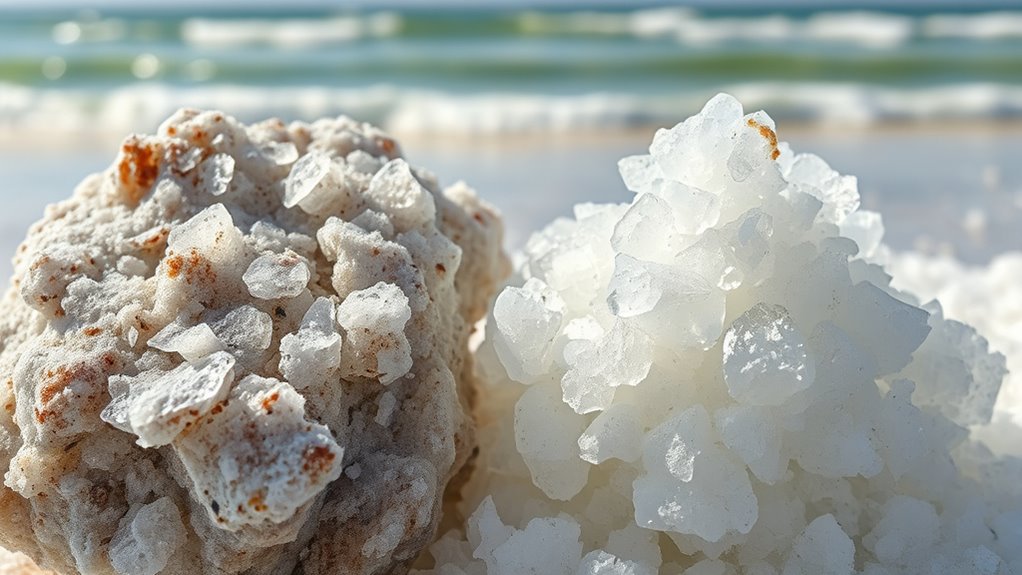
Have you ever wondered where Celtic salt and sea salt come from and how they’re made? Celtic salt is from the coastal regions of France, especially Brittany. It’s harvested from seawater in clay-lined salt ponds using traditional methods.
The water naturally evaporates under the sun and wind, leaving behind moist, mineral-rich salt crystals that are hand-gathered. Sea salt is made worldwide by evaporating seawater either naturally or with mechanical help. It’s collected from salt pans or large evaporation ponds.
Both types of salt keep trace minerals from their original environments, but Celtic salt’s process preserves more minerals because it’s minimally processed. This traditional harvesting makes Celtic salt unique in flavor and texture.
What Are the Nutritional Differences Between Celtic and Sea Salt?
Curious about how Celtic salt and sea salt compare nutritionally? Both contain similar minerals like sodium, magnesium, calcium, and potassium, but in different amounts.
Celtic salt tends to have a slightly higher moisture content, which helps preserve more trace minerals from the ocean. This can give it a marginally richer mineral profile, including small amounts of iron and zinc.
Sea salt, depending on where it’s sourced and how it’s processed, may have fewer trace minerals. It’s often less moist and more refined.
How Do Celtic Salt and Sea Salt Differ in Taste and Texture?
While the nutritional differences between Celtic salt and sea salt are subtle, their taste and texture can vary noticeably. This can really influence how you use each one in cooking.
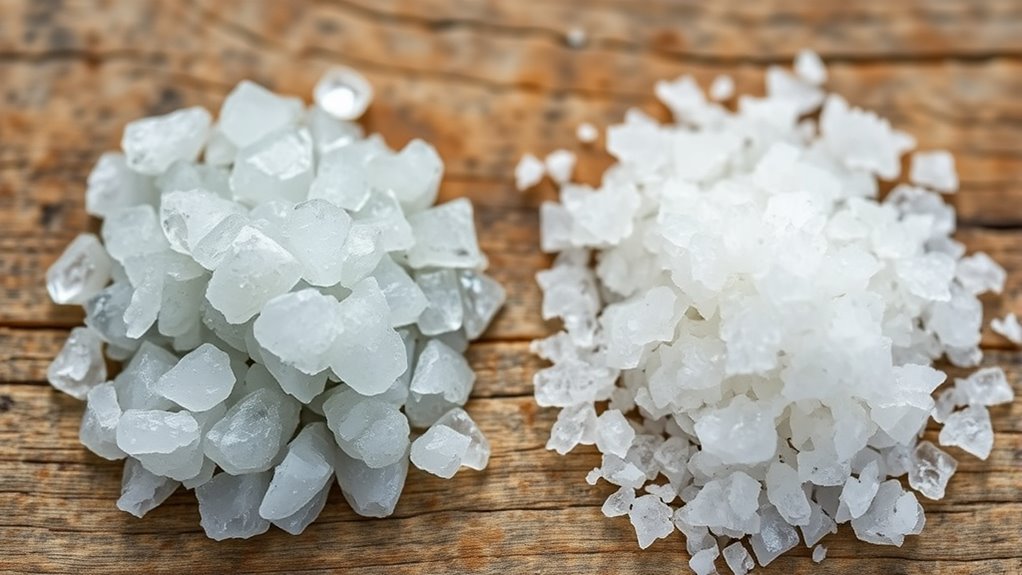
Celtic salt has a moist, coarse grain with a briny, mineral-rich flavor that adds depth to dishes. Sea salt tends to be drier and can be either coarse or fine, with a cleaner, less intense saltiness.
The table below highlights these differences:
| Aspect | Celtic Salt | Sea Salt | Ideal Use |
|---|---|---|---|
| Grain Size | Coarse, moist | Coarse or fine | Finishing, seasoning |
| Texture | Slightly damp, flaky | Dry, crunchy | Cooking, garnishing |
| Taste | Briny, mineral-rich | Light, clean saltiness | Salad dressings, finishing |
| Moisture Content | High | Low | Salt blocks, finishing |
| Flavor Profile | Robust, earthy | Delicate, subtle | Enriches flavors |
These differences shape how each salt complements your dishes.
Which Salt Is Better for Cooking: Celtic or Sea Salt?
When deciding which salt is better for cooking, think about how each one interacts with heat and flavor. Celtic salt has a moist, coarse texture that dissolves slowly, making it perfect for finishing dishes or seasoning at the table. Its mineral richness adds depth without overpowering flavors.
Sea salt, on the other hand, often has a lighter, flaky texture that dissolves quickly. This makes it versatile for cooking and seasoning during the process. It provides a clean, crisp saltiness that boosts flavors without overwhelming them.
If you want more control over seasoning during cooking, sea salt might be the better choice. For adding texture and a burst of flavor at the end, Celtic salt’s moist crystals work really well. Both salts are effective, depending on your cooking style.
What Are the Health Benefits of Celtic Salt Compared to Sea Salt?
Both Celtic salt and sea salt contain minerals that can offer health benefits beyond just flavoring food. Celtic salt, with its higher moisture content, keeps more trace minerals like magnesium and calcium, which help support muscle function and bone health.
Sea salt also provides minerals but usually in smaller amounts. These minerals can help balance electrolytes and keep you hydrated more effectively.
How Do Environment and Climate Affect Celtic and Sea Salt Quality?
The environment and climate where salt is harvested are key in shaping its purity and mineral content. Changes in temperature, humidity, and weather patterns affect how fast the salt evaporates and what minerals stay in the final product.
For Celtic salt, cooler, moist coastal conditions help keep its delicate mineral balance intact. In hotter, drier climates, evaporation happens faster, which can increase mineral concentration.
Sea salt quality also depends on water purity and local pollution levels. Pollution and runoff can introduce contaminants, impacting both safety and flavor.
Water purity and pollution levels directly influence sea salt safety and flavor quality.
Seasonal changes play a role, too. They influence mineral profiles and moisture levels, which in turn affect the texture and flavor of the salt.
To ensure high-quality salt, it’s important to pay attention to factors like local water purity, climate stability during harvesting, pollution control, seasonal evaporation rates, and the health of the coastal ecosystem.
Which Salt Suits Your Dietary Needs and Wellness Goals?
Choosing the right salt depends on your specific dietary needs and wellness goals. If you’re trying to cut down on sodium for heart health, look for unrefined salts with lower sodium levels.
Celtic salt, rich in minerals, can help support electrolyte balance and keep you hydrated. Sea salt, especially when minimally processed, provides trace minerals that might boost overall wellness.
If detoxing or alkalizing your body is your goal, Celtic salt’s mineral content can be helpful. For cooking where flavor matters, sea salt’s coarse texture and clean taste might be the best choice.
Think about your health conditions, activity level, and taste preferences when picking a salt. Ultimately, choosing one that fits your goals means you’ll enjoy both the flavor and the health benefits.
How Should You Store Celtic Salt and Sea Salt to Keep Them Fresh?
To keep Celtic salt and sea salt fresh, use airtight containers that keep moisture out. This helps prevent clumping and keeps the salt dry.
Store them in a cool, dry place away from direct sunlight. This way, their flavor and texture stay at their best.
Picking the right container and environment is key to maintaining their quality over time.
Proper Container Selection
Storing Celtic salt and sea salt properly helps keep them fresh and flavorful for longer. Choosing the right container is key to preventing moisture and keeping their natural qualities intact.
Go for airtight, non-reactive containers like glass jars or ceramic pots. Make sure the lids seal tightly to keep out air and moisture. Avoid plastic containers, which might transfer odors or cause chemical reactions over time.
Containers with wide mouths are great for easy scooping, but always reseal them tightly afterward. Keep your salts in a cool, dark spot away from direct sunlight to preserve their flavor and texture.
Using the right container not only keeps your salts fresh but also makes measuring and using them more hygienic and convenient.
Ideal Storage Environment
Keeping Celtic salt and sea salt fresh means storing them in an environment that keeps moisture, heat, and light away. Moisture is the biggest problem because it can cause clumping or spoilage.
Use airtight containers to block humidity, and store the salts in a cool, dark place like a pantry or cupboard. Stay away from areas near stovetops, sinks, or windows where temperatures and humidity can change.
Keep the salts out of direct sunlight, which can degrade their quality over time. Make sure the storage space is dry and has good ventilation.
Proper storage helps preserve their natural minerals and prevents clumping. This way, your Celtic and sea salts stay fresh, flavorful, and ready to use whenever you need them.
Final Thoughts: Choosing the Right Salt for Your Lifestyle
When choosing between Celtic and sea salt, think about how each fits into your lifestyle and dietary needs. Your health goals and personal preferences should help guide your choice.
Ultimately, picking the right salt is about what works best for you and your routine.
Lifestyle Compatibility Considerations
Have you thought about how your daily routines and health goals match up with different types of salt? Your lifestyle really influences which salt is the best fit for you. For instance, if you like quick and easy seasoning, finely ground sea salt might be perfect. If you prefer natural, minimally processed options, Celtic salt could be more your style.
Your cooking habits, storage space, and budget also matter. Think about how often you cook from scratch versus using pre-made meals. Your choice of salt can reflect your environmental values—some salts are harvested more sustainably than others. Finally, decide whether you want a versatile salt for everyday use or specialty salts for specific dishes.
Health and Dietary Needs
Choosing the right salt depends on your health and dietary needs, as these factors influence which type will support your well-being best.
If you need to limit sodium intake because of hypertension or heart concerns, go for a finely ground sea salt with lower mineral content and less potential for excess sodium.
On the other hand, if you’re after minerals like magnesium and trace elements, Celtic salt’s higher mineral content might be beneficial.
Vegans or those avoiding processed foods might prefer unrefined salts for their natural purity.
If you have specific mineral deficiencies, consider salts rich in those nutrients.
Ultimately, understanding your dietary restrictions and health goals will help you choose the best salt, ensuring it fits into your overall wellness plan.
Frequently Asked Questions
Can Celtic and Sea Salt Be Used Interchangeably in Recipes?
Yes, you can use Celtic and sea salt interchangeably in recipes. Both salts have similar mineral content and salty flavor, making them quite versatile.
Celtic salt is often moister and has a slightly milder taste, while sea salt can vary depending on where it’s sourced from.
Just keep in mind that Celtic salt’s moisture might affect your dish a bit, so you might want to adjust the amount if needed.
Are There Any Allergens Associated With Celtic or Sea Salt?
You’re unlikely to encounter allergens with Celtic or sea salt, as they’re pure mineral salts without common allergens.
However, if you have sensitivities, it’s a good idea to check labels carefully. Some brands might process salts in facilities that handle allergens or add anti-caking agents.
Celtic salt, often minimally processed, retains trace minerals, but both types are generally safe.
If you’re unsure, it’s best to consult your healthcare provider to see if they’re suitable for your diet.
How Does the Mineral Content Vary Between Different Brands?
The mineral content varies between brands depending on their source and processing methods. You’ll find some brands keep more trace minerals like magnesium, potassium, and calcium, while others focus on purity.
Check the label for mineral profiles or sourcing details. Opt for brands that emphasize natural, minimally processed salts to get a richer mineral spectrum.
Comparing labels helps you pick a salt with the mineral content that best supports your health needs.
Is One Salt More Environmentally Sustainable Than the Other?
Celtic salt is generally more environmentally sustainable because it’s harvested using traditional methods that minimize ecological impact, like solar evaporation and hand-raking.
Sea salt production can vary in sustainability depending on where and how it’s processed. Sometimes, it involves more energy or chemicals.
Look for brands that prioritize eco-friendly harvesting methods, no matter the type. That way, you can make a more sustainable choice.
How Do I Identify Authentic Celtic or Sea Salt Products?
To identify authentic Celtic or sea salt, look for products with clear, transparent sourcing information.
Check for mineral-rich, moist crystals that keep their natural color, usually gray or off-white.
Avoid overly processed salts and opt for brands that focus on sustainable harvesting.
Read labels carefully, do some research on the company’s reputation, and make sure the salt is minimally refined.
Authentic Celtic and sea salts celebrate their natural origins, so trust brands that preserve their purity.
Conclusion
Choosing between Celtic and sea salt is like picking the perfect dance partner—you want one that complements your taste, health, and lifestyle.
Think about where each salt comes from, their nutritional benefits, and how they feel in your cooking and wellness routine.
Trust your preferences and needs, and you’ll find the right fit.
Remember, the perfect salt, like a good dance partner, elevates your experience and brings out the best in your culinary journey.
When deciding, consider the unique qualities of Celtic salt versus sea salt to enhance your health and flavor.