What Is a Lean Cut of Beef and How Do You Cook It?
If you’re trying to eat healthier or cut down on fat, choosing the right beef cuts can be a challenge. Many people struggle with finding options that are both tasty and lower in fat. Luckily, there are lean cuts of beef that fit the bill.
A lean cut of beef is a piece that has less fat and visible marbling, making it a healthier choice. When shopping, look for cuts like sirloin, tenderloin, or round. Check for a bright red color with minimal fat on the edges.
To keep your beef juicy and flavorful, stick to quick cooking methods like grilling or searing. Avoid overcooking to preserve tenderness.
If you want to learn how to prepare and cook these cuts perfectly, keep exploring for more tips and tricks.
Key Takeaways
- Lean cuts of beef are low in fat, like sirloin, tenderloin, and round.
- Look for USDA “Choice” or “Select” grades with minimal visible marbling.
- Use gentle cooking methods such as grilling, searing, or baking to help keep the meat moist.
- Marinate the beef to add flavor and help retain moisture.
- Be careful not to overcook—using a meat thermometer can help ensure perfect doneness.
- After cooking, let the meat rest. This helps keep it juicy and tender.
What Is a Lean Cut of Beef and Why Does It Matter?
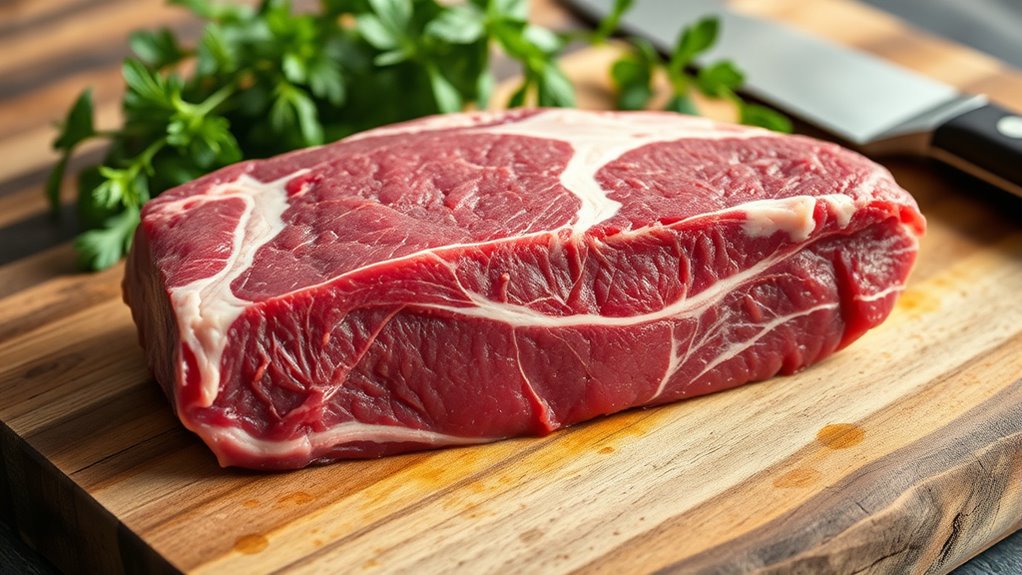
A lean cut of beef is a portion that contains less fat compared to other cuts, making it a healthier choice for those watching their fat intake. These cuts provide high-quality protein, essential vitamins, and minerals without the extra calories from fat.
Choosing lean beef can help you maintain a balanced diet, support weight management, and reduce the risk of heart disease. It’s especially important if you’re trying to lower your saturated fat consumption.
Lean cuts are versatile and can be used in various recipes, from stir-fries to roasts. By selecting lean beef, you’re making a smart decision to enjoy flavorful meals while prioritizing your health.
Understanding what constitutes a lean cut helps you make better choices at the grocery store.
How Can You Identify Lean Beef When Shopping?
When shopping for lean beef, knowing how to spot it can save you time and help you make healthier choices. Start by checking the label for USDA beef grading; look for “Choice” or “Select,” which usually mean the meat is leaner.
Check USDA grades and look for bright red, firm meat with minimal visible fat for lean beef.
Next, look at the color—lean beef should be bright red, not brown or gray. You should also visually assess the fat content; lean cuts have little to no visible fat or marbling.
To make sure you pick the right cut, remember these tips: read labels carefully for fat percentage or lean designations. Choose cuts like sirloin, tenderloin, or round, which are known for being lean.
Finally, look for firm, bright red meat with minimal visible fat or marbling. These steps will help you easily find healthier, lean beef options.
What Are the Best Ways to Cook Lean Beef to Keep It Juicy?
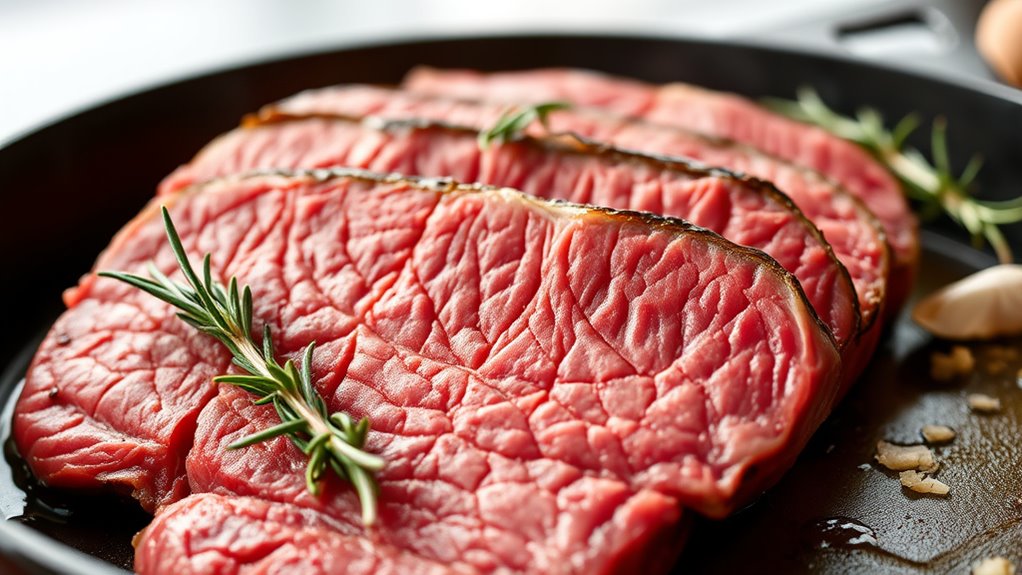
Wondering how to keep lean beef juicy and flavorful? The key is gentle cooking methods that preserve moisture. Quick, high-heat techniques like searing or grilling work well because they lock in juices and develop flavor.
If you’re roasting or baking, keep the oven temperature moderate to prevent drying out the meat. Marinating beforehand adds moisture and boosts flavor too.
Using a meat thermometer helps you cook to the perfect internal temperature—around 135°F for medium-rare or 145°F for medium—so you don’t overcook and dry out the beef.
Resting the meat for a few minutes after cooking allows juices to redistribute. This keeps each bite tender and juicy.
Which Lean Cuts of Beef Are Perfect for Healthy Meals?
Choosing the right lean cuts of beef can make a big difference in creating healthy, flavorful meals. Some cuts are naturally lower in fat and calories, making them ideal for healthy eating. Look for options like:
- Sirloin steak, which is tender, versatile, and lean
- Tenderloin (filet mignon), very lean and tender
- Flank or skirt steak, flavorful and lean, perfect for grilling
These cuts are packed with protein but contain less fat, helping you stay within your health goals. When shopping, check for cuts labeled “loin” or “round,” as they tend to be leaner. Using these cuts, you can enjoy hearty, satisfying meals without sacrificing nutrition or flavor.
Tips for Making Lean Beef Tender and Flavorful
To make lean beef tender and flavorful, marinate it before cooking to boost moisture and add taste. Use a mix of acids like lemon juice or vinegar with herbs and spices to break down muscle fibers and enhance flavor. Marinate for at least 30 minutes, or a few hours for more tenderness.
Avoid overcooking lean cuts since they can dry out quickly. Aim for medium-rare or medium doneness to keep the meat juicy. Searing on high heat helps lock in juices and creates a delicious crust. Rest the beef for a few minutes after cooking to allow juices to redistribute.
Finally, slice against the grain to keep each bite tender and easy to chew. These simple tips will help you get the most flavor and tenderness out of your lean beef.
Nutritional Benefits and Quick Meal Ideas With Lean Beef
Lean beef offers high-quality protein and essential nutrients without excess fat, making it a smart choice for a balanced diet.
You can prepare quick, healthy meals by using simple cooking techniques like grilling or stir-frying.
Nutritional Advantages of Lean Beef
Because it’s lower in fat and calories, lean beef offers impressive nutritional benefits that make it a smart choice for healthy eating. It’s rich in high-quality protein, which helps build and repair muscle, and provides essential nutrients like iron, zinc, and B vitamins.
These nutrients support your immune system, energy levels, and overall health. Eating lean beef can also help you maintain a healthy weight by satisfying hunger with fewer calories. To get the most benefits, focus on choosing cuts with minimal visible fat.
Cooking methods like grilling, broiling, or roasting can help reduce added fats. Incorporate lean beef into a balanced diet with plenty of vegetables and whole grains for a nutritious, satisfying meal that supports your health goals.
Quick Meal Preparation Tips
Preparing quick, nutritious meals with lean beef is easier than you might think, especially when you focus on simple techniques that preserve its health benefits. Start by choosing thinly sliced or ground lean beef, which cooks faster and evenly. Use a hot skillet or grill to sear the meat quickly, locking in flavor and moisture.
Keep ingredients simple—think stir-fries, tacos, or salads—so you spend less time cooking and more time enjoying your meal. Prepping ingredients ahead of time, like chopping vegetables or portioning meat, can speed up assembly.
Use quick marinades or seasonings to improve flavor without extra steps. These tips help you create healthy, satisfying meals in minutes, making lean beef a convenient option for busy weeknights.
Healthy Cooking Techniques
Using healthy cooking techniques can boost the nutritional benefits of beef while keeping your meals quick and flavorful. Focus on methods that preserve nutrients and cut down on added fats.
Choose grilling, broiling, or stir-frying, which need little oil and let excess fat drip away. Trimming visible fat before cooking also helps lower saturated fat intake.
Season beef with herbs, spices, or citrus instead of heavy sauces or salt. This keeps the flavor without adding extra calories.
These techniques help retain lean protein and essential nutrients, making your meals healthier. Cooking beef quickly at high heat locks in moisture and flavor, ensuring a tasty and nutritious meal.
Frequently Asked Questions
Are Lean Beef Cuts More Expensive Than Fattier Options?
Yes, lean beef cuts tend to be more expensive than fattier options because they’re often rarer, more sought after, and require more careful trimming. You might pay a premium for cuts like sirloin or tenderloin, but they offer healthier benefits and better flavor when cooked properly.
Keep in mind, the higher price reflects their quality and leanness. That makes them a worthwhile investment for healthier meals.
Can Lean Beef Be Cooked With Marinades or Should It Be Dry-Cooked?
You can definitely cook lean beef with marinades. They help tenderize the meat and add flavor. Since lean cuts are often less fatty, marinating for a few hours keeps the beef moist and juicy.
After marinating, you can choose dry-heat methods like grilling or pan-searing. Or, go for moist-heat cooking like braising if you want a softer texture. Just be careful not to overcook to prevent it from drying out.
How Long Does It Typically Take to Cook Lean Beef Properly?
Cooking lean beef properly is quicker than you’d think, usually taking around 10-15 minutes depending on the cut and thickness.
You should aim for a safe internal temperature, about 135°F for medium-rare. Using a meat thermometer helps you get it just right.
Avoid overcooking, as that can make it tough and less enjoyable. Let it rest a few minutes before slicing so it stays juicy and tender.
Are There Specific Spices or Herbs That Enhance Lean Beef Flavor?
You can enhance the flavor of lean beef with herbs like rosemary, thyme, and oregano, which add earthy notes. These herbs help bring out the beef’s natural richness.
Spices such as black pepper, garlic powder, and paprika boost its savory profile. They make the beef taste more vibrant and appetizing.
Marinating the beef in a mixture of olive oil, herbs, and spices before cooking can deepen the flavor. It helps infuse the meat with additional taste.
Since lean cuts are less fatty, balancing herbs and spices is key to making it taste juicy and flavorful. This way, every bite is satisfying.
Can Lean Beef Be Used in Slow-Cooker Recipes?
Yes, you can definitely use lean beef in slow-cooker recipes. It’s great because the low, slow heat tenderizes the meat while keeping it moist.
Just be mindful of cooking times to prevent dryness, and consider adding a bit more liquid or broth to keep it juicy. Using tender cuts like sirloin or round works well, and you’ll end up with flavorful, melt-in-your-mouth dishes.
Conclusion
So, next time you pick a lean cut of beef, remember it’s not just about eating healthy but also about savoring flavorful, juicy meals. Whether you’re grilling, broiling, or simmering, using the right techniques makes a big difference.
The more you explore these cuts, the more you’ll see that healthy eating doesn’t mean sacrificing taste. With a little effort, you can turn lean beef into delicious, satisfying dishes that keep both your body and palate happy.