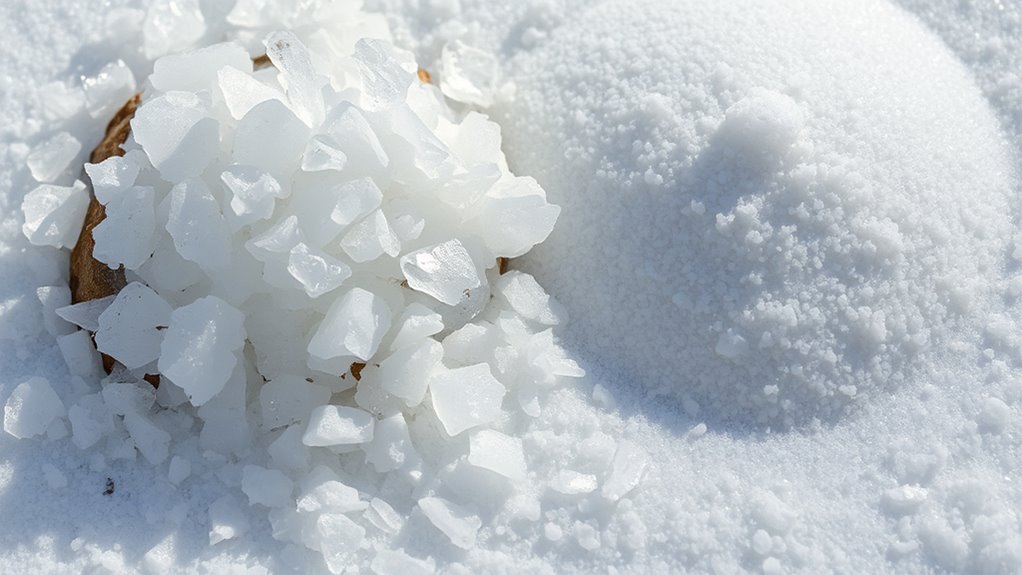
Are Rock Salt and Ice Melt the Same?
Are you tired of slipping and sliding on icy sidewalks during winter? You’re not alone—many people struggle with choosing the right product to keep their walkways safe.
Navigating the options can be confusing, especially when it comes to understanding the differences between rock salt and ice melt.
No, rock salt and ice melt are not the same. Rock salt is composed of sodium chloride and works best above 20°F, but less effectively in colder temperatures.
Ice melt products often contain calcium or magnesium chloride and can work in much colder conditions. They also may include additives for visibility or anti-caking.
To understand when and how to use each safely and effectively, there’s more useful information ahead.
Key Takeaways
- Rock salt is pure sodium chloride, but ice melt products often contain calcium chloride or magnesium chloride.
- Ice melts usually work at colder temperatures than rock salt. Rock salt becomes less effective below 20°F (-6°C).
- Both are used to lower the freezing point of ice, but they differ in chemical makeup and how well they melt.
- Ice melt products may also include additives like anti-caking agents or dyes. This is not the case with pure rock salt.
- They serve the same purpose, but their chemical composition, temperature performance, and environmental impact are different.
What Are Rock Salt and Ice Melt Made Of?
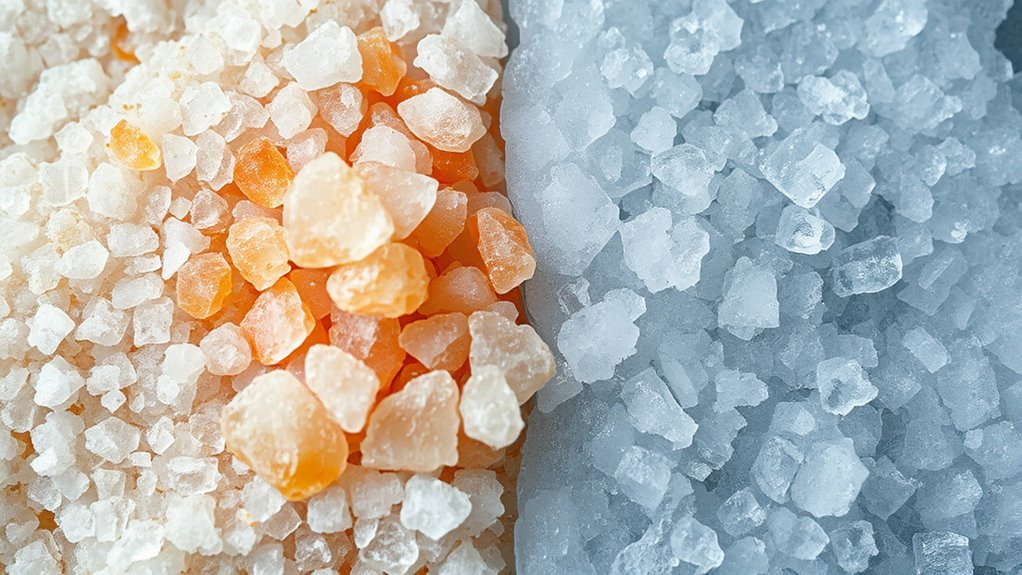
Rock salt and ice melt are made from different chemical compounds, but they both help melt ice. Rock salt, or sodium chloride, is a natural mineral that dissolves when it touches ice, lowering the freezing point.
Rock salt and ice melt differ chemically but both effectively lower ice’s freezing point to melt snow.
Ice melt products often contain calcium chloride or magnesium chloride, which work better at colder temperatures. These chemicals disrupt the bond between ice and the surface, speeding up the melting process.
Some ice melts also have additives like anti-caking agents or dyes to improve visibility. While rock salt is cheap and widely used, calcium and magnesium chlorides perform better in very cold conditions.
Knowing what each product is made of can help you choose the right one for your specific needs.
How Do Rock Salt and Ice Melt Melt Ice?
When you spread rock salt or ice melt on ice, they lower the freezing point, which causes the ice to melt even at temperatures below 32°F. This means the ice doesn’t have to be above freezing for it to start melting.
The colder it gets, the more salt or ice melt you’ll need to work effectively. Chemical reactions also help speed up the melting process, making it more efficient.
Understanding how these substances interact with ice can help you choose the right product for different winter conditions.
How Salt Lowers Freezing Point
Salt lowers the freezing point of water through a process called freezing point depression, which means it stops water from turning into ice at its usual temperature. When you add salt, it dissolves into the water and messes with the formation of ice crystals.
This causes the water to stay liquid even below its normal freezing point. The more salt you add, the colder the temperature has to be for the water to freeze.
Here’s a simple way to understand this:
| Salt Amount | Freezing Point |
|---|---|
| None | 0°C (32°F) |
| Small | Slightly below 0°C |
| Moderate | Much lower |
| High | Considerably below 0°C |
| Very high | Very low freezing point |
This process helps melt ice more efficiently, especially in really cold conditions.
Temperature Impact on Melting
Temperature plays an essential role in how effectively ice melt products like rock salt work. Their ability to lower the freezing point drops off as temperatures get really cold.
When it gets very cold—below about 15°F or -9°C—rock salt isn’t as effective because it can’t melt the ice well. It doesn’t dissolve properly, so it can’t stop the ice from freezing again.
Ice melts faster at moderate temperatures where the salt can work properly. But when it’s extremely cold, you might see little to no melting even if you add salt.
Knowing this temperature limit helps you pick the right ice melt for your weather. That way, you can keep pathways safer and clearer even in chilly conditions.
Chemical Reactions With Ice
Rock salt and ice melt work by triggering chemical reactions that lower the freezing point of water. When you spread salt or other ice melt compounds on ice, they dissolve into the thin layer of liquid water that’s always present on the surface.
This creates a saltwater solution with a lower freezing point than pure water. As a result, the ice melts because the temperature isn’t cold enough to freeze this salty water.
The key reaction involves the salt ions disrupting the water molecules’ ability to bond into solid ice. This process speeds up melting, even at temperatures below 32°F (0°C).
The stronger the reaction, the more effective the ice melt becomes, making your sidewalks and driveways safer during winter storms.
When and Where Should You Use Rock Salt or Ice Melt?
Wondering when and where to use rock salt or ice melt? Here’s a quick guide to help you decide:
- Driveways and walkways: Use rock salt or ice melt early in storms to prevent ice from bonding strongly to surfaces. This makes removal easier later on.
- Stairs and steps: Apply ice melt to reduce slipping hazards on steep or frequently used stairs. It helps keep them safer to walk on.
- Parking lots: Use larger quantities of ice melt to clear bigger areas efficiently. It speeds up melting and makes the lot safer.
- Unpaved surfaces: Stick with ice melt on gravel or dirt, as rock salt can damage these surfaces or nearby plants.
What Are the Environmental and Safety Effects of Using Rock Salt and Ice Melt?
Using ice melt and rock salt to keep walkways and driveways safe can have unintended consequences for the environment and safety. When spread, these substances can seep into soil and water sources, harming plants, animals, and aquatic life.
Over time, high salt levels can damage roadside vegetation and weaken soil quality, leading to erosion. On safety, excessive use of salt can create slippery patches, increasing fall risks for pedestrians.
It can also corrode concrete, asphalt, and vehicles, leading to costly repairs. Pets are at risk if they ingest salt or ice-melting chemicals, which can cause health issues.
While effective for melting ice, it’s important to use these materials responsibly. Understanding their environmental impact and potential safety hazards is key.
How Effective Are Rock Salt and Ice Melt at Melting Ice?
You’ll notice that rock salt melts ice faster at moderate temperatures, but its effectiveness drops as it gets colder. Ice melt products often work within a broader temperature range, making them more versatile in different conditions.
However, keep in mind that some options can leave residues or damage surfaces. These factors might influence your choice depending on your needs.
Melting Speed Comparison
In regard to melting ice quickly, the effectiveness of rock salt versus ice melt depends largely on how fast they can lower the ice’s freezing point. Generally, rock salt melts ice faster at moderate temperatures because it dissolves readily and creates a brine that speeds up melting.
Ice melt products, often containing chemicals like calcium chloride, work more quickly in colder conditions. Here’s a quick comparison:
- Rock Salt: Best at temperatures above 20°F, melts ice steadily.
- Calcium Chloride: Melts ice rapidly, even below 0°F.
- Magnesium Chloride: Slightly slower than calcium chloride but effective in colder weather.
- Potassium Chloride: Works well at moderate temperatures but is less aggressive.
Choosing the right option depends on your temperature conditions for the best melting speed.
Temperature Effectiveness Range
Ever wonder how cold it needs to be for rock salt and ice melt to work effectively? Rock salt usually starts melting ice around 20°F (-6°C), but its efficiency drops as temperatures get colder.
Ice melt products like calcium chloride can work down to -25°F (-32°C), making them better suited for colder conditions. This temperature range matters because if it’s too cold, rock salt won’t melt ice efficiently, leaving dangerous surfaces.
Ice melt formulas are designed to be effective over a wider, colder temperature spectrum. Knowing these ranges helps you pick the right product for winter conditions, keeping walkways and roads safer.
Residue and Damage Potential
While both rock salt and ice melt products effectively break down ice, they can leave behind residues that impact surfaces and the environment. Rock salt often leaves a white crust, which can corrode concrete, asphalt, and metal over time.
Ice melt formulas, especially those containing chemicals like calcium magnesium acetate, tend to be less corrosive but may still cause damage if used excessively. Consider these points:
- Salt residue can cause surface pitting and deterioration.
- Chemical runoff may harm plants and aquatic life.
- Some ice melts can stain concrete or asphalt.
- Excessive use increases corrosion risks on vehicles and infrastructure.
You should monitor application amounts to minimize damage while keeping surfaces safe on icy days.
What Are the Risks of Surface and Vegetation Damage?
Surface and vegetation damage are important concerns when using rock salt or ice melt on pathways and lawns. Salt can corrode concrete, asphalt, and stone surfaces, leading to cracks and deterioration over time.
Vegetation is also at risk. Plants absorb salt, which hampers their water uptake and can cause browning or even death.
Here’s a quick look at common risks:
| Material Affected | Damage Type | Salt Type |
|---|---|---|
| Concrete & Asphalt | Cracking & Spalling | Rock Salt & Ice Melt |
| Vegetation | Wilting & Death | Rock Salt & Ice Melt |
| Soil | Reduced Fertility | Rock Salt & Ice Melt |
| Waterways | Contamination | Excess Salt |
| Animals | Toxicity | Salt Residues |
Using salt carefully can reduce these risks, but it doesn’t eliminate them completely.
Is It Safe and Cost-Effective to Combine Rock Salt and Ice Melt?
Combining rock salt and ice melt might seem like a good way to boost melting power and save money. But it’s important to think about whether it’s safe and cost-effective in the long run. Mixing these products can come with some risks.
First, there’s the risk of corrosion. Using both can damage concrete, metal, and plants more than using just one.
Second, chemical reactions between the two may create harmful compounds or lower melting efficiency, which defeats the purpose.
Third, it might end up costing more overall, especially if it damages your surfaces or plants and requires repairs.
Finally, combining products can sometimes cause unpredictable chemical reactions, which could be unsafe for you and your family.
How Do You Use and Store Rock Salt and Ice Melt Properly?
To use rock salt and ice melt effectively, follow the manufacturer’s instructions for how much to apply and when. Spread the products evenly over icy surfaces, but don’t overdo it, since too much can harm concrete and plants.
For the best results, apply them when temperatures are near or below freezing. Avoid using them during heavy snowfall; instead, put it down before snow starts falling.
Store rock salt and ice melt in a dry, cool place away from moisture to prevent clumping. Keep containers tightly sealed to keep them effective.
Make sure to keep these products out of reach of children and pets, and don’t store them near food or drinks. Proper use and storage help them work better, reduce environmental impact, and prevent damage.
Summary and Tips for Safe Winter Deicing
Effective winter deicing depends on using the right products safely and correctly. To protect your property and stay safe, follow these tips:
- Always read and follow the manufacturer’s instructions to prevent over-application.
- Use deicers sparingly; more isn’t always better and can harm your surroundings.
- Avoid applying deicing products directly on plants or concrete without checking compatibility.
- Store deicers away from children, pets, and water sources to prevent accidents and contamination.
Frequently Asked Questions
Can Rock Salt and Ice Melt Be Used Together Safely?
You can use rock salt and ice melt together, but it’s not always the best idea. Mixing them can sometimes reduce how well they work or even damage surfaces.
If you decide to combine them, do so in moderation and avoid applying too much. Always check the labels and follow the manufacturer’s instructions.
It’s usually safer to choose just one or the other depending on your needs. Also, consider your surface type to prevent any damage.
How Long Does Each Product Take to Melt Ice?
Imagine ice as a stubborn guest refusing to leave. How quickly you can persuade it depends on your tool.
Rock salt usually starts melting ice within 15-30 minutes, slowly breaking down the frozen fortress.
Ice melt products, especially those with chemicals like calcium chloride, act faster—often within 5-15 minutes—like a magic wand.
Your choice sets the pace, but remember, patience and proper application make all the difference.
Are There Differences in Effectiveness on Different Ice Thicknesses?
Yes, rock salt and ice melt work differently depending on how thick the ice is. Rock salt is best on thin, freshly formed ice because it lowers the freezing point effectively there.
For thicker, older ice, specialized formulas with chemicals like calcium chloride are more effective. They generate more heat and work faster to melt the ice.
What Are Natural or Eco-Friendly Alternatives to Rock Salt and Ice Melt?
Imagine a winter landscape softened by eco-friendly solutions. You can use sand, which provides traction without chemicals, or beet juice and apple cider vinegar mixed with water, offering a natural melting effect.
Calcium magnesium acetate is another gentle option that breaks down ice without harming the environment. These alternatives help you stay safe on icy paths while protecting your surroundings, making winter safer and more sustainable.
How Do Climate Conditions Affect the Choice Between Rock Salt and Ice Melt?
Climate conditions greatly influence your choice between rock salt and ice melt. In colder regions where temperatures drop below 15°F, ice melt products containing calcium chloride work better because they lower the freezing point more effectively.
Conversely, if your area experiences milder winters, rock salt may suffice. Hotter climates require less aggressive solutions, so simple rock salt can be a practical, eco-friendly option.
Always consider your local weather to choose the best de-icing method.
Conclusion
In winter, wisely weigh the ways to ward off slippery surfaces. While rock salt and ice melt may seem similar, their substances and safety signals differ. Stay savvy by selecting the safest, most effective solution and storing substances securely.
Remember, proper application prevents problems and helps preserve pavement. Prepare proactively and prioritize protection for people, property, and the planet.
By balancing benefits and risks, you can confidently conquer cold conditions with clever, cautious choices. Keep in mind that rock salt and ice melt are not the same, so choosing the right one is key.