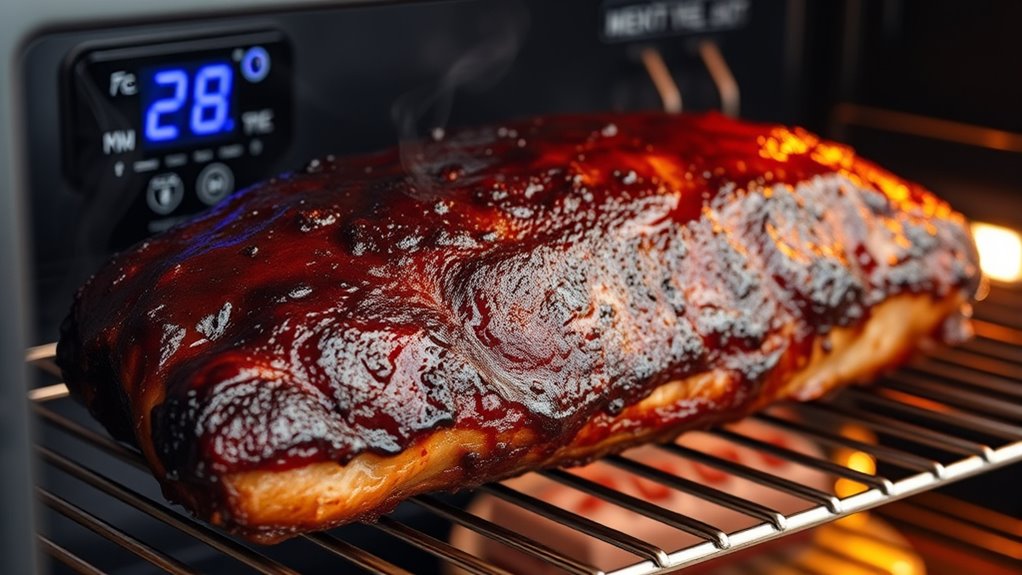
How to Smoke Beef Brisket in an Electric Smoker in 8 Easy Steps
Many people love the idea of smoking beef brisket at home but often feel overwhelmed by the process. You’re not alone—smoking brisket can seem tricky, especially if you’re new to it.
Luckily, with an electric smoker, you can achieve delicious results without the hassle.
To smoke beef brisket in an electric smoker in 8 easy steps, start by choosing a well-marbled cut and trimming excess fat.
Season it with a dry rub, then set your smoker to 225°F, placing a water pan and wood chips inside.
Smoke until the internal temperature reaches 195-205°F, then let it rest before slicing against the grain.
You’ll find tips for perfect results and common issues as you continue, ensuring a delicious smoked brisket.
Key Takeaways
- Preheat your electric smoker to 225°F. Season the brisket well and place it fat side up in the smoker. Make sure to add a water pan and wood chips to get that smoky flavor.
- Pick the right cut, whether it’s the flat, point, or whole brisket. Trim off any excess fat and apply your favorite dry rub.
- Keep the temperature steady and keep an eye on the internal meat temperature. Aim for 195-205°F to get that perfect tenderness.
- During the smoking process, add moisture by spritzing the brisket or wrapping it. Let the brisket rest for about 30 minutes before slicing.
- When slicing, cut against the grain to keep the meat tender and juicy. If the meat turns out dry or greasy, adjust your cooking or seasoning methods accordingly.
Basics of Smoking a Brisket in an Electric Smoker
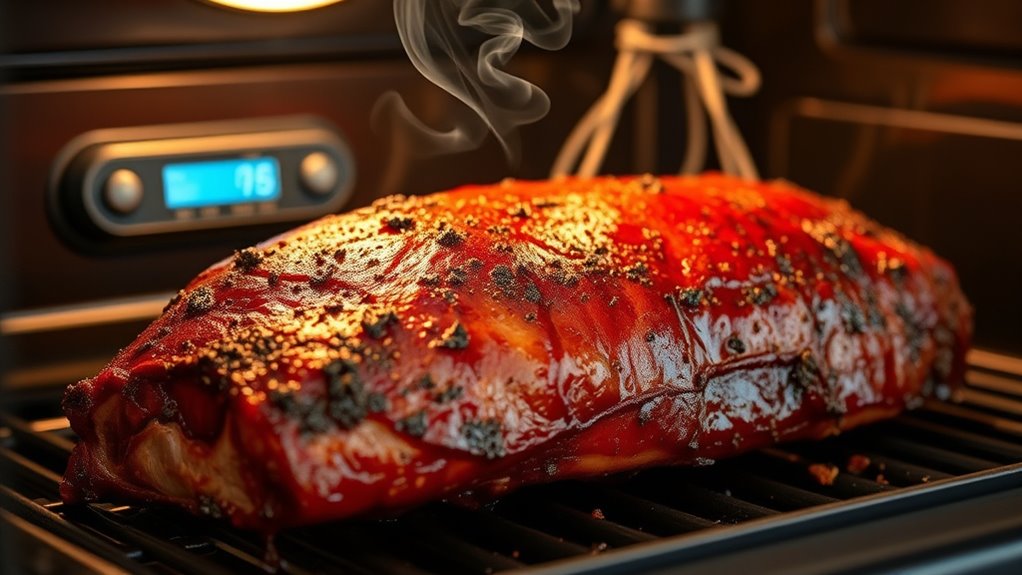
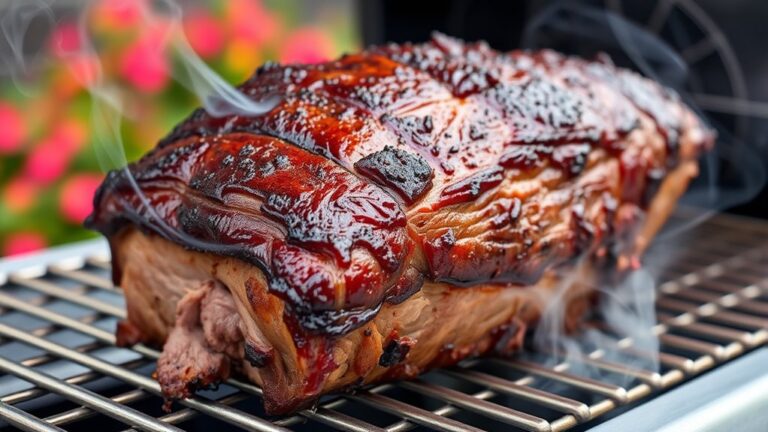
Using an electric smoker makes smoking a brisket simple and convenient. You just set the temperature, add your wood chips, and let the smoker do its thing.
Start by trimming excess fat from the brisket, but leave enough to keep it moist. Season your meat generously with a dry rub, then preheat the smoker to around 225°F.
Place the brisket fat side up on the rack, making sure there’s good airflow around it. Keep the lid closed as much as possible to maintain consistent heat and smoke.
Maintain the temperature throughout, which usually takes about one to one and a half hours per pound. Use a meat thermometer to check for doneness, aiming for an internal temperature of 195-205°F.
This method produces tender, flavorful smoked brisket with minimal fuss.
Choosing the Best Brisket Cut for Smoking
Choosing the right brisket cut is key to getting a tender, flavorful smoke. Different parts of the cow offer unique qualities, so picking the right one matters.
Look for well-marbled meat because it keeps the brisket juicy and full of flavor. The two main cuts are the flat and the point. The flat is leaner and easier to slice, while the point is fattier and more tender.
| Cut Type | Characteristics | Best For |
|---|---|---|
| Flat | Lean, uniform, easy to slice | Slicing for sandwiches |
| Point | Fatty, tender, flavorful | Pulled beef, rich dishes |
| Whole Brisket | Combines both cuts | Traditional smoked brisket |
How to Prepare Your Brisket for Smoking
Once you’ve chosen the right brisket cut, it’s time to prepare it for smoking. Start by trimming away excess fat, but leave about a quarter-inch layer to help keep the meat moist during cooking.
Remove any silverskin or tough connective tissue because these can block smoke from penetrating and make the meat less tender. Next, think about applying a dry rub or marinade to add flavor and create a tasty bark.
If you’re using a rub, coat the entire surface evenly. Let it sit for at least an hour or overnight in the fridge to build deeper flavor. Before placing the brisket in the smoker, make sure it’s at room temperature.
Proper preparation is key to ensuring your brisket turns out tender, flavorful, and perfectly smoked.
Set Up Your Electric Smoker for Perfect Results
To set up your electric smoker for perfect results, start by placing the water pan and wood chips or pellets according to the manufacturer’s instructions. Fill the water pan with enough liquid like water, apple juice, or another flavorful option to keep things moist during smoking.
Add the wood chips or pellets to the designated tray or box, making sure not to overfill. Turn on your smoker and set it to the desired temperature, usually around 225°F to 250°F for brisket.
Make sure the vents are open to allow proper airflow. Preheat the smoker for 15 to 20 minutes so it reaches the right temperature and produces ideal smoke.
Proper setup guarantees consistent heat, moisture, and smoke, creating the perfect environment for a tender, flavorful brisket.
Applying Rubs and Seasonings to Boost Flavor
Applying the right rubs and seasonings can really boost your brisket’s flavor. A good mix of spices helps create complex and appealing profiles that complement the meat.
Make sure to cover the brisket evenly and use proper technique. This way, you get the best taste with every bite.
Enhancing Flavor Profiles
Enhancing the flavor of your smoked beef brisket starts with choosing and applying the right rubs and seasonings. The right combo can boost your meat’s natural taste and add some depth.
To make it even better, try these steps: Use bold spices like paprika, garlic powder, and black pepper for a strong flavor. Mix in a touch of sweetness with brown sugar or honey to balance out the smoky notes.
Adding herbs like thyme or oregano can bring in fresh, aromatic layers that make your brisket stand out. Make sure to spread your rub evenly over the meat, covering all surfaces.
Let it sit for a few hours or overnight if you can. This gives the flavors a chance to really soak in. Good preparation is key to a richly flavored smoked brisket.
Optimal Seasoning Techniques
The key to maximizing flavor with your brisket is mastering the art of seasoning. Start by applying a generous layer of dry rub evenly across the entire surface.
Use a blend of salt, pepper, garlic powder, onion powder, and paprika for a classic flavor profile. Don’t be afraid to add herbs or spices that suit your taste.
For deeper penetration, let the seasoned brisket rest in the refrigerator for a few hours or overnight. This allows the flavors to seep in and improves the crust.
Before smoking, pat the meat dry to guarantee a good bark formation. Remember, the quality and balance of your seasonings make all the difference in creating a flavorful, tender brisket.
Monitoring Temperature and Timing for Juicy Brisket
To get a juicy brisket, you need to keep the temperature steady and watch the clock. Use a reliable meat thermometer to track the internal temperature, so you don’t overcook or undercook.
Staying mindful of the cooking duration helps you achieve that perfect, tender result. It’s all about balancing temperature and timing to get that ideal outcome.
Maintaining Consistent Temperature
Maintaining a consistent temperature throughout the smoking process is key to getting tender, juicy brisket. Fluctuations can lead to uneven cooking and dry meat.
To keep the temperature steady, check your electric smoker’s thermometer regularly to make sure it’s accurate.
Try not to open the lid too often because every time you do, heat escapes and the temperature drops.
Using water pans or heat deflectors can help stabilize the internal temperature and prevent hot spots.
Using a Meat Thermometer
Using a meat thermometer is key to getting that perfect brisket. It helps you keep track of the internal temperature so you don’t end up undercooking or overcooking it.
Just insert the probe into the thickest part of the brisket, making sure to avoid fat or bone. This way, you’ll get an accurate reading.
Aim for an internal temperature of around 195-205°F. That range will give you tender, juicy results every time.
Check the temperature regularly to see how your brisket is doing without opening the smoker too often. Opening it too much can cause temperature swings.
Keep the thermometer in place during the smoking process so you can monitor small changes without re-inserting it. When the brisket hits your target temperature, it’s ready to rest and carve.
Using a meat thermometer gives you confidence and precision, making sure you get that perfectly smoked brisket every time.
Monitoring Cooking Duration
Keeping an eye on both the temperature and the cooking time helps ensure your brisket stays juicy and tender. To do this effectively, follow these simple steps:
- Set a target time based on your brisket’s weight, usually around 1 to 1.5 hours per pound.
- Use a timer to keep track of how long it’s cooking, adjusting if needed.
- Check the internal temperature regularly, aiming for 195-205°F for the best tenderness.
Resting and Slicing Your Smoked Brisket
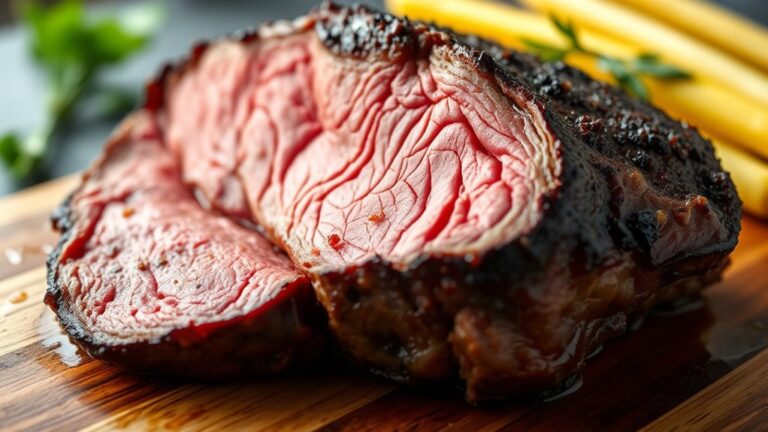
Once your brisket comes off the smoker, it’s important to let it rest before slicing. Resting helps the juices redistribute, keeping the meat moist and tender.
Wrap the brisket loosely in foil or place it on a cooling rack and tent with foil. Let it rest for at least 30 minutes. During this time, the internal temperature stabilizes, and the meat fibers relax.
Wrap loosely in foil and rest for 30 minutes to allow juices to settle and fibers to relax.
When you’re ready to slice, use a sharp carving knife and cut against the grain for maximum tenderness. Take your time to make even slices and avoid pressing down too hard.
Proper resting and slicing ensure each piece is juicy, flavorful, and melts in your mouth.
Troubleshooting Common Brisket Smoking Issues
Even with careful planning, you might run into some common issues when smoking brisket, but knowing how to troubleshoot can really save your cook.
If your brisket turns out dry, check your temperature—cooking too hot or for too long can dry it out. For overly fatty briskets, trimming excess fat before smoking helps.
If the brisket isn’t tender, it probably needs more time or a slightly higher heat, but don’t rush it. Here are some tips to troubleshoot:
- Dry meat: Lower the temperature a bit and add moisture by spritzing or wrapping in foil.
- Too greasy: Trim excess fat beforehand or reduce the thickness of the fat cap.
- Tough brisket: Extend the cooking time, keep a steady temperature, and make sure it hits about 203°F internally.
Frequently Asked Questions
How Long Does It Typically Take to Smoke a Brisket in an Electric Smoker?
It usually takes about 1 to 1.5 hours per pound to smoke a brisket in an electric smoker, depending on its size and how tender you want it.
For an 8-10 pound brisket, plan on roughly 8 to 14 hours total.
Keep an eye on the internal temperature, aiming for around 195-205°F for the best tenderness.
Patience is key for a perfect smoked brisket.
What Wood Chips Are Best for Smoking Beef Brisket?
You should choose wood chips like hickory, oak, or mesquite for smoking beef brisket. I once used hickory, and the smoky aroma reminded me of a cozy campfire, making the meat extra flavorful.
These woods provide a robust, hearty smoke that complements the richness of beef. Avoid softer woods like pine, which can produce bitter flavors.
Stick with these tried-and-true options for a delicious, smoky brisket.
Can I Smoke a Frozen Brisket in an Electric Smoker?
You shouldn’t smoke a frozen brisket in an electric smoker. It’s best to thaw it completely first because starting with frozen meat can cause uneven cooking and safety concerns.
When thawed, your brisket will smoke more evenly and efficiently, making sure it hits the right internal temperature. You can let it sit in the fridge for 24-48 hours or use the defrost setting on your microwave to speed things up.
How Do I Know When My Brisket Is Fully Cooked?
You’ll know your brisket is fully cooked when its internal temperature reaches about 195-205°F. Use a reliable meat thermometer and insert it into the thickest part of the meat to check.
You’ll also notice the brisket feels tender and juicy, and it easily pulls apart. Let it rest for at least 30 minutes before slicing to allow the juices to redistribute, ensuring maximum flavor and tenderness.
Is It Necessary to Wrap the Brisket During Smoking?
Wrapping isn’t necessary, but it can really enhance your smoking experience. If you want a tender, juicy brisket, wrapping—often called the Texas Crutch—locks in moisture and makes the meat easier to handle.
You might want to wrap when the brisket hits around 160°F, trapping steam and flavors. On the other hand, skipping the wrap leaves a crisp, barky surface, giving you that smoky, crusty charm.
Conclusion
Smoking a brisket in your electric smoker is a rewarding experience that yields mouthwatering results. Did you know that the average brisket can absorb up to 30% of its weight in smoke flavor?
By following these simple steps, you’ll unveil rich, tender meat every time. With patience and attention to detail, you’ll impress everyone at your next gathering.
Get ready to savor the delicious, smoky aroma and juicy tenderness that make smoking brisket truly special. Using an electric smoker makes the process easier, so you can focus on enjoying the flavorful payoff.