
8 Key Factors That Affect How Much It Costs to Install a Kitchen
Many homeowners feel overwhelmed when estimating kitchen installation costs. You’re not alone—figuring out what affects the final price can be confusing. Understanding the key factors can help you plan better and avoid surprises.
Your kitchen installation costs are influenced by several key factors. The size of your kitchen affects material and labor expenses, while the choices of materials and design impact overall costs.
Labor rates vary based on project complexity and contractor experience. Permits and regulations can add to your expenses, and location or accessibility might increase costs.
Opting for upgrades can boost value without overspending. Keep in mind, careful planning helps control costs—continue to investigate how to make your project budget-friendly.
Key Takeaways
- Kitchen size affects the total costs because larger kitchens need more materials and more labor.
- The choices you make for materials, like countertops and cabinets, really matter when it comes to your budget.
- Labor costs can vary a lot depending on how complicated the project is and the experience of the contractor.
- Don’t forget about permit fees and making sure everything meets regulations—they can add quite a bit to the overall cost.
- Looking for ways to save? Doing some prep work yourself or taking advantage of appliance deals can help cut down expenses.
How Does Kitchen Size Affect Installation Costs?
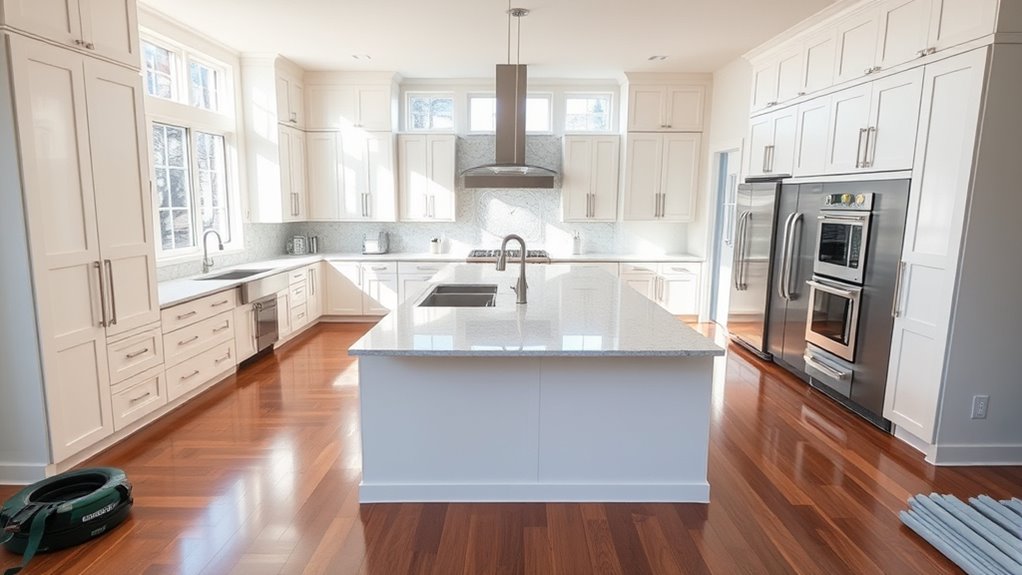
The size of your kitchen directly impacts the overall installation costs, as larger spaces typically require more materials, labor, and time. When your kitchen is bigger, you’ll need extra cabinets, countertops, and appliances, which increases material expenses.
Larger kitchens lead to higher costs due to increased materials, labor, and installation time.
More square footage also means longer installation times for tradespeople, raising labor costs. Plus, larger kitchens often involve more extensive plumbing and electrical work, which adds to the bill.
You might also need extra permits or inspections, depending on the size and scope of your project. Ultimately, the bigger your kitchen, the higher the investment you’ll make.
To manage costs, it’s important to plan carefully and prioritize the most essential updates, especially if your space is sprawling.
What Materials Impact Your Kitchen Budget the Most?
Choosing the right materials can really impact your kitchen budget since some options cost more upfront but might last longer or look better.
For example, high-end countertops like granite or quartz tend to be more expensive than laminate but are more durable and resist stains better.
Cabinets made from solid wood cost more than MDF or particleboard, but they offer greater strength and a more premium look.
Flooring choices vary too; hardwood floors are pricier than vinyl, but they add warmth and increase your home’s value.
Your appliances can also significantly affect costs, especially when comparing high-end models to standard ones.
Keep in mind that cheaper materials might save you money at first but could need more maintenance or replacements later, affecting your long-term budget.
How Do Design Choices Influence the Cost of Your Kitchen Remodel?
Design choices have a big impact on your kitchen remodel costs because some layouts, features, and styles need more materials and labor. For example, choosing an open-concept layout might mean removing walls and adding support beams, which can boost expenses.
Picking high-end appliances or custom cabinets also increases costs compared to standard options. The style you go for, like modern or traditional, affects material choices—luxury finishes and detailed work cost more.
Extra features like a kitchen island, walk-in pantry, or built-in storage will also add to the total price. Your decisions about these elements shape both how your kitchen looks and how complex and expensive the project becomes.
Careful planning helps you find a balance between your desired style and your budget.
What Factors Drive Labor Expenses for Kitchen Installation?
Labor expenses for kitchen installation are influenced by several key factors that can greatly impact your overall costs. The complexity of the project plays a big role; more intricate designs or custom features require extra skill and time.
The size of your kitchen also matters. A larger space means more labor hours, which can increase costs. Accessibility of your space affects how quickly work can be done; tight or awkward areas tend to slow things down.
The experience level of your contractors can influence the rate. Seasoned professionals often charge more for their expertise. Lastly, the scope of prep work, like demolition or moving utilities, adds to labor costs.
Which Upgrades and Features Add Value Without Breaking the Bank?
Are you looking to boost your kitchen’s value without overspending? Focus on cost-effective upgrades that make a big impact.
Replacing cabinet hardware or adding a fresh coat of paint can refresh the space without high costs. Upgrading to energy-efficient appliances offers long-term savings and appeal.
Installing a stylish backsplash or new lighting fixtures elevates visual appeal at a reasonable price. Consider open shelving to maximize storage without the expense of full cabinetry.
Upgrading countertops to materials like laminate or butcher block can transform the look without breaking the bank. These features add significant value and modernize your kitchen while keeping costs manageable.
Prioritize upgrades that improve both functionality and aesthetics. This way, your investment pays off without draining your budget.
How Do Location and Accessibility Change Your Kitchen Costs?
Have you ever thought about how your kitchen’s location within your home or how accessible it is can affect renovation costs? If your kitchen is hard to reach or involves moving major walls or utilities, expect to pay more.
Easier access can cut down on labor time and materials needed, which helps lower costs. On the flip side, if your kitchen is in a basement or far from main utilities, costs go up because of extended plumbing, electrical work, and structural changes.
Accessibility issues like narrow doorways or limited space can also hike up costs. They might require special tools or modifications to get everything done smoothly.
Moving utility lines, for example, increases both labor and material expenses. Basement kitchens often need extra structural support, which adds to the cost.
Narrow doorways may need custom fittings, and long-distance plumbing or electrical runs can be pricey. Limited space makes installations more complicated and can lead to higher labor costs.
How Do Permits and Regulations Impact Your Budget?
Permits and regulations can add unexpected costs to your kitchen project, so it’s important to understand what’s required in your area.
Permit fees vary depending on the scope of work and local rules, which can influence your overall budget.
Furthermore, complying with regulatory standards may involve upgrades or inspections that can increase expenses.
Permit Costs and Fees
Permit costs and regulations are a key part of your kitchen installation budget. The fees can vary a lot depending on where you live, what your project involves, and local government rules.
These costs can be anywhere from a few hundred to several thousand dollars, which can surprise you if you’re not prepared. Skipping or delaying permits might lead to fines, project delays, or even having to redo work, all of which can drive up your costs.
It’s really important to look into your local permit rules early on. Fees differ by city and the size of your project, and some areas require multiple permits for different kinds of work.
Expedited permits usually cost more, but some renovations might have reduced or waived fees. Overlooking permits can cause legal issues and unexpected expenses down the line.
Regulatory Compliance Requirements
Understanding the regulatory compliance requirements for your kitchen renovation is essential because they directly impact your project’s budget.
Local building codes and safety standards determine what permits you need and how your renovation should be done. Not meeting these regulations can lead to costly fines, delays, or even having to redo work.
You’ll need to budget for inspections and approvals at different stages, which can add to your overall costs. Some regulations might also require specific materials or methods, raising expenses further.
Staying informed about these rules early on helps you avoid surprises and plan your budget more accurately. Consulting with your local building department early guarantees you understand all the compliance costs, preventing unexpected expenses from derailing your project.
Tips to Save Money on Your Kitchen Installation Project
Looking for ways to cut costs on your kitchen installation? Start by planning carefully to avoid costly changes later. Consider choosing standard sizes and styles instead of custom options, which can greatly lower expenses.
Doing some of the prep work yourself, like demolition or painting, can also save money. Shop around for materials and appliances, comparing prices to find the best deals.
Save money by doing prep work yourself and comparing prices on materials and appliances.
Opt for ready-made cabinets instead of custom-built ones. Limit high-end finishes to key areas to keep costs down. Reuse or refinish existing fixtures and cabinetry to save even more.
Buy appliances during sales or clearance events for the best deals. Finally, prioritize essential updates over luxury upgrades to stay within your budget.
Hiring a reliable but affordable contractor can help you avoid unexpected fees and delays. With some planning and smart choices, you can get a beautiful kitchen without breaking the bank.
Frequently Asked Questions
How Long Does a Typical Kitchen Installation Take?
A typical kitchen installation usually takes about 1 to 3 weeks, but it really depends on how complex the project is. You’ll need some time for planning, ordering materials, and actually doing the work.
If you’re going with custom cabinets or have complicated electrical and plumbing work, it might take longer. To keep things on track, stay in regular contact with your contractor.
Make sure all permits and materials are ready before you start. This helps reduce delays and gets your kitchen completed efficiently.
What Are Common Hidden Costs During Installation?
Hidden costs during kitchen installation often catch you off guard. You might need permits, which aren’t always included in the initial quote. Unexpected plumbing or electrical work can come up if existing systems aren’t up to code.
You may also face costs for moving or upgrading appliances, fixing hidden damages, or buying extra materials. It’s a good idea to budget extra to cover these surprises so the renovation goes smoothly without stressing your finances.
How Does Choosing Eco-Friendly Materials Affect Costs?
Choosing eco-friendly materials can initially seem like a tall order, but it often pays off in the long run. These materials tend to cost more upfront because of their quality and sustainability.
But the good news is, they can help cut your energy bills and reduce maintenance costs over time. So, even if you spend a bit more at the start, you’re doing your part for the environment and your wallet.
Can DIY Installation Reduce Overall Expenses?
Yes, DIY installation can lower your overall expenses because you won’t have to pay for labor.
But keep in mind, it takes time, effort, and some skills to do it right.
If you’re experienced, you’ll save money and might even enjoy the process.
However, if you’re new to this, mistakes could lead to costly repairs or replacements down the line.
What Warranties or Guarantees Come With Professional Installation?
When you hire professionals, they usually provide warranties or guarantees on their workmanship. These often cover issues for one to five years.
The warranties ensure that if problems happen because of installation errors, the contractor will fix them at no extra cost. Always ask for written guarantees before hiring.
This way, you’ll know exactly what’s covered and for how long, giving you peace of mind about your investment.
Conclusion
Remember, your kitchen is the heart of your home—every decision you make shapes its soul.
By understanding the key factors that affect how much it costs to install a kitchen, you’re guiding your project like a captain navigating calm and stormy seas.
With thoughtful choices and smart planning, you’ll create a space that’s not just beautiful and functional but also a true reflection of your story.
Let your vision shine brighter than the stars, turning your kitchen dreams into a warm, welcoming reality.
Knowing these factors will help you manage your budget and make informed decisions throughout your kitchen installation journey.