Clean Painted Kitchen Cabinets Safely in 7 Simple Steps
Many homeowners find themselves frustrated with keeping painted kitchen cabinets looking fresh and clean. You’re not alone—maintaining that perfect finish can feel overwhelming, especially with all the cleaning tips out there.
But don’t worry, with a simple, safe approach, you can restore your cabinets’ beauty easily.
To clean painted kitchen cabinets safely, start by clearing surfaces and dusting with a soft cloth. Remove handles and knobs for thorough cleaning.
Use gentle products like mild soap or vinegar, avoiding harsh chemicals. Wipe with a damp cloth along the grain, then rinse to remove residue.
Address stains carefully, and finish with a dry cloth. To keep your cabinets protected and looking their best, follow these steps closely—there’s more to learn for best results.
Key Takeaways
- Clear and dust your cabinets before cleaning. This helps prevent scratches and makes it easier to access all surfaces.
- Use gentle, non-abrasive cleaning solutions like mild soap or a vinegar-water mix. These are safe for painted surfaces and effective at cleaning.
- Wipe the surfaces with a damp cloth, following the grain of the wood. This helps avoid damaging the paint and keeps your cabinets looking fresh.
- Always test your cleaning products on hidden areas first. This way, you can make sure they won’t cause discoloration or damage.
- Once clean, dry everything thoroughly. If you want extra protection, consider applying a protective wax or sealant for added durability.
How to Prepare Your Cabinets for Safe Cleaning
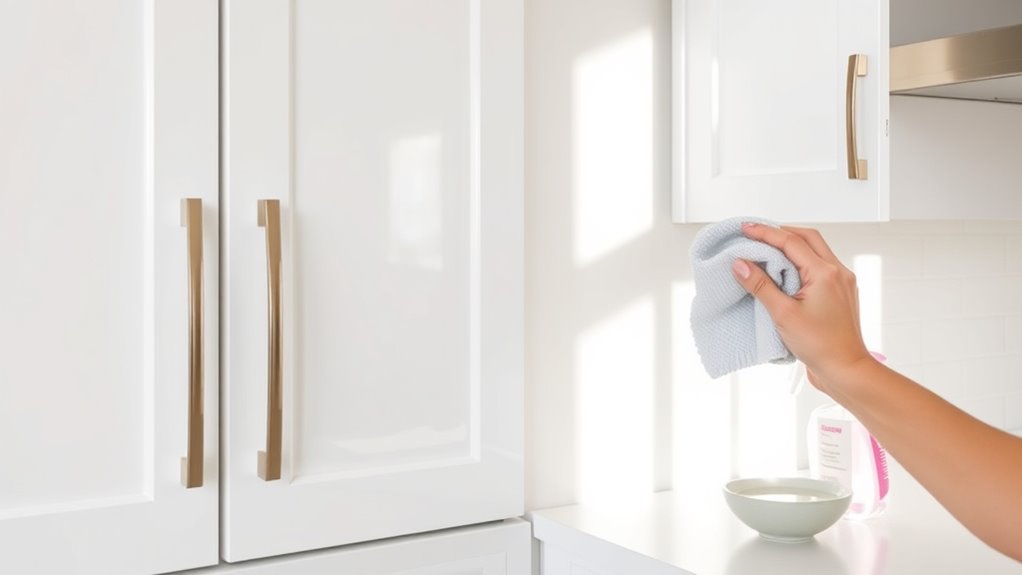
Before you start cleaning your painted kitchen cabinets, it’s important to prepare them properly to avoid damage. First, clear off all items from the surfaces so you have easy access.
Next, dust the cabinets with a soft cloth or a gentle brush to remove loose dirt and cobwebs. This helps prevent scratching during cleaning. If your cabinets have handles or knobs, remove them to clean thoroughly and prevent water from seeping into hardware.
Cover nearby countertops with a drop cloth or towels to catch drips. Finally, make sure the area is well-ventilated by opening windows or turning on a fan. Proper preparation creates a safe, effective environment for cleaning, helping your cabinets stay beautiful and protected.
Choosing Gentle Cleaning Products for Painted Cabinets
When cleaning your painted cabinets, go for gentle solutions that won’t harm the finish.
Steer clear of harsh chemicals like bleach or ammonia, as they can cause discoloration or peeling.
Instead, use mild soap or specially formulated cabinet cleaners to keep your cabinets looking their best.
Gentle Cleaning Solutions
Choosing the right cleaning products is key to protecting your painted kitchen cabinets. Harsh chemicals can damage the finish, so it’s best to opt for gentle solutions that clean without stripping or dulling the paint.
A safe, effective choice is mild dish soap mixed with water. You can also try a mixture of equal parts water and white vinegar for a natural clean. Just remember to test a small area first.
Avoid abrasive cleaners or scrubbing pads that can scratch the surface. Stick with tools like microfiber cloths and soft sponges for a gentle, effective clean.
Here’s a quick guide:
| Product Type | Best Use |
|---|---|
| Mild Dish Soap | Daily cleaning, gentle on paint |
| White Vinegar & Water | Natural, good for grease and grime |
| Microfiber Cloth | Non-abrasive, smooth cleaning |
| Soft Sponge | Light scrubbing, avoid scratches |
Avoid Harsh Chemicals
Using harsh chemicals can quickly damage the delicate finish on your painted kitchen cabinets. Strong cleaners like bleach, ammonia, or abrasive scrubs may strip away paint or cause discoloration.
Instead, opt for gentle, pH-balanced products designed for painted surfaces. Mild dish soap mixed with warm water works well for routine cleaning, breaking down grease without harming the finish.
Always check labels to verify the cleaner is safe for painted cabinetry. Avoid mixing cleaners or using excessive amounts, as this can cause streaks or damage.
Test any new product on a small, hidden area first. By choosing gentle cleaning products, you protect your cabinets’ appearance and extend their lifespan.
This keeps your kitchen looking fresh and well-maintained over time.
The Right Way to Clean Painted Kitchen Cabinets
To effectively clean painted kitchen cabinets, use gentle methods that won’t damage the finish. Start by dusting the cabinets with a soft cloth or microfiber duster to remove loose dirt and debris.
Next, mix a small amount of mild dish soap with warm water. Dip a soft sponge or cloth into the solution, then wring it out well to prevent excess moisture.
Gently wipe the cabinet surfaces, following the grain, to lift grime without scratching. Avoid harsh scrubbing or using abrasive pads, which can damage the paint.
After cleaning, rinse the cloth with clean water and wipe again to remove any soap residue. Finally, dry the cabinets thoroughly with a soft towel to prevent water spots and keep the finish looking fresh.
How to Remove Common Stains Without Damaging the Finish
After thoroughly cleaning your painted cabinets, you might still see some common stains like coffee, grease, or water spots. To remove these without damaging the finish, gently blot the stain with a soft, damp cloth—avoid scrubbing, as that can wear down the paint.
For greasy stains, mix a little dish soap with warm water and apply it with a soft sponge, then rinse with clean water. For water spots or light stains, use a mixture of equal parts white vinegar and water. Apply with a cloth and wipe gently.
Always test any cleaning solution on a small, hidden area first to make sure it won’t damage the paint. Finish by wiping with a clean, dry cloth to prevent streaks or residue.
Tips to Protect Your Paint After Cleaning
Once you’ve cleaned your painted kitchen cabinets, protecting the fresh finish is key to keeping them looking their best. First, steer clear of harsh scrubbing or abrasive cleaners that could damage the paint. Instead, opt for gentle, non-abrasive products and soft cloths to prevent scratches.
Applying a clear sealant or protective wax can help shield the paint from future stains and moisture. Be sure to wait a few days after cleaning before exposing the cabinets to heavy use, giving the paint time to cure fully.
Regularly dust the surface with a soft cloth to maintain its shine and prevent buildup. Also, consider using placemats or coasters to minimize direct contact with spills and water.
These simple steps will help extend the life of your painted cabinets and keep them looking fresh longer.
What to Do If Your Paint Gets Damaged During Cleaning
Even with careful cleaning, accidents can happen, and your paint might get scratched, chipped, or peeled. If that occurs, don’t panic. Start by gently cleaning the damaged area with a soft cloth and mild soap to remove dust or grease. Once dry, assess how bad the damage is.
For small chips or scratches, you can usually just touch up with matching paint or a touch-up kit. Use a fine brush for precise application and let it dry completely before using the area again. If the damage is larger, you might need to lightly sand the area with fine-grit sandpaper before applying primer and paint.
Always choose paint that matches your cabinet’s finish to get the best results. Taking these steps quickly can help restore your cabinets’ look and stop the damage from getting worse.
How to Maintain Your Cabinets and Keep Them Looking Fresh
Regular maintenance is key to keeping your painted kitchen cabinets looking fresh and vibrant. To do this, regularly wipe down surfaces with a soft cloth and a gentle cleaner to remove dust, grease, and fingerprints. Avoid harsh abrasives that can scratch or damage the paint.
Check for signs of wear or chips, and touch up small areas with matching paint to prevent further deterioration. Keep cabinet handles and knobs clean and tight to prevent buildup and loosened hardware.
Use coasters and placemats to protect surfaces from moisture and heat. Proper ventilation helps prevent moisture buildup, which can cause paint to peel or blister.
Frequently Asked Questions
How Often Should I Clean My Painted Kitchen Cabinets?
You should clean your painted kitchen cabinets at least once a month to keep them looking fresh and prevent grime buildup.
If you cook often or notice grease and stains, cleaning them more frequently is a good idea.
Use a gentle cleaner and a soft cloth to avoid damaging the paint. Regular cleaning helps keep the finish in great shape and makes sure your cabinets stay beautiful and hygienic.
Can I Use a Sponge or Scrub Brush on Painted Cabinets?
Think of your painted cabinets as delicate glass—you need gentle tools to avoid scratches. You can use a sponge or a soft scrub brush, but make sure they’re non-abrasive.
Dampen them with warm, soapy water and gently scrub. Avoid harsh scrubbing or steel wool, which can damage the paint.
Always test a small area first to make sure the brush or sponge won’t harm the finish.
Are There Any Natural Cleaning Remedies Recommended for Painted Surfaces?
Yes, there are natural cleaning remedies you can use on painted surfaces.
You can mix equal parts of water and white vinegar for a gentle, effective cleaner that cuts through grease and grime.
Add a few drops of lemon juice for a fresh scent. Use a soft cloth or sponge to gently wipe the surface, avoiding abrasive materials that could damage the paint.
Always test a small area first to guarantee safety.
How Do I Handle Peeling or Chipping Paint During Cleaning?
Peeling or chipping paint isn’t just a minor annoyance, it’s like discovering a hidden treasure map!
Start by gently scraping away loose paint with a soft brush or putty knife. Then, clean the area with a mild, natural cleaner—avoid harsh scrubbing.
If the chips are significant, sand the edges smoothly, prime the area, and carefully repaint. This keeps your cabinets looking beautiful and damage-free, ready to impress for years to come.
What Long-Term Maintenance Tips Help Preserve Cabinet Paint?
You should regularly dust your cabinets with a soft cloth to prevent dirt buildup. Wipe spills immediately with a damp cloth, then dry thoroughly.
Use gentle cleaning solutions and avoid harsh chemicals to protect the paint. Consider applying a quality sealant or wax once a year to boost durability.
Also, avoid excessive moisture and rough scrubbing, as these can damage the paint over time. Proper care keeps your cabinets looking fresh for years.
Conclusion
Just like a master painter restores a faded masterpiece, your gentle care keeps your kitchen cabinets looking their best.
By following these simple steps, you protect your investment and preserve their beauty for years to come.
Remember, a little care today prevents a costly redo tomorrow. Your kitchen’s charm is worth the effort.
Keep your cabinets vibrant and inviting by cleaning them safely and regularly.
Turning everyday cleaning into a heartfelt act of love for your home helps maintain their appearance and longevity.
Using proper cleaning methods ensures your painted kitchen cabinets stay beautiful and safe for everyone.