10 Steps to Clean Greasy Kitchen Cabinets Effortlessly
Many people struggle with greasy kitchen cabinets, especially after cooking hearty meals or frying foods. It can feel overwhelming to keep them looking fresh and clean, but you’re not alone in this challenge.
Luckily, there are simple and effective ways to tackle the grime effortlessly.
To clean greasy kitchen cabinets effortlessly, start by evaluating how greasy they are and gather gentle cleaning supplies like dish soap and a soft cloth.
Prepare your kitchen for safe cleaning by clearing surfaces and protecting electrical outlets.
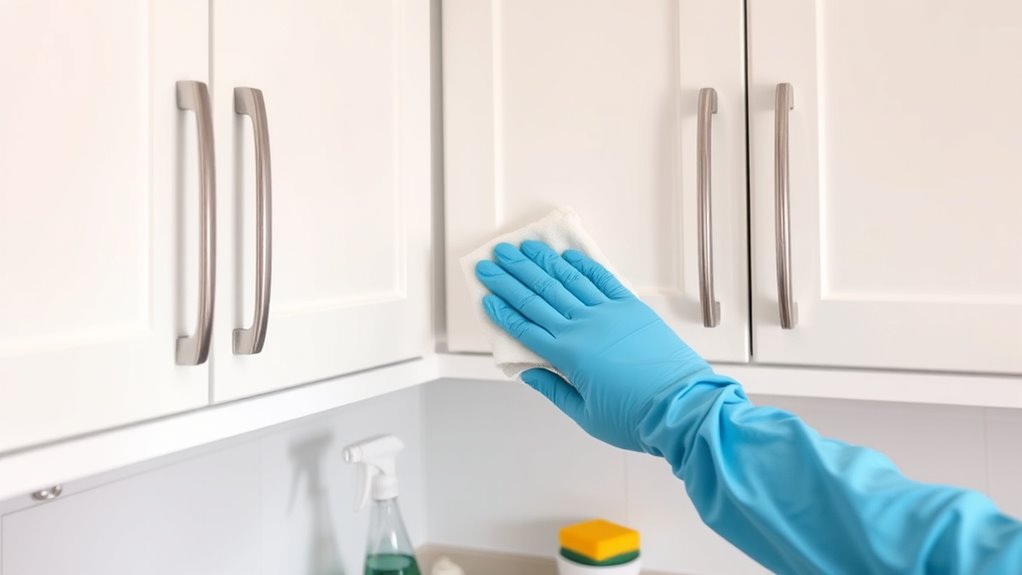
Use a grease-busting solution and clean from top to bottom, focusing on handles and corners.
Rinse, dry, and apply a polish or sealant for extra protection.
Regular maintenance prevents future buildup—continue exploring these steps for a sparkling clean kitchen.
Key Takeaways
- Assess grease buildup to see if you just need a quick wipe or if a deeper clean is necessary.
- Gather gentle cleaning supplies like dish soap, vinegar, a soft sponge, and microfiber cloths.
- Start cleaning from the top and work your way down. Focus on handles, edges, and corners to get rid of all the grease.
- Dry the cabinets completely after cleaning. Then, apply a protective sealant or polish to keep them shiny and protected.
- To keep them looking great, wipe down your cabinets weekly and clean up spills right away.
Assess How Greasy Your Kitchen Cabinets Are
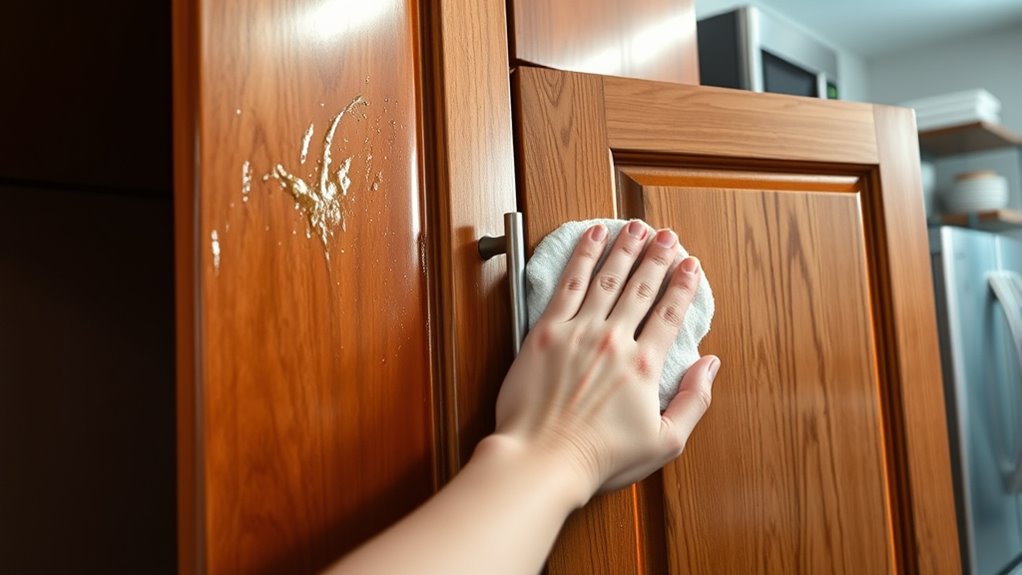
How do you know if your kitchen cabinets need a good cleaning? Just look at them. If they’re covered in a greasy film, with streaks or splatters, it’s time to take action.
Wipe a small area with a damp cloth. If it picks up grime easily, your cabinets are greasy. You might notice a sticky or shiny surface, especially near the stove or sink.
If grease has built up over time, it can attract dust and dirt, making your cabinets look dull and unkempt. Don’t ignore these signs; the longer grease sits, the harder it is to remove.
Checking their condition helps you decide whether a quick wipe-down or a deep clean is needed. This way, your cabinets stay fresh and well-maintained.
Gather Supplies for Cleaning Greasy Cabinets
Before you start cleaning, gather all the supplies you’ll need to tackle greasy kitchen cabinets effectively. Having everything on hand makes the process smoother and quicker.
First, get a gentle dish soap or a degreasing cleaner designed for kitchens. You’ll also need a soft sponge or microfiber cloth to avoid scratching surfaces.
Finally, grab a bucket of warm water for rinsing and a dry towel for drying.
Having these supplies ready guarantees you won’t interrupt your cleaning midway. Stick to gentle, non-abrasive products to protect your cabinets’ finish while effectively removing grease buildup.
Prepare Your Kitchen for Safe Cleaning
Clearing your workspace is the first step to guarantee a safe cleaning process. Remove dishes, utensils, and small appliances from your countertops and nearby areas. This keeps things organized and helps prevent accidents.
Next, make sure the area is well-ventilated by opening windows or turning on the exhaust fan. It helps disperse fumes from cleaning products and reduces inhalation risks.
Ensure proper ventilation by opening windows or using an exhaust fan to safely disperse cleaning fumes.
Cover nearby electrical outlets and switches with painter’s tape or unplug appliances to avoid electrical hazards. If you’re working near sensitive surfaces or items, protect them with drop cloths or towels.
Finally, gather all your cleaning tools and solutions in one place. Being prepared makes your cleaning safer and more efficient.
Make a Grease-Busting Cleaning Solution
To effectively remove grease buildup from your kitchen cabinets, you’ll want a powerful cleaning solution that cuts through stubborn grime. A simple but effective mix includes dish soap, white vinegar, and warm water.
Dish soap breaks down grease, while vinegar dissolves mineral deposits and grime. Warm water helps everything blend smoothly without damaging your surfaces. For extra strength, add a teaspoon of baking soda for more scrubbing power.
Mix these ingredients in a spray bottle or bucket to create your grease-busting solution. It’s safe, affordable, and works well on most cabinet finishes.
Use a soft cloth or sponge to apply the solution, making sure to cover all greasy areas thoroughly. Just be gentle to avoid scratching your cabinets.
Start Cleaning From the Top Down
Starting your cleaning from the top guarantees that dust, cobwebs, and grime don’t fall onto already cleaned surfaces below. Begin by removing any items from the top shelves or cabinet tops.
Use a duster or microfiber cloth to wipe away dust and cobwebs. If there are stubborn cobwebs, a vacuum with a brush attachment works well. Once the top surfaces are clear, wipe them with your cleaning solution to remove grease and dirt.
Use a microfiber cloth or vacuum with a brush attachment for stubborn cobwebs and dust removal.
Don’t forget to clean the edges and corners where grime tends to accumulate. By working downward, you prevent re-soiling previously cleaned areas and make the process more efficient.
This systematic approach assures every inch of your cabinets gets thoroughly cleaned without unnecessary backtracking.
Focus on Handles, Corners, and Edges
Focusing on handles, corners, and edges ensures no dirt or grime hides in those hard-to-reach spots. These areas often collect grease and dust, so paying attention to them guarantees a thorough clean.
Start by removing handles and knobs, then clean them separately with warm, soapy water. Use a small brush or toothbrush to scrub corners and edges where dirt tends to settle.
Wipe down the edges of cabinet doors with a damp cloth to catch any buildup. This targeted approach prevents residue from spreading and keeps your cabinets looking fresh.
- Remove handles for a deep clean
- Use a toothbrush for corners and edges
- Wipe edges with a damp cloth to remove grime
Rinse and Dry the Cabinets Thoroughly
After you’ve scrubbed the cabinets thoroughly, it’s important to rinse away any remaining cleaning residue to avoid streaks or buildup. Use a clean, damp cloth or sponge with plain water to wipe down all surfaces.
Make sure to go over every area, including corners and edges, to remove any soap or cleaner residue. Take your time and rinse thoroughly—leftover soap can make cabinets look dull or sticky over time.
Once rinsed, grab a dry microfiber cloth or towel and wipe the cabinets dry. This step ensures no moisture is left behind, which can cause water spots or damage the finish. Proper rinsing and drying leave your cabinets clean, fresh, and ready for the next step in your cleaning routine.
Restore Shine With Cabinet Polish or Sealant
To restore the shine and protect your cabinets, apply a high-quality cabinet polish or sealant. This step revives the surface, giving your cabinets a fresh, glossy look while creating a barrier against future grease and dirt buildup. Pick a polish suited for your cabinet material, whether it’s wood, laminate, or painted surfaces.
Before applying, make sure the cabinets are completely dry and dust-free. Use a soft cloth to evenly spread the polish or sealant, following the product instructions.
Test a small area first to check for compatibility. Use a microfiber cloth for a streak-free finish. Apply in gentle, circular motions for even coverage.
Maintain Your Cabinets to Prevent Grease Buildup
To keep grease from building up, stick to a regular cleaning schedule to remove messes early.
Applying protective coatings or sealants can create a barrier that makes future cleaning easier.
Consistent maintenance helps your cabinets stay clean and looking new longer.
Regular Cleaning Schedule
Establishing a regular cleaning schedule is key to keeping your kitchen cabinets looking their best and preventing grease buildup. Being consistent helps you catch messes early and stops grime from becoming stubborn.
Try to wipe down your cabinets at least once a week to keep them looking fresh and hygienic. Pick a specific day and time each week for cleaning so it becomes part of your routine.
Use a gentle, effective cleaner that’s suited for your cabinet finish. Quickly deal with splatters and spills before they harden, making them easier to remove.
Sticking to this routine not only preserves your cabinets’ appearance but also reduces the effort needed for deep cleaning later. Staying consistent makes the task less overwhelming and keeps your kitchen looking great.
Use of Protective Coatings
Applying protective coatings to your kitchen cabinets creates a barrier that prevents grease and grime from sticking strongly, making future cleaning much easier. These coatings, like clear sealants or varnishes, form a shield on the cabinet surface, reducing buildup.
Before applying, make sure your cabinets are clean and dry. Use a brush or roller to evenly spread the coating, following the manufacturer’s instructions.
Once dry, the surface becomes more resistant to oil, dirt, and moisture. This helps keep your cabinets cleaner for longer and preserves their look.
Regularly reapply the coating as recommended to maintain its protective benefits. Investing in a protective layer makes ongoing maintenance easier and keeps your kitchen looking fresh with less effort.
Tips for Keeping Your Kitchen Cabinets Spotless
Keeping your kitchen cabinets spotless takes regular upkeep and smart habits. To keep them looking fresh, create simple routines that prevent grease buildup and stains.
Wipe down cabinets weekly with a gentle cleaner or a mix of soap and water to remove dust and splatters before they set in. Use liners or mats inside cabinets to catch crumbs and spills, making cleanup easier.
Avoid overcrowding cabinets to ensure proper air circulation, which helps reduce mold and odors. Wipe cabinet handles and knobs often to prevent grime from building up.
Clean spills immediately to prevent stains and sticky residues. Check regularly for any damaged or loose hardware and fix it to keep everything looking tidy.
Frequently Asked Questions
How Often Should I Clean My Greasy Kitchen Cabinets?
You should clean your greasy kitchen cabinets at least once a month to prevent buildup. If you cook often or notice grease building up faster, try cleaning every two weeks.
Regular cleaning keeps your cabinets looking fresh and stops stubborn grease from setting in. Use a gentle cleaner and a soft cloth to avoid damaging the finish.
Staying consistent with your cleaning schedule makes the process easier and keeps your kitchen spotless.
Can Homemade Solutions Damage My Cabinet Finish?
Imagine your cabinets shining like a mirror after a gentle clean—that’s what homemade solutions can do if used correctly. Usually, they won’t damage your finish if you avoid harsh ingredients like bleach or ammonia.
Stick to mild soap, vinegar, or baking soda, and always test a small area first. This way, you protect your cabinets’ beauty while effectively removing grease without risking any harm.
Are There Eco-Friendly Cleaning Options for Greasy Cabinets?
Yes, there are eco-friendly options you can use to clean greasy cabinets. You might try mixing equal parts of white vinegar and water, which effectively breaks down grease without harsh chemicals.
Alternatively, a paste made from baking soda and water works well. These natural solutions are safe for your family and the environment, and they leave your cabinets clean without risking damage to the finish.
How Do I Remove Stubborn Grease Stains Effectively?
To remove stubborn grease stains effectively, start by mixing equal parts of white vinegar and water in a spray bottle. Spray the solution generously onto the stain and let it sit for 5-10 minutes.
Then, use a soft sponge or cloth to scrub gently. If needed, add a small amount of baking soda to help break down tough grease. Rinse with clean water and dry thoroughly for a spotless finish.
What Signs Indicate My Cabinets Need Professional Cleaning?
You’ll notice your cabinets need professional cleaning when grease buildup becomes stubborn despite regular cleaning, or if they look dull and sticky.
If you see darkened, greasy patches or persistent odors, it’s a sign that professional attention is needed.
Also, if cleaning takes more effort or the grime keeps returning quickly, it’s time to call in experts.
Regular professional cleaning can restore their shine and prevent long-term damage.
Conclusion
Keeping your kitchen cabinets spotless might seem like a chore, but with these simple steps, it’s manageable. Think of it as a quick detox for your space—removing grease and grime just like clearing clutter from your mind.
When you tackle the mess, you’ll enjoy a cleaner, brighter kitchen and a sense of accomplishment. It’s the small act of care that transforms your space from chaos to calm.
This makes cooking and cleaning a little more joyful, especially when your kitchen cabinets are clean and grease-free. Regular maintenance with these tips will help keep your kitchen looking fresh and inviting.