7 Simple Steps to Snake Your Kitchen Sink Like a Pro
Dealing with a clogged kitchen sink can be frustrating and messy, and you’re not alone in facing this common problem. Many people struggle with stubborn blockages that disrupt daily routines.
Luckily, you can tackle this issue like a pro with a few simple steps.
To snake your kitchen sink like a pro, start by understanding common causes of clogs like grease, hair, and food buildup.
Gather your drain snake, safety gear, and set up a clear workspace.
Remove the drain trap, then gently insert and rotate the snake to break up the blockage.
Clear any debris, test the flow, and maintain your drain with regular habits.
Keep going to master these steps and guarantee your sink stays clog-free.
Key Takeaways
- Gather and inspect a drain snake, wearing gloves and safety gear for protection.
- Clear the workspace and place a bucket or towels under the drain.
- Gently insert the snake into the drain, turning it as you go to navigate bends and reach the clog.
- Pull out any debris you find, then run hot water to flush everything through.
- Test the drainage to see if it’s clear. If not, repeat the process until it’s flowing smoothly.
- To keep your drains clear, clean them regularly, use covers, and avoid pouring grease down the sink.
What Causes Kitchen Sink Clogs and How Do You Fix Them?
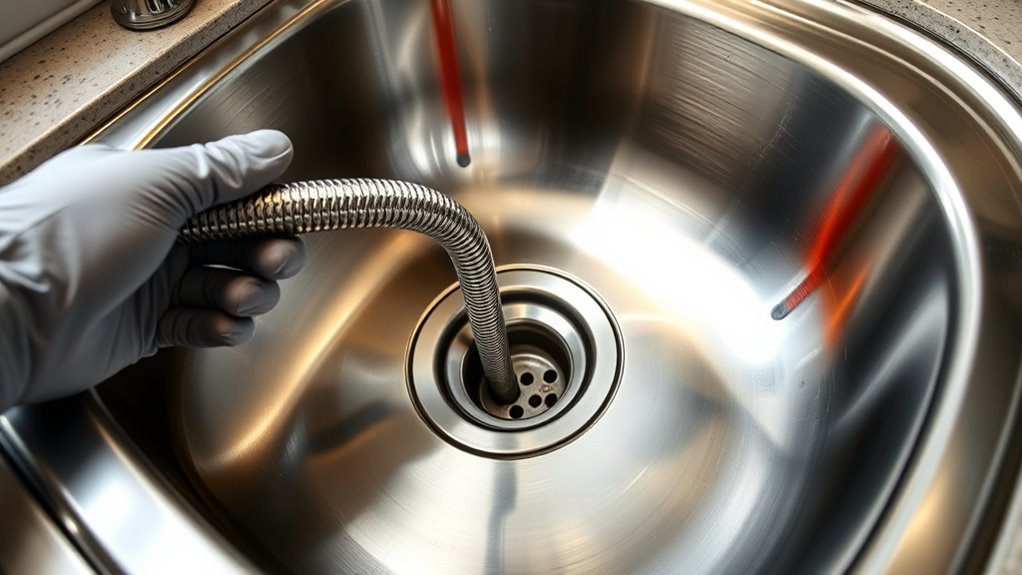
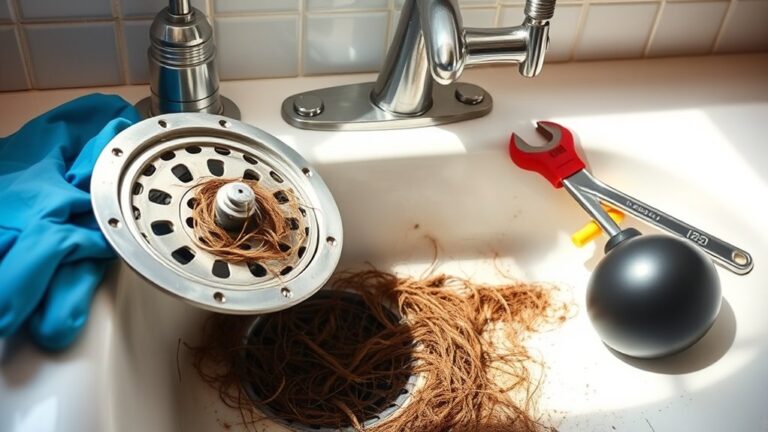
Kitchen sink clogs often happen because of common everyday habits. When you rinse greasy dishes or pour coffee grounds down the drain, you unknowingly contribute to buildup.
Hair, soap scum, and food particles also accumulate over time, narrowing the pipe’s passage. Flushing non-degradable items like paper towels or wipes makes the problem worse.
To fix these clogs, start by running hot water to loosen debris. Pouring a mixture of baking soda and vinegar can help break down organic buildup.
If that doesn’t work, using a drain snake can manually remove the blockage. Regularly clearing your drain and avoiding habits that cause buildup can prevent future clogs.
With proper care, you can keep your sink flowing smoothly and avoid costly repairs.
Gather Your Drain Snake and Safety Gear
Before you start snaking the drain, gather your drain snake and safety gear to make sure you’re prepared. Having everything ready saves time and helps avoid accidents.
Gather your tools and safety gear first for a safer, smoother drain snaking experience.
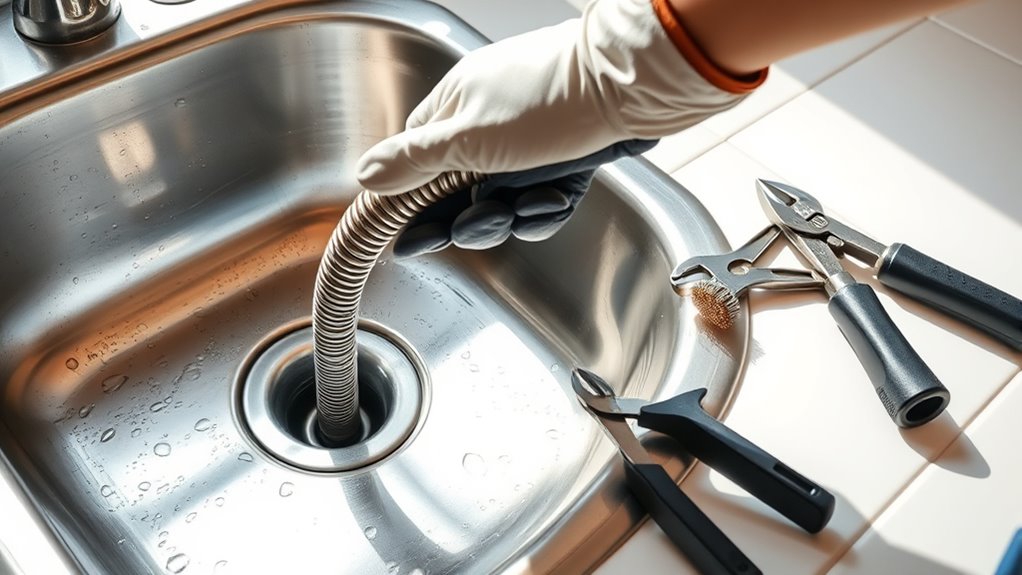
Grab your drain snake—whether it’s manual or powered—and check that it’s in good working condition. Safety gear is just as important: wear sturdy gloves to protect your hands and safety goggles to shield your eyes from splashes.
Keep a towel or rag nearby for quick cleanup, and use a flashlight if the lighting is poor. Make sure your workspace is clear so you can move freely.
Preparing your tools and safety supplies beforehand helps you focus on the task without interruptions. Being ready ensures you can work efficiently and safely, making the whole process smoother and less stressful.
Set Up Your Workspace for Safe Snaking
Before you start snaking, clear the area around your sink to prevent accidents.
Gather all necessary tools and your safety gear so you stay protected throughout the process.
Make sure your workspace is organized and ready for safe, efficient work.
Clear the Area
Clearing the area around your sink is an essential first step to ensure a safe and effective snaking process. You don’t want anything in the way that could cause accidents or make the job harder.
Move dish soap, sponges, and dish racks out of reach. Make sure towels or rugs nearby are out of the way to prevent slipping.
Put a bucket or towel underneath the sink trap to catch any drips or debris. Finally, clear the countertop around the sink to give yourself enough room to work comfortably.
- Remove dishes and utensils from the sink
- Tuck away cleaning supplies and sponges
- Place a bucket or towels underneath the drain
- Clear the surrounding countertop for easy access
Gather Necessary Tools
To set yourself up for success, gather all the necessary tools you’ll need for snaking the drain. Start with a plumber’s snake or drain auger, which is essential for breaking up clogs.
Have a pair of channel-lock pliers handy to grip or turn fittings if needed. A bucket or large container will catch water and debris during the process.
Keep a few rags or towels nearby to wipe up spills. A flashlight can help you see inside the pipe, especially in dark areas.
You might also want a drain brush or a small hook to clear minor blockages. Organizing these tools in your workspace guarantees you’re prepared and makes the snaking process smoother and safer.
Wear Protective Gear
Wearing protective gear is essential to keep yourself safe while snaking the drain. It helps prevent contact with dirty water, debris, and potential splashes that could irritate or injure you.
Before you get started, put on gloves to protect your skin from bacteria and sharp objects. Safety goggles are also a smart choice to shield your eyes from splashes.
Consider wearing a long-sleeved shirt or apron to keep your clothes clean. If you’re working in a tight space, a dust mask can help you avoid inhaling unpleasant odors or airborne particles.
Remove and Inspect the Drain Trap
Before you can effectively clean your sink drain, you need to remove and inspect the drain trap. First, place a bucket or container underneath to catch any water or debris.
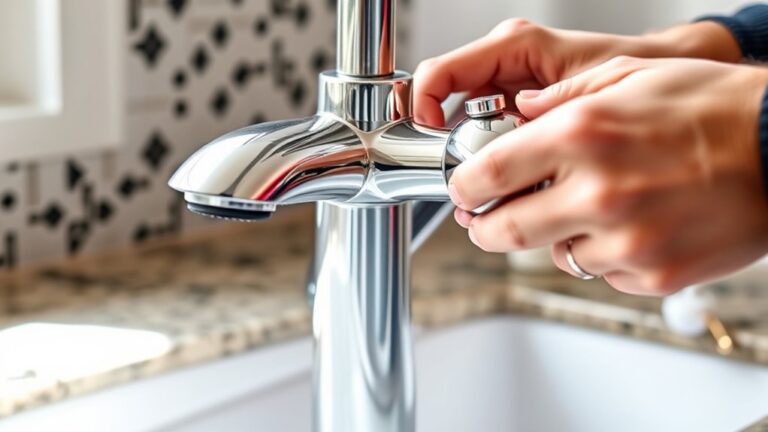
Unscrew the slip nuts holding the trap in place using a wrench or your hands. Carefully lower the trap and check for clogs, hair, or grease buildup inside.
Look for cracks or damage that could cause leaks. Clean the trap thoroughly with a brush or rinse it with warm water. If it’s damaged, replace it before reassembling.
Inspect the surrounding pipes for any blockages or buildup. Once everything looks clear and in good condition, reattach the trap tightly.
This step guarantees your drain is clean and ready for the next stage of snaking.
How to Use a Drain Snake Effectively
To use a drain snake effectively, start by choosing the right size and type for your clog.
Gently insert the snake, turning it slowly to avoid damaging your pipes.
Keep a steady grip as you rotate and pull out the snake to clear the blockage completely.
Choosing the Right Tool
Choosing the right drain snake can make all the difference when clearing a clogged sink. First, think about the size of the drain and how severe the clog is. Small hand snakes work well for minor blockages, while augers are better for stubborn clogs.
Consider your comfort level and strength too. A flexible, lightweight tool is easier to maneuver and control. Also, look at the material—metal snakes are durable, but plastic ones are gentler on pipes.
Finally, match the tool to your specific needs. For example, choose a curved or straight snake depending on the pipe shape. Here are some options:
- Handheld augers for light clogs
- Manual drain snakes for moderate blockages
- Power augers for tough, stubborn clogs
- Flexible, lightweight tools for easy handling
Proper Snake Insertion Technique
Once you’ve chosen the right drain snake, inserting it properly is key to clearing the clog effectively. Start by slowly feeding the snake’s tip into the drain opening, making sure it stays aligned with the pipe.
Apply gentle pressure as you push it in, but don’t force it if you meet resistance. If it resists, try rotating the snake slightly to help it navigate around bends.
Keep feeding until you feel resistance or reach the clog. Be patient and steady—rushing can cause damage or push the clog further down.
Keep the snake straight as you insert it and stay in control. Once it’s properly in place, you’re ready to break up or hook onto the clog.
Proper insertion ensures maximum contact and makes your cleaning process more effective.
Effective Rotation and Retrieval
After inserting the snake properly, focus on rotating and retrieving it to break up or hook onto the clog effectively. Use steady, clockwise turns to latch onto debris or loosen the blockage.
Keep a firm grip and avoid applying excessive force, which could damage your pipes. As you rotate, gently pull back to see if the clog starts to move or break apart.
When you feel resistance, pause and rotate again to dislodge it further. Remember these tips for effective retrieval:
- Maintain a slow, consistent rotation
- Avoid forcing the snake if resistance is strong
- Pull back gently to check for loosened debris
- Repeat until the clog clears or you feel no more resistance
This method helps you get the most out of your snake without risking damage to your pipes.
Clear Debris and Test Your Sink’s Flow
Debris buildup is a common cause of slow or clogged sinks. To clear it, remove any visible gunk from the drain opening. Use a flashlight if needed to see inside.
Once clear, run hot water for a minute to help loosen any remaining debris. Afterward, test your sink’s flow by running water and watching how smoothly it drains.
If the water clears quickly and without hesitation, you’ve successfully restored proper flow. If it still drains slowly or backs up, try repeating the process or use a plunger for stubborn blockages.
Cleaning debris and testing your sink’s flow not only keeps your drain clean but also helps prevent future clogs. Regular maintenance like this keeps your sink running smoothly and can save you from bigger plumbing problems later on.
Tips to Prevent Future Clogs and Keep Your Sink Flowing
To prevent future clogs and keep your sink flowing smoothly, simple habits can make a big difference. Regularly scraping food scraps into the trash instead of the sink helps reduce buildup.
Use a drain cover to catch hair, soap scum, and debris before they reach the pipes. Periodically flush your drain with hot water or a mixture of baking soda and vinegar to clear minor blockages.
Avoid pouring grease or oil down the drain, as they solidify and trap debris. Also, run hot water after each use to help wash away residues.
Frequently Asked Questions
Can I Use Household Items to Clear a Clogged Sink?
Yes, you can often use household items to clear a clogged sink. Try pouring hot water down the drain to loosen the debris, or use a mixture of baking soda and vinegar to break up the clog.
A plunger can also be effective for dislodging blockages. Just make sure to create a good seal and give it a few firm pushes.
Avoid harsh chemicals, as they can damage your pipes over time. If these methods don’t do the trick, consider using a drain snake or calling a professional plumber.
How Often Should I Snake My Kitchen Sink?
Did you know that homeowners typically snake their kitchen sink once every 1 to 2 years?
You should snake your sink when you notice slow draining or foul odors, usually every 6 to 12 months, depending on how much you use it. Regular snaking helps prevent buildup and clogs, saving you money on repairs.
Keep an eye on how your sink performs, and don’t hesitate to snake it proactively. This will help maintain smooth drainage and avoid bigger problems down the line.
What Are Alternative Methods to Clear Stubborn Clogs?
You can try using a plunger to loosen stubborn clogs, which often works well for minor blockages. Baking soda and vinegar can also break down buildup; pour them down the drain, let sit, then flush with hot water.
Furthermore, a wire hanger shaped into a hook helps dislodge debris. If these methods fail, consider enzyme drain cleaners or professional help to avoid damaging your pipes.
Is It Safe to Use Chemical Drain Cleaners?
Chemical drain cleaners are like wildfire—they can quickly clear a clog, but they also pose risks. You might damage your pipes or harm the environment if used improperly.
If you decide to use them, wear gloves and goggles, and follow instructions carefully. However, safer methods, like snaking your drain or using natural remedies, often do the trick without the potential hazards.
Think of it as choosing a gentle rain over a storm.
How Do I Know When to Call a Professional Plumber?
You should call a professional plumber when your sink stays clogged even after trying to snake it yourself or if you notice persistent slow drainage and foul odors.
Also, avoid attempting repairs if you see extensive pipe damage or suspect a major plumbing issue. It’s better to leave those to the pros.
Trust a plumber when you’re unsure about handling complex problems. This helps prevent further damage, ensures safety, and guarantees a lasting fix.
Conclusion
With your drain snake in hand, you’ve become the architect of a smooth-flowing stream in your kitchen. Think of your sink as a garden hose—clear and free of obstructions, ready to deliver water’s life-giving flow.
By mastering these simple steps, you’re not just unclogging a drain. You’re clearing a path for effortless chores and a kitchen that runs as smoothly as a well-oiled machine.
Keep this rhythm, and your sink will sing with ease for years to come. When you snake your kitchen sink using these tips, you’ll ensure your drain stays clear and your plumbing stays happy.