Key Parts of the Oven and Their Functions
Are you tired of guessing whether your food is cooked just right or constantly worried about uneven results? You’re not alone—many people struggle with understanding how their ovens work and how to get the best cooking experience.
Knowing the key parts of your oven can make a huge difference in achieving perfect meals every time.
Your oven’s key parts include heating elements that generate warmth by resistive heating, while the thermostat maintains the desired temperature by regulating these elements.
The oven door and window help you monitor progress and prevent heat loss, and racks position food for even cooking.
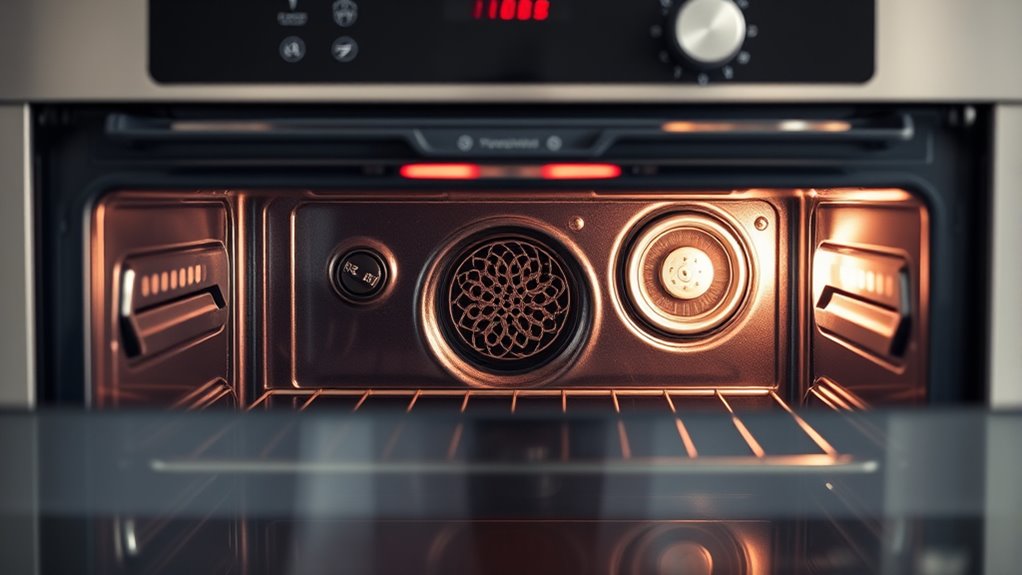
The convection fan guarantees heat circulates evenly, and safety features like gas ignitors and sensors prevent accidents.
If you want to understand how all these parts work together, there’s more to uncover ahead.
Key Takeaways
- Heating elements turn electrical energy into heat, helping the oven stay at a consistent temperature.
- The thermostat keeps things in check by cycling the heating elements on and off to maintain your desired heat level.
- Oven door seals are essential—they trap heat inside and prevent energy from escaping, so your food cooks efficiently.
- The convection fan blows hot air around evenly, which makes sure everything cooks uniformly and can even cut down cooking time.
- Safety features like gas ignition systems and thermal cut-offs are there to keep everything safe. They help prevent accidents and ensure safe operation.
How Do Ovens Work? An Overview of Basic Functionality
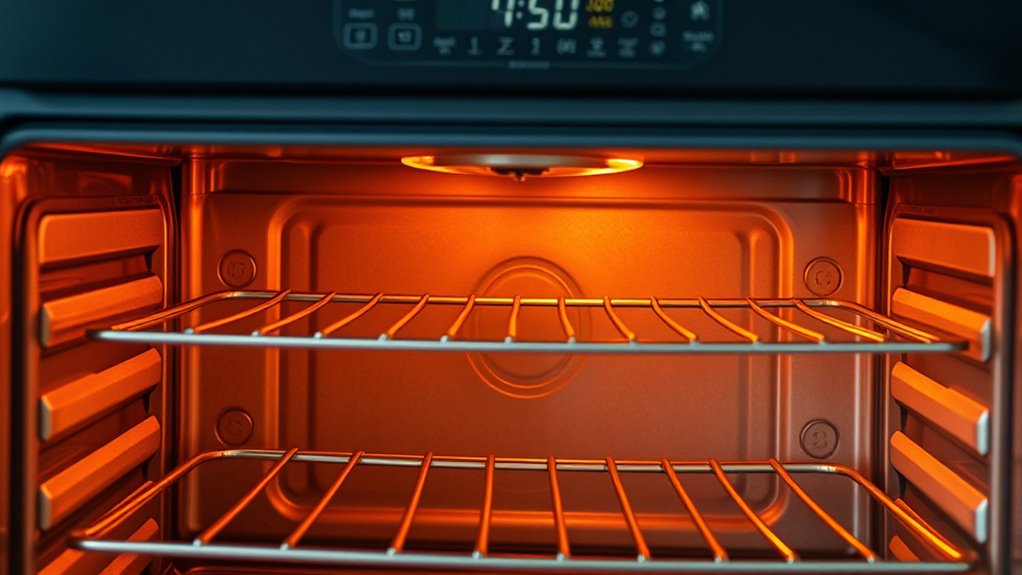
Ovens work by generating heat that cooks or bakes food inside a contained chamber. When you turn on the oven, an internal system heats the air and surfaces inside, creating a consistent environment for cooking.
The heat then transfers from the oven’s walls and rack surfaces directly to your food. As the temperature rises, moisture in the food evaporates, cooking it evenly from the outside in.
This process relies on the oven’s insulation, which keeps the heat contained and prevents energy loss. Temperature controls help you set the right heat level for different recipes.
The oven maintains a stable environment by cycling the heating elements on and off, ensuring your food cooks thoroughly without constant supervision.
How Heating Elements Generate Heat in Your Oven
When you turn on your oven, the heating elements become the main source of heat, turning electrical energy into thermal energy through resistive heating. Inside the element, electrical current flows through a thin wire or coil made of a high-resistance material like nichrome.
As the current faces resistance, it produces heat, causing the wire to glow red or orange. This heat radiates outward, warming the oven cavity. The design ensures quick, efficient heating and even heat distribution.
The heating elements are carefully calibrated to maintain consistent temperatures. As they heat up, they help cook your food evenly, making them essential for proper oven function. Their ability to convert electrical energy into heat is key to your oven’s performance.
What Does the Thermostat Do? Temperature Control Explained
Your oven’s thermostat controls the temperature by turning the heating elements on and off to keep the heat steady.
There are different types of thermostats, each with its own way of managing temperature.
If your oven isn’t heating properly, troubleshooting the thermostat can help identify and fix the issue.
How Thermostats Regulate Heat
A thermostat acts as the brain of your oven’s temperature control system, constantly monitoring the heat inside. When the temperature goes above your set point, it signals the heating element to turn off, preventing overheating.
If the temperature drops below your desired level, the thermostat activates the heating element to warm the oven back up. This on-and-off cycle keeps the temperature steady, helping your food cook evenly.
The thermostat relies on a sensor—often a bimetallic strip or thermistor—to detect temperature changes accurately. It keeps adjusting the heat to maintain a consistent temperature.
Types of Oven Thermostats
Oven thermostats come in several types, each designed to control temperature in different ways. Mechanical thermostats use a bimetallic strip that bends with temperature changes, turning the heating element on or off.
Digital thermostats rely on electronic sensors and provide precise temperature settings, often with digital displays. Capillary thermostats use a tube filled with a fluid that expands or contracts to regulate heat.
Some ovens feature programmable thermostats, allowing you to set specific temperature schedules. Each type offers unique advantages in accuracy, ease of use, and responsiveness.
Knowing which thermostat your oven uses can help you understand how it maintains consistent heat and how to operate it effectively.
Troubleshooting Temperature Issues
Understanding how your oven’s thermostat works is crucial for troubleshooting temperature problems. The thermostat controls the heat by sensing the internal temperature and turning the heating elements on or off to keep the set temperature.
If your oven isn’t heating properly or the temperature seems off, the thermostat might be faulty or miscalibrated. Start by checking if the temperature setting matches the actual oven temperature with an oven thermometer.
If there’s a mismatch, try recalibrating the thermostat if possible, or consider replacing it. Sometimes, dirt or debris on the sensor can give false readings. Making sure the thermostat is clean and working right can solve many temperature issues.
If problems continue, it may be best to call in a professional. They can diagnose and replace the thermostat if needed.
How the Oven Door and Window Keep Cooking Conditions Stable
Your oven door seals tightly to keep heat from escaping, which helps maintain a steady temperature inside.
The window allows you to check on your food without opening the door. This prevents temperature fluctuations that can happen when you open it.
Together, these features keep your cooking conditions stable and make your oven more efficient.
Seals Prevent Heat Loss
Seals around the oven door and window help keep the heat inside, making sure your food cooks evenly. They create an airtight barrier that prevents hot air from escaping.
Without good seals, heat leaks out, making the oven work harder and using more energy. Over time, seals can wear out or get damaged, which reduces their effectiveness.
Regularly checking and replacing worn seals keeps your oven running at its best. When the seals are in good shape, they help maintain a steady internal temperature.
This helps prevent temperature swings that can lead to undercooked or overcooked dishes. In short, good seals are essential for efficient and reliable oven performance.
Window Allows Monitoring
The oven door and window act as clear windows into the cooking process, so you can keep an eye on your food without opening the door. This helps maintain a stable temperature inside and prevents heat from escaping, which can mess with cooking times and results.
The glass window gives you a visual cue, making it easy to see if your dish needs more time or is ready. By avoiding unnecessary door openings, you keep the oven’s heat consistent for even cooking.
The window’s durability stands up to high temperatures and frequent use. Some ovens even have double or tempered glass for extra insulation.
Types of Oven Racks and How to Use Them Effectively
Oven racks come in different types, each made for specific cooking tasks to help you get better results.
Standard racks are versatile and good for most baking and roasting. Glide racks slide out smoothly, so you can check your food easily without tipping. Warming racks keep dishes warm without overcooking, while deeper racks are great for roasting larger items or multiple dishes at once.
Choose the right rack position for your recipe: higher for browning or broiling, middle for even cooking, and lower for slow roasting. Adjust the rack placement based on how you want your food to brown, cook faster, or handle larger items to get the best results.
How the Convection Fan Improves Cooking Performance
The convection fan helps your oven distribute heat more evenly, so your food cooks uniformly without hot spots.
It also speeds up cooking times, saving you time in the kitchen.
Even Heat Distribution
When you turn on the convection fan, it spreads hot air evenly throughout the oven. This helps ensure your food cooks consistently without cold spots or overcooked edges.
With even heat, baked goods rise properly and meats cook all the way through. The fan’s circulation also means you don’t have to rotate dishes during cooking, saving you time and effort.
Consider these key benefits:
- Prevents uneven cooking or baking
- Promotes consistent browning and texture
- Reduces cooking time by maintaining steady heat
- Ensures delicate items like soufflés rise evenly
Faster Cooking Times
Because the convection fan circulates hot air quickly around your food, it significantly cuts down cooking times compared to traditional ovens. This efficient air movement ensures heat reaches all parts of your dish evenly and fast.
As a result, you can prepare meals more quickly without sacrificing quality. The faster heat transfer means less waiting and more convenience, especially when you’re in a hurry.
You might notice your baked goods, roasts, and casseroles finish cooking sooner, saving energy and time. Plus, the consistent heat distribution helps prevent hot spots, so edges don’t overcook and centers stay perfectly cooked.
Using the Timer and Control Panel to Manage Your Cooking
Using the timer and control panel helps you manage your cooking more precisely, making sure your dishes come out perfect. You can set exact cooking times, adjust temperatures, and choose specific modes for different recipes. This control helps prevent overcooking or undercooking, saving you time and effort.
Here are four key ways to get the most out of your control panel:
- Set accurate cooking times so you don’t have to guess.
- Adjust temperature settings based on your recipe needs.
- Use preset modes for specialized cooking functions.
- Keep an eye on progress with digital displays for real-time updates.
Getting familiar with these functions will boost your confidence, improve your cooking accuracy, and help you get consistent results every time.
How Gas Oven Ignition Systems Work and Ensure Safety
Understanding how your gas oven ignites is key to ensuring safe and efficient cooking. When you turn on the oven, the ignition system generates a spark or heats a pilot light that ignites the gas.
Most modern ovens use an electric igniter, which produces a high-voltage spark near the gas burner. This spark ignites the gas quickly, so you can start cooking without delay.
Safety mechanisms are built in to prevent leaks or accidental ignitions. For example, if the flame goes out, the system automatically shuts off the gas supply, preventing dangerous buildup.
These systems are designed to be reliable, minimizing the risk of gas leaks or fires. So, you can cook confidently knowing your oven’s ignition system is working safely.
How the Interior Light Helps You Monitor Food
The interior light in your oven helps you keep an eye on your food without opening the door and losing heat. It makes checking your cooking progress quick and easy, so your dish doesn’t burn or stay undercooked.
With the light, you can spot bubbles or browning on baked goods to see if they’re done. You can also watch melting or bubbling in sauces and casseroles.
It helps you notice uneven cooking or hot spots inside the oven. Plus, using the light means fewer door openings, which keeps the heat in.
This simple feature saves you time and energy. It keeps your food cooking evenly and helps prevent accidents like opening a hot oven too soon. The interior light is a handy tool for precise, safe, and efficient cooking.
Key Sensors and Safety Features in Your Oven
Modern ovens come with key sensors and safety features to keep you safe and ensure great cooking results. These sensors keep an eye on temperature, humidity, and whether the oven door is closed properly.
For example, temperature sensors prevent overheating by turning off the heating elements if it gets too hot. Door sensors help avoid accidents and heat loss by making sure the door is fully closed.
Safety features like thermal cut-offs automatically shut the oven down if it overheats or malfunctions, reducing fire risks. Some ovens also have child safety locks that stop little hands from operating them accidentally.
All these sensors and safety systems work together to protect you while helping you achieve consistent, accurate cooking every time.
Troubleshooting Common Oven Problems and Key Parts
When your oven isn’t heating properly or behaves unpredictably, the first step is to check its key parts. Start with the heating element; if it’s broken or damaged, your oven won’t heat evenly.
Next, look at the temperature sensor. A faulty sensor can give incorrect temperature readings, causing your food to be under- or overcooked. The oven igniter, especially in gas models, must glow to ignite the gas. If it’s defective, the oven won’t heat at all.
Finally, inspect the control board for any signs of damage or failure. It manages all of the oven’s operations, so issues here can cause a range of problems.
Frequently Asked Questions
What Materials Are Commonly Used for Oven Racks and Why?
You’ll find oven racks made mostly of stainless steel, chrome-plated steel, or sometimes nickel. These materials are chosen because they resist rust, withstand high temperatures, and are easy to clean.
Stainless steel is durable and doesn’t warp, making it a popular choice. Chrome-plated steel offers a smooth surface that helps prevent food from sticking.
These materials guarantee your oven racks stay safe, durable, and functional during high-heat cooking.
How Does the Oven’s Safety Shut-Off Feature Operate?
You might think your oven’s safety shut-off is just a small feature, but it’s like having a superhero protecting your home! When the oven overheats or senses a fault, it instantly cuts power, preventing fires or damage.
This life-saving technology operates automatically, monitoring temperature levels continuously. It’s your oven’s way of saying, “Don’t worry, I’ve got this,” giving you peace of mind every time you cook.
Can Oven Parts Be Replaced or Repaired Easily?
Yes, many oven parts can be replaced or repaired, especially if you have some basic tools and skills.
Common parts like thermostats, heating elements, or door hinges are often designed for easy access and replacement.
However, some repairs might need a professional, especially if they involve electrical components or complex mechanisms.
Always follow safety guidelines, unplug the oven, and check the manufacturer’s instructions before trying any repairs.
What Is the Purpose of the Oven’s Cooling Fan?
Imagine a gentle breeze cooling a hot summer day—that’s what the oven’s cooling fan does. Its purpose is to regulate temperature by dissipating excess heat and preventing overheating of internal components.
This keeps your oven safe, efficient, and helps prevent damage. As you cook, the fan quietly hums, making sure the heat stays balanced.
That way, your dishes cook evenly without the oven getting too hot or risking internal damage.
How Do Different Oven Types Impact Cooking Times?
Different oven types can really change how long you need to cook. For example, convection ovens use fans to move hot air around, which helps food cook faster and more evenly.
Conventional ovens rely on radiant heat, so they often take a bit longer to do their thing. Microwave ovens heat food quickly using electromagnetic waves, cutting down cooking time a lot.
Induction ovens heat cookware directly, so they get hot fast and cook things quickly. Your choice depends on what you need, but knowing these differences can help you cook more efficiently.
Conclusion
By understanding the essential parts of your oven, from the heating elements to safety sensors, you can better troubleshoot, tame, and customize your baking experience. Knowing how each component works helps you achieve consistent cooking results.
Recognizing the role of each part ensures you avoid mishaps and master your meals with confidence. Keep key parts in mind, and you’ll have full control over your oven’s conditions.
Remember, a well-watched oven is a wonderful oven—especially when you understand its key parts and how they contribute to perfect baking.