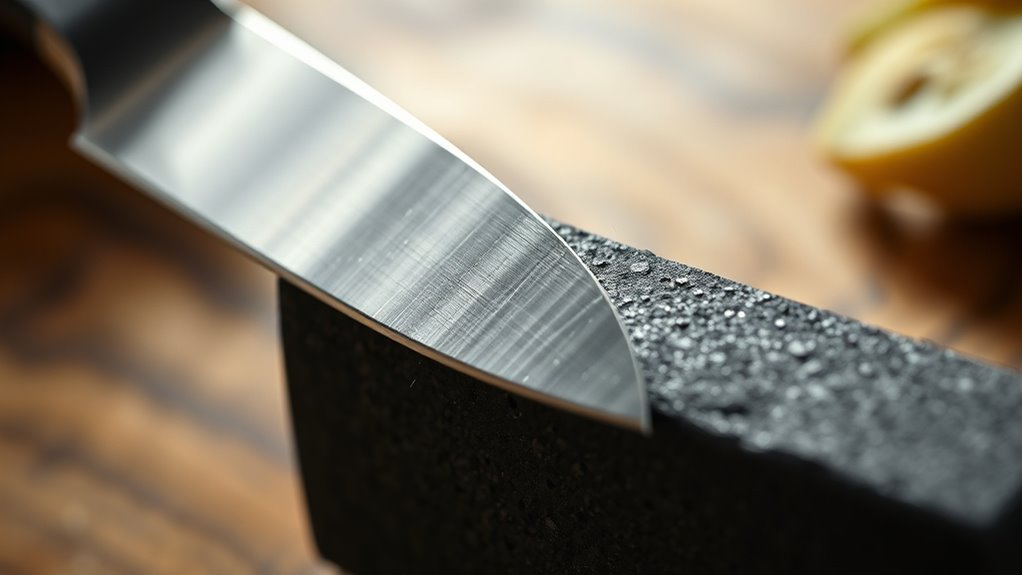
Mastering the Art of Sharpening Kitchen Knives With a Rod
Are you tired of struggling with dull kitchen knives that make meal prep frustrating? You’re not alone—many home cooks find it challenging to keep their blades sharp and effective.
Mastering the art of sharpening kitchen knives with a rod can make all the difference in your cooking experience.
Mastering the art of sharpening kitchen knives with a rod involves regular honing to keep your blades aligned and sharp, preventing dullness. Choose the right honing rod—ceramic or steel—based on your knives and control preference.
Hold your knife at a consistent 15-20 degree angle and use smooth, controlled strokes to hone the entire blade. Recognizing when your knife needs sharpening and avoiding common mistakes will guarantee safe, effective results.
Keep going to uncover expert tips that will upgrade your technique.
Key Takeaways
- Choose a honing rod made of ceramic or steel that matches your knife type and size for better control.
- Hold your knife at a steady 15 to 20-degree angle and slide it along the rod with smooth, controlled motions.
- Apply even pressure, making sure the entire blade makes contact with the rod for consistent honing.
- It’s best to hone regularly—about once a week for most cooks or every 2 to 3 days if you use your knives often.
- Keep an eye out for signs of dullness, like needing more effort or uneven cuts.
- Hone your knives before sharpening when you notice these signs to keep them in top shape.
Why Regular Honing Keeps Your Knives Sharp
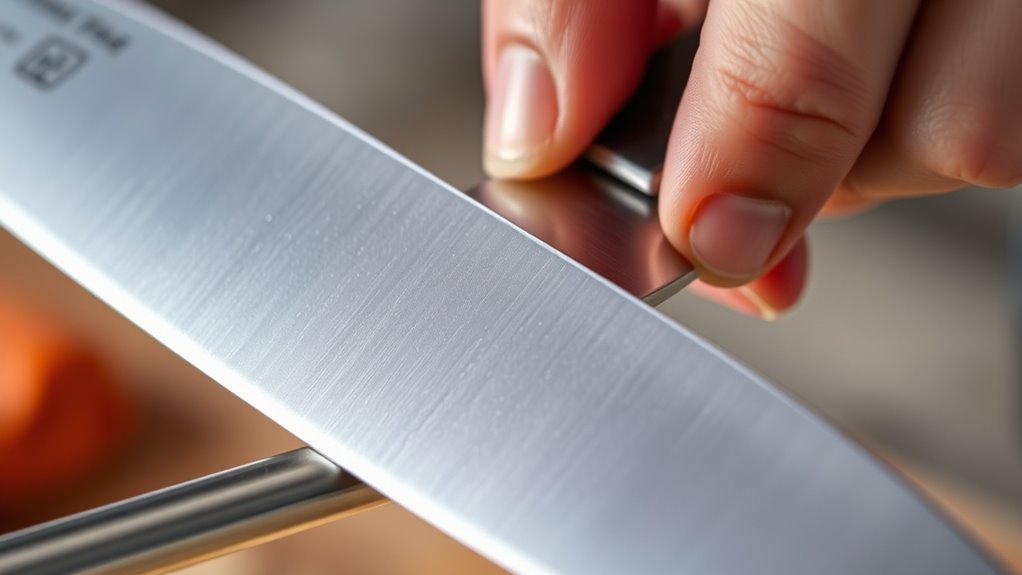
Regular honing is important because it helps straighten the blade’s edge, stopping it from getting dull over time.
When you use your knife, tiny bends and misalignments form along the edge, making cutting less smooth.
Honing fixes these small imperfections, bringing back a sharp, precise edge. Unlike sharpening, honing doesn’t take off metal; it just realigns it.
Honing realigns the edge without removing metal, restoring sharpness and precision effortlessly.
This process keeps your knives working well longer and means you don’t have to sharpen them as often. Regular honing also helps keep your knife safe and makes prep work easier and more enjoyable.
Plus, honing extends the life of your blades, saving you money and effort in the long run. It’s not just about keeping your knives sharp, but also about maintaining their quality and durability.
Choosing the Best Honing Rod for Your Knives
Choosing the right honing rod is key to keeping your knives sharp and lasting longer. When picking one, think about the material—ceramic rods are harder and gentler on blades, while steel rods are more durable and better at realigning edges.
The length of the rod should match your knives. Longer rods give you better control and contact, making the process smoother. Look for a handle that’s comfortable and non-slip for safety and ease of use.
If you have high-carbon or specialty knives, a ceramic rod is a good choice to avoid metal transfer. You can find budget-friendly options that work well, but investing in a quality honing rod means better results and longer life.
In the end, pick a rod that feels good in your hand and fits your cooking style.
How to Hold and Position Your Knife for Honing
To get the best results when honing your knives, how you hold and position the blade really matters. Grip the handle firmly but comfortably, making sure your fingers stay clear of the rod’s surface.
Hold the knife at a consistent angle, usually between 15 to 20 degrees, relative to the honing rod. Rest the heel of the blade on the rod’s base and tilt it slightly upward.
Apply steady pressure as you draw the blade down and across the rod with smooth, controlled motions. Keep the entire length of the blade in contact with the rod during each pass.
Repeating this process with the same angle and technique ensures even honing. It helps preserve your knife’s sharpness effectively.
Honing Your Knife: Step-by-Step Guide
Honing your knife is simple and easy to do with a few basic steps. First, hold the rod vertically on a stable surface. Place the heel of the blade against the rod at about a 20-degree angle.
Gently draw the blade down and across the rod, keeping that angle consistent. Repeat this motion 5-10 times on each side, making sure to contact the rod evenly.
Feel confident as your knife gets sharper with each stroke. Remember, regular honing helps preserve your blade’s edge and keeps your kitchen safe.
Here’s a quick reminder:
| Step | Action | Feeling |
|---|---|---|
| Position your rod | Secure it upright on a stable surface | Confident and steady |
| Draw the blade | Smoothly slide from heel to tip | Controlled, focused |
| Repeat | Alternate sides evenly | Empowered and precise |
Your knife will thank you, and your cooking will shine!
Avoid These Common Honing Mistakes
You need to watch out for overhoning without inspecting your blade, which can wear down the edge prematurely.
Using the wrong type of honing rod or applying too much pressure can also damage your knife instead of sharpening it.
Being mindful of these mistakes helps guarantee your honing is effective and safe.
Overhoning Without Inspection
Overhoning a knife without inspecting the edge can do more harm than good. If you don’t check the blade first, you might remove too much metal or straighten a dull edge that actually needs sharpening.
This can weaken the blade or hide underlying issues that need more than just honing. Always take a moment to examine your knife after each pass to see if it’s truly straight and aligned.
Rushing through the process can lead to overhoning, which shortens your blade’s lifespan. Remember, honing is meant to realign a slightly dull edge, not fix a damaged one.
Taking the time to inspect ensures you’re honing effectively and helps prevent unnecessary wear. Patience and precision are key to maintaining a sharp, durable edge.
Using Wrong Rod Type
Using the wrong honing rod can undermine your efforts to keep a sharp edge. Not all rods are suitable for every knife; for example, using a ceramic rod on a delicate or serrated blade can cause damage.
Conversely, a steel rod might be too abrasive for a high-quality, fine edge, dulling it faster. It’s essential to match the rod’s material and grit to your knife’s needs.
A coarse rod can strip away too much metal, while a very fine rod might not effectively realign the edge. Using the incorrect type also diminishes the effectiveness of honing, making your knives less sharp over time.
Always check the manufacturer’s recommendations for your knives and choose a rod that complements their material and intended use.
Applying Excessive Pressure
Applying excessive pressure during honing is a common mistake that can damage your knife’s edge. When you press too hard, you risk bending or chipping the blade instead of refining it.
Light, controlled strokes are more effective and safer for your knife. Focus on maintaining gentle, consistent pressure as you draw the blade along the rod.
Remember, honing is about realigning the edge, not grinding away material. Using too much force can create unevenness and shorten your knife’s lifespan.
Stay patient and trust the process. If you find yourself pressing hard, take a step back and focus on finesse rather than strength.
Proper technique preserves your knife’s sharpness and guarantees safe, efficient honing every time.
How Often Should You Hone Your Knives?
You should hone your knives regularly to keep them in top shape, but how often really depends on how much you use them.
Pay attention to signs like needing more effort when cutting or uneven slices—that’s a good indicator it’s time to hone.
Creating a routine helps maintain the edge and prevents the need for frequent sharpening.
Regularity of Honing Routine
Honing your knives regularly is key to keeping them sharp and performing well, but figuring out how often can be a bit confusing. It really depends on how often you cook and your cutting habits.
Most home cooks will find that honing once a week works well. If you’re using your knives daily, consider honing every 2-3 days to keep them in top shape. Less frequent use means less frequent honing, maybe once a month.
Just keep an eye on how your knives perform. If cutting becomes dull or difficult, it’s a good idea to hone sooner. Remember, honing realigns the edge, but it doesn’t sharpen it, so it’s mainly a maintenance step.
Signs You Need Honing
How can you tell when it’s time to hone your knives? You might notice it takes more effort to chop or that your slices aren’t as clean as they used to be. Sometimes, the blade might have a dull sheen or feel like it’s slipping off the food. These are signs it’s time to hone.
Regular honing keeps your knife in top shape, but don’t wait until it’s painfully obvious. To help you gauge, here’s a simple table:
| Condition | What it feels like | Why it matters |
|---|---|---|
| Increased resistance | Cutting feels harder | The blade is dull and needs honing |
| Uneven slices | Food tears or crushes | The edge is misaligned |
| Slipping off food | Knife slides instead of cutting | The edge has dulled |
| Visible nicks or bends | Blade shows damage | It needs honing or sharpening |
| Friction during use | Feels rough, heats up quicker | The blade is dull |
How to Tell When Your Knife Needs Sharpening
Determining when your knife needs sharpening can be pretty straightforward if you pay attention to certain signs. If your knife struggles to cut through even soft foods or requires a lot of force, it’s probably dull.
You might notice a ragged or torn cut instead of a clean slice, which means the edge isn’t sharp enough. Food slipping off easily or tearing rather than slicing smoothly are also good indicators.
Another sign is if your knife doesn’t respond well to honing—that usually means it needs sharpening. Lastly, inspecting the blade under good light can reveal nicks or a dull, rounded edge. Keep an eye out for these clues, and you’ll know when it’s time to sharpen your knife for the best performance.
Sharpening vs. Honing: What’s the Difference?
When your knife starts to feel less effective, it’s important to understand the difference between sharpening and honing because they serve different purposes. Sharpening removes metal from the blade’s edge to restore its shape, making it ready to cut again. Honing, on the other hand, realigns the existing edge without removing any metal, keeping it smooth and straight. Think of honing as routine maintenance and sharpening as a repair.
| Purpose | Method | Result |
|---|---|---|
| Sharpening | Using a rod or stone | Creates a new, sharper edge |
| Honing | Using a honing rod | Realigns the existing edge |
| Frequency | When dull or damaged | Every few months (sharpening) |
| Maintenance | Regular honing | Weekly or as needed |
Troubleshooting a Dull Knife: What to Do
A dull knife can make even simple tasks frustrating and dangerous, but the first step is to identify the problem. Check if the blade feels blunt or won’t cut smoothly through food.
A dull knife hampers your prep—check if it feels blunt or struggles to cut smoothly.
Look for uneven edges or nicks along the blade. To troubleshoot, try slicing a tomato or paper to see if it cuts effortlessly. Inspect the blade for visible damage or dull spots.
Carefully feel the edge with your finger for roughness or burrs. Consider how often you’ve sharpened or honed it recently. If these tests show dullness, it’s time to sharpen or hone.
Sometimes, a quick hone with a rod can restore the edge, but more severe dullness might need full sharpening.
Tips for Maintaining a Sharp, Safe Knife Collection
To keep your knives sharp and safe, make sure to hone them regularly to maintain that perfect edge. It’s a simple step that can really make a difference.
Store your knives properly in a knife block or on a magnetic strip. This helps prevent damage and keeps them out of reach of kids, reducing the risk of accidents.
Always handle your knives with care and use proper techniques when cutting. This not only keeps you safe but also helps your collection stay in great shape.
Regular Honing Practices
Regular honing is key to keeping your knives sharp and safe to use. It realigns the blade’s edge, helping prevent dullness and slips.
To keep your knives in top shape, hone them regularly—ideally after a few uses. Use a honing rod with a consistent angle to get the best results.
Remember to use light, controlled strokes on each side of the blade. Keep your motion steady and smooth, without applying too much pressure.
Hone both sides evenly to maintain a balanced edge. And don’t forget to clean and dry your honing rod regularly to avoid dirt buildup.
Proper Storage Methods
Proper storage is essential for keeping your knives sharp and safe. Storing knives correctly prevents dulling and reduces the risk of accidents.
Use a knife block, magnetic strip, or blade guards to keep blades protected from contact with other utensils. A knife block keeps blades upright and prevents them from knocking against other items.
Magnetic strips allow easy access and save space. Blade guards are ideal for storing knives in drawers, protecting both the blades and your fingers.
Avoid tossing knives loose in drawers, as this causes dulling and potential injury. Regularly clean and dry your knives before storing to prevent corrosion.
Proper storage maintains edge sharpness, prolongs the life of your knives, and guarantees safety in your kitchen.
Safe Handling Techniques
Handling your knives safely is just as important as storing them correctly. Always be mindful when using and cleaning your knives to prevent accidents. Keep your fingers away from the blade’s edge, and hold the handle firmly to stay in control.
Never try to catch a falling knife. Instead, set it down carefully to avoid injury. When cleaning, wash each knife separately and avoid the sink’s bottom, where blades can hide. Use a sponge or cloth rather than steel wool to prevent scratches.
Always store your knives properly after use. This helps prevent dulling and damage, keeping them in good condition. Hold knives firmly by the handle, not the blade, and cut on stable, non-slip surfaces.
Keep knives dry and clean after each use. Store them securely to prevent accidents and keep everyone safe.
Frequently Asked Questions
Can Honing Damage or Wear Out Your Knife Over Time?
Honing won’t damage or wear out your knife if you do it correctly and regularly. It realigns the edge rather than removing metal, so it keeps your blade sharp without thinning it out.
But if you overdo it or use too much pressure, you might cause tiny chips or weaken the edge over time. Just use a gentle, consistent technique and hone only when needed.
This way, you can keep your knife in top shape without risking any damage.
What Materials Are Best for Honing Rods Besides Steel?
Using a honing rod is like guiding a dance partner—precision matters. Besides steel, ceramic rods are great because they’re harder and gentler on your blades, helping them stay sharp longer.
Diamond-coated rods are another option, offering high abrasiveness for dull knives. You might also want to explore ceramic or diamond options, but always match your rod’s material to your knife’s composition for the best results.
Is It Safe to Hone Knives With a Ceramic Rod?
Yes, you can safely hone knives with a ceramic rod, but you need to be careful. Ceramic rods are very hard and great for realigning edges, but they can chip softer blades if used improperly.
Always hold the knife at the correct angle and apply gentle pressure. Avoid using excessive force, and make sure the ceramic rod is clean to prevent damage.
With proper technique, it’s a safe and efficient way to keep your knives sharp.
How Do You Clean and Maintain Your Honing Rod?
Imagine a gentle stream washing over a smooth pebble—that’s how you clean your honing rod.
Just wipe it down with a damp cloth after each use to remove any metal shavings.
Occasionally, give it a light scrub with mild soap and a soft brush to get rid of stubborn debris.
Make sure to dry it thoroughly before putting it away.
Regular maintenance keeps your honing rod in great shape, helping your knives stay razor-sharp and ready for anything in the kitchen.
Can Honing Make a Very Dull Knife Usable Again?
Yes, honing can make a very dull knife usable again. When you hone, you’re realigning the tiny metal burrs on the blade’s edge, which restores its sharpness temporarily.
Regular honing keeps your knife’s edge in good shape and prevents dullness from getting worse. But if your knife is extremely dull or damaged, honing alone might not be enough.
In that case, you’ll need to sharpen it more thoroughly with a sharpening stone or rod to fully restore its cutting power.
Conclusion
Think of your honing rod as a trusted compass guiding your knife back to its true edge. With consistent care and proper technique, you’ll keep your blades sharp as a sword and safe as a shield.
Remember, a well-honed knife isn’t just about cutting — it’s about respecting your craft and the tools that serve you.
Adopt this ritual, and let your culinary journey be as precise and polished as your sharpened blades. Mastering the art of sharpening kitchen knives with a rod will elevate your cooking and ensure safety in the kitchen.