8 Simple Steps to Measure Kitchen Cabinets Accurately
Many homeowners find measuring kitchen cabinets to be a daunting task. You’re not alone—getting precise measurements can feel overwhelming, but it’s essential for a perfect fit. If you’ve ever worried about making mistakes or ending up with cabinets that don’t fit, don’t worry. With a little patience and the right approach, you can do it accurately.
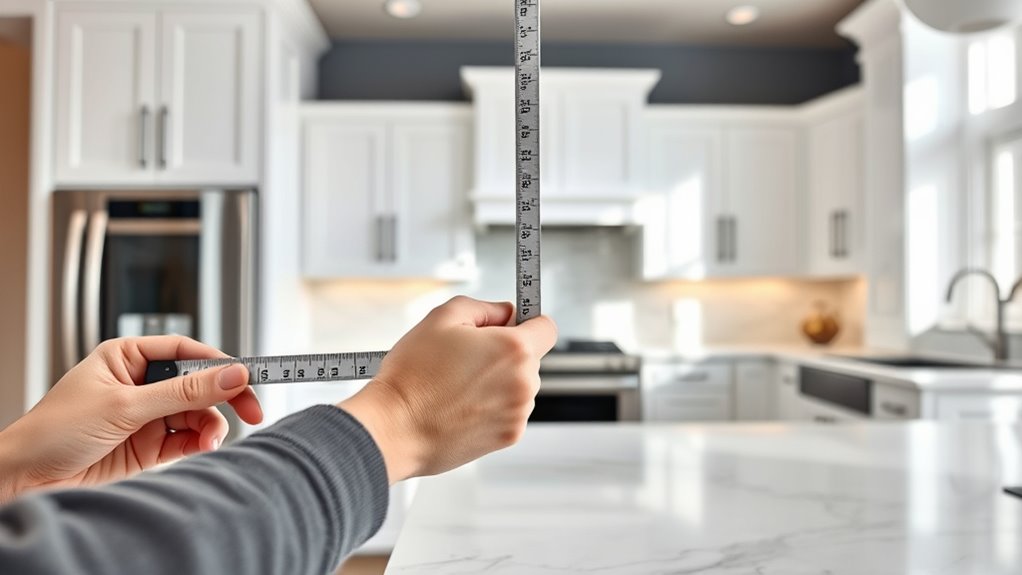
To measure your kitchen cabinets accurately, start by gathering essential tools like a tape measure, level, square, pencil, and notepad. Measure width, height, and depth at multiple points to catch any irregularities, and be sure to include hardware and moldings.
Record all measurements clearly and organize them carefully. Avoid common mistakes by double-checking your work. Taking your time and verifying measurements ensures accuracy and saves you headaches later.
If you want detailed tips on each step, keep going—there’s more to learn for a perfect fit.
Key Takeaways
– Use a tape measure to carefully measure the width, height, and depth of your cabinets at several points to ensure accuracy.
Take your time and don’t rush through this step. It’s better to get multiple measurements than to assume one is enough.
Record each measurement clearly in a notepad, making sure to label each dimension precisely. This will help you stay organized as you move forward.
Measure from walls, the floor, and the ceiling, paying attention to any irregularities or obstacles along the way.
Sometimes walls or floors aren’t perfectly straight, so it’s good to note those differences.
Use a level and a square to double-check your measurements. This helps confirm everything is straight and true before you proceed.
Always verify your measurements before moving on to avoid costly mistakes during installation.
Why Accurate Kitchen Cabinet Measurements Matter
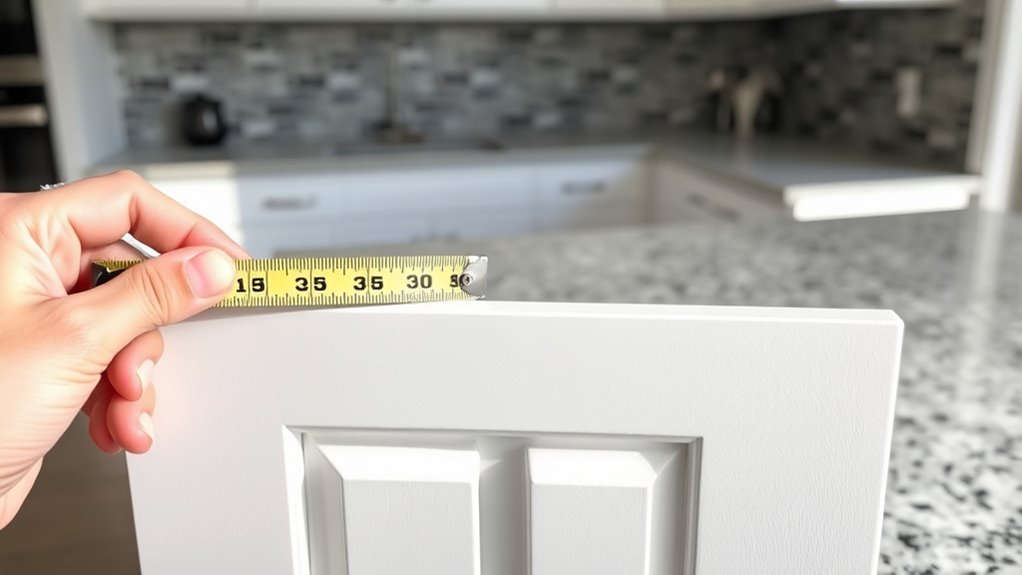
Accurate kitchen cabinet measurements are essential because even small mistakes can cause big problems during installation. If your measurements are off, cabinets might not fit properly or line up correctly.
This can lead to gaps or uneven surfaces, which means more costs, extra adjustments, and lots of frustration. Precise measurements help ensure your cabinets fit seamlessly, making the most of your space and look great.
Incorrect measurements can also cause hardware misalignment or make doors hard to open and close. Taking your measurements carefully upfront prevents these issues, saving you time and money later.
Gather the Tools You Need for Precise Measurement
Gather the tools you need for precise measurement before you start measuring your kitchen cabinets. Having the right equipment ensures your measurements are accurate and helps you avoid costly mistakes later on.
You’ll need a tape measure, a pencil, a notepad, and a level. The tape measure captures dimensions accurately, while the pencil marks measurements without damaging surfaces. Use the notepad to record your data clearly.
A level helps confirm your measurements are straight and even. Here’s a quick overview of the tools:
| Tool | Purpose |
|---|---|
| Tape measure | Measure cabinet width, height, and depth |
| Pencil | Mark measurements on surfaces |
| Notepad | Record measurements for reference |
| Level | Verify measurements are straight and level |
| Square ruler | Check for right angles |
How to Measure Your Cabinet Width and Height Correctly?
To measure your cabinet width and height accurately, start with the right tools like a tape measure or a ruler.
Make sure to take measurements at multiple points to catch any variations. Record each dimension precisely.
This way, you’ll get the correct sizes you need for your project without any guesswork.
Use Proper Measuring Tools
Using the right measuring tools is key to getting accurate dimensions for your kitchen cabinets. A tape measure is your go-to tool because it’s flexible and works for different measurements.
A level helps ensure your measurements are straight and precise, especially when checking height or depth. Keep a pencil nearby to mark measurements clearly so you don’t forget or make mistakes.
Choose a sturdy, retractable tape measure with clear markings. Use a good quality level for vertical and horizontal checks. Keep your pencil handy to mark your measurements, making sure everything stays accurate. Proper tools make all the difference in getting perfect cabinet measurements.
Measure Multiple Points
Measuring multiple points on your cabinets ensures you get accurate width and height dimensions. Cabinets might not be perfectly square or straight, so checking several spots helps you get precise measurements.
Start at the top, middle, and bottom of each section for width. For height, measure from the floor to the top at multiple points, especially if the floor or ceiling isn’t level.
Walls and cabinets can have slight variations, so record the largest measurements to account for irregularities. This prevents underestimating or overestimating and avoids problems later.
Properly measuring at multiple points guarantees your new hardware, doors, or replacements fit perfectly, saving you time and frustration.
Verify consistency across different points and look for any irregularities or warping. Use a tape measure for precise readings and cross-reference measurements for accuracy.
Record Accurate Dimensions
Accurately recording your cabinet dimensions is key for a perfect fit. Measure multiple points, then note the narrowest width and the tallest height to ensure your measurements are precise.
Use a reliable tape measure, keeping it level and straight for the most accurate readings. Record the width from one outer edge to the other, avoiding gaps or irregularities.
For height, measure from the floor or countertop to the top of the cabinet, noting any variations if present. Double-check your measurements to catch any discrepancies.
Write them clearly and keep the records accessible. Precise measurements prevent ordering errors and help your new hardware or replacements fit seamlessly into your kitchen.
Measuring Cabinet Depths for a Perfect Fit
To ensure your cabinets fit perfectly into your kitchen, it’s important to measure their depths accurately. Start by opening the cabinet doors and measuring from the front edge of the door or face frame to the back wall of the cabinet.
Use a tape measure for precision, keeping it flush against the interior surfaces. Make sure the tape is straight and avoid compressing it to get the most accurate measurement.
Standard base cabinet depths usually range from 24 to 25 inches, but keep in mind that custom cabinets might be different.
It’s a good idea to confirm the measurement at multiple points inside the cabinet. Check for any irregularities like protruding moldings or hardware.
Record the deepest point to avoid underestimating and ensure a perfect fit. Double-check your measurements before moving forward.
Accounting for Moldings, Handles, and Hardware
When accounting for moldings, handles, and hardware, it’s important to include their thicknesses in your measurements to ensure a seamless fit. Measure the width and height of each molding or handle, then add these dimensions to your cabinet measurements.
For hardware like knobs and pulls, note their placement and depth, especially if they extend beyond the cabinet face. If handles are recessed or have decorative moldings, measure their protrusion to avoid interference.
Remember to consider the thickness of any decorative trim or edging when planning for countertop or appliance clearance. Accurately including these details helps your cabinets fit perfectly with all hardware and moldings in place, preventing surprises during installation or use.
Common Mistakes to Avoid When Measuring Cabinets
When measuring your cabinets, don’t ignore wall irregularities because they can throw off your measurements. It’s important to account for any bumps or dips in the wall so your cabinets fit perfectly.
Make sure you’re using accurate tools. Avoid cheap or faulty measuring tapes and tools since they can lead to mistakes and cause issues down the line.
And don’t forget to measure the depth of your cabinets. Overlooking this can cause problems with fitting and installation later on.
Ignoring Wall Irregularities
Ignoring wall irregularities can lead to measurement errors that throw off your entire cabinet installation. Walls are rarely perfectly straight or level, and overlooking these imperfections can cause gaps, misaligned cabinets, or uneven finishes.
Before measuring, examine your walls carefully for deviations. Use a level or straightedge to identify high or low spots, bulges, or dents that could impact your measurements.
Adjust your measurements accordingly, noting where walls aren’t square or plumb. Failing to do this might result in cabinets fitting poorly or needing costly adjustments later.
Being precise about wall imperfections guarantees a seamless, professional finish and helps you avoid unnecessary frustration or rework. Pay close attention to these details to ensure your cabinets fit perfectly and look great.
Using Inaccurate Tools
Using the right tools is essential for accurate measurements, but many people rely on outdated or cheap equipment that can give false readings. Cheap tapes or rulers might seem convenient but often lack precision, leading to mistakes in your measurements.
Always opt for a high-quality tape measure or a laser distance meter for better accuracy. It’s also a good idea to check the calibration of your tools regularly to make sure they’re working properly.
| Inaccurate Tool | Consequence |
|---|---|
| Cheap tape | Inconsistent or incorrect readings |
| Old ruler | Slips or bends, causing errors |
| Damaged tape | Skips or produces false measurements |
| Low-quality laser | Misreads distance, leading to inaccuracies |
Avoid these pitfalls to make sure your cabinet measurements are precise and reliable.
Forgetting to Measure Depth
One of the most common mistakes when measuring cabinets is forgetting to include the depth. This can cause fitting issues later on. If you ignore depth, your new cabinets might not fit properly or could interfere with appliances and countertops.
Make sure to measure from the front of the cabinet to the back wall, not just the width and height. Getting an accurate depth measurement helps prevent surprises during installation.
Here are some important points to keep in mind:
- Measure at multiple points to account for any wall irregularities.
- Use a sturdy tape measure to avoid slack or sag.
- Record the deepest point, especially if your walls are uneven.
- Double-check your measurements before buying or building.
Paying attention to depth ensures your cabinets fit seamlessly and work as they should.
How to Record and Organize Your Measurements
Accurately recording and organizing your measurements is key to making sure your kitchen cabinets fit perfectly. Write each measurement clearly on a dedicated sheet or in a digital note.
Keep your measurements clear and organized for perfect kitchen cabinet fit.
Label each measurement clearly, like “upper cabinet width” or “door height,” so you know exactly what you measured. Keep your measurements in order, maybe in a table, to avoid confusion later.
Double-check each number against your actual measurements to prevent mistakes. Taking photos of your notes can be helpful for quick reference. Store your records somewhere safe and easy to access.
This way, when it’s time to buy or replace cabinets, you’ll have accurate, reliable data ready to go. Good organization makes the whole process smoother and less stressful.
Next Steps: Using Your Measurements for Replacement or Renovation
With your measurements organized and verified, you’re all set to use that data for your kitchen project. Accurate measurements help you choose the right replacements or plan your renovations effectively.
Next, cross-check your measurements with manufacturer specifications to ensure everything will fit properly. Creating detailed sketches or digital layouts can help you visualize your new design clearly.
It’s a good idea to consult with professionals or suppliers to double-check your measurements and discuss your options. This way, you can avoid surprises later on.
Finally, prepare a list of materials and fixtures based on your measurements. Having everything listed will make ordering accurate and straightforward.
Frequently Asked Questions
How Often Should I Re-Measure My Kitchen Cabinets?
You should re-measure your kitchen cabinets whenever you notice changes, renovations, or damage that could affect their size.
It’s also a good idea to re-measure if you’re planning to upgrade appliances or add new features. This helps ensure your measurements stay accurate.
Regular checks every few years can be helpful, especially if your home shifts or settles over time.
Staying proactive means your cabinets will fit perfectly and you’ll avoid costly mistakes during updates.
What Are the Best Tools for Measuring Irregularly Shaped Cabinets?
You should use a flexible tape measure or a laser distance measurer for irregularly shaped cabinets. A flexible tape easily contours around curves and angles, giving you accurate measurements.
Laser distance measurers provide quick, precise readings even in tight or oddly shaped spaces. Using both tools together helps you capture detailed dimensions efficiently.
This way, you can be sure your measurements are spot-on for custom fittings or renovations.
How Do I Measure Cabinets With Built-In Appliances?
To measure cabinets with built-in appliances, start by removing any obstructions like panels or trim around the appliances.
Measure the width, height, and depth of the cabinet opening, including the space needed for the appliances.
Use a tape measure and record the dimensions carefully. Be sure to measure from wall to wall and inside corners for accuracy.
Note any clearance needed for installation or ventilation to ensure everything fits properly.
Should I Measure Cabinets With Doors Open or Closed?
You should measure cabinets with the doors closed to get accurate dimensions. Leaving doors open can add extra width or height that isn’t part of the actual cabinet frame, which can lead to mistakes.
Closed doors give you a clear, consistent view of the cabinet’s true size. Make sure to measure from edge to edge, including any trim or molding, for the most precise fit for your new appliances or renovations.
How Do I Account for Uneven or Warped Cabinet Surfaces?
To handle warped or uneven cabinet surfaces, start by taking detailed, three-dimensional measurements from multiple points. Make sure to note both the highest and lowest spots.
Use a level to check for plumbness and record any variations carefully. Mark these irregularities on your measurement plan so you won’t forget.
This detailed data helps you adjust your plans, making sure your new fittings or facelifts fit perfectly despite the flaws. Being precise and thorough now will save you time and trouble later.
Conclusion
By mastering meticulous measurement methods, you’ll minimize mistakes and maximize your kitchen’s makeover potential. With careful calculating, consistent recording, and clever consideration of moldings and hardware, your cabinet measurements will be precise and perfectly planned.
Proceed with confidence, knowing your measurements will help turn your kitchen into a beautiful, functional space. Adopt these expert steps, and you’ll bring your kitchen goals to life, making your renovation a success.
Measuring accurately is key to achieving a gorgeous, gleaming upgrade you’ll love for years.