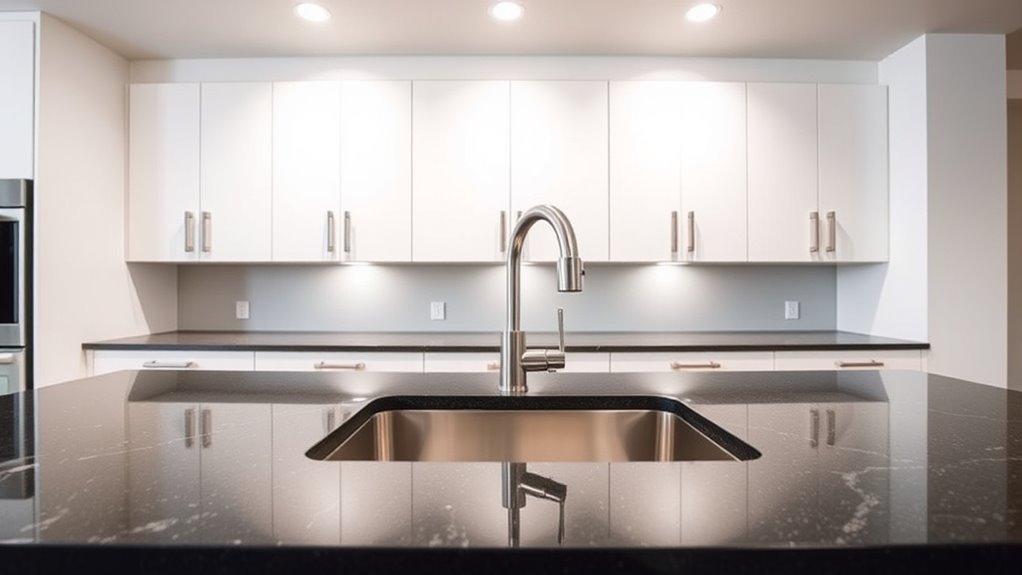
What Is the Standard Height for Tall Kitchen Counters?
Many people struggle with finding the perfect kitchen counter height that feels comfortable and ergonomic. If you’re tired of bending over or reaching up too high, you’re definitely not alone.
Finding the right fit can make a huge difference in your cooking and prep experience.
What Is The Standard Height for Tall Kitchen Counters?
If you’re wondering about tall kitchen counters, the standard height usually ranges from 36 to 38 inches to suit taller users comfortably.
This height helps prevent hunching and reaching, reducing strain and improving efficiency.
To find the best fit for you, measure from your elbow to the floor while standing naturally.
Keep in mind that adjusting the height can boost comfort, and exploring options for customization will help you create an ergonomic space tailored to your needs.
Key Takeaways
- The standard kitchen counter height is usually around 36 inches from the floor.
- Tall users often prefer counters raised to about 36-38 inches for better comfort.
- If you need something taller, custom counters can go up to 42 inches or more.
- The key is making sure your elbows rest at a 90-degree angle when you’re working.
- Adjustable or modular counters are great because they can be set to different heights.
- That way, taller folks can customize their workspace for maximum comfort.
Why Kitchen Counter Height Matters for Tall Cooks
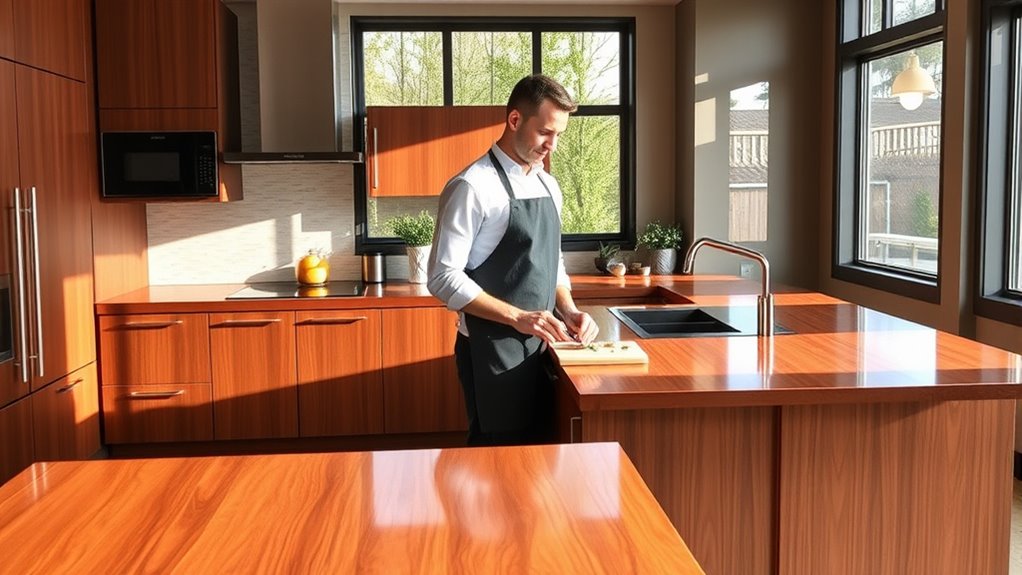
If you’re tall, standard kitchen counter heights can cause discomfort and strain during meal prep. Bending over or stretching up makes chopping, stirring, and cleaning more tiring. Over time, this discomfort can lead to back pain and fatigue.
When counters are too low, you might find yourself leaning forward constantly, which puts unnecessary pressure on your back and shoulders. It also reduces your control and precision while cooking, increasing the risk of spills or accidents.
Proper counter height allows you to work comfortably, maintaining good posture and minimizing fatigue. For tall cooks, adjusting the counter height or customizing your workspace is essential to create an ergonomic cooking environment.
Proper counter height ensures comfort, good posture, and reduces fatigue for tall cooks.
This helps you stay efficient, comfortable, and safe in your kitchen.
What Is the Standard Kitchen Counter Height?
The standard kitchen counter height is usually around 36 inches from the floor to the countertop surface. It’s designed to fit most people comfortably for cooking, prepping, and cleaning.
This height strikes a good balance between ease of use and ergonomic comfort, helping you work efficiently without straining your back or shoulders.
It works well for an average adult and fits common kitchen appliances and cabinets. But if you’re taller or shorter, this height might not feel as comfortable.
While it’s a versatile starting point, keep in mind it’s not one-size-fits-all. When planning or remodeling your kitchen, knowing this standard can help you make better choices about counter placement and layout.
How to Measure Your Ideal Counter Height
To find your perfect counter height, start by checking what feels comfortable for you in the kitchen. Stand naturally with your arms relaxed at your sides, and see where your forearms rest on a surface.
This measurement ensures you won’t strain your shoulders or back while working. Think about how your arms bend naturally and use that as a guide.
For a natural feel, measure from your elbow down to the floor. If your elbows bend slightly, adjust the height so it matches that position.
If you find yourself reaching up or feeling strained, raise or lower your surface until it feels right.
Once you hit that perfect fit, keep that measurement in mind when choosing your counter height.
Adjusting Counter Height for Tall Users: Best Practices
To guarantee comfort, aim for a counter height that supports your natural posture without straining your back or shoulders. Adjustable counter features can make it easier to customize the height to fit your needs precisely. Implementing these best practices helps create a more ergonomic and efficient workspace tailored for tall users.
Optimal Height for Comfort
Finding the right counter height can really boost your comfort while cooking or preparing meals. For taller users, a counter height of around 36 to 38 inches often provides the best ergonomic fit, reducing strain on your back and shoulders.
Ideally, your elbows should rest comfortably at a 90-degree angle when standing upright with your hands on the counter. If you find yourself hunching or reaching too high, the counter might be too low.
If you’re stretching or feeling strain, it’s probably too high. The goal is to create a surface that allows you to work efficiently without discomfort.
Keep in mind that slight adjustments can make a big difference in your overall comfort and help prevent long-term musculoskeletal issues.
Adjustable Counter Features
Adjustable counter features offer a practical solution for tall users who need to customize their workspace. With height-adjustable counters, you can easily change the surface level to match what’s comfortable for you and your tasks.
Many models use mechanisms like pneumatic lifts, manual cranks, or electronic controls, allowing quick and precise adjustments. This flexibility helps prevent strain on your neck, shoulders, or back, especially during long cooking sessions.
When choosing adjustable counters, consider the range of height options and how stable the mechanism is. Properly adjusted counters improve ergonomics and can be tailored for chopping, kneading, or plating.
Investing in these features creates a more comfortable and efficient kitchen environment suited to your unique height needs.
Factors Influencing Counter Height Choices
Your comfort and ergonomics are really important when choosing the right counter height, especially if you’re tall.
Think about how the counter fits into your overall kitchen workflow and design. You want everything to be accessible and easy to reach.
Balancing these factors will help you create a space that’s both functional and comfortable for you.
User Ergonomics and Comfort
When choosing the right counter height, it’s important to think about your ergonomics and comfort. These factors directly affect how easily you can move and work in the kitchen. Your height, cooking style, and comfort should guide your decision.
A counter that’s too high or low can lead to strain on your back, shoulders, and arms. To make the best choice, consider these factors:
| User Height | Typical Counter Height | Comfort Level |
|---|---|---|
| Shorter | 36 inches | Moderate |
| Average | 42 inches | Comfortable |
| Taller | 48 inches | Best |
Adjusting the counter height to fit your needs helps create a more comfortable and efficient kitchen. It also reduces fatigue and the risk of injury.
Kitchen Workflow and Design
The overall design and layout of your kitchen are key to determining the right counter height. They influence how smoothly you move between different work zones. You want your counters to support cooking, prep, and cleanup without causing unnecessary strain.
Think about how your kitchen flows and guides your movements. Placing prep areas near the stove or sink can make tasks easier and quicker. Also, where you put appliances and storage affects what counter height works best for you.
Make sure your counter height makes moving between zones easy. Confirm it fits well with where your appliances are placed. And consider designing your counters for specific tasks like baking or chopping to boost efficiency.
Materials and How They Affect Counter Height Options
Choosing the right materials for your kitchen counters can really influence the best height for your workspace. Different materials come with varying thicknesses, which may require adjustments to standard counter heights for comfort.
For example, thicker materials like natural stone or butcher block might need taller counters. Thinner surfaces like laminate or quartz usually fit standard heights without any issues.
Here’s a quick table to illustrate:
| Material | Typical Thickness | Impact on Height |
|---|---|---|
| Natural Stone | 2-3 cm | May need taller counters |
| Quartz | 2-3 cm | Usually standard |
| Laminate | 1-1.5 cm | Fits standard heights |
| Butcher Block | 2-3 cm | Might need height adjustment |
| Metal | Varies | Customizable |
Your choice of material affects both comfort and usability, so keep that in mind when making your selection.
Pros and Cons of Custom Tall Kitchen Counters
Opting for custom tall kitchen counters can really improve your workspace, but it’s important to weigh the pros and cons before making a decision. Custom counters let you set the height to fit your needs, which can make cooking more comfortable and efficient.
Custom tall kitchen counters enhance comfort and efficiency but consider the higher cost and limited flexibility.
On the downside, they usually cost more than standard options and take longer to install. You might also have trouble finding matching appliances or accessories that fit the unique dimensions.
Having personalized comfort can reduce strain during cooking, which is a big plus. But keep in mind, the higher costs and limited flexibility if you want to change things later are important factors to consider.
Thinking about these points will help you decide if custom tall counters fit your budget and lifestyle, making your kitchen more functional and comfortable.
Are Adjustable or Modular Counters Right for You?
Adjustable or modular counters give you the flexibility to set your kitchen height to suit your needs, whether you cook often or have multiple users.
They also offer a range of customization options, so you can tailor the space to your preferences.
Think about whether this adaptability is right for you based on how many people will use your kitchen and your specific comfort needs.
Flexibility in Counter Heights
While traditional kitchen counters are fixed at standard heights, adjustable or modular options give you more flexibility and make your space more functional. These counters allow you to customize the height for different tasks, users, or preferences. For instance, you might lower a section for kids or raise part for baking prep.
This adaptability can boost comfort and efficiency in your kitchen. You can adjust counters for better ergonomics, reducing strain during tasks. Switching heights based on activity, like chopping or dining, makes things more convenient.
Plus, flexible counters are a great way to future-proof your space. You can easily modify your setup as your needs change, avoiding costly renovations. If versatility matters to you, investing in flexible counters could be a smart move.
Customization Options Available
Deciding if adjustable or modular counters are right for you depends on how much you value flexibility and customization in your kitchen. These options let you tailor your workspace to fit your specific needs, whether it’s changing counter heights or adding specialized features.
Adjustable counters usually have mechanisms that allow you to raise or lower surfaces easily. They’re perfect if your needs change often or if multiple people use the kitchen.
Modular systems let you customize the layout and storage, giving you control over how your space functions. If you enjoy personalizing your environment or expect future changes, these options can be a smart choice.
Just keep in mind, they might cost more and require more installation compared to standard counters.
Ideal for Different Users
Choosing between adjustable and modular counters depends on how you use your kitchen and who will be in it. If you cook with family members of different heights or regularly host guests, flexible options can make things more comfortable and accessible.
Adjustable counters let you change heights easily, so they’re great for kids or seniors. Modular counters can be customized for specific tasks or users, helping you make your space more efficient.
Consider these points:
- Perfect for households with different height needs
- Great for shared kitchens or family cooking
- Ideal if you want to customize counter space for various activities
Cost Considerations for Taller Kitchen Counters
Increasing the height of your kitchen counters can lead to higher costs because custom adjustments often need specialized materials or labor. Taller counters might require custom cabinetry, which tends to be more expensive than standard options.
You may also need specialized tools or skilled workers to modify existing structures or install new ones properly. If you choose premium materials like quartz or high-end wood, you’ll pay more upfront.
Plus, taller counters can affect your overall kitchen layout. You might need to make adjustments to plumbing, electrical wiring, or flooring, which can add to the cost.
While the upgrade can improve functionality, it’s important to consider these potential expenses during planning to stay within your budget.
Design Tips for Integrating Tall Counters Seamlessly
Integrating taller counters into your kitchen design requires some thoughtful planning to make sure they blend seamlessly with the overall look. Start by choosing materials and finishes that match or complement your existing cabinetry and countertops.
Use consistent color schemes and textures to create a cohesive appearance. To improve visual flow, consider adjusting the height of surrounding elements like backsplash or cabinetry to align with the taller counters.
Incorporcorporating functional design elements, such as open shelving or decorative accents, can help balance the increased height without overwhelming the space. This adds both style and practicality to your kitchen.
Troubleshooting Common Issues With Tall Kitchen Counters
While tall kitchen counters can boost your space’s style and function, they can also bring some common issues. One frequent problem is having trouble reaching items on the back of the counter.
To fix this, try installing pull-out shelves or adding a step stool for safety. Another issue is feeling strain on your back and shoulders when working at the higher surface.
Taking breaks and adjusting your stance can help prevent discomfort. If the height feels uncomfortable for everyday tasks, consider customizing the counter height or adding an ergonomic work surface.
Finally, don’t forget about lighting. Tall counters can cast shadows and make it harder to see clearly. Good lighting and smart organization can help you overcome most challenges with tall kitchen counters.
Making Your Kitchen Ergonomic and Comfortable
To make your kitchen more comfortable and user-friendly, focus on optimizing its ergonomic setup. Proper counter height helps reduce strain and makes meal prep and cleaning easier.
Make sure your workspace minimizes awkward postures by keeping frequently used items within easy reach. Adjustable features like pull-out shelves or height-adjustable surfaces can help customize the space to your needs.
Consider using anti-fatigue mats to lessen leg and back fatigue. Incorporate ergonomic tools like angled knives and padded grips for added comfort.
Arrange appliances and utensils so you don’t have to reach or bend too much, making your kitchen safer and more efficient.
Frequently Asked Questions
Can Taller Counters Improve Kitchen Ergonomics for Everyone?
Taller counters can improve kitchen ergonomics for some people, especially those who are taller or have back problems, by reducing the need to bend over.
But they might not fit everyone, making tasks uncomfortable or awkward for shorter users. To get around this, consider adjustable or custom-height counters.
This way, everyone can work comfortably and efficiently, no matter their height or physical needs.
Are There Specific Ergonomic Guidelines for Tall Kitchen Counters?
Yes, there are ergonomic guidelines for tall kitchen counters. Ideally, the counter height should be around 36 to 38 inches for taller individuals, which helps reduce strain on your back and shoulders.
When working at the counter, you should stand comfortably with your elbows at about a 90-degree angle. This position helps prevent fatigue and discomfort during cooking or prep work.
You can also improve comfort by adjusting the counter height or adding footrests. These small changes help you maintain good posture and make extended tasks much easier.
How Do I Ensure Safety With Taller Countertops?
To ensure safety with taller countertops, focus on maintaining good posture and adjusting your workspace as needed. Use tools like step stools when reaching higher areas to avoid straining yourself.
Keep the area tidy to prevent tripping hazards, and make sure there’s enough lighting so you can see clearly. This helps prevent accidents and keeps everything within easy reach.
Check regularly for loose or damaged fixtures, and keep appliances and utensils close by to reduce unnecessary stretching. If you’re unsure about the best setup, consulting an ergonomic expert can give you personalized tips.
What Are the Maintenance Differences for Taller Kitchen Surfaces?
Taller kitchen surfaces need a bit more care, but the cleaning process isn’t too hard.
Just wipe them down regularly with mild soap and water, and steer clear of abrasive cleaners that can scratch those hard-to-reach spots.
Pay extra attention to the edges and corners, since dirt can get trapped there. Think of it like tending a garden—prune and water consistently to keep everything looking fresh, even if it’s higher up.
Can Tall Counters Be Integrated Into Existing Kitchen Designs?
Yes, you can definitely integrate tall counters into your existing kitchen design. You might need to modify cabinetry, adjust plumbing, or update appliances to make sure everything fits seamlessly.
Think about your overall style and how you want the space to function. Choose materials and finishes that match or complement your current decor for a cohesive look.
It’s a good idea to consult a professional. They can help you plan the integration smoothly and ensure the new tall counters enhance your kitchen’s aesthetic and usability without disrupting the layout.
Conclusion
Think of your kitchen as a symphony, where each instrument must be tuned just right. Adjusting your counters for your height guarantees the melody flows smoothly, letting you cook comfortably and confidently. When you customize your space, you’re not just building a kitchen—you’re creating a harmonious environment that works with you, not against you.
The standard height for tall kitchen counters is typically around 36 inches (91 centimeters). This height works well for most people, providing a comfortable surface for food prep and cooking. However, if you’re taller or shorter than average, you might want to customize your counters to better suit your needs.
Getting your kitchen counters right is all about comfort and efficiency. The right height can make a big difference, turning everyday cooking into a smooth, enjoyable experience. When you align your counters with your height, your culinary rhythm becomes effortless, making your kitchen truly yours.