How Can I Determine My Appliance’s Age?
Knowing the age of your appliance can be tricky, especially if you’re trying to figure out if it’s time for an upgrade or just want to understand its history.
Many people struggle with pinpointing exactly how old their appliances are, and that’s completely normal.
To determine your appliance’s age, start by locating the serial and model numbers, usually found on the back, inside doors, or near control panels.
Check the serial number for embedded date codes—these often indicate the manufacturing week and year.
If labels are hard to find or faded, consult your user manual or manufacturer’s website for guidance.
Keep in mind, some older appliances might lack serial numbers, but there are other ways to estimate age if you keep exploring.
Key Takeaways
- Locate the serial and model numbers on your appliance. You’ll usually find them on the back, inside doors, or near control panels.
- Decode the serial numbers using guides provided by the manufacturer. These can help you figure out the production year and week.
- Check the user manual or visit the manufacturer’s website. They often have information about the age based on model or serial number.
- You can also use online tools or databases. Just enter your model or serial number, and you’ll get a quick estimate of the appliance’s age.
- If labels are missing, look for physical signs. Wear and tear, design features, and hardware condition can give you clues about how old your appliance is.
Why Knowing Your Appliance’s Age Matters
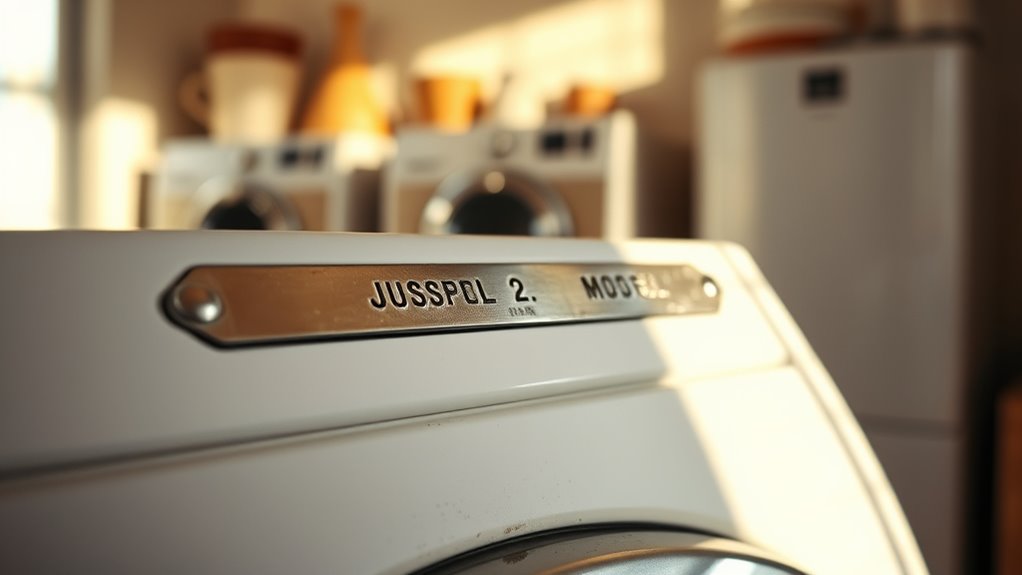
Knowing the age of your appliance is essential because it directly impacts its performance, reliability, and cost of maintenance.
An older appliance may start to show signs of wear, leading to frequent repairs or decreased efficiency. If you know it’s nearing the end of its typical lifespan, you can plan for replacement, saving you money in the long run.
Understanding its age also helps you determine if it’s still covered by warranty or eligible for upgrades. It guides you in making informed decisions about repairs—whether fixing it makes sense or if replacing it is more cost-effective.
How to Find Appliance Age Using Serial Numbers
To find your appliance’s age through its serial number, start by locating the serial number on the unit. It’s usually found on the back or inside the door.
Once you have it, look for manufacturer-specific codes that often indicate the production date. Decoding these codes can quickly and accurately tell you the age of your appliance.
Locating Serial Numbers
Have you ever wondered where to find the serial number on your appliance? Usually, it’s on a label or plate somewhere easy to see.
For most appliances, check the back, side, or door frame. For washers and dryers, look inside the door or lid.
Refrigerators often have the serial number inside the fridge, on the walls or door frame. Dishwashers and microwaves might hide theirs behind the door panel or near the control panel.
If you can’t find it right away, check the user manual or the manufacturer’s website. Some appliances also have the serial number embossed directly onto the body.
Knowing where to find this number is the first step to figuring out your appliance’s age accurately.
Decoding Manufacturer Codes
Once you’ve located the serial number, the next step is to understand how to interpret it. Manufacturer codes often embed manufacturing date information within the serial number. These codes vary by brand, so check the manufacturer’s website or user manual for specific decoding guides.
Typically, the first few characters or numbers indicate the production year and week. For example, a code like “12345” might mean the 45th week of 2012. Some brands use a letter or number system to represent the year, followed by numbers for the week.
Carefully compare the serial number to the manufacturer’s decoding chart. Once you understand the code, you’ll be able to accurately determine your appliance’s age.
This knowledge can help with repairs, upgrades, or resale planning.
Understanding Serial Number Formats
To understand serial number formats, you need to recognize how manufacturers structure their codes and identify key markings.
These formats often include date information embedded within specific sections of the serial number.
Deciphering Serial Code Structure
Understanding the serial number format of your appliance is key to figuring out its age. Serial codes often hide information about when the product was made, but the format can be different depending on the brand.
To decode it, look for patterns like letters, numbers, or a mix that might indicate the manufacturing date. Check if the serial number has sections that look like month and year.
Some brands use specific characters or numbers to show the production date. Refer to brand-specific guides to interpret their unique serial number formats accurately.
Recognizing Manufacturer Markings
Manufacturer markings are the key to deciphering serial number formats, as each brand often uses unique symbols, codes, or patterns to convey production details. Recognizing these markings helps you identify the manufacturing date and other info.
Look for logos, symbols, or alphanumeric codes stamped or printed directly on the appliance. Many brands have specific formats, such as the following:
| Brand | Marking Location | Format Example |
|---|---|---|
| Whirlpool | Inside door frame | W12345678 |
| GE | Behind control panel | 12345 67890 |
| Samsung | Back panel | S/N: 9876543210 |
Understanding these markings simplifies your search for age and origin. This makes appliance maintenance and replacement decisions easier.
How to Recognize Serial Number Labels and Markings
Serial number labels and markings are key identifiers that tell you how old your appliance is. You’ll usually find them on the back, inside panels, or near the control panel.
Look for labels with the word “Serial” or “SN” — these usually have the serial number. Also, check for labels that show a date code, often in formats like YYYYMMDD or week/year.
Some older models have markings stamped or engraved directly into the metal or plastic. Use a flashlight if needed to see small or faded labels clearly.
Getting familiar with these markings makes it easier to figure out your appliance’s age quickly and accurately.
Check Your Appliance’s User Manual for Age Info
Check your appliance’s user manual to find the model number and manufacturing date.
These details usually help you determine its age quickly.
If you can’t locate the manual, look for this information on the appliance itself.
Locate Model Number
Wondering where to find your appliance’s model number? It’s usually on a label or plate somewhere on the appliance itself. Here’s how to locate it:
Check behind or inside the door or lid, especially for appliances like washers, dryers, or dishwashers. Look at the back or side panels of larger appliances such as refrigerators or ovens.
Inspect the control panel or near the door frame for smaller appliances like microwaves or coffee makers. If you’re unsure where the label is, consult the user manual or the manufacturer’s website.
Once you find the model number, note it down. This info helps identify the manufacturing details and age.
Find Manufacturing Date
Once you’ve found and recorded your appliance’s model number, the next step is to find its manufacturing date. The easiest way is to check your appliance’s user manual, where manufacturers often include the manufacturing date or a code that indicates it.
Look for sections labeled “Specifications” or “Product Information.” If you can’t find the manual, try searching online with your model number plus “manufacture date” or “date code.”
Some appliances have date codes stamped directly on the unit, often near the serial number or inside access panels. These codes may need decoding, which you can do by referencing manufacturer resources or online guides.
Knowing how to interpret these details helps you accurately determine your appliance’s age.
Use Manufacturer Websites to Find Appliance Age
Many appliance manufacturers offer helpful resources on their websites to help you figure out the age of your appliance. Start by visiting the official site and heading to the support or FAQ section.
Look for links related to product registration, manuals, or model info. Many brands have search tools where you can enter your model or serial number.
First, find your appliance’s model and serial number, usually on a label inside the door or on the back. Then, enter this info into the manufacturer’s online tool or search bar.
Check the results for details about the manufacturing date or an age estimate. Download manuals or guides that often include manufacturing info for your specific model.
Using these resources makes it easier to identify your appliance’s age accurately.
Online Tools to Determine Your Appliance’s Age
Are online tools the quickest way to figure out how old your appliance is? They can be fast and convenient, especially if you don’t have the model or serial number nearby.
Many websites and apps let you enter basic info like the brand and model to get an estimate of the manufacturing date. Some appliance manufacturer sites even have dedicated lookup tools where entering your model number shows the age.
There are also third-party databases that gather serial number info across brands, making it easier to find what you need. Just keep in mind that the accuracy depends on the tool’s database and the details you provide.
Using online tools is usually faster than manual searches, but it’s a good idea to verify with other methods if possible.
Identify Age Through Model and Serial Number Codes
To identify your appliance’s age accurately, start by locating its model and serial number. These are usually found on a label inside the door, on the back, or near the control panel.
Once you find these numbers, you can decode the manufacturing date. Check the serial number for date codes, often represented by letters or numbers indicating the month and year.
Refer to the manufacturer’s coding guide, which is usually available online or in user manuals, to interpret these codes. Some brands embed the production year in the first few digits of the serial number.
Confirm the date by cross-referencing the model number with manufacturer records or online databases. Decoding these numbers helps you determine your appliance’s age and gives an accurate timeline of its manufacture.
Common Challenges When Dating Your Appliance
While decoding your appliance’s age might seem straightforward, several common challenges can make it tricky. First, serial numbers or model codes may be faded or damaged, which makes them hard to read.
Second, manufacturers sometimes change their coding systems, leading to confusion. Third, older appliances might not have serial numbers at all.
Fourth, manuals or receipts could be missing or outdated, giving you little info. Finally, some appliances have inconsistent coding formats, which can mislead you about their true age.
Here’s a quick overview of these challenges:
| Challenge | Solution |
|---|---|
| Faded or damaged serial numbers | Use a flashlight or magnifier |
| Changing coding systems | Research manufacturer updates |
| Missing serial numbers | Check other labels or records |
| Outdated manuals or receipts | Contact the manufacturer |
| Inconsistent coding formats | Cross-reference with known data |
Tips for Tracking Your Appliance’s Age Over Time
Keeping track of your appliance’s age over time helps you anticipate maintenance needs and plan for replacements. Here are some tips to stay organized:
- Create a Maintenance Log: Write down purchase dates, repairs, and upgrades to keep track of usage and service history.
- Set Reminders: Use your phone or calendar to schedule regular inspections or filter changes so nothing gets overlooked.
- Photograph Serial Numbers and Labels: Save digital copies of serial numbers and installation dates for quick reference when needed.
- Track Energy Efficiency: Keep an eye on energy bills or note any performance changes that might signal aging or declining performance.
Estimating Appliance Age Without Labels or Serial Numbers
Even without labels or serial numbers, you can still get a good idea of your appliance’s age by looking at certain features and signs of wear. Check for fading, discoloration, or cracks, which show it’s been used for a while.
Look at the style and design—older models often have different shapes or control layouts. The materials used can also give clues; newer appliances usually have more modern plastics and metals.
Pay attention to the hardware as well. Rust, corrosion, or worn edges can indicate age. These small details help you estimate how long the appliance has been around.
What to Do If You Still Can’t Find Your Appliance’s Age
If you’ve checked all the visual clues and still can’t figure out your appliance’s age, don’t worry. There are other steps you can try.
First, reach out to the manufacturer directly with any model or serial numbers you found. They can often tell you how old the appliance is.
Contact the manufacturer with your model or serial numbers to find out your appliance’s age.
Next, look online at appliance databases or forums where people discuss similar models. You might find helpful info there.
Also, check your purchase receipts or warranty documents. They often include the purchase date or manufacturing details.
Finally, consider hiring a professional technician. They can evaluate your appliance and estimate its age based on wear and manufacturing techniques.
These steps can bring you closer to figuring out your appliance’s true age, even if labels and serial numbers are missing.
Frequently Asked Questions
Can Appliance Age Impact Warranty Coverage or Service Eligibility?
Yes, appliance age can impact warranty coverage and service eligibility. Many warranties have a time limit, so if your appliance is too old, it might no longer be covered.
Manufacturers often prioritize newer appliances for repairs or replacements, especially if parts are no longer available. Knowing your appliance’s age helps you understand your rights and options for service or warranty claims.
This way, you can make sure you’re getting the most out of your investment.
Are There Differences in Serial Number Formats Across Brands?
Yes, serial number formats can differ quite a bit across brands. Some use a mix of letters and numbers to show things like manufacturing date, while others might only have numbers.
You might notice differences in how long the serial number is, where the production info is placed, or the kind of characters used. To figure out what your serial number means, check the manufacturer’s website or guidelines. Understanding the format can help you find out the age of your appliance and other details.
How Often Should I Check My Appliance’s Age for Maintenance?
Think of your appliance as a car that needs regular check-ups. You should check its age and condition once a year or whenever you notice issues. Regular maintenance, like oil changes for a car, helps it run smoothly.
By staying proactive, you catch problems early, extend its lifespan, and avoid costly repairs. So, mark your calendar each year to assess your appliance’s age and do routine maintenance.
This way, your appliance stays in top shape and works efficiently for years to come.
Can External Wear Indicate an Appliance’s True Age?
External wear can give you clues about an appliance’s condition, but it doesn’t always reveal its true age. Factors like usage, environment, and maintenance can all affect how much wear and tear you see.
You might notice rust, dents, or worn-out parts, but that doesn’t necessarily mean the appliance is old. These signs can be caused by other things, like how often it’s used or where it’s kept.
To get a better idea of the real age, check the serial number or the manufacturing date label. Relying solely on external wear can be misleading.
Is There a Way to Estimate Appliance Age Without Serial Numbers?
Yes, you can estimate your appliance’s age without serial numbers by looking at its design, model features, and how much wear it shows.
Check labels or inside panels for manufacturing dates or codes. Comparing your appliance to online images or catalogs can help identify its model and the year it was released.
Also, look at its condition; newer appliances usually have less wear and tear.
You can also visit manufacturer websites or contact customer service for help in figuring out its age.
Conclusion
So, now you know where to look and what to decipher, but the true mystery remains—how old is your appliance really?
Picture yourself flipping that serial number, peeling back the label, or browsing through manuals. Each step reveals another piece of the puzzle.
The countdown begins. Will you uncover its secrets today or wait for that perfect moment when everything clicks into place?
The answer’s just a few steps away. Are you ready to find out how to determine your appliance’s age?