DIY Guide to Unclog Your Kitchen Sink Drain Fast
Dealing with a clogged kitchen sink drain can be so frustrating—you’re not alone in this. Many people struggle with slow drains or sudden blockages in their daily routines.
When your kitchen sink is clogged, act quickly with simple DIY methods. Start by removing standing water and then use a plunger to create suction and dislodge minor blockages.
If that fails, pour boiling water, or try baking soda and vinegar for a fizzing reaction.
For stubborn clogs, a drain snake can help break up the blockage.
Keep your drain clear with routine maintenance—more tips and tricks will help you solve the problem fast.
Key Takeaways
- Use a plunger or baking soda and vinegar to quickly dislodge minor clogs. Just pour some baking soda down the drain, then add vinegar. Let it fizz for a few minutes before flushing with hot water.
- Remove and clean the P-trap to clear stubborn blockages near the drain. Place a bucket underneath, unscrew the trap, and clear out any gunk. Rinse it well before putting it back.
- Pour boiling water to melt grease and soap buildup safely. Do this in stages, pouring slowly to avoid splashing.
- Insert a drain snake or auger for deeper, stubborn clogs. Push it down the drain until you feel resistance, then turn it to break up the clog.
- Implement preventive habits like regular hot water flushes and drain strainers. Using strainers catches debris before it causes a blockage, saving you trouble later.
How to Unclog Your Kitchen Sink: A Step-by-Step DIY Guide
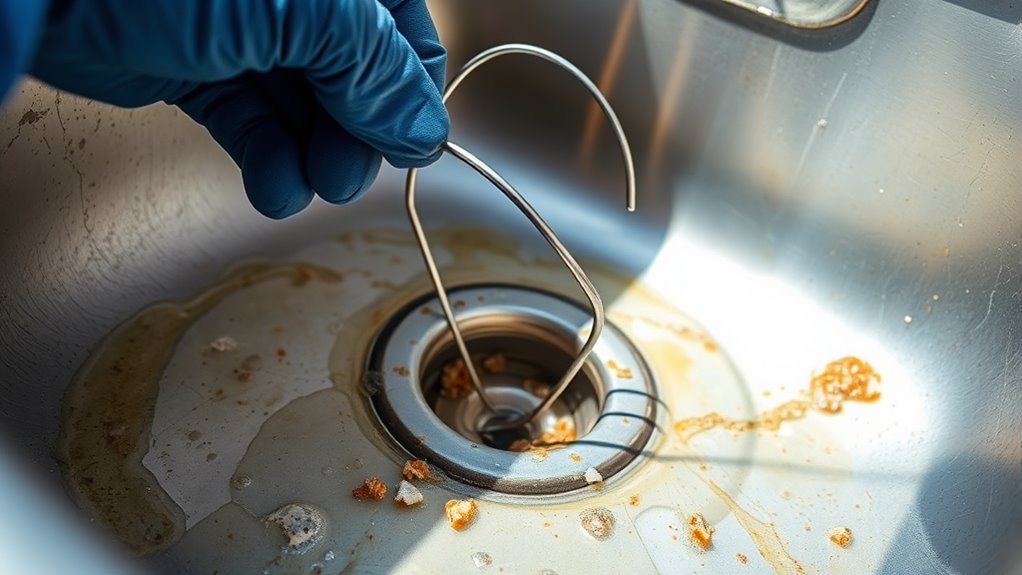
When your kitchen sink drains slowly or backs up, acting quickly can save you a lot of hassle. First, remove any standing water with a cup or small bowl.
Next, try using a plunger. Cover the drain completely and give it several firm pushes. If that doesn’t do the trick, loosen the P-trap underneath the sink by turning the nuts counterclockwise.
Place a bucket underneath to catch water, then remove the trap and clear out any debris or gunk. Rinse the trap and reassemble it.
If the clog still won’t budge, pour a mixture of baking soda and vinegar down the drain. Let it sit for 15 minutes, then flush with hot water. This simple method often clears minor clogs easily.
What Causes Kitchen Sink Clogs? Common Reasons Explained
Kitchen sink clogs often happen because of everyday habits and accumulated debris. When you rinse greasy dishes or pour fats down the drain, they solidify and stick to pipes, forming blockages over time.
Greasy dishes and fats rinsed down the drain can solidify, leading to persistent kitchen sink clogs over time.
Food particles, especially starchy or fibrous foods like rice, pasta, or vegetable peels, can also get lodged and build up. Hair and soap scum may seem minor but can trap debris and create stubborn clogs.
Furthermore, using too much dish soap or chemical cleaners can leave residues that cling to pipes, trapping dirt. Sometimes, small objects accidentally slip into the drain, causing immediate blockages.
Regular neglect of proper disposal practices and ignoring early signs of buildup contribute to these common clog causes. Staying mindful of these habits helps prevent future drain issues.
Signs Your Kitchen Sink Is Clogged and Needs Attention
If your sink is draining slowly or water is pooling, it’s a clear sign something’s blocking the pipe.
You might also notice unpleasant odors or hear gurgling sounds when you run the water.
These signs mean your sink needs attention before the clog gets worse.
Slow Drain Flow
A slow drain flow is often the first sign that your sink is starting to clog. When water takes longer than usual to drain, it’s a sign of buildup in the pipes or a partial blockage. Ignoring this early warning can lead to more severe clogs and backups later.
Look out for these signs: water pooling around the drain before disappearing, increased water level in the sink after use, or a noticeable delay between pouring water and it draining away. Recognizing these early can help you fix the issue before it gets worse.
Regular maintenance like flushing with hot water or using natural cleaning solutions can prevent minor slowdowns from turning into full-blown clogs. Stay vigilant and act quickly when you notice these symptoms.
Unpleasant Odors Emitted
Unpleasant odors wafting from your sink are a clear sign that a clog is forming or worsening. When debris, grease, or food particles build up, they create a breeding ground for bacteria that produce foul smells.
If you notice a persistent, sour, or rotten odor, it’s probably your drain being blocked and needing some attention. These smells won’t just go away on their own and might mean there’s a buildup deep inside your pipes.
Ignoring the smell can lead to bigger clogs and even water backups. To fix it, try cleaning your drain with baking soda and vinegar or use a drain snake to remove the blockage.
Acting quickly can prevent more damage and help bring fresh air back to your kitchen.
Gurgling Sounds Occur
Gurgling sounds coming from your sink usually mean there’s a blockage deeper in the drain. When water has trouble flowing smoothly, air gets trapped, causing that familiar noise. It’s a clear sign your plumbing needs some attention before a full clog forms.
You might notice the gurgling when running water or using the disposal. It can also happen after using the dishwasher or garbage disposal, pointing to a backup somewhere in the system.
Watch for signs like slow drainage combined with gurgling noises, frequent backups in the sink or nearby fixtures, or odd bubbling sounds when you use your sink.
Dealing with these signs early can help prevent bigger clogs. It also makes your DIY unclogging efforts easier and more effective.
Tools Needed to Unclog Your Kitchen Sink
To effectively clear your kitchen sink clog, you’ll need a few essential tools. First, grab a plunger with a rubber cup that fits your sink opening. This is your main tool for dislodging minor blockages.
A plunger with a fitting rubber cup is your primary tool for clearing minor kitchen sink clogs.
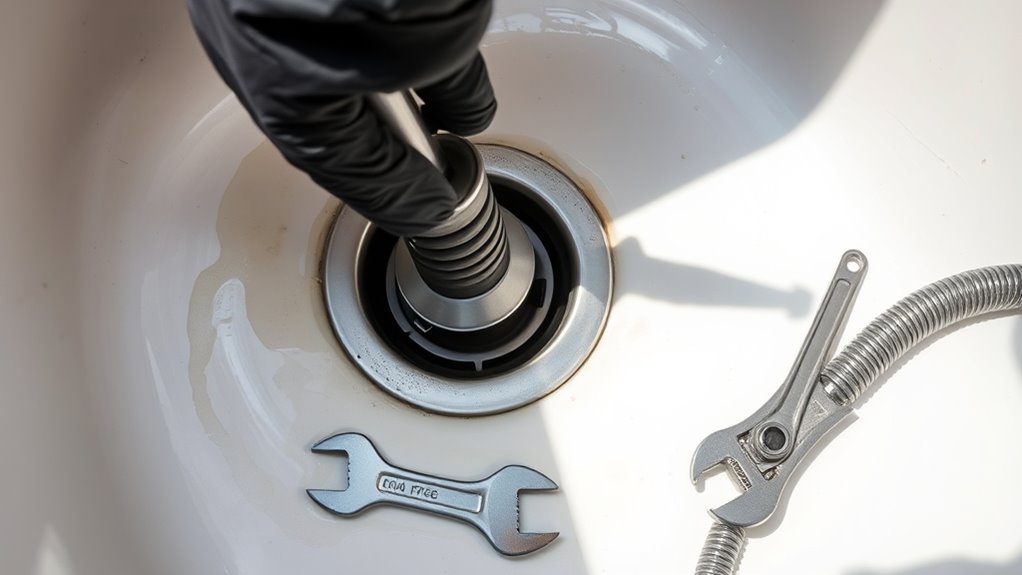
Next, have a drain snake or auger on hand. This flexible tool can reach deep into pipes to break up stubborn clogs. A pair of gloves is important to protect your hands from grime and debris.
Keep a bucket nearby to catch any water or debris that may come loose. You might also want a flashlight to see inside the pipes clearly. Finally, having some old towels or rags nearby can help clean up spills and messes during the process.
With these tools, you’re ready to tackle your sink clog efficiently.
Try Boiling Water to Clear Your Sink Drain
Boiling water can be a simple and effective way to clear minor clogs in your sink drain. When you do it right, it helps loosen grease and soap buildup without needing harsh chemicals.
Just pour the water slowly and carefully to avoid damaging your pipes. This method is easy and can save you a lot of hassle.
Benefits of Boiling Water
Using boiling water is one of the simplest and most effective ways to clear minor clogs in your kitchen sink. It works by melting grease, soap scum, and other debris that often cause blockages.
The heat helps break down stubborn buildups, allowing water to flow freely again. Plus, boiling water is a safe, chemical-free solution, so you don’t have to worry about damaging your pipes with harsh cleaners.
It’s also quick and inexpensive, making it an easy option for everyday maintenance. Benefits include dissolving grease and soap residue naturally, reducing stubborn clogs, and saving you time and money on professional repairs.
Proper Boiling Water Technique
Start by boiling a large pot of water, making sure it reaches a rolling boil. Carefully pour the hot water directly into the drain in a steady, controlled stream. This helps loosen grease, soap scum, and minor clogs.
To get the best results, do this in two or three separate pouring sessions. Let each pour sit for a few seconds before adding more. This allows the hot water to work on the buildup effectively.
Check out the table below to see different water temperatures and what they do:
| Temperature | Effectiveness | Caution |
|---|---|---|
| Boiling (212°F) | Melts grease, clears minor blockages | Handle carefully to avoid burns |
| Hot (around 160°F) | Loosens buildup, gentle clearing | Less effective for stubborn clogs |
| Warm (around 120°F) | Helps dissolve soap scum | Less impactful overall |
Using hot water with patience can really help clear your drain efficiently.
Use a Plunger to Dislodge the Clog
Grabbing a plunger is often the quickest way to tackle a stubborn kitchen sink clog. To get the best results, make sure there’s enough water in the sink to cover the rubber cup of the plunger.
Place the cup firmly over the drain opening to create a tight seal. Pump the handle up and down vigorously for about 15-20 seconds, applying steady pressure. This forces air and water through the blockage, helping to dislodge it.
For better results, use a flange plunger designed specifically for sinks. Keep your pressure steady and controlled during each pump. If needed, repeat the process, making sure the seal stays intact.
A few determined attempts usually clear minor clogs, saving you time and effort.
How to Use Baking Soda and Vinegar to Clear Your Drain
If the plunger doesn’t fully clear the clog, a natural solution often does the trick. Mix about half a cup of baking soda directly into the drain.
If your plunger fails, try pouring half a cup of baking soda into the drain to help clear the clog naturally.
Follow with half a cup of white vinegar, pouring it slowly to create a fizzing reaction. Cover the drain with a plug or a cloth to keep the reaction contained.
Wait 15-30 minutes for the bubbling action to break down the clog. Afterward, flush the drain with hot water to wash away loosened debris.
This method works well for minor buildup and is eco-friendly. You can repeat it if needed, but try to avoid harsh chemicals afterward.
Using baking soda and vinegar regularly can also help prevent future clogs.
Use a Drain Snake to Remove Tough Clogs
Choosing the right drain snake is key to effectively removing tough clogs, so pick one suited for your sink’s size and type.
Once you have the right tool, follow proper techniques like inserting the snake carefully and rotating it to break up the blockage.
With these steps, you’ll clear the drain more efficiently and prevent damage.
Choosing the Right Drain Snake
Selecting the right drain snake is key to clearing tough clogs without damaging your pipes. The type and size of the snake should match the severity of the clog and the pipe diameter.
A flexible auger works well for minor blockages, while a sturdy, longer cable can handle stubborn clogs deep inside the drain. Think about the material—stainless steel is durable, but reinforced plastic might be enough for lighter use.
When choosing, keep these factors in mind: the pipe diameter and the length of the snake for reach and maneuverability, the type of clog—soft debris or solid obstructions—and the material and build quality for durability and ease of use.
Picking the right tool helps you clear the clog efficiently and reduces the risk of damaging your pipes.
Proper Snake Usage Techniques
To effectively remove tough clogs with a drain snake, start by inserting the tip into the drain and turning the handle clockwise to feed the cable deeper into the pipe. Keep steady pressure and avoid forcing the cable, as this can damage the pipe.
When you feel resistance, gently twist and push to break up or hook onto the clog. Continue rotating the handle to latch onto or dislodge the blockage. If you encounter resistance, gently retract the cable while twisting to pull out debris.
Once you feel the clog has cleared, slowly pull the snake out while continuing to turn the handle. Clean the snake thoroughly afterward to prevent future buildup. Proper technique guarantees safe, effective unclogging without damaging your plumbing.
How and When to Use a Wet/Dry Vacuum for Drain Clearing?
A wet/dry vacuum can be a powerful tool for clearing a clogged kitchen sink drain when used correctly. To do this, first make sure the vacuum is set to liquid mode and create a tight seal around the drain opening with the nozzle.
Turn on the vacuum to generate strong suction, which can dislodge the clog. Use steady, controlled pressure to avoid damaging pipes or making a mess. This method works best when the clog is near the surface or within reach of the vacuum’s suction.
Make sure the vacuum is properly sealed to prevent air leaks. Avoid using it on deep or stubborn blockages that may need professional tools. Always wear gloves and eye protection for safety.
Prevent Future Kitchen Sink Clogs With Simple Maintenance Tips
Regularly maintaining your kitchen sink can prevent clogs before they start. Start by pouring hot water down the drain weekly to dissolve grease and soap buildup. Use a mixture of baking soda and vinegar monthly to break down residues; let it sit for a few minutes before rinsing with hot water.
Always scrape food scraps into the trash or compost instead of rinsing them down the drain. Install a drain strainer to catch hair, food, and debris, and clean it regularly. Avoid pouring grease or oil down the drain, as they solidify and cause blockages.
Finally, run cold water after using the sink to flush away leftover particles. These simple habits keep your drain clear and functioning smoothly, saving you from future clogs and costly repairs.
Frequently Asked Questions
How Often Should I Perform Drain Maintenance to Prevent Clogs?
You should perform drain maintenance every three to six months to prevent clogs. Regularly flushing your drain with hot water helps break down grease and soap buildup.
Use a mixture of baking soda and vinegar monthly to keep your pipes clear and neutralize odors. Avoid pouring fats or oils down the drain, as they can cause blockages.
Consider installing a drain strainer to catch debris and make cleanup easier. Consistent maintenance keeps your sink flowing smoothly and prevents major blockages.
Are Chemical Drain Cleaners Safe for My Pipes?
Chemical drain cleaners can be tempting, but they aren’t always safe for your pipes. They often contain harsh chemicals that can corrode metal and damage PVC over time.
Instead, consider natural alternatives like baking soda and vinegar, or use a plunger for minor clogs. Regular maintenance helps, but avoiding harsh chemicals keeps your pipes healthier longer and helps prevent costly repairs.
Your pipes deserve gentle, effective care.
Can Hair Be the Main Cause of Kitchen Sink Clogs?
Yes, hair can be a main cause of kitchen sink clogs, especially if it mixes with grease, soap residue, or food particles. Hair strands tend to stick to pipes and trap debris, creating a blockage over time.
To prevent this, use a drain cover to catch hair and clean it out regularly. If a clog happens, removing hair manually or using a drain snake can help clear the blockage efficiently.
What Are Natural Alternatives to Chemical Drain Cleaners?
Did you know that over 90% of drain clogs can be cleared using natural remedies? You can try pouring a mixture of baking soda and vinegar down your drain, which reacts to loosen debris. Follow up with hot water to flush out the clog.
Alternatively, a combination of salt, baking soda, and boiling water can work effectively. These natural options are safer and eco-friendly, making them a smart choice.
When Should I Call a Professional Plumber Instead of DIY?
You should call a professional plumber when your DIY efforts don’t clear the clog or if you notice persistent backups, foul odors, or slow drainage that gets worse over time.
If you suspect a broken pipe, severe blockage, or water damage, it’s best to get expert help. Trying to fix these issues yourself might cause more damage or delay proper repairs.
Don’t hesitate to call a professional when needed. It can save you time, money, and stress in the long run.
Conclusion
Think of your kitchen sink like a busy highway. When traffic slows or stalls, it’s a sign something’s blocking the flow.
By following these simple DIY steps, you’re effectively clearing the congestion before it causes a full-blown jam. Just like regular tune-ups keep your car running smoothly, routine maintenance prevents stubborn clogs.
Keep these tips handy, and you’ll keep your sink flowing freely. This way, you can turn a potential disaster into a quick fix with your DIY skills.
Remember, regular drain maintenance is key to preventing future clogs and keeping everything running smoothly.