Kitchen Scale Basics: How to Use It for Accurate Weighing
Are you tired of guessing measurements in your recipes and ending up with less-than-perfect results? You’re not alone—many home cooks struggle with accuracy in the kitchen.
A kitchen scale can be a game-changer, helping you achieve consistent, delicious dishes every time.
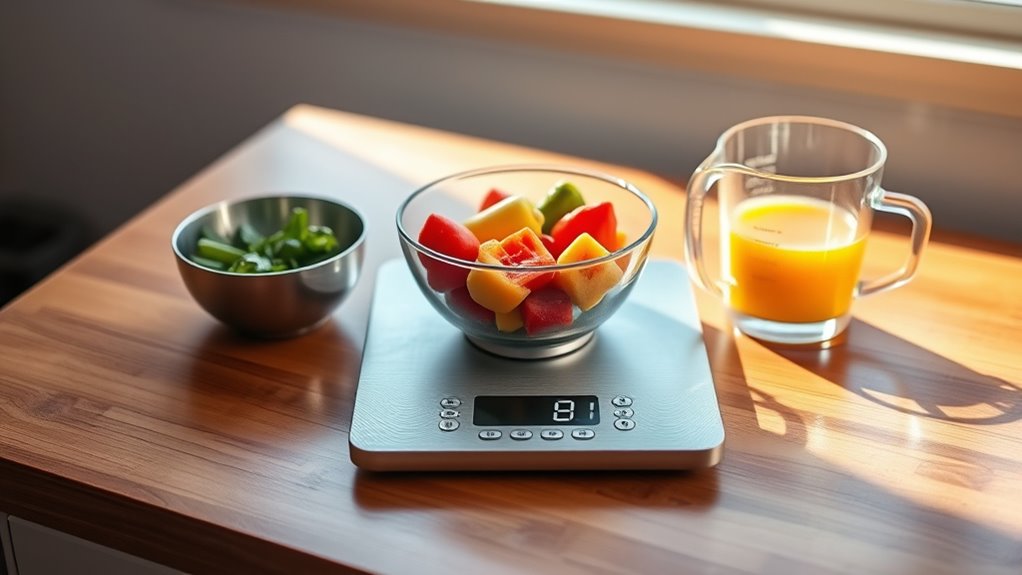
To use a kitchen scale accurately, place it on a flat, stable surface and turn it on. Zero it out with the tare function before adding ingredients, whether solids or liquids.
Use precise containers for liquids and avoid overpacking dry ingredients. Regularly clean and calibrate your scale for best results.
If you keep these tips in mind, you’ll improve your cooking precision—plus, you’ll uncover more helpful techniques as you continue exploring.
Key Takeaways
- Place the scale on a flat, stable surface to get accurate readings.
- Turn it on and reset to zero or tare before you start weighing your ingredients.
- Use the tare function to subtract the weight of your container so you’re only measuring the ingredient.
- Make sure the scale is clean and free of any debris for the most precise measurements.
- Always read the measurements at eye level to avoid mistakes.
- Also, avoid overfilling or packing ingredients too tightly on the scale.
Why Use a Kitchen Scale for Precise Cooking and Baking?
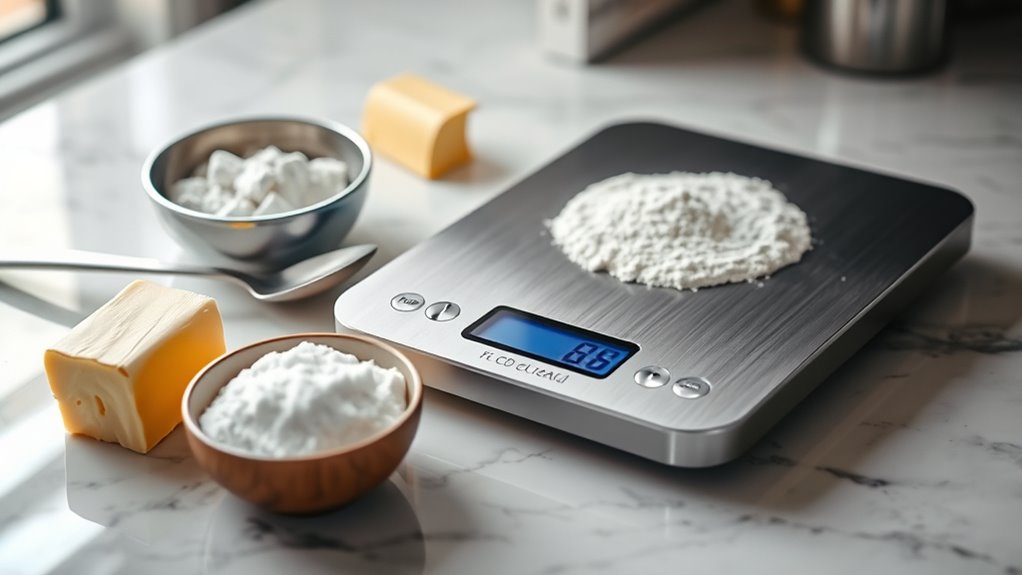
Using a kitchen scale guarantees your measurements are exact, which is essential for consistent results in cooking and baking. When you rely on volume measurements like cups or teaspoons, small variations can lead to inconsistent flavors or textures.
Using a kitchen scale ensures precise measurements for consistent, professional results in every dish.
A scale ensures you measure ingredients by weight, providing accuracy every time. This precision is especially important for recipes that depend on exact ratios, such as baked goods, where the balance of ingredients affects rise and texture.
It also helps when you’re adjusting recipes or working with unfamiliar ingredients. By using a kitchen scale, you eliminate guesswork, making your cooking more reliable and professional.
Ultimately, it’s the best way to achieve perfect, repeatable results every time you cook or bake.
How to Set Up Your Kitchen Scale Correctly
Setting up your kitchen scale correctly is essential to guarantee accurate measurements every time.
First, place your scale on a flat, stable surface to confirm consistent readings. Turn it on and wait for it to display zero or a tare reading.
If your scale has a tare function, press it to reset the display to zero after placing any container or plate. Make sure the scale is clean and free of dust or debris, which can affect accuracy.
Check the battery if the display is flickering or inconsistent, and replace it if necessary. Always calibrate your scale if it has a calibration feature, following the manufacturer’s instructions.
Proper setup guarantees your measurements are precise, helping you cook and bake with confidence.
What Are the Different Types of Kitchen Scales?
There are several types of kitchen scales designed to suit different cooking and baking needs. Mechanical scales use a spring mechanism, offering simplicity and no batteries, which is great for basic measurements.
Mechanical kitchen scales are simple, battery-free tools perfect for basic measurement needs.
Digital scales give precise readings with a clear display, making them perfect for recipes that need accuracy. Some models also have features like tare functions and unit conversions, adding to their versatility.
Balance scales compare ingredients against known weights and are handy for specialty baking or scientific tasks. Lastly, portable pocket scales are compact and convenient for small measurements or when you’re on the go.
Your choice depends on your cooking style, how precise you need to be, and your budget. Knowing these options can help you pick the right scale to make your kitchen tasks easier and more accurate.
How to Calibrate Your Kitchen Scale for Accurate Measurements
Calibrating your kitchen scale regularly makes sure you get accurate measurements every time you cook or bake.
First, turn on your scale and make sure it’s on a flat, stable surface. Check your scale’s manual to see if it has a calibration mode; if it does, follow the instructions to enter calibration mode.
Usually, this involves pressing a button and placing a calibration weight on the platform. Use a known, precise weight—like a small calibration weight or a standard item like a coin—to test accuracy.
If your scale is off, follow the manufacturer’s guidelines to reset or recalibrate. Regular calibration keeps your measurements precise and ensures your recipes turn out just right.
How to Use the Tare Function to Simplify Weighing
Once your scale is properly calibrated, using the tare function can make weighing multiple ingredients much easier. To activate it, place your container on the scale and press the tare or zero button. This resets the display to zero, ignoring the container’s weight.
When you add an ingredient, the scale only shows that item’s weight. This makes measuring more straightforward and reduces cleanup.
To get the most out of the tare function, make sure the container is stable before pressing tare. Always reset to zero after placing a new container. Use the tare function for each additional ingredient.
Avoid overloading the scale, as it can affect accuracy. Double-check that the scale reads zero before weighing each item to ensure precise measurements.
Tips for Measuring Liquids and Solids Accurately
To measure liquids and solids accurately, paying attention to details like container choice and measurement technique is essential. Use a flat, level surface for your scale to guarantee precise readings.
When measuring liquids, place the container directly on the scale, then zero out the weight with the tare function before pouring. For solids, place the item in a container or directly on the scale, depending on the recipe, and tare if needed to exclude the container’s weight.
Use clear, graduated containers for liquids so you can see the measurement easily. Avoid overfilling or packing ingredients tightly, as this can lead to inaccurate results.
Always measure at eye level to prevent parallax errors and double-check your measurements for consistency.
How to Weigh Small or Sticky Ingredients Effectively
To weigh small or sticky ingredients accurately, start by choosing non-stick containers. This helps prevent sticking and makes cleanup a lot easier.
Be gentle when applying pressure on the scale so you don’t accidentally shift the ingredients. Always use the tare function to reset the scale between measurements.
These simple tips help you get precise results without any frustration.
Use Non-Stick Containers
Using non-stick containers is a smart way to weigh small or sticky ingredients accurately. They help prevent ingredients from clinging to the sides, ensuring precise measurements.
When choosing a non-stick container, think about its size relative to your ingredient so you don’t overload it. Before weighing, make sure the container is clean and dry to avoid extra weight or moisture messing with your measurements.
Using a non-stick container also means less scraping or transferring ingredients later. For the best results, look for containers made from silicone, coated metal, or non-stick plastic.
Keep in mind that some coatings can wear over time, so it’s a good idea to inspect them regularly. This simple step helps you get consistent, accurate measurements and makes cleanup easier, making your cooking and baking more efficient.
- Choose the right size for your ingredients
- Confirm the container is clean and dry
- Opt for durable, high-quality non-stick coatings
- Avoid overloading to prevent inaccurate readings
- Regularly inspect for coating wear
Apply Light Pressure Carefully
Gently applying light pressure on the container or ingredients helps ensure accurate weighing, especially for small or sticky items. Pressing too hard can shift or compress the ingredients, which leads to inaccurate results. To avoid this, use a gentle touch and keep your hand steady.
For better control, try these tips:
| Tip | Explanation | Benefit |
|---|---|---|
| Use fingertip | Lightly touch the container or ingredients | Prevents excess pressure |
| Practice small taps | Tap gently instead of pressing down | Maintains stability |
| Monitor weight | Watch the display closely as you apply pressure | Ensures precise reading |
Applying light, controlled pressure helps your measurements stay accurate, giving you reliable results every time.
Use Tare Function Effectively
Applying light pressure on the scale helps ensure accurate readings, especially when handling small or sticky ingredients. To guarantee precision, always use the tare function correctly.
First, place your container or bowl on the scale and press the tare button to reset the display to zero. This lets you add ingredients without including the container’s weight.
When weighing sticky items, use a spatula or paper to transfer small amounts onto the container, then tare again if needed. Keep these tips in mind:
- Use the tare function after adding each ingredient for layered measurements
- Avoid overloading the scale to prevent inaccuracies
- Reset to zero before adding new ingredients
- Use a non-stick or parchment paper to minimize sticking
- Double-check the display before recording your measurement
How to Clean and Maintain Your Kitchen Scale
Keeping your kitchen scale clean and accurate is key to getting reliable measurements.
Just wipe the surface with a damp cloth regularly to keep it looking its best.
It’s also a good idea to check its calibration now and then to make sure it’s precise.
Proper maintenance will help your scale stay in top shape and last longer over time.
Regularly Clean the Surface
To keep your kitchen scale accurate and looking good, make it a habit to clean its surface regularly. This helps prevent residue buildup that can affect precise measurements.
Use a soft, damp cloth to wipe the surface gently. Avoid harsh chemicals or abrasive materials that might cause damage. For stubborn stains, a mild soap solution works well.
Make sure the surface is completely dry before using the scale again. Regular cleaning not only maintains hygiene but also helps extend the lifespan of your scale.
Here are some tips to keep in mind:
- Avoid oversaturating with water
- Use only non-abrasive cleaners
- Wipe in a gentle, circular motion
- Keep the surface dry after cleaning
- Store the scale in a clean, dry place when not in use
Calibrate for Accuracy
Regularly cleaning your kitchen scale helps keep it accurate, but over time, small calibration issues can still happen. To stay precise, it’s a good idea to calibrate your scale every now and then.
Start by turning on the scale and placing it on a flat, level surface. If you have calibration weights, use those—they’re the most accurate way to check. If not, pick a reliable object with a known weight.
Follow your scale’s instructions for calibration. This might mean pressing a button or holding a specific combination. Afterward, weigh an object to see if the scale is still accurate.
If the measurement is off, repeat the calibration process or check the manual for troubleshooting tips. Regular calibration ensures your measurements stay precise, so your recipes turn out perfect every time.
Troubleshooting Common Issues With Your Kitchen Scale
When your kitchen scale isn’t working properly, troubleshooting can help identify and fix common issues quickly. First, make sure it’s on a flat, stable surface. Check for any debris or spills that might interfere with the sensors.
If the display shows incorrect readings, try recalibrating or resetting the scale. Sometimes, weak batteries can cause problems, so it’s a good idea to replace them. Confirm that the scale is zeroed before weighing.
If you notice inconsistent results, avoid placing items off-center. Also, inspect the scale for any damage or cracks that could impair its functionality. Regular cleaning and maintenance can help keep it working smoothly.
Frequently Asked Questions
Can I Use My Phone or Smartphone App as a Kitchen Scale?
You can’t reliably use your phone or smartphone app as a kitchen scale because they lack the necessary sensors for accurate weight measurement. While some apps claim to do so, they typically rely on estimating weight based on other data, which isn’t precise.
For accurate results, invest in a proper kitchen scale. It guarantees your measurements are consistent, especially for baking or recipes that need exact ingredient quantities.
What Is the Maximum Weight Capacity of Typical Kitchen Scales?
Most kitchen scales can handle weights between 5 to 11 pounds (2.2 to 5 kg), but some heavy-duty models go up to 22 pounds (10 kg) or more.
You should check your specific scale’s maximum capacity to avoid overloading it. Always weigh ingredients within the scale’s limit for accurate measurements.
If you often need to weigh larger quantities, consider investing in a scale with a higher capacity.
How Often Should I Replace the Batteries in My Kitchen Scale?
Think of your kitchen scale as a trusty sidekick in your culinary adventures. You should swap out the batteries when the display dims or flashes like a warning sign.
Check it every few months, especially if you notice inconsistent readings. Keeping fresh batteries in your scale guarantees it stays sharp, like a well-honed knife.
This helps you measure ingredients with precision and confidence every time you cook.
Are There Specific Scales Recommended for Professional Baking?
For professional baking, you want a digital scale that offers high precision, usually with readability to at least 0.1 grams.
Brands like Ohaus, OXO, and Escali are popular because they’re durable, accurate, and easy to calibrate.
Look for a scale with a large, stable platform and a tare function for convenience.
Investing in one with a smooth, easy-to-clean surface helps ensure your measurements stay consistent and reliable for all your baking needs.
How Do I Prevent Cross-Contamination Between Different Ingredients?
Did you know cross-contamination can cause foodborne illnesses? To prevent it, always use separate measurement bowls for different ingredients, especially raw meats and produce.
Clean your scale thoroughly after each use with soap and warm water, and avoid cross-contact by not placing raw ingredients directly on the scale.
Label containers clearly and store ingredients separately. These habits keep your kitchen safe and your recipes tasting their best.
Conclusion
Mastering your kitchen scale isn’t just about accuracy; it’s about trusting the process, where every measurement becomes a small coincidence guiding your culinary creations. With proper setup, calibration, and care, you’ll find that precise weighing seamlessly becomes part of your cooking rhythm.
Sometimes, it’s surprising how a simple tool like a kitchen scale can boost your confidence in recipes. When you understand how to use it correctly, even the smallest details help turn ordinary ingredients into extraordinary dishes.