What’s the Best Water Softener Salt in 2026?
Are you tired of dealing with hard water stains, soap scum, and mineral buildup? You’re not alone—many people struggle with finding the right water softener salt that keeps their systems running smoothly.
In 2026, the best water softener salt balances high purity, reliable dissolving, and compatibility with your system. Expect top choices like Morton evaporated pellets and Diamond solar salt, which minimize residue and improve performance.
While eco-friendly options like potassium chloride cost more, they’re worth considering for sustainability.
To get the most out of your softener, you should choose quality salt and maintain it properly.
Keep going to uncover tips for selecting and managing the perfect salt for your needs.
Key Takeaways
- High-purity evaporated salt (99%) ensures your softener works its best and helps prevent mineral buildup.
- Potassium chloride is a great eco-friendly option for households that need to limit sodium.
- If you’re on a budget, consider rock salt—it’s a cost-effective choice.
- Stick with trusted brands like Morton, Diamond, or Cargill for reliable quality.
- Regular maintenance and proper salt storage can make your system run smoother and last longer.
What Are the Key Factors to Consider When Choosing Water Softener Salt?
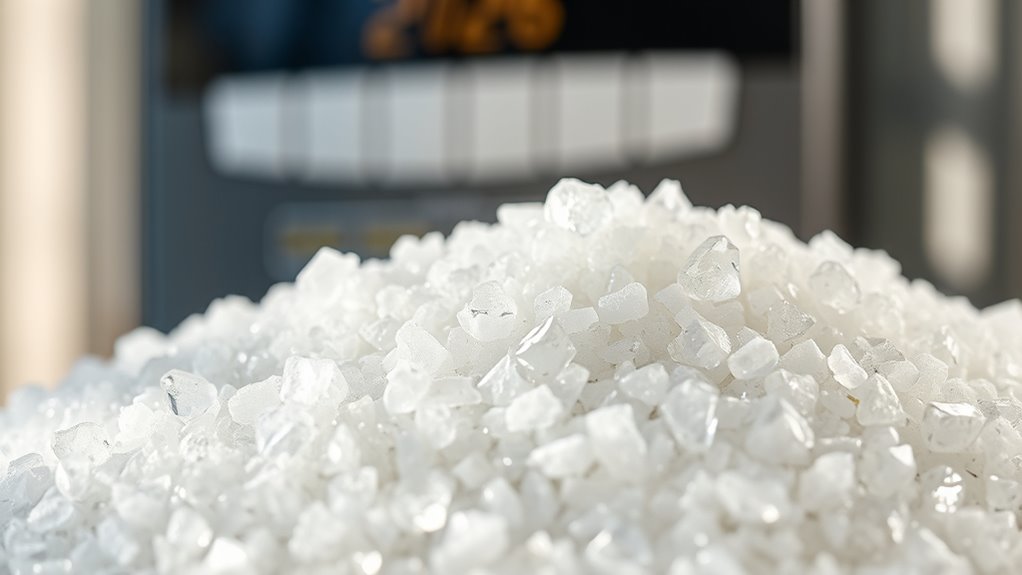
When selecting water softener salt, understanding the key factors can help you make the best choice for your needs.
First, consider the type of salt, such as solar or rock salt, as each offers different purity levels and dissolving rates.
Next, check the salt’s purity; higher purity salts reduce the risk of mineral buildup in your system.
Also, think about the grain size—pellet or crystal forms can influence how quickly the salt dissolves and how easy it is to handle.
Cost is another factor; while some salts might seem more affordable upfront, they could require more frequent refills.
Finally, verify compatibility with your water softener model to guarantee peak performance.
Paying attention to these factors helps maximize efficiency and prolongs your system’s lifespan.
Which Water Softener Salt Types Are Available in 2026?
In 2026, you’ll find several types of water softener salts, each with different purity levels, costs, and availability. Knowing your options helps you pick the best one for your needs and budget.
Let’s look at the main salt types and what makes them different.
Salt Types Overview
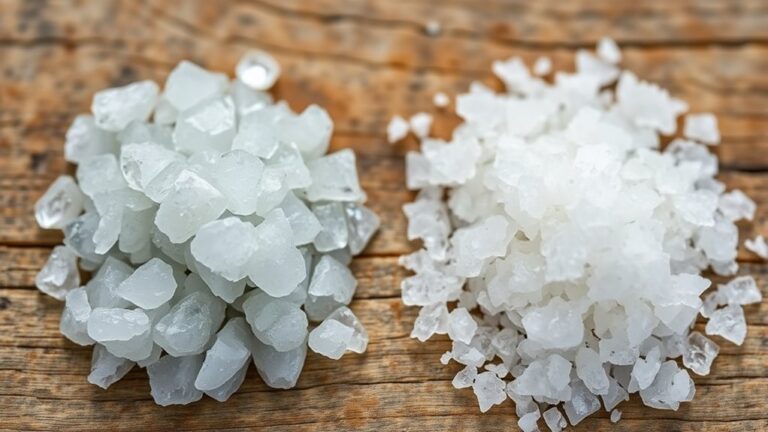
By 2026, you’ll find a variety of water softener salt options designed to meet different needs and preferences. These include different types based on composition, form, and intended use. Common options are solar salt, rock salt, evaporated salt, and potassium chloride. Each type offers unique benefits, like cost savings or being more environmentally friendly.
| Salt Type | Form | Key Benefit |
|---|---|---|
| Solar Salt | Crystals | Eco-friendly and affordable |
| Rock Salt | Lump or Block | High mineral content |
| Evaporated Salt | Pellets or Crystals | Purity and efficiency |
| Potassium Chloride | Pellets | Good alternative for reducing sodium |
These options give you choices depending on what matters most to you, like cost, environmental impact, or purity.
Salt Purity Levels
The purity level of water softener salt really affects how well it works and how long it lasts. Higher purity salts, like solar or evaporated types, have fewer impurities that can clog your system or cause buildup over time.
Look for salts with at least 99% purity for the best performance. Lower purity options, like rock salt or block salt, often contain contaminants like clay or minerals, which can reduce efficiency and increase maintenance.
Choosing a high-purity salt ensures your softener runs smoothly, prevents scaling, and helps your equipment last longer. Always check the label for purity percentages before buying.
Investing in high-purity salt gets you the most out of your water softening system and helps avoid potential problems later on.
Cost and Availability
As you consider different water softener salts, understanding their cost and availability in 2026 can help you make smarter choices.
Generally, salt prices fluctuate based on material type and regional supply. Solar pellets and potassium chloride tend to be more expensive, but they’re often more eco-friendly.
Sodium chloride in the form of regular rock or pellet salt is usually the most affordable and widely available. You’ll find these salts in hardware stores, supermarkets, and online retailers year-round.
Availability remains steady for common types like rock salt and pellets, but specialty salts like potassium chloride might require a bit more searching. Planning ahead and comparing prices can save you money, especially if you need large quantities over time.
What Are the Top Water Softener Salt Brands in 2026 and Their Features?
Ever wonder which water softener salt brands stand out in 2026? Some top contenders include Morton, Diamond, and Cargill. Morton offers high-quality, reliable evaporated salt pellets that dissolve quickly and leave minimal residue.
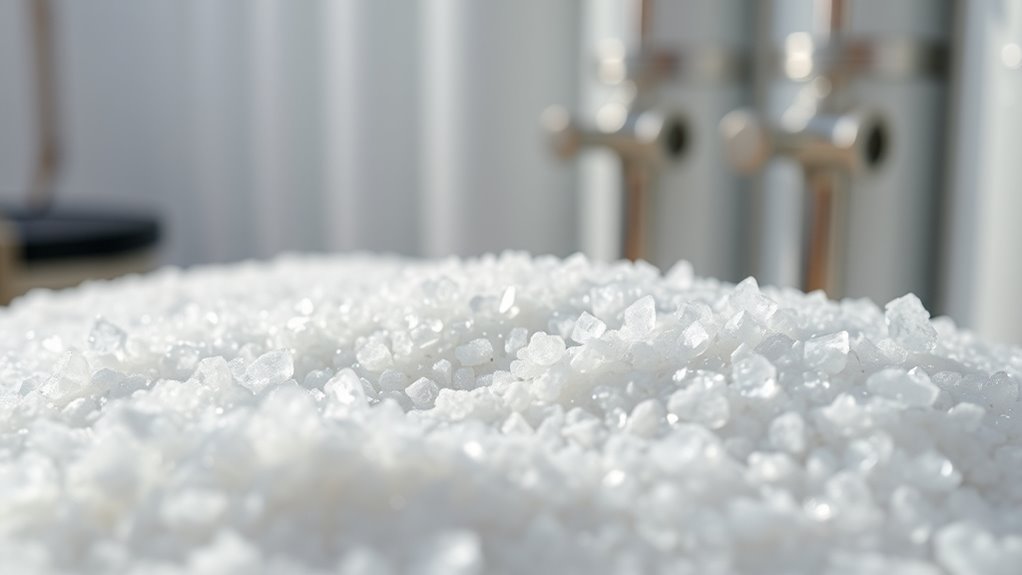
Diamond’s Solar salt is known for its eco-friendly production and consistent performance, making it a popular choice for many households.
Cargill’s Maldon brand provides premium pellet salt with excellent solubility and low impurities, ensuring your system runs efficiently.
These brands prioritize purity, dissolvability, and durability, helping you maintain soft water and protect your appliances.
When choosing a brand, consider their reputation for quality, ease of use, and environmental impact.
These top brands are trusted in 2026 for delivering effective salt that keeps your water softening system running smoothly.
How Do You Pick the Best Water Softener Salt for Your System?
Choosing the right water softener salt depends on understanding your system’s specific needs and your water quality. First, check your softener’s manual for recommended salt types, as some systems work best with certain kinds.
Consider your water’s hardness level. If it’s very high, you might need a salt that’s more effective at removing minerals. Look at the salt’s purity—high-purity salts reduce the risk of residue buildup and salt bridges.
High water hardness requires more effective, high-purity salts to prevent residue buildup and salt bridges.
Also, think about your budget and maintenance preferences. Pellets, crystals, or blocks each have their own advantages. Finally, pay attention to local water conditions and any specific recommendations from your softener’s manufacturer.
Picking the right salt guarantees ideal softening, efficiency, and longevity for your system.
Are Eco-Friendly Water Softener Salts Worth the Extra Cost?
Are eco-friendly water softener salts worth the extra cost? It really depends on what’s important to you. Here are four reasons to consider them:
- Environmental Impact: Eco-friendly salts create less waste and help reduce pollution.
- Health Benefits: They usually have fewer additives and chemicals, making your water safer to drink.
- System Longevity: Using eco salts can help extend your softener’s life by reducing mineral buildup.
- Regulatory Compliance: Choosing environmentally responsible salts can help you meet green standards and local rules.
While these salts often cost more, their benefits for the environment and your health might make the extra expense worthwhile. If lowering your ecological footprint matters to you, eco-friendly softener salts could be a good investment.
Which Water Softener Salt Offers the Best Value for Your Money?
While eco-friendly salts offer benefits for the environment and health, many homeowners also want to get the best value for their money. To do this, look for salts that balance cost with effectiveness.
Regular solar or rock salts tend to be more affordable and provide good softening performance over time. Pellets or crystals often dissolve quickly, reducing maintenance and salt waste, which saves you money in the long run.
Avoid overly processed or specialty salts that come with a higher price tag without offering significant benefits. Consider brands with proven durability and consistent performance.
Ultimately, choosing a salt that lasts longer and works efficiently guarantees you get the most bang for your buck. Focus on quality and price to find the best value for your water softener needs.
How Do You Troubleshoot Common Water Softener Salt Problems?
Experiencing issues with your water softener salt can be frustrating, but many problems are easy to diagnose and fix with a little troubleshooting.
First, check for salt bridges or mushing, which can block salt from dissolving properly. These build-ups can prevent the system from working correctly.
Next, confirm your salt level is adequate. Low salt levels can reduce the softening efficiency and cause issues.
Then, inspect the brine tank for salt clumps or debris that might be blocking the system’s operation. Clearing out any buildup helps keep everything running smoothly.
Finally, verify your water softener’s settings and make sure the regeneration cycle is running as scheduled. Proper settings ensure your system works effectively.
Tips for Maintaining and Replacing Your Water Softener Salt Effectively
To keep your water softener working efficiently, regularly check the salt levels and refill when needed.
Storing salt properly helps prevent moisture absorption and clumping, keeping your supply dry and effective.
Regular Salt Level Checks
Regularly checking the salt level in your water softener is key to making sure it works well and lasts longer. If the salt isn’t topped up, the system can’t regenerate properly, which can lead to hard water and less effective performance.
To keep everything running smoothly, check the salt level once a week so it doesn’t get too low. Make sure the salt stays above the brine line, but don’t overfill the tank.
Use high-quality water softener salt to avoid clogs and buildup over time. Also, clean out any salt bridges or mounded salt deposits that may form, so your system stays in good shape.
Staying on top of these simple steps helps your water softener run at its best, saving you money and helping it last longer.
Proper Storage Practices
Keeping your water softener working well isn’t just about checking the salt level; how you store your salt matters too. Store it in a dry, covered container to keep moisture out, which can cause clumping and make it less effective.
Avoid placing salt directly on the ground. Use pallets or shelves to keep it off the floor and protect it from leaks or spills. Make sure the storage area is well-ventilated to prevent humidity from building up.
Always seal the container tightly after refilling to keep out moisture and contaminants. Regularly check your salt for signs of moisture or caking, and replace any hardened salt.
Proper storage keeps your salt effective, extends its shelf life, and helps your water softener run smoothly.
Frequently Asked Questions
How Often Should I Refill My Water Softener Salt in 2026?
You should refill your water softener salt whenever the salt levels drop below the recommended level, usually once a month or every 3 to 4 weeks.
Check the brine tank regularly, especially if you notice a decrease in water softening efficiency or if the salt has formed a crust.
Regularly maintaining the salt level guarantees your system works efficiently and prevents mineral buildup in your appliances and pipes.
Can Specific Water Softener Salts Cause System Damage?
Yes, specific water softener salts can cause system damage. Using high-purity, properly formulated salts helps reduce mineral buildup and the risk of corrosion.
Lower-quality salts often contain impurities like dirt, clay, or excess sodium. These can clog your system or damage components over time.
To keep your softener in good shape, always choose recommended, high-grade salts. Avoid salts with added additives or anti-caking agents.
This way, your system runs smoothly and lasts longer.
What Are the Signs of Low Salt Levels in My Water Softener?
You’ll notice your water softener isn’t working properly if you see scale buildup on fixtures or soap isn’t lathering well. If your salt levels are low, the system may cycle more often or produce hard water.
You might also detect a salty taste in your water or notice decreased water pressure. Regularly check the salt level in the brine tank to prevent these issues and keep your softener running smoothly.
Are There Health Concerns With Using Certain Water Softener Salts?
Did you know that over 70% of households in the U.S. use water softeners?
When it comes to health concerns, some salts have added chemicals or high sodium levels. This can be an issue for people on low-sodium diets or with certain health conditions.
To stay safe, choose high-purity, food-grade salts like solar or evaporated salt. They help reduce health risks and ensure your family gets clean, softened water.
How Does Water Temperature Affect Salt Dissolving and Efficiency?
Warmer water speeds up salt dissolving and makes the softener work better because heat lowers the solution’s viscosity and boosts molecular movement.
When water is hot, salt dissolves faster, which helps your softener regenerate more effectively.
On the other hand, cold water slows down dissolution, which can cause salt build-up and reduce efficiency.
To get the best performance, use warm water when refilling salt or doing maintenance, especially in colder climates or during winter.
Conclusion
Choosing the right water softener salt is like tending a garden—you’ll see the best results when you select quality, match your system’s needs, and stay consistent. Think of each salt type as a piece of your water treatment puzzle—fitting perfectly guarantees smooth operation.
By understanding your options and maintaining your system, you’ll keep your water softening process flowing smoothly. With the best water softener salt in 2026, your water will stay soft and your system will run efficiently, just like a well-tended garden blooming beautifully through careful, ongoing care.