What Temperature Does Corned Beef Fall Apart How to Guide
Many people struggle with getting their corned beef just right—tender, juicy, and falling apart easily. If you’ve ever been disappointed by tough slices or dry meat, you’re not alone.
The secret to perfect corned beef is all about cooking it to the right temperature and patience.
To make corned beef fall apart, cook it until the internal temperature reaches about 195°F to 200°F. Use a reliable meat thermometer to monitor the temperature, inserting it into the thickest part of the meat.
Low and slow cooking, like simmering or slow cooking, helps break down the connective tissues for tender, juicy results. Keep an eye on timing and temperature, and you’ll be on your way to perfect tenderness—more tips await if you keep exploring.
Key Takeaways
- Corned beef falls apart when cooked to an internal temperature of 190°F to 200°F (88°C to 93°C).
- Keep an accurate meat thermometer handy to track the temperature as you cook.
- Cooking it low and slow in this temperature range helps break down collagen, making the meat tender and easy to shred.
- After cooking, let the meat rest for about 15 minutes. This step really helps improve tenderness and keeps the juices in.
- Whether you’re slow cooking, pressure cooking, or using sous vide, reaching the right temperature is key for that perfect fall-apart texture.
What Is the Ideal Temperature for Corned Beef to Fall Apart?
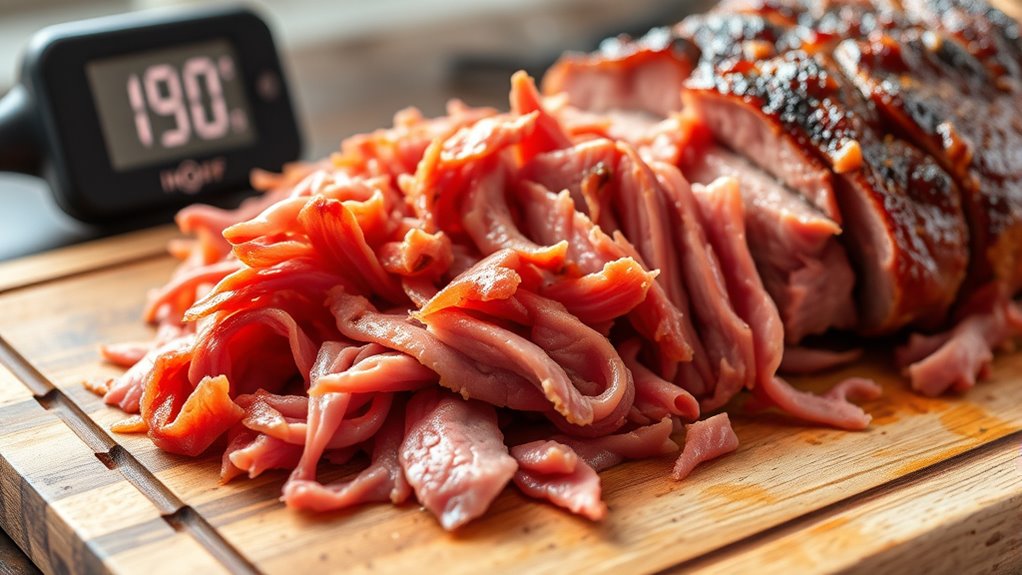
Have you ever wondered at what temperature corned beef becomes so tender it falls apart? The ideal temperature to achieve this perfect tenderness is around 195°F to 200°F (90°C to 93°C).
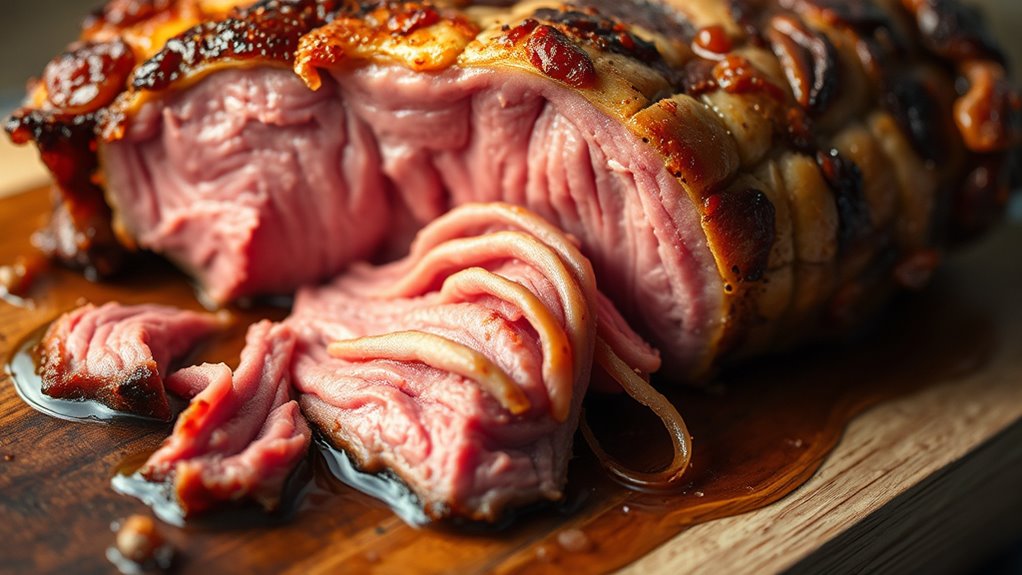
At this range, the collagen in the meat breaks down completely, transforming tough muscle fibers into melt-in-your-mouth goodness. Cooking within this temperature zone guarantees the beef is not just cooked through but tender enough to easily shred or pull apart.
Keep in mind, reaching this temperature requires patience because it takes time for the heat to penetrate and break down the connective tissues. Once you hit this range, you’ll notice the meat has a juicy, tender texture that’s perfect for shredding or serving as slices.
How to Monitor Corned Beef’s Temperature During Cooking
Monitoring the temperature of corned beef accurately is key to getting that perfect tenderness. To do this, insert a reliable meat thermometer into the thickest part of the meat, avoiding fat and bone.
Keep the thermometer steady and make sure it doesn’t touch the sides or bottom of the pot, as this can give false readings. Check the temperature periodically as it gets close to your target range.
Keep the thermometer steady and avoid contact with the pot’s sides or bottom for accurate readings.
For the best results, use a digital instant-read thermometer for quick and accurate readings. If you’re slow-cooking, consider a probe thermometer that stays in the meat.
This allows continuous monitoring without opening the lid, which helps maintain a consistent temperature. It also prevents overcooking, so your corned beef stays tender without falling apart too soon.
How Long Does It Take to Reach the Perfect Temperature?
Once you’ve set your thermometer and started cooking, it’s good to know roughly how long it takes for corned beef to reach the right temperature. Usually, at a simmer, a 3-pound piece takes about 2 to 3 hours to hit 190°F (88°C), which makes it tender.
Keep in mind that larger cuts might take longer—sometimes 4 hours or more. Cooking at a higher temperature can speed things up but risks overcooking the meat. Using a reliable thermometer helps ensure accuracy and consistency.
After cooking, let the meat rest a bit so the juices redistribute. This step completes the process and keeps the meat juicy and flavorful. Patience is key—rushing can ruin the tenderness and flavor.
Tips for Cooking Tender, Fall-Apart Corned Beef
To get tender, fall-apart corned beef, it’s best to cook it low and slow so the connective tissues can break down gradually. Use a gentle simmer instead of a rapid boil to keep the meat moist and tender.
Keep the temperature steady at around 190-200°F (88-93°C). This helps break down collagen without drying out the meat. Don’t rush—plan for at least 2.5 to 3 hours, depending on the size of your brisket.
Maintain a steady 190-200°F (88-93°C) to tenderize without drying out the meat.
Adding enough liquid, like water or broth, keeps the beef moist and helps it cook evenly. Cover the pot to lock in heat and moisture. After cooking, let the meat rest for about 15 minutes before slicing.
Resting allows the juices to redistribute, making the beef even more tender and flavorful.
Common Mistakes That Keep Corned Beef From Falling Apart
One common mistake is overcooking or undercooking the meat, which keeps it from becoming tender enough to fall apart.
Another issue is not letting the meat rest long enough after cooking, so it stays too firm.
Paying attention to cooking times and resting periods makes a big difference.
That’s how you get that perfect, melt-in-your-mouth texture.
Overcooking or Undercooking Meat
Have you ever cooked corned beef only to find it too tough or falling apart too easily? Overcooking or undercooking is a common mistake that affects texture.
When you cook it too long, the collagen breaks down excessively, making the meat mushy. If you don’t cook it enough, the connective tissues stay tough, and it won’t fall apart.
To get it just right, monitor the cooking time carefully. Use a reliable thermometer to check the internal temperature.
Aim for a temperature around 190-200°F (88-93°C) for tender, falling-apart meat. Avoid rushing the process; patience is key to ideal texture.
Proper cooking guarantees your corned beef reaches that perfect balance of tenderness and moisture.
Insufficient Resting Time
Even if you cook corned beef perfectly, rushing to serve it without giving it enough rest can prevent it from falling apart. Resting allows the juices to redistribute throughout the meat, making it tender and easier to shred.
If you cut into it immediately after cooking, the juices will escape, leaving the meat dry and tough. Ideally, let your corned beef rest for at least 15-20 minutes after removing it from heat.
Wrap it loosely in foil to retain heat while resting. Skipping this step can ruin the texture, making the meat less likely to fall apart easily.
Patience is key—giving the meat adequate rest guarantees maximum tenderness and that perfect, fall-apart consistency you’re aiming for.
Troubleshooting: What to Do If Your Corned Beef Isn’t Tender?
If your corned beef isn’t tender, start by checking the cooking temperature to make sure it’s high enough. Sometimes, it just needs a little more heat to break down the tough fibers.
You might also need to extend the cooking time, as tougher cuts often require longer simmering. Give it a bit more time, and your beef should become more fork-tender.
Adjust these factors, and you’ll likely end up with perfectly tender corned beef.
Check Cooking Temperature
When your corned beef isn’t tender, checking the internal temperature is a key step. Use a reliable meat thermometer to get an accurate reading. Aim for an internal temperature of about 190°F to 200°F, which helps break down those tough connective tissues.
Here are some important points to keep in mind:
First, verify the temperature to make sure it’s in the right range for tenderization.
Second, try not to open the lid too often, as that can slow down the cooking process.
Recheck the temperature after more cooking time if the meat still isn’t falling apart.
Finally, insert the thermometer into the thickest part of the meat for the most accurate reading.
Extend Cooking Time
Sometimes, even after reaching the right internal temperature, your corned beef might still not be as tender as you’d like. In that case, extending the cooking time can help break down those stubborn connective tissues. Keep the heat low and let it simmer gently for an extra 30 minutes to an hour. Think of this process like a slow dance—patience really does lead to perfect tenderness.
| Step | What to Do | Result |
|---|---|---|
| 1 | Check tenderness | Meat becomes softer |
| 2 | Cover and simmer | Keeps moisture in |
| 3 | Add liquid if needed | Stops it from drying out |
| 4 | Rest before slicing | Ensures juiciness |
Understanding How Temperature Affects Corned Beef’s Texture
Temperature plays a key role in shaping the texture of corned beef because it affects how the muscle fibers break down during cooking. When you heat the meat, collagen turns into gelatin, making it tender.
If the temperature is too low, the meat stays tough and chewy. On the other hand, if it gets too high, it can become dry and stringy. Finding that perfect balance is essential for great texture.
At around 190°F, low temperatures gently soften the fibers, giving you a tender, moist piece.
Cooking at about 200°F helps break down collagen without drying out the meat, resulting in a nice, tender texture.
If you go above 212°F, the beef risks drying out and becoming tough.
Consistent heat ensures even cooking, preventing undesirable textures and helping you achieve the perfect corned beef.
Best Practices for Using a Meat Thermometer
To guarantee your corned beef reaches the perfect tenderness, using a meat thermometer correctly is essential. First, insert the thermometer into the thickest part of the meat, avoiding fat or bone, for an accurate reading.
Make sure the probe is fully submerged but not touching the pan bottom, which could give false readings. Always preheat your thermometer if it has a calibration function to confirm accuracy.
Check the temperature periodically rather than constantly, so you don’t overcook or undercook the meat. Once the thermometer reads around 190°F to 200°F, your corned beef is likely to be fall-apart tender.
Remove it from heat promptly to prevent overcooking. Proper thermometer use helps you achieve consistent results and perfectly tender corned beef every time.
Variations in Cooking Methods and Their Impact on Temperature and Tenderness
The method you choose to cook your corned beef really affects how tender it gets and the temperature at which it falls apart. Different techniques like boiling, slow cooking, or pressure cooking each give different results.
Boiling usually makes the meat soft and easy to shred, but it can overcook if you’re not careful. Slow cooking gives you steady tenderness and keeps the meat moist. Pressure cooking is fast and creates a fall-apart texture at higher temperatures.
Sous vide lets you control the temperature precisely, so your corned beef turns out perfectly tender without overcooking.
Frequently Asked Questions
Can You Overcook Corned Beef to the Point It Becomes Too Dry?
Yes, you can overcook corned beef, making it too dry. When you cook it for too long or at too high a temperature, the meat’s moisture escapes, which can leave it tough and dry.
To avoid this, keep an eye on the cooking time and temperature. Using a slow cooker or simmering gently can help keep the meat tender.
Resting the meat after cooking also helps retain its juices, making sure it stays flavorful and moist.
Does Altitude Affect the Cooking Temperature Needed for Tender Corned Beef?
Absolutely, altitude affects your cooking. At higher elevations, the boiling point lowers, so you’ll need to adjust your method.
You might want to increase the cooking temperature slightly or cook it longer to get that tender, fall-apart corned beef. Think of it as altitude changing the game—you need a bit more heat to reach perfect tenderness.
Is It Better to Cook Corned Beef Quickly or Slowly for Tenderness?
You should cook corned beef slowly for the best tenderness. Slow cooking lets the connective tissues break down gradually, making the meat juicy and tender.
Rushing the process by cooking quickly can leave the beef tough and chewy. Use a low temperature and cook for several hours, whether in a slow cooker, oven, or on the stovetop.
Patience really pays off with perfectly tender corned beef. Taking your time will make all the difference in the final result.
How Does the Size of the Cut Influence the Ideal Temperature?
The size of the cut really impacts the ideal cooking temperature for corned beef. Larger cuts need a lower, slower cook to break down the connective tissues properly, usually around 190-200°F.
Smaller pieces cook faster and can reach tenderness at slightly lower temperatures, about 180-190°F. Keep in mind, patience is essential for larger cuts to become tender and fall apart.
Adjust your cooking time accordingly to get the best results.
Can Using a Slow Cooker Change the Optimal Temperature for Tenderness?
Ever wondered if a slow cooker can change the tenderness of corned beef? It actually helps you get that fall-apart texture by cooking at a steady low temperature for several hours.
This gentle, consistent heat breaks down connective tissues more effectively than stovetop methods. So yes, using a slow cooker can make your corned beef more tender, often at a lower, more forgiving temperature, ensuring deliciously tender results every time.
Conclusion
Now that you know the perfect temperature for corned beef to fall apart, imagine every bite melting in your mouth—tender and flavorful.
But don’t stop here. Your next cooking adventure awaits, and the secret to perfection is within your reach.
Will you achieve that melt-in-your-mouth tenderness? Keep monitoring, adjusting, and trusting your thermometer.
The magic of a flawless, fall-apart corned beef is just one perfect temperature away. Are you ready to uncover it?