What Oil to Season Carbon Steel Pan in 10 Steps
Many people struggle with seasoning their carbon steel pans properly, often ending up with uneven or sticky surfaces. If you’re looking for that perfect, non-stick finish, you’re not alone.
Finding the right oil and technique can make all the difference. For seasoning your carbon steel pan in 10 steps, choose an oil with a high smoke point like flaxseed, grapeseed, or canola, which polymerizes well and creates a durable coating.
Avoid low smoke point oils like unrefined olive oil, as they can burn and cause uneven seasoning. Use thin layers of oil and heat gradually for best results.
If you want to master the process, there’s more to uncover as you proceed.
Key Takeaways
- Choose oils with high smoke points like flaxseed or grapeseed for durable seasoning.
- Avoid low smoke point oils such as unrefined olive oil to prevent bonding issues.
- Use a very thin layer of oil to prevent stickiness and ensure even seasoning.
- Heat the pan evenly at 400-450°F to promote proper polymerization of the oil.
- Regularly inspect and maintain the seasoning by cleaning gently and reapplying oil as needed.
How to Choose the Best Oil for Seasoning Your Carbon Steel Pan
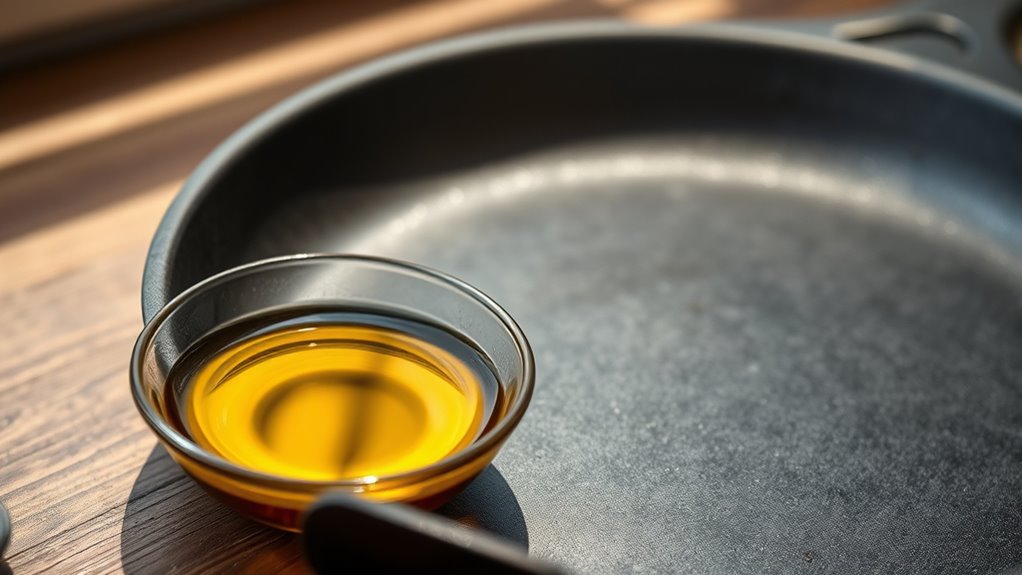
When choosing the best oil for seasoning your carbon steel pan, it’s important to consider its smoke point and polymerization properties. You want an oil that can handle high temperatures without burning or producing smoke early on.
Oils with higher smoke points, like flaxseed or grapeseed oil, are ideal because they polymerize well at high heat, creating a durable, non-stick coating. Stay away from oils with low smoke points, like unrefined olive oil, which can burn easily and mess up your seasoning layer.
Look for oils that tend to form a hard, resilient surface after heating. Picking an oil that heats evenly and polymerizes effectively will help you build a stronger seasoning layer that improves your pan’s non-stick qualities over time.
What Makes an Oil Ideal for Seasoning? Key Properties Explained
The key to a successful seasoning process is choosing an oil with the right properties. You want an oil that creates a durable, non-stick surface, so pick one that polymerizes well when heated.
Look for oils with high smoke points. That way, you can heat them beyond their smoke threshold without burning. A good seasoning oil should also oxidize easily, forming a strong, protective layer on your pan.
Plus, a balanced fatty acid profile helps the coating bond better and last longer. All these qualities together make for a great, long-lasting seasoning layer.
Which Oils Are Best for Seasoning? A Comparison of Common Options
When choosing oils for seasoning, pay attention to their smoke points because higher ones help create a durable, non-stick surface without smoking too much.
You’ll also notice flavor differences. Some oils add a neutral finish, while others can leave a subtle taste.
Comparing these factors helps you pick the best oil for your seasoning process.
Smoke Point Significance
Choosing the right oil for seasoning your carbon steel pan depends on understanding smoke points. The smoke point is when an oil starts to burn and produce smoke, which can impact your seasoning layer.
Using an oil with a high smoke point means you can heat your pan thoroughly without breaking down the oil’s structure. This helps create a durable, non-stick coating that lasts.
When you pick an oil with the right smoke point, you’re laying a strong foundation for your seasoned pan. It sets you up for a well-made, long-lasting surface.
Feel confident in your choice, knowing you’re building a sturdy, lasting finish. This helps you avoid frustrations like peeling or uneven seasoning.
Maximize your pan’s heat tolerance and cooking versatility by choosing the right oil. It’s the key to perfect, flavorful dishes every time.
Flavor Impact Differences
Different oils give your seasoned pan unique flavors, affecting how your dishes taste. For example, flaxseed oil adds a subtle nutty note, while vegetable oil stays pretty neutral.
If you’re after a more noticeable flavor, oils like sesame or avocado can bring some interesting tastes to the table. Just keep in mind that some oils, like olive oil, might leave a slight flavor after several seasoning layers, which could influence your cooked foods.
Neutral oils like grapeseed or canola won’t interfere with your recipes’ flavors. They’re often preferred if you want a subtle seasoning without adding extra taste.
Your choice depends on whether you want a barely-there seasoning or a more flavor-forward profile. Picking the right oil helps your pan’s seasoning complement your cooking style without unwanted taste transfers.
How Does Smoke Point Affect Your Oil Choice for Seasoning?
Your choice of oil for seasoning depends on its smoke point, which determines how well it can handle high heat without breaking down.
If you pick an oil with a low smoke point, it can burn quickly. That can damage your seasoning and make it less durable.
Choosing an oil with a high smoke point is safer and helps build a stronger, longer-lasting seasoning layer.
Impact on Oil Durability
The smoke point of an oil directly impacts how well it withstands the high temperatures involved in seasoning a carbon steel pan. Oils with higher smoke points are more durable, resisting breakdown and rancidity over time.
When you choose an oil with a low smoke point, it can degrade faster, leading to a less effective seasoning layer. This might cause your pan to lose its non-stick properties and develop unpleasant flavors.
Selecting a high smoke point oil guarantees your seasoning lasts longer and maintains its quality. Feel confident that your effort creates a resilient, non-stick surface rather than wasting time on oils that fade quickly.
- Feel the satisfaction of a durable, long-lasting seasoning
- Avoid the frustration of wasted oil and repeated seasoning
- Experience the confidence of a resilient non-stick surface
- Enjoy your pan’s performance, meal after meal
Smoke Point Safety
How does the smoke point influence your choice of oil for seasoning your carbon steel pan? The smoke point is the temperature at which oil starts to smoke and break down, releasing harmful compounds and creating unpleasant odors. When seasoning, you want an oil with a high smoke point to prevent burning and ensure a smooth, durable coating.
Using an oil with a low smoke point risks scorching the surface, which can ruin the seasoning process. Oils like flaxseed, grapeseed, or vegetable oil have higher smoke points and are safer choices. Staying below the smoke point also helps maintain the oil’s protective properties.
This ensures a more even, long-lasting seasoning layer. Always monitor the temperature to avoid overheating and compromising your pan’s seasoning.
Step-by-Step Guide to Applying Oil for a Perfect Seasoning Layer
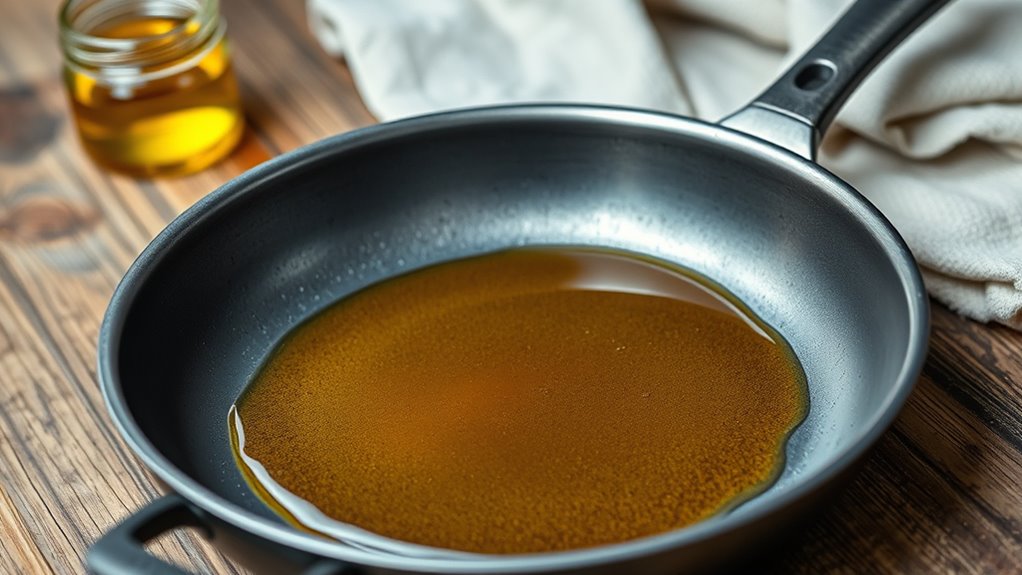
Applying oil correctly is essential to achieving a smooth, durable seasoning layer on your carbon steel pan. First, clean the pan thoroughly to remove any residue.
Next, use a small amount of oil—just enough to coat the surface thinly and evenly. Use a paper towel or cloth to spread the oil, making sure no excess pools or drips.
Wipe away any surplus to prevent sticky buildup. When applying, focus on creating a uniform layer, covering every inch of the pan. This step is vital for even seasoning and a non-stick finish.
Feel confident knowing you’re creating a protective, non-stick surface. Enjoy the satisfying process of perfecting your pan’s seasoning.
Watch your pan develop a beautiful, glossy finish. Take pride in your skill to maintain a long-lasting, well-seasoned pan.
Tips for Achieving a Durable, Non-Stick Surface on Your Pan
Achieving a durable, non-stick surface depends largely on maintaining a proper seasoning layer and caring for your pan consistently. To boost durability, always clean your pan gently with hot water and a soft brush—avoid soap, which can strip the seasoning.
After cleaning, dry the pan thoroughly and apply a thin layer of oil before storing. Regularly re-season your pan by applying a light coat of oil and heating it until it smokes; this rebuilds the seasoning layer.
Avoid cooking highly acidic foods frequently, as they can erode the seasoning. Use your pan regularly; the more you cook with it, the better the seasoning becomes.
Proper maintenance, patience, and consistent care will help you develop a resilient, non-stick surface that lasts.
Troubleshooting Common Seasoning Problems and How to Fix Them
Even with proper care, seasoning problems can still happen, affecting your pan’s non-stick surface and how long it lasts. Common issues include a sticky or gummy coating, uneven seasoning layers, flaking, or a dull look. To fix these, you need to find out what’s causing the problem and act quickly.
Sticky or gummy surface is usually from applying too much oil. To fix it, strip the pan and reseason with a very thin layer of oil. For uneven seasoning, make sure to spread the oil evenly and heat the pan gradually so the layers develop uniformly.
A sticky surface often means too much oil—restrip and reseason with a thin layer for best results.
If your pan is flaking or peeling, remove any loose bits first, then reseason carefully to build back a solid coating. Dull or rusty spots can be cleaned thoroughly, then re-seasoned to restore the protective layer.
Fixing these issues quickly keeps your pan working well and helps it last longer.
How Often Should You Re-Season Your Carbon Steel Pan?
A well-seasoned carbon steel pan doesn’t need to be re-seasoned after every use, but it does need occasional maintenance to keep that non-stick surface in top shape.
You should re-season it when food starts sticking more or if the surface looks dull or patchy. This might be every few months or after several uses, depending on how often you cook and how well you take care of it.
If you notice rust or stubborn stains, it’s a good idea to re-season earlier. Interestingly, regular use actually helps build and strengthen the seasoning layer.
Just keep an eye on the surface, and re-season when you see signs of wear or when your cooking experience isn’t as smooth. This way, your pan stays in great condition and ready for your next meal.
Best Practices for Maintaining Your Seasoned Pan Over Time
Maintaining your seasoned carbon steel pan over time is about consistent care and smart habits. Regularly clean it gently with hot water and a soft brush, avoiding soap that can strip the seasoning. After washing, thoroughly dry the pan to prevent rust.
Occasionally, apply a light layer of oil and heat it to reinforce the seasoning. Store it in a dry place and avoid stacking heavy objects on top. Use your pan frequently to build a resilient patina that becomes more non-stick with time.
Keep your pan dry to prevent rust and damage. Reapply a thin oil layer after each use. Avoid abrasive scrubbers that can damage the surface. Cook regularly to maintain a durable, seasoned coating.
Final Tips for Safe and Effective Pan Seasoning
To guarantee your pan is safely and effectively seasoned, always work in a well-ventilated area and follow proper temperature guidelines. Keep your oven between 400-450°F for even seasoning without risking damage.
Use thin, even layers of oil—too much can create a sticky surface—and wipe off excess before baking. Avoid using flammable oils or overheating your pan, as this can cause smoke or fire hazards.
Let the pan cool completely before handling or cleaning, preventing warping or cracking. Regularly inspect your seasoning layer; if it becomes dull or sticky, strip and reseason the pan.
With proper care and attention, you’ll develop a durable, non-stick surface that improves your cooking experience. Safety and patience are key to achieving a perfect seasoning.
Frequently Asked Questions
Can I Use Flavored or Infused Oils for Seasoning?
Yes, you can use flavored or infused oils for seasoning your carbon steel pan, but it’s generally not recommended. These oils often have lower smoke points and added flavors that might not develop well during seasoning. This could affect the pan’s non-stick properties and flavor over time.
For the best results, stick to neutral oils with high smoke points like flaxseed, grapeseed, or canola oil. These oils help create a durable, effective seasoning layer that lasts longer.
How Long Should I Heat the Oil During Seasoning?
You should heat the oil until it starts to smoke lightly, which usually takes about 10-15 minutes at medium-high heat. Keep a close eye on it to prevent burning.
This process allows the oil to polymerize and create a durable seasoning layer. If the oil stops smoking or starts to burn, reduce the heat.
Consistent heating guarantees an even, non-stick surface on your pan.
Is It Necessary to Wash the Pan Before Re-Seasoning?
No, you don’t need to wash your pan before re-seasoning—just like you don’t wash a bike chain before it gets a fresh coat of oil. If it’s greasy or sticky, a quick wipe with a paper towel is enough.
Over-cleaning can strip away your seasoned layer, turning your masterpiece into a blank slate. So, keep it simple, and let that seasoned pan work its magic!
Can I Use a Spray Oil for Seasoning My Pan?
Yes, you can use spray oil for seasoning your pan. Just make sure it’s a light, even coating to avoid excess buildup. Spray oil is convenient and easy to spread across the surface.
After spraying, wipe off any excess with a paper towel to prevent sticking. Keep in mind, some spray oils contain additives, so opt for a pure one if possible for the best seasoning results.
How Do I Know When the Seasoning Layer Is Complete?
Think of your pan’s seasoning like a sunset sky. It’s complete when it glows with a deep, even hue.
You’ll notice a smooth, matte finish that resists sticking and builds up with each use. When the surface looks uniform and dark, and your food releases easily, your seasoning is ready.
Keep seasoning until the layer feels resilient, like a well-worn leather. It should be ready to serve you for years.
Conclusion
So there you have it—your foolproof guide to seasoning your carbon steel pan. Follow these steps, pick the right oil, and soon you’ll have a non-stick wonder that even your grandma would envy.
Just remember, seasoning isn’t magic. It’s patience, the right oil, and a little bit of smoke. Keep at it, avoid turning your kitchen into a inferno, and you’ll be flipping perfect pancakes with no sticky mess.
With these tips, you’ll master seasoning your carbon steel pan in no time. Happy cooking!