10 Key Differences Between Prime and Choice Beef
Choosing the right beef can be confusing, especially with so many options out there. Many people struggle with deciding which cut offers the best flavor and value for their money.
Don’t worry—you’re not alone, and understanding the differences can make all the difference.
Prime beef has more marbling, making it tender and flavorful, while Choice is leaner with less fat and variable tenderness.
Prime offers a richer, buttery taste and melts in your mouth, but costs more and is found in premium sections.
Choice is more affordable and versatile for everyday cooking, with slightly milder flavor.
By understanding these differences, you can pick the perfect cut for your meal—and there’s more to uncover if you keep exploring.
Key Takeaways
- Prime beef has more marbling and fat, which makes it super tender and flavorful. You’ll notice it melts in your mouth compared to Choice beef.
- It’s usually more expensive and found in the premium sections of stores. Choice beef, on the other hand, is more budget-friendly and easy to find.
- Prime shows a fine, web-like marbling pattern. Choice tends to have thinner, more irregular streaks of fat.
- When it comes to taste, prime has a richer, buttery flavor. Choice has a milder flavor that can vary depending on the animal’s age.
- The best cooking methods are different too. Prime is great for slow, moist cooking like braising.
- Choice works well for grilling or roasting because it’s versatile and tends to be more evenly cooked.
What Are the Main Differences Between Prime and Choice Beef?
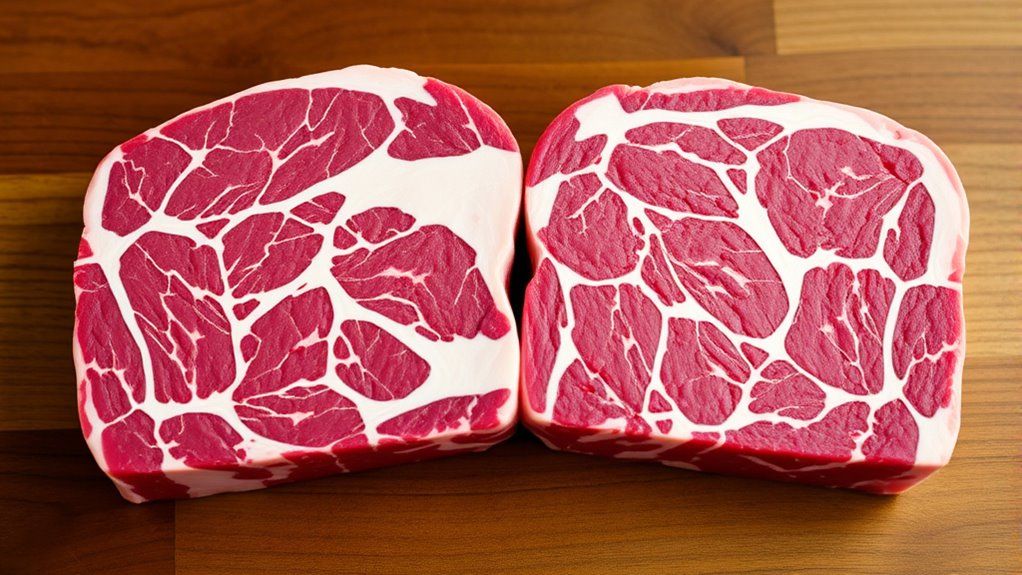
The main differences between Prime and Choice beef mainly lie in their marbling and tenderness. Prime beef has more intramuscular fat, which creates a higher level of marbling. This marbling helps the meat stay moist and flavorful during cooking.
Because of this, Prime tends to be more tender and juicy, making it ideal for grilling or roasting. Choice beef, on the other hand, has less marbling, so it’s typically leaner and slightly less tender. It still offers good quality but may require careful cooking to avoid dryness.
If you prefer a richer, melt-in-your-mouth experience, Prime is your best choice. But if you’re looking for a more economical option that can still deliver decent tenderness, Choice beef works well too.
How Is Marbling Different in Prime and Choice Cuts?
Prime beef usually has more even and abundant marbling throughout the muscle, giving it a rich, uniform look.
Choice cuts tend to have less marbling, with fat scattered more unevenly, which can affect how they look.
This difference in fat content and distribution impacts both flavor and tenderness, so Prime is generally more succulent.
Marbling Distribution Patterns
Marbling distribution patterns greatly influence the flavor and tenderness of beef cuts. In Prime beef, marbling is more evenly spread throughout the muscle, creating a consistent, rich fat presence that melts during cooking. This uniformity improves juiciness and flavor, especially in the center portions.
Conversely, Choice beef tends to have marbling concentrated in specific areas, often near the edges or in streaks. This uneven distribution can result in less consistent tenderness and flavor, depending on the cut.
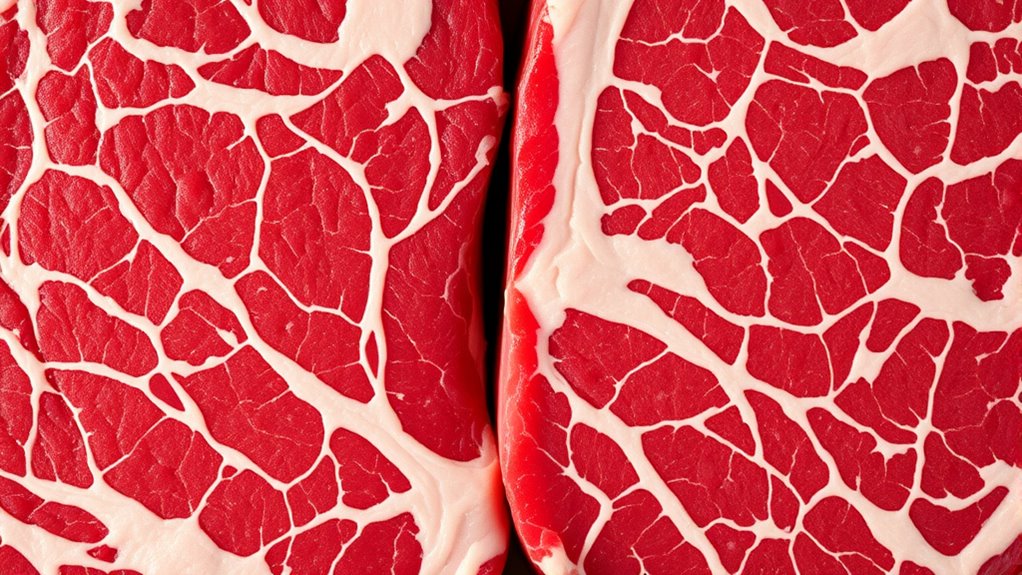
To understand these differences better: Prime cuts show a fine, web-like marbling pattern throughout. Choice cuts often display more localized marbling streaks.
The distribution affects how fat melts and flavors the meat. Even marbling in Prime maximizes tenderness, while uneven marbling in Choice can lead to variable eating experiences.
Fat Content Levels
Fat content levels in beef cuts directly relate to how marbling is distributed and affect the meat’s overall quality. Prime beef generally has a higher fat content, with abundant marbling throughout the muscle. This fat melts during cooking, adding flavor, juiciness, and tenderness.
Choice beef, on the other hand, has less fat, resulting in leaner cuts with less marbling. While it still offers good flavor, it’s not as rich or moist as prime. The difference in fat levels also influences cooking methods.
Prime cuts excel with slow, moist heat to break down the fat and connective tissue. Choice cuts work well with grilling or roasting, where less fat is needed to keep the meat tender. Overall, fat content levels in your beef choice shape the eating experience you can expect.
Visual Marbling Appeal
The visual appeal of marbling in beef cuts is a big part of judging quality and flavor. Prime beef usually shows lots of fine, web-like fat streaks spread evenly, hinting at richness and tenderness.
Choice beef has less intramuscular fat, with marbling that’s more sparse and uneven. This difference affects not just how it looks but also how it tastes and juices up when cooked.
Prime marbling looks like delicate, web-like streaks across the meat. Choice marbling tends to be more irregular and less noticeable.
Prime gives a more luxurious, high-quality look, while choice may need careful cooking to stay tender.
Both types benefit from proper handling to bring out their best flavor potential.
Which Beef Grade Is More Tender and Juicy?
When comparing Prime and Choice beef, Prime generally offers more tenderness and juiciness. This is because Prime beef has higher marbling, meaning more intramuscular fat, which helps keep the meat soft and moist.
The fat melts during cooking, making the meat more tender and flavorful. Choice beef has less marbling, so it’s leaner and slightly less juicy.
While Choice can still be tender if cooked properly, it usually doesn’t have that melt-in-your-mouth quality like Prime. If you want a juicy, tender experience, go for Prime, especially with high-heat methods like grilling or broiling.
But with careful cooking, Choice can still be satisfying and tender, just not quite as much as Prime.
What Are the Flavor Differences Between Prime and Choice?
You’ll notice that Prime beef generally has a richer, more buttery flavor thanks to its higher marbling, which melts during cooking and infuses the meat.
Choice beef, being leaner, offers a milder taste that can vary depending on the age and maturity of the animal.
Younger, less mature beef tends to be tenderer with a subtle flavor, while older meat can develop a stronger, more pronounced taste.
Marbling Impact on Flavor
Marbling plays an essential role in shaping the flavor profile of beef, especially when comparing Prime and Choice grades. The more intramuscular fat you see, the richer and more buttery the taste becomes.
Prime beef, with its abundant marbling, delivers a juicier, more flavorful experience. On the other hand, Choice beef has less marbling, making it leaner but still satisfying in flavor.
The fat melts during cooking, which improves tenderness and adds depth to the meat’s natural taste. It also enhances juiciness and mouthfeel, making each bite more enjoyable.
Marbling adds a buttery, savory note that intensifies the beef’s richness. It helps balance leaner cuts, giving them more flavor and a more complex aroma.
Age and Maturity Effects
Age and maturity greatly influence the flavor differences between Prime and Choice beef. As cattle grow older, their muscles develop more connective tissue and a richer, more complex flavor profile.
Prime beef usually comes from younger animals, which makes it tender and mild in taste. Choice beef, often from slightly older cattle, tends to have a deeper, beefier flavor because of increased maturity.
This aging process intensifies the beef’s natural flavors, making Choice cuts taste bolder and more pronounced. Maturity also affects tenderness, with younger beef generally being more tender.
When choosing between Prime and Choice, think about how age impacts flavor strength and texture. Pick the one that best matches your preferred taste and tenderness.
How to Decide Between Prime and Choice for Your Favorite Recipes
Deciding between Prime and Choice beef depends on how you plan to use the meat and what qualities matter most to you. If you want a tender, flavorful dish, Prime is perfect because of its higher marbling.
Choosing Prime or Choice beef depends on your desired tenderness, flavor, and occasion.
For everyday cooking or budget-friendly options, Choice works well without sacrificing quality. Think about these factors:
- How tender do you want your meat?
- How important are flavor and juiciness?
- What’s your preferred cooking method (grilling, roasting, braising)?
- Do you care about presentation and texture?
- Are you willing to spend more on premium meat?
Matching these points to your recipe helps you pick the right cut. Prime beef makes special occasions feel even more special, while Choice offers versatility for many dishes.
Choosing the right one guarantees your meal turns out just how you want it.
How Does Price Affect Your Choice of Beef?
Price plays a big role when choosing between Prime and Choice beef, especially based on your budget and how often you cook.
Prime beef, which has more marbling and tenderness, is usually more expensive. If you’re on a budget or cook often, Choice beef can be a more affordable option without sacrificing much flavor for many recipes.
You might pick Choice if you’re making everyday meals or grilling on a budget. But if it’s a special occasion or you want top quality, investing in Prime beef might be worth the extra cost.
Your choice depends on how much you value tenderness and marbling versus saving money. Knowing the price difference helps you make smarter decisions based on your cooking habits and finances.
Where Can You Find Prime and Choice Beef in Stores?
If you’re wondering where to find Prime and Choice beef in stores, you’ll usually see them in different sections depending on the retailer.
Prime beef is typically located in the premium meat section or at the meat counter, often near specialty or gourmet products.
Choice beef, which is more common and affordable, is usually found in the regular meat aisle or pre-packaged in the refrigerated section.
Look for these indicators to spot high-quality cuts:
- Labels like “Prime” or “Choice”
- Well-marbled slices with visible fat
- Shelves dedicated to premium meats
- Pre-packaged beef in the refrigerated case
- Butcher counter with knowledgeable staff
Knowing where to look helps you pick the best beef for your needs.
How Are Prime and Choice Beef Graded and Certified?
You might wonder how beef gets its quality labels, and the grading standards play a big role. These standards look at things like marbling, maturity, and texture to assign a grade.
Certification processes make sure each cut meets specific criteria. This helps give you confidence that you’re getting quality beef every time.
Grading Standards Overview
Understanding how prime and choice beef are graded starts with knowing the role of official inspection agencies, mainly the USDA. They use specific criteria to evaluate beef quality, focusing on marbling, maturity, and texture. These factors decide the grade given to each cut.
The grading process looks at things like the amount of marbling, which affects flavor and tenderness, and the age of the animal, which influences meat maturity. It also considers the color and texture of the meat, overall uniformity and firmness, and any defects or blemishes.
Prime beef has lots of marbling, showing it’s high quality. Choice beef has less marbling but still maintains good quality. This system helps ensure consistency, so consumers can make informed choices based on clear standards.
Certification Processes Explained
The process of grading and certifying prime and choice beef involves visual inspections and standardized evaluation methods carried out by authorized agencies like the USDA.
First, inspectors examine the carcass’s marbling, which is the fat within the muscle. This is a key factor in grading. They also assess the animal’s maturity by looking at bone development and other features.
These evaluations follow strict guidelines to ensure consistency. Once the inspection is done, the USDA assigns a grade, such as Prime or Choice, to certify the quality level.
This certification helps consumers understand what to expect in terms of tenderness, flavor, and juiciness. Overall, the process makes sure each cut meets specific standards, helping you make more informed purchasing decisions.
What Factors Should Influence Your Beef Selection?
When choosing beef, several factors can greatly impact the quality and flavor of your meal. First, consider the cut; some cuts are naturally more tender and flavorful.
Next, look at the marbling. More intramuscular fat usually means juicier, more flavorful meat. Freshness is also essential. Check the color, smell, and packaging date to guarantee quality.
The grade of beef can indicate tenderness and marbling, but personal preference plays a role too. Finally, think about how you’ll cook the beef, as certain cuts perform better with specific methods.
- Cut type and tenderness
- Marbling and fat distribution
- Freshness and packaging
- Beef grade and quality
- Cooking method compatibility
How to Spot Prime and Choice Beef When Shopping
Wondering how to tell prime beef from choice while shopping? Look at the meat’s marbling—prime beef has plenty of fine fat streaks throughout the muscle, giving it a bright, white look.
Choice beef has less marbling, with thinner fat lines that are less evenly spread out. Check the color; prime beef tends to be darker and richer, while choice is usually lighter.
The grade is often labeled right on the packaging, but if you don’t see it, use marbling and color as your clues. Prime cuts are usually more expensive and often stored in a separate, more prominent section.
Frequently Asked Questions
Are There Health Differences Between Prime and Choice Beef?
There aren’t significant health differences between prime and choice beef, as both come from similar cuts and have comparable nutritional profiles. The main difference is in marbling, which affects flavor and tenderness, not health.
If you’re watching fat intake, opt for leaner cuts regardless of grade. Both types provide high-quality protein, vitamins, and minerals, so your choice should focus on flavor preference and cooking method rather than health concerns.
Can Cooking Methods Change Depending on Beef Grade?
Yes, cooking methods can change depending on beef grade. For example, with Prime beef, which has higher marbling, you might choose dry-heat methods like grilling or roasting to boost tenderness and flavor.
On the other hand, Choice beef is leaner, so moist-heat methods like braising or slow-cooking are better. These methods help prevent the meat from drying out.
Adjusting your approach ensures the beef stays juicy and flavorful, no matter the grade.
How Long Does Prime Beef Typically Last in Storage?
You can typically store prime beef in the refrigerator for 3 to 5 days, making sure it’s kept at or below 40°F.
If you want to keep it longer, freezing is the way to go. Properly wrapped, it can last up to 6 to 12 months in the freezer.
Always check for signs of spoilage, like an off smell or slimy texture, before cooking.
Storing it correctly helps keep its quality and makes sure it’s safe for your meals.
Are There Regional Variations in Prime and Choice Beef Availability?
You’ll find that prime beef is more readily available in regions with a strong culinary scene, like New York or California. Choice beef, on the other hand, is more common nationwide.
About 60% of beef sold in the US is choice, thanks to its affordability and versatility. Prime beef, which makes up roughly 2-3% of all graded beef, is usually found in high-end restaurants and specialty markets.
Availability really varies depending on the region and the demand there.
Is Prime Beef Always Better for Grilling?
Prime beef isn’t always better for grilling, but it’s often preferable if you want tenderness and flavor. Because prime cuts have more marbling, they stay juicy and flavorful when cooked quickly over high heat.
However, choice beef can also make excellent grilled steaks if you pick well-marbled cuts and cook them properly. So, it really depends on what you prefer, your budget, and the specific cut you choose for grilling.
Conclusion
Next time you’re at the butcher’s or grocery store, picture yourself holding a perfectly marbled cut of prime beef. Its rich aroma promises a juicy, tender bite that’s hard to resist.
Whether you go for the luxurious prime or the more accessible choice, your selection influences the flavor of your meal.
Trust your eye and palate, and enjoy the satisfying sizzle and melt-in-your-mouth experience. Knowing the difference between prime and choice beef makes all the difference in your cooking.