Best Salt to Use – 7 Essential Types Compared
Are you overwhelmed by the countless salt options at the store? You’re not alone—many people struggle to choose the right one for their cooking and health goals. With so many varieties, it’s easy to feel unsure which salt will truly elevate your dishes.
Choosing the best salt depends on your cooking needs and health goals. Sea salt offers minerals and flavor for finishing dishes, while refined table salt is ideal for baking and quick seasoning.
Himalayan pink salt adds health benefits and a mild taste, and specialty salts like fleur de sel give a refined crunch for garnishing. Each type serves a unique purpose, and understanding these differences will help you enhance your culinary game—if you continue exploring, you’ll uncover even more.
Key Takeaways
– Unrefined salts like Himalayan pink and sea salt offer trace minerals and unique flavors, making them healthier options for seasoning.
They add a special touch to dishes and can enhance the overall flavor profile. Plus, many people prefer their natural, unprocessed qualities.
Fine salts are perfect for baking and cooking because they dissolve easily and distribute evenly. On the other hand, coarse and flaky salts shine when used as finishing touches.
Specialty salts such as fleur de sel and Maldon can boost texture and visual appeal. Adding them at the end of cooking makes dishes look and taste more refined.
Refined table salt provides a consistent flavor and dissolves quickly, making it ideal for baking and everyday seasoning.
To keep your salt fresh and free from moisture, store it in airtight containers. Proper storage helps maintain its quality over time.
Main Types of Salt: Origins, Processing, and Differences
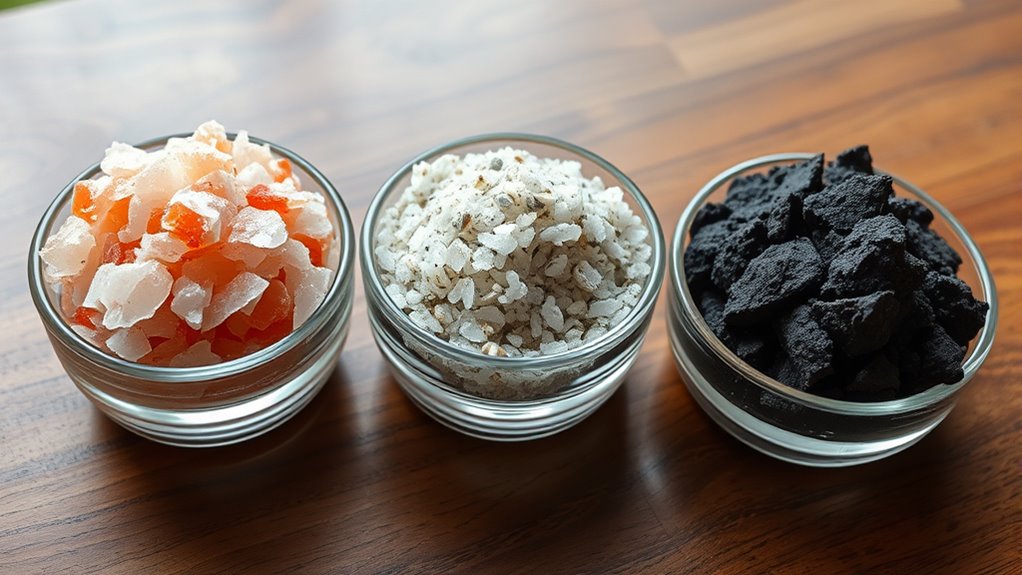
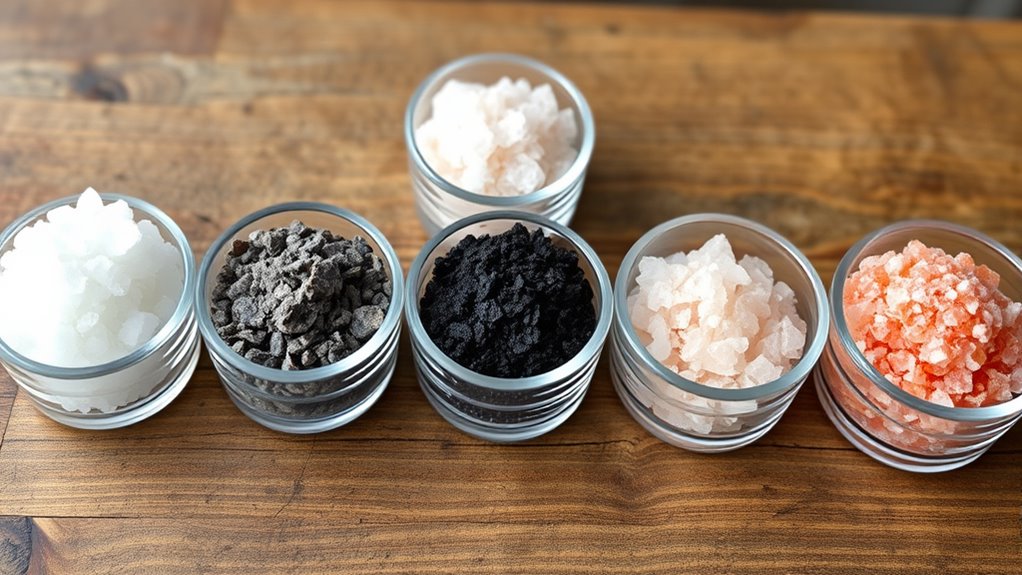
Salt comes in various types, each with its own origins, processing methods, and unique characteristics. You might encounter sea salt, which forms through evaporation of seawater, retaining natural minerals and trace elements. It often has a moist, coarse texture and a delicate flavor.
Salt varieties differ in origin, processing, and flavor, from moist sea salts to refined, pure white table salts.
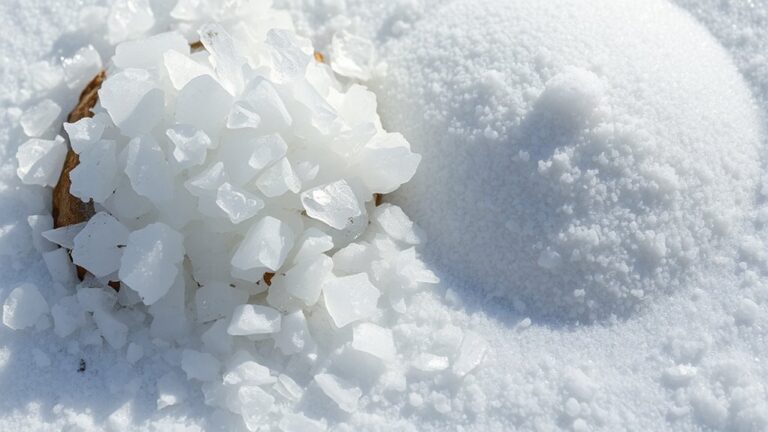
Then there’s rock salt, mined from underground deposits. It usually comes in large crystals and is mainly used for industrial purposes or in salt lamps.
Table salt is highly processed, refined to remove impurities, and often contains additives like anti-caking agents. It typically appears fine, pure white, and has a consistent, sharp taste.
Each type offers different culinary and health benefits, depending on how it’s sourced and processed. Understanding these differences helps you choose the right salt for your cooking or lifestyle needs.
Refined Table Salt: Benefits and When to Use It
Refined table salt is a popular choice for everyday cooking because it dissolves quickly and provides consistent flavor. Its fine texture guarantees even seasoning, making it perfect for baking, boiling, and seasoning dishes. You should consider using it when you need reliable results and uniform saltiness.
Here are four key benefits:
- Fast Dissolution – Easily blends into recipes without clumping.
- Precision Salt Levels – Accurate measurements improve recipe consistency.
- Cost-Effective – Usually cheaper and widely available.
- Neutral Flavor – Does not alter the taste of your dishes.
Use refined table salt for everyday cooking tasks where consistency, affordability, and quick dissolving qualities are priorities. It’s great for general seasoning and baking needs.
Unrefined Sea Salts: Unique Flavors and Culinary Uses
Unrefined sea salts offer unique flavor profiles that can elevate your dishes with subtle mineral notes. They’re great for adding a finishing touch or gentle seasoning.
Plus, their minimal processing keeps natural elements intact, making each pinch both flavorful and authentic. They’re incredibly versatile in the kitchen, so you can use them in many ways.
Distinctive Flavor Profiles
Because of their minimal processing, unrefined sea salts often carry distinctive flavors that can elevate your cooking. These salts contain trace minerals that give each variety a unique taste profile, adding depth and complexity to your dishes.
For example, Hawaiian Red Salt offers an earthy, mineral-rich flavor that’s perfect for finishing grilled meats and salads.
Sel Gris has a moist texture with subtle briny notes, making it ideal for seasoning seafood or vegetables.
Himalayan Pink Salt provides a mild, slightly sweet taste that complements meats and roasted vegetables.
Fleur de Sel features a delicate, flaky texture with nuanced saltiness, great as a finishing touch on desserts or charcuterie.
These distinctive flavors help you elevate your culinary experience with natural, nuanced seasoning.
Culinary Versatility
Unrefined sea salts are incredibly versatile in the kitchen, enhancing a wide range of dishes with their unique flavors and textures. You can use them as finishing salts to add crunch and flavor to salads, steaks, or roasted vegetables. Their mineral-rich profile brings depth to baked goods and marinades.
Whether sprinkled on popcorn or stirred into soups, these salts uplift everyday meals with distinct character. Their coarse grains are perfect for seasoning meats during grilling or roasting. Using different types allows you to experiment with textures and tastes, from flaky to granular.
| Salt Type | Culinary Use |
|---|---|
| Flake Sea Salt | Finishing, garnishing |
| Coarse Sea Salt | Seasoning, grilling |
| Himalayan Pink | Marinating, presentation |
| Celtic Sea Salt | Broths, slow cooking |
| Hawaiian Sea Salt | Enhancing seafood dishes |
Minimal Processing Methods
Minimal processing methods preserve the natural minerals and flavors of sea salts, making them stand out in both taste and health benefits. When you choose unrefined sea salts, you keep trace minerals like magnesium, calcium, and potassium that are often lost in refined varieties. These minerals add complexity to the flavor and offer potential health perks.
Here are some key points:
- Retain Natural Trace Minerals: This boosts flavor and nutritional value.
- Unrefined Texture: Usually coarser, perfect for finishing dishes.
- Unique Flavors: You might notice briny, smoky, or earthy notes.
- Culinary Flexibility: Great for seasoning, garnishing, and finishing dishes.
Choosing minimally processed salts can elevate your cooking with richer flavors and added nutritional benefits.
Himalayan Pink Salt: Health Benefits and How to Use It
Himalayan pink salt is packed with minerals like magnesium, potassium, and calcium that can support your overall health.
You can use it to season your meals or add it to baths for relaxation and mineral absorption. Its unique flavor and supposed wellness benefits make it a popular choice for both cooking and self-care.
Mineral Composition and Benefits
Because of its unique mineral profile, Himalayan pink salt offers more than just flavor; it provides essential trace minerals that can benefit your health. Its mineral composition includes over 80 elements like potassium, magnesium, calcium, and iron, which support various bodily functions.
These minerals help maintain electrolyte balance, promote healthy bone development, and improve circulation. They may also aid in detoxification and enhance hydration. Here’s a closer look at its benefits:
- Supports mineral replenishment needed for overall wellness
- Contributes to balanced electrolyte levels for proper hydration
- Promotes bone health with calcium and magnesium content
- Assists in detoxification through mineral-rich properties
Incorporating Himalayan pink salt into your diet can help you enjoy these health benefits naturally.
Culinary and Wellness Uses
You can easily incorporate Himalayan pink salt into your daily routine, whether in the kitchen or for wellness. Its unique mineral content not only improves flavor but also offers health benefits like better hydration and mineral intake.
Use it as a finishing salt on dishes or add a pinch to your bath for relaxation and mineral absorption. Himalayan pink salt is versatile, making it easy to include in your routine.
To highlight its benefits, consider this comparison:
| Use | Benefit | How to Apply |
|---|---|---|
| Cooking | Enhances flavor and trace minerals | Sprinkle during cooking |
| Finishing salt | Adds texture and mineral boost | Use on salads or meats |
| Bathing | Promotes relaxation and mineral absorption | Dissolve in warm bath |
| Salt scrubs | Exfoliates and nourishes skin | Mix with oils for scrubs |
| Dietary supplement | Supports mineral intake | Use as table salt |
When and Why to Use Specialty Salts Like Fleur De Sel and Maldon
Specialty salts like Fleur de Sel and Maldon are best reserved for finishing dishes, where their unique textures and subtle flavors can really shine. You want to add them at the end of cooking to give your dish a refined touch.
Use them to improve texture, since their flaky, crunchy grains offer a nice contrast. They also help boost flavor because their delicate saltiness complements rather than takes over.
These salts add visual appeal too, giving your plated dishes a more sophisticated look. And if you want to highlight their distinct mineral notes, it’s best to do so when the salt isn’t cooked away.
Their visual charm elevates presentation, and adding them late preserves their unique mineral flavors.
Using these salts sparingly keeps their delicate qualities intact. This way, you enjoy their nuanced flavors, making your dishes more refined and memorable.
How to Choose the Best Salt for Cooking, Finishing, and Health
Choosing the right salt depends on how you plan to use it in your cooking, finishing, or for health reasons.
For cooking, go for larger-grained salts like sea salt or kosher salt. They dissolve slowly and add texture to your dishes.
Fine salts are great for baking and seasoning during cooking because they dissolve quickly and blend well.
When finishing dishes, flaky salts like Maldon or fleur de sel are perfect for adding a crisp, briny crunch.
For health, consider mineral-rich salts like Himalayan pink or sea salt, which have trace minerals that can benefit your body.
Avoid heavily processed salts with additives or anti-caking agents if you’re focused on health benefits.
Ultimately, choose salts that match your taste preferences, texture needs, and health concerns to enhance your culinary experience.
Storing and Using Different Salt Types for Optimal Results
Storing different types of salt properly keeps their unique textures and flavors intact, making sure they work as intended in your cooking.
To keep them fresh and prevent clumping, follow these simple tips:
- Keep salts in airtight containers away from moisture and heat.
- Store flaky or coarse salts in clear jars so you can easily see their texture.
- Use dry, clean utensils to avoid adding moisture or contaminants.
- Label different salts to prevent mix-ups and ensure you use the right one.
Using salts the right way depends on their texture and what you’re cooking. Fine salts are great for seasoning during cooking, while coarse salts are perfect for finishing dishes or rubs.
Proper storage keeps their quality high, so your dishes turn out perfect every time.
Frequently Asked Questions
Are There Any Health Risks Associated With Consuming Unrefined Salts?
Yes, consuming unrefined salts can pose health risks if you eat too much. This is mainly because they have a higher mineral content, which could lead to an excess intake of minerals like magnesium or potassium.
Unrefined salts might also contain contaminants or impurities from natural sources. It’s important to use them in moderation, especially if you have health conditions like high blood pressure.
If you do, be sure to talk with a healthcare professional before making big changes to your salt intake.
How Does Mineral Content Vary Among Different Types of Salt?
Your taste buds might be in for an adventure, but mineral content varies a lot among different salts.
Sea salt often has a rich mix of minerals like magnesium and potassium, giving it a unique flavor. Himalayan pink salt contains trace elements that give it its distinctive pink hue.
Table salt, on the other hand, is heavily refined and has fewer minerals. It’s usually fortified with iodine to support your health.
Can Salt Type Affect the Flavor of Specific Dishes?
Yes, the type of salt can really change the flavor of your dishes. Different salts have unique mineral compositions that affect their taste profiles.
For example, sea salt often has a subtle briny flavor, while Himalayan pink salt offers earthy undertones. Using the right salt can really enhance your dish’s overall flavor.
On the other hand, choosing the wrong salt might overpower or underwhelm the dish. Experimenting with different types helps you fine-tune your culinary creations for the best taste.
Is There a Recommended Daily Intake for Various Salts?
Yes, there’s a recommended daily intake for various salts, but it might surprise you.
For sodium, adults should limit intake to about 2,300 milligrams daily, which is roughly a teaspoon of salt.
If you have health concerns like hypertension, aim for even less—around 1,500 milligrams.
Staying within these limits helps prevent health issues, but be mindful of your salt intake.
Your body and taste buds will thank you.
How Do Environmentally Sustainable Salt Production Methods Compare?
Environmental sustainable salt production methods generally have a lower ecological impact than traditional methods. Solar evaporation, for example, uses sunlight and minimal energy, reducing carbon emissions.
Mechanical evaporation also conserves resources with efficient energy use. In contrast, mining can disturb ecosystems and cause habitat loss.
Conclusion
Choosing the right salt is like picking the perfect brush for your masterpiece — every type adds its own special touch to your cooking. Whether you love the clarity of refined salt or the rich depth of unrefined sea salts, your choice influences the flavor story you tell.
Embrace the variety, and let each salt be a new chapter in your culinary adventure. After all, salt isn’t just about seasoning — it’s the key to unlocking your culinary artistry and making your dishes truly stand out.